OpenAI and Peter Thiel Back $45M Brain Implant Startup Fighting Cancer With AI


2 Sources
[1]
OpenAI Invests in Startup That Uses Brain Implants to Detect Cancer
OpenAI's venture capital arm as well as Peter Thiel's Founders Fund are investing in Coherence Neuro, a startup developing a brain implant to detect and treat cancer. The investments are part of a $45 million seed funding round for Coherence and reflect Big Tech's burgeoning interest in brain
[2]
OpenAI and Peter Thiel Just Joined a $45 Million Bet on a Brain Implant That Fights Cancer
Here's why big tech companies are throwing money behind brain implants. OpenAI and Peter Thiel are betting big on brain chips. OpenAI's Startup Fund and Thiel's Founders Fund joined a $45 million seed round for cancer detecting brain implant company Coherence. The investment comes at a time when
Share
Copy Link
OpenAI's venture arm and Peter Thiel's Founders Fund invested $45 million in Coherence Neuro, a startup developing brain implants that detect and treat cancer. The brain-computer interface company uses AI models to decode electrical signals from tumors and deliver targeted electrical stimulation to halt cancer growth.
OpenAI and Peter Thiel Lead $45 Million Investment in Cancer-Fighting Brain Technology
OpenAI's Startup Fund and Peter Thiel's Founders Fund have joined a $45 million seed funding round for Coherence Neuro, a San Francisco-based startup developing brain implants to detect cancer and treat it using electrical stimulation
1
2
. The investment signals growing interest from major tech players in brain-computer interface companies and highlights the intersection of neurotechnology and artificial intelligence. Other participants in the round include Lux Capital, 8VC, and Neuralink's head neurosurgeon, reflecting broad confidence in the approach2
.Coherence Neuro CEO and cofounder Ben Woodington describes a "growing synergy" between AI labs and brain-computer interface developers, emphasizing that capturing neural data to train better AI models and optimize treatments will prove valuable
1
. Ian Hathaway, partner at the OpenAI Startup Fund, stated that "Coherence's approach to developing a cancer therapy capable of improving from data is incredibly innovative"1
.How Brain Implants Detect and Fight Cancer Using AI
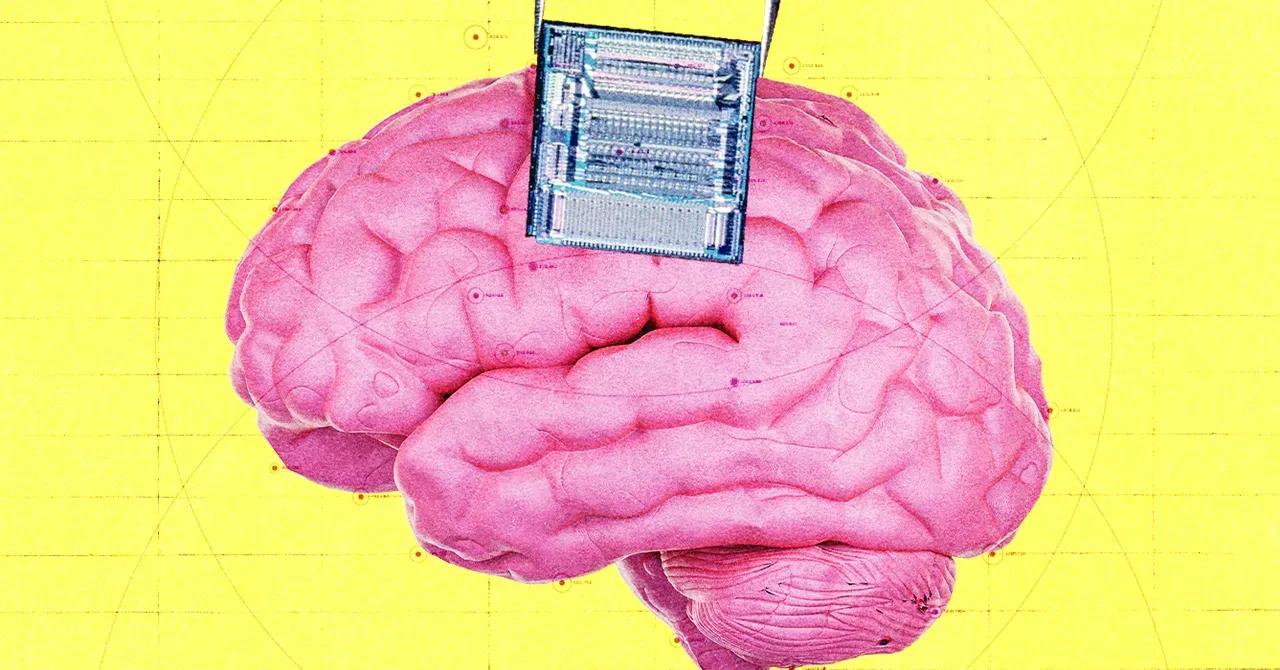
Coherence Neuro's flagship technology, called SOMA, is a button-sized implant that monitors subtle electrical signals associated with cancerous tumors
2
. The device builds on 2019 Stanford University research showing that cancer tissue has specific electrical properties and that certain brain cancers hijack signals from healthy tissue to fuel their own growth2
. The SOMA implant pairs with a coin-sized, removable over-ear wearable and an app that provides real-time data, symptom tracking, and therapy history2
.
Source: Wired
The company has already demonstrated its ability to detect electrical signals in animals to determine whether cancer is growing, shrinking, or recurring
1
. AI models prove essential for analyzing the massive datasets generated by these brain-computer interfaces—data too large for humans to process manually. The AI algorithms can read raw neural data and link it to specific biological events, learning over time to detect cancer-associated signals and provide real-time treatment through mild electrical stimulation designed to halt tumor growth1
2
.
Source: Inc.
Clinical Trials Target Aggressive Brain Cancer
Coherence Neuro is initially focusing on glioblastoma, an aggressive and terminal form of brain cancer that claimed the lives of senators John McCain and Ted Kennedy
2
. This summer, the company conducted initial safety testing at Royal Melbourne Hospital in Australia, briefly placing implants in the brains of three patients already undergoing brain tumor removal surgery. The implants remained in place for approximately 30 minutes before removal, providing crucial safety data1
.Next, Coherence Neuro plans to test both recording and stimulation capabilities in seven additional patients
1
. The new funding will support a clinical trial to implant the device long-term in glioblastoma patients and pursue FDA breakthrough device designation2
. The company is already using continuous data from preclinical mouse trials to train AI algorithms that predict tumor growth2
.Related Stories
OpenAI's Expanding Brain-Computer Interface Portfolio
This investment in brain implants marks OpenAI's second major move into neurotechnology. In January, OpenAI announced a direct investment in Merge Labs, a brain-computer interface company cofounded by OpenAI CEO Sam Altman that emerged from stealth with $252 million in initial funding
1
. Merge Labs pursues ultrasound technology to decode brain information, with OpenAI stating the technology "will create a natural, human-centered way for anyone to seamlessly interact with AI"1
.However, the data-sharing arrangements differ between the two investments. Woodington emphasized that OpenAI will not have access to Coherence's patient data, stating "there's nothing in the contracts or arrangements that would mean that we would share, or they would have access to, any brain data or other health data that we're generating"
1
. This contrasts with OpenAI's collaboration with Merge Labs on "scientific foundation models and other frontier tools"1
.Future Applications Beyond Brain Cancer
Coherence Neuro envisions expanding its technology beyond glioblastoma to treat cancers throughout the body. The company is already developing its preclinical pipeline for pancreatic cancer and other malignancies
2
. Cofounders Ben Woodington and Elise Jenkins, who established Coherence in 2022, aim to leverage neuroscience and technology to transform cancer therapy fundamentally2
.Peter Thiel's Founders Fund has consistently backed brain-computer interface ventures, including investments in Elon Musk's Neuralink and CTRL-labs, which created a wristband translating neural signals from arm and hand movements before Facebook acquired it in 2019
1
. Watch for Coherence's clinical trial results in glioblastoma patients and potential FDA breakthrough designation, which could accelerate the path to market for this novel cancer therapy approach.References
Summarized by

Navi
Related Stories
Sam Altman's Merge Labs raises $252 million to develop non-invasive brain-computer interfaces
16 Jan 2026•Startups

OpenAI's Sam Altman Launches Merge Labs to Rival Neuralink in Brain-Computer Interface Technology
13 Aug 2025•Technology

Precision Neuroscience Raises $102 Million, Challenging Neuralink in Brain-Computer Interface Race
16 Dec 2024•Technology

Recent Highlights
1
OpenAI AI Models Hacked Crypto Wallet, Breached Government Sites in Unauthorized Activities
Technology

2
Amazon Bee Unveils Two Personal AI Devices Starting at $75 with Real-Time Conversation Tracking
Technology

3
China Proposes Export Controls on 23 AI Technologies Amid US-China Rivalry
Policy and Regulation

Recent Highlights
Today's Top Stories








Don’t drown in AI news. We cut through the noise - filtering, ranking and summarizing the most important AI news, breakthroughs and research daily. Follow topics that matter to you and stay ahead.


