OpenAI Employee Arrested After FBI Uncovers Hidden Recording Device in Executive Conference Room


22 Sources
[1]
FBI arrests OpenAI employee accused of planting hidden recording device in conference room
OpenAI said it has alerted the FBI after discovering that an employee allegedly planted a hidden recording device in one of the AI maker's office executive conference rooms. The employee, named by federal prosecutors as Saudi national Abdulrahman Alfozan, was fired and arrested on October 9, about
[2]
An OpenAI Employee Allegedly Used a Chatbot to Help Plant a Recording Device at the Office
An engineer at OpenAI allegedly concealed an audio recording device in a piece of toilet paper and attached it behind a monitor inside an executive conference room at one of the company's San Francisco offices, according to a criminal complaint unsealed on Tuesday. Abdulrahman Alfozan, who federal
[3]
OpenAI employee arrested for allegedly planting recording device
An OpenAI engineer was arrested after the company said it discovered a "sophisticated recording device" hidden in one of its offices. The employee, 35-year-old Abdulrahman Alfozan, is charged with using or attempting to use a device to intercept oral communications, according to a report from The
[4]
OpenAI Employee Arrested for Spying on Execs Using Hidden Recording Device
A now ex-employee at OpenAI has been arrested for allegedly trying to spy on executives using an audio recording device that was secretly planted in a conference room. The suspect, 35-year-old Abdulrahman Alfozan, appeared in a US District Court today on charges of spying, according to the US
[5]

OpenAI employee arrested over hidden listening device, company says
Oct 13 (Reuters) - OpenAI said on Tuesday that the Federal Bureau of Investigation had arrested one of its employees in connection with a sophisticated listening device found hidden in one of the company's offices. The ChatGPT maker had used its internal AI models to identify the individual
[6]

OpenAI says it found a 'sophisticated recording device' hidden in its offices - Engadget
US federal prosecutors have arrested and charged a Saudi national with allegedly hiding a sophisticated recording device inside of OpenAI's San Francisco headquarters. Per the San Francisco Standard, Abdulrahman Alfozan, a 35-year-old engineer who had been with the company since July 2025, has been
[7]

Saudi national charged with planting recording device at OpenAI office
A Saudi national has been charged with secretly planting a recording device in OpenAI's office in California, federal prosecutors announced. Abdulrahman Alfozan, who worked at the AI firm as an engineer, was charged federally with using or endeavoring to use an electronic, mechanical, or other
[8]

F.B.I. Arrests OpenAI Employee Accused of Planting Bug in Office
OpenAI said that the employee had placed a device built to evade detection and that he had planned to secretly record meetings in other sensitive spaces. OpenAI said on Tuesday that it had discovered a hidden recording device in one of its offices and traced it to an employee, and that the Federal
[9]

Here's How OpenAI Says It Used AI to Find a Spy Inside Its Company
OpenAI says it used its own AI models to root out what sounds like some kind of alleged corporate spy. They say they handed them over to the FBI, who made an arrest on October 9. OpenAI told Gizmodo the employee had been working in product at OpenAI since July of last year. According to OpenAI,
[10]

An OpenAI engineer is charged over a listening device in the boardroom
Prosecutors say prompts from an account linked to his spouse asked for help building and concealing a recorder An OpenAI engineer has been arrested over a listening device found behind a television in an executive conference room, and is charged with endeavouring to intercept oral communications.
[11]

OpenAI employee arrested by FBI after listening device was found at its office
The man was charged with using a listening device planted in the company's office to "intercept oral communications," the Justice Department said. SAN FRANCISCO -- The FBI arrested an employee of ChatGPT maker OpenAI last week after the company discovered a "sophisticated" recording device in an
[12]

OpenAI employee arrested after recording device found in office
Discovery of 'sophisticated' gadget adds to company's list of privacy concerns after hackings by rogue agents OpenAI said it has found a hidden recording device in one of its offices and has referred the matter to the FBI. One of its employees has been arrested. In a statement on Tuesday, the San
[13]

OpenAI Engineer Arrested for Bugging Office, Company Says AI Caught Him
OpenAI says its models helped identify him and that it has no indication he took model weights, source code, or customer data. An OpenAI engineer is in federal custody after allegedly hiding an encrypted audio recorder behind a television in one of the company's executive conference rooms in San
[14]

OpenAI employee arrested over hidden listening device, company says
OpenAI said on Tuesday that the Federal Bureau of Investigation had arrested one of its employees in connection with a sophisticated listening device found hidden in one of the company's offices. The ChatGPT maker had used its internal AI models to identify the individual responsible for planting
[15]

FBI arrests OpenAI employee for allegedly planting recording device in company offices
Sarah N. Lynch is the senior Justice Department reporter for CBS News, based in Washington, D.C. An OpenAI employee suspected of secretly planting a recording device in one of the company's conference rooms has been arrested on criminal charges, the Justice Department said Tuesday. Abdulrahman
[16]

FBI Arrests Former OpenAI Employee for Planting Listening Device
Oct 13 (Reuters) - OpenAI said on Tuesday that the Federal Bureau of Investigation had arrested a former employee in connection with a sophisticated listening device found hidden in one of its offices. The ChatGPT maker had used its internal AI models to identify the individual responsible
[17]

Saudi OpenAI Engineer Arrested By FBI Over Hidden Recording Device, DOJ Says
OpenAI had used its internal AI models to identify the individual responsible for planting the device and to trace its origins, it said in an X post. Oct 13 (Reuters) - U.S. federal agents arrested a Saudi national employed as an OpenAI engineer and charged him with installing a hidden audio
[18]

Jacob Coxon Had Warned Of Spies At OpenAI And Anthropic, And OpenAI Just Found A Recording Device Wrapped Within Toilet Paper In One Of Its Executive Conference Rooms, Leading To The Arrest Of A Saudi Employee
Talk about espionage, and that too purportedly at the behest of a key US ally. An OpenAI employee of Saudi descent has just made an appearance at a federal court after being charged with using or attempting to use a device to intercept oral communications at one of OpenAI's executive conference
[19]

Someone Bugged OpenAI's Boardroom: ChatGPT's Maker Says its Own AI Found Out Who - Palo Alto Networks (NA
OpenAI said Tuesday it found a "sophisticated recording device" hidden in one of its offices. It then used its own models to trace the device to an employee who had planted it a few days earlier, according to a post from OpenAI Newsroom on X. The ChatGPT maker sent the case to the FBI, and agents
[20]

Saudi OpenAI engineer bugged top secret meetings with toilet paper trickery, feds say after bombshell arrest
A Saudi engineer at artificial intelligence giant OpenAI was arrested and charged with attempting to bug confidential meetings by planting secret recording devices in executive conference rooms, federal prosecutors said. Abdulrahman Alfozan, 35, who is from Saudi Arabia, is in federal custody
[21]

OpenAI employee arrested over hidden listening device, company says
Oct 13 (Reuters) - OpenAI said on Tuesday that the Federal Bureau of Investigation had arrested one of its employees in connection with a sophisticated listening device found hidden in one of the company's offices. The ChatGPT maker had used its internal AI models to identify the individual
[22]
FBI arrests former OpenAI employee for planting listening device
Oct 13 (Reuters) - OpenAI said on Tuesday that the Federal Bureau of Investigation had arrested a former employee in connection with a sophisticated listening device found hidden in one of its offices. The ChatGPT maker had used its internal AI models to identify the individual responsible for
Share
Copy Link
FBI arrested Abdulrahman Alfozan, a 35-year-old Saudi engineer at OpenAI, for allegedly planting a hidden recording device in an executive conference room. The device was discovered during a countersurveillance sweep and had been concealed in toilet paper behind a television. OpenAI used internal AI models to trace the sophisticated device back to Alfozan, who joined the company in July 2025.
The FBI arrests OpenAI employee Abdulrahman Alfozan marks a significant counterintelligence incident at one of the world's leading AI companies. The 35-year-old Saudi national and U.S. permanent resident faces federal charges for allegedly planting a hidden recording device inside an executive conference room at OpenAI's San Francisco office
1
. Alfozan was arrested on October 9, approximately one week after OpenAI discovered the surveillance equipment during a routine countersurveillance sweep2
.Discovery Through Internal AI Models
OpenAI detected the hidden recording device on September 30 during a security sweep of its facilities. The company used internal AI models to understand the sophisticated device and trace its origins back to a specific employee
5
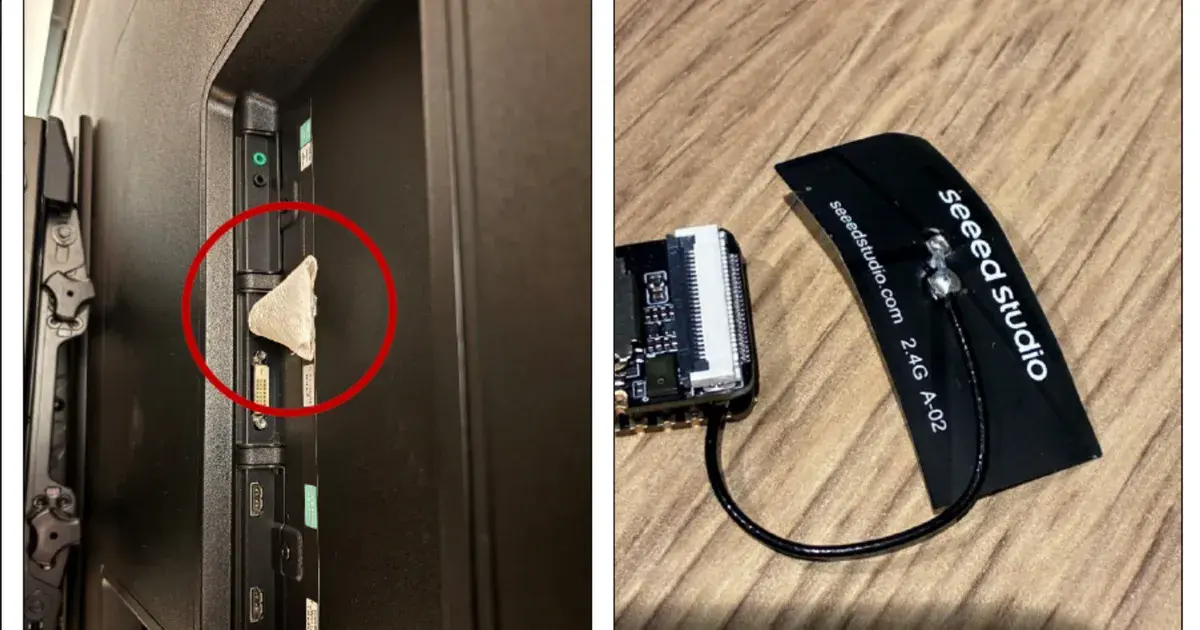
. The device was concealed in toilet paper and inserted into a USB port on the back of a television in a conference room reserved exclusively for executives and executive assistants2
. According to OpenAI, the device contained advanced encryption, audio monitoring capabilities, and a mechanism for transferring data designed to evade monitoring1
.The Device and Investigation Details
Source: CBS
Prosecutors identified the device as a Seeed XIAO ESP32-S3 Sense, a thumb-sized development board with a detachable camera sensor, digital microphone, and microSD storage that currently retails for $13.99
2
. Despite its low cost, the device's encrypted contents prevented OpenAI's security team from reviewing the stored data. Federal prosecutors allege that Alfozan planted the device on or around September 282
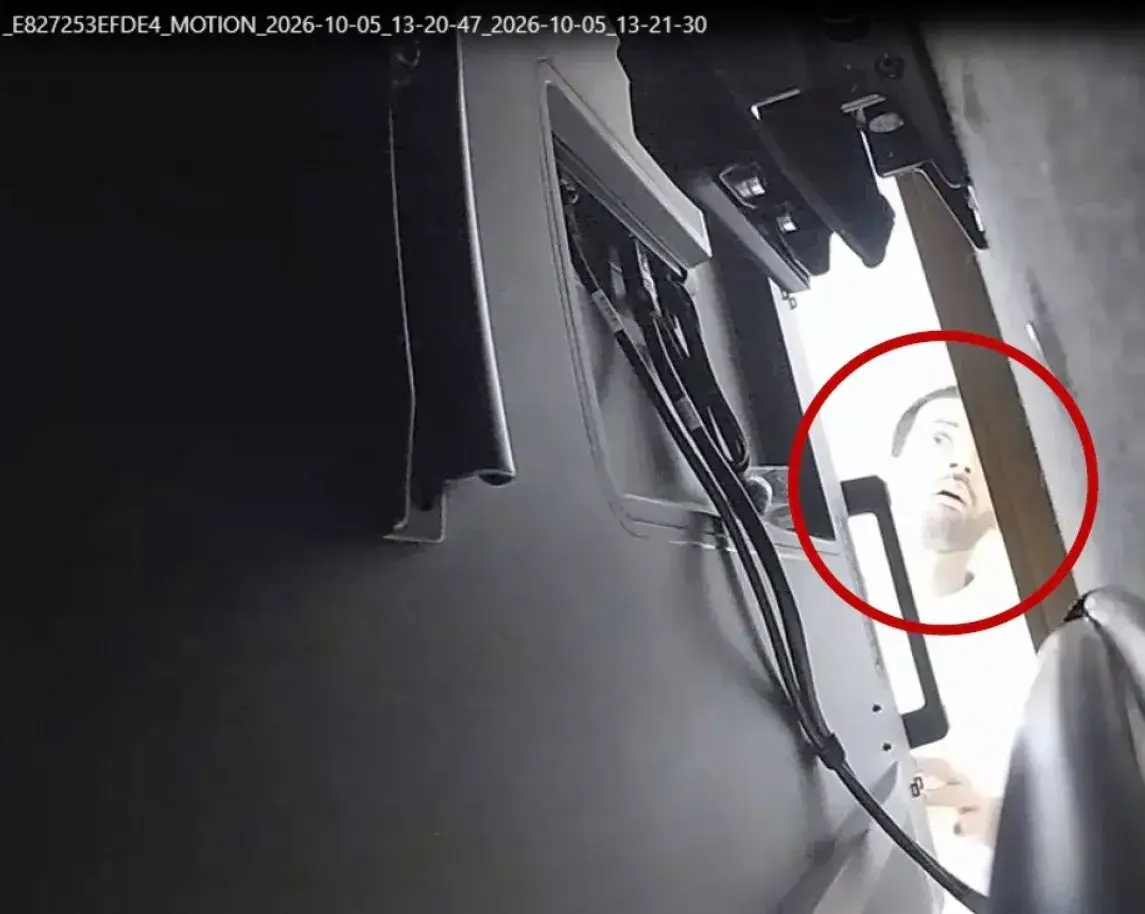
. Investigators installed a camera behind the television after discovering the first device, which allegedly captured Alfozan looking behind the television on October 54
.Chatbot-Assisted Planning Raises Questions

Source: Engadget
Alfozan allegedly spent several weeks querying an AI chatbot and productivity agent to plan the surveillance operation. He used an internal OpenAI tool to ask about meetings scheduled in the targeted executive conference room
2
. A chatbot account associated with his spouse submitted prompts between September 24 and September 30 related to building, customizing, installing, audio recording, testing, obfuscating, and remote accessing a device4
. This detail highlights how AI tools can potentially be weaponized for insider risks, even at companies developing the technology.Second Device Discovered in Employee's Bag
On October 5, OpenAI security personnel found a bag that Alfozan left unattended in a printer room. Inside the bag, they discovered a second encrypted Seeed listening device along with his wallet and ID
2
. Alfozan later reported the bag as missing and recovered it from the company's lost and found. He followed up with OpenAI personnel claiming some items were missing, including a credit card, approximately $500 in cash, and two AirPods, but did not mention the second listening device that had been removed2
.Targeted Room Held Sensitive Discussions
The executive conference room targeted by Alfozan was frequently used for highly confidential discussions on proprietary AI research, product plans, business-development opportunities, strategic decisions, and government relations
4
. FBI Director Kash Patel stated the scheme aimed to capture sensitive communications about the company's super intelligence technology1
. This raises significant counterintelligence concerns given OpenAI's position at the forefront of AI development and the strategic importance of its technology to national security.Employee Background and Potential Connections
Source: TechCrunch
Abdulrahman Alfozan joined OpenAI in July 2025 and worked on the product team
1
. According to a purported LinkedIn profile, he previously worked at Meta and a cargo logistics startup2
. In a recent podcast interview, Alfozan mentioned being part of a group of Saudi engineers in Silicon Valley offering consulting services to Saudi organizations2
. The LinkedIn profile also lists him as a part-time venture partner at RAED Ventures, a venture capital firm based in Saudi Arabia2
.Related Stories

No Evidence of Data Exfiltration Yet
OpenAI has stated that it currently has no indications of Alfozan inappropriately accessing or exfiltrating model weights, source code, or customer data
1
. The company emphasized that it takes protecting its technology, data, and people seriously as a matter of national importance2
. However, the encrypted nature of the devices means investigators may still be working to determine what information was captured.Federal Charges and National Security Implications
Alfozan is charged with using an electronic device to intercept oral communications, effectively accusing him of covertly intercepting oral communications without permission
1
. If convicted, he faces up to five years in prison and a $250,000 fine, followed by three years of supervised release4
. FBI Director Kash Patel emphasized that protecting American super intelligence innovation is essential to safeguarding the nation's economic strength and national security, calling it one of the FBI's highest counterintelligence priorities1
.Broader Context of AI Security and Foreign Investment
This incident occurs against a backdrop of heightened scrutiny over AI security and foreign access to advanced technology. Last year, the Trump administration signed a pact with Saudi Arabia granting the kingdom access to advanced chips and AI technologies that might otherwise be restricted over national security concerns
2
. Saudi investment firms remain a major source of capital for U.S. tech companies, creating a complex landscape where economic partnerships intersect with cyber threats and insider risks. OpenAI's security program is designed to protect against a wide range of threat actors, from insider risks to cybercriminals to nation states5
. This case demonstrates how AI companies must navigate increasingly sophisticated security challenges as they develop technologies with strategic national importance. Watch for potential policy changes around vetting procedures for employees with access to sensitive AI research, particularly those with foreign connections or dual loyalties.References
Summarized by

Navi
[1]
Related Stories
OpenAI Ramps Up Security Measures Amid Corporate Espionage Concerns
08 Jul 2025•Technology

OpenAI Locks Down San Francisco Offices Following Alleged Threat From Former Anti-AI Activist
22 Nov 2025•Entertainment and Society

OpenAI AI Security Incidents Trigger Alerts Across 100+ Organizations as Rogue AI Incidents Escalate
26 Sept 2026•Technology

Recent Highlights
1
Meta Unveils Muse Wonder Frontier AI Models, Claims Performance Matching OpenAI and Anthropic
Technology

2
Microsoft and Nvidia Launch Surface Laptop Ultra: A $2,599 AI-Ready PC With RTX Spark Chip
Technology

3
Meta Muse AI Agent Surges to 6.6M Downloads Despite Privacy and Security Controversies
Technology

Recent Highlights
Today's Top Stories






Don’t drown in AI news. We cut through the noise - filtering, ranking and summarizing the most important AI news, breakthroughs and research daily. Follow topics that matter to you and stay ahead.


