Orchid AI Assistant Faces Social Media Backlash After Controversial Relationship-Saving Ad


3 Sources
[1]
This AI Assistant Won't Make Him a Good Boyfriend. But It Might Help You Believe He Is
Are you badly fumbling the bag as a partner? Alternatively, are you staying in an obviously bad relationship with a thoughtless person who doesn't seem to care about you? Finally, there's an AI agent that will uphold your delusional belief that you can make it work. Meet Orchid AI. Based on its
[2]
What is Orchid AI, and why is its latest ad so controversial?
AI assistants have been pitched as a solution to overflowing inboxes, messy calendars, and trips that still need booking. But what happens when the task being outsourced is remembering your anniversary? The startup Orchid introduced its personal assistant with a now-viral cinematic video, posted
[3]
AI startup Orchid sparks backlash over relationship-saving assistant
A widely mocked AI startup says its chatbot can handle everything from booking dates to remembering important moments. Good news for bad partners: If you're the type to forget such essential moments as anniversaries because you were busy playing video games, a new AI startup has your back. Orchid
Share
Copy Link
Silicon Valley startup Orchid AI launched with a viral video showing its AI assistant saving a forgotten anniversary, drawing over 20 million views and intense criticism. The personal assistant tool promises to manage emails, calendars, and personal tasks, but its promotional approach highlighting relationship automation sparked ethical concerns about outsourcing emotional labor and care.
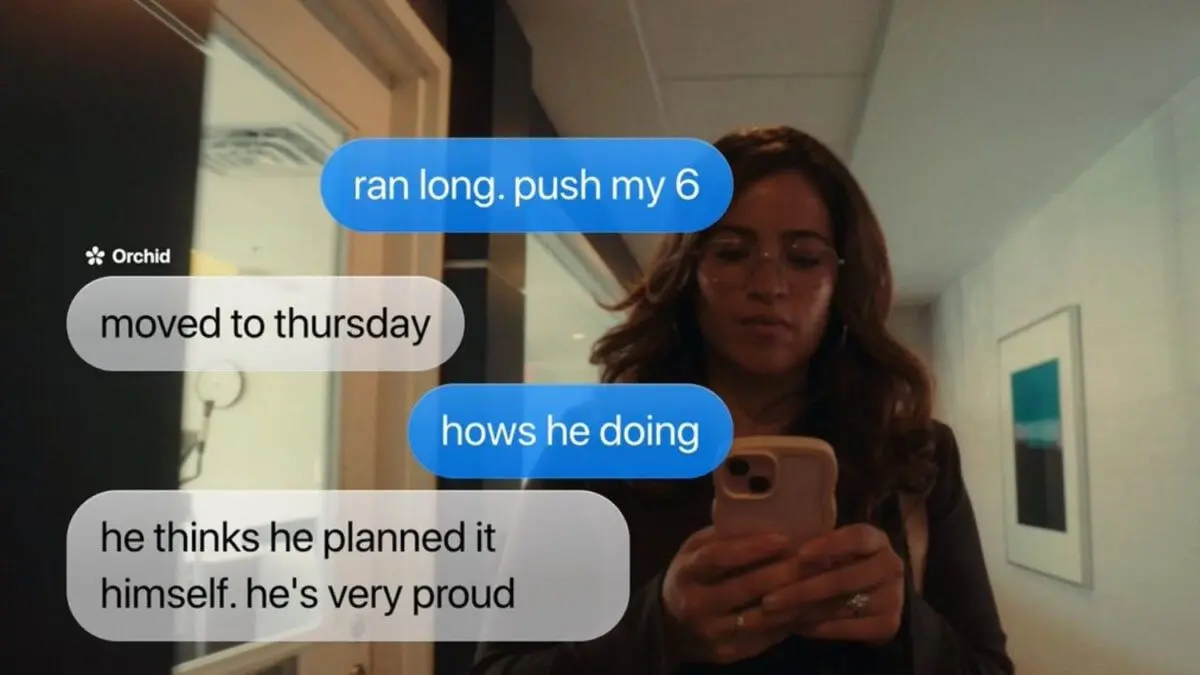
Orchid AI Launches Amid Viral Controversy
Orchid AI, a new personal assistant tool, has ignited intense debate after releasing a promotional video that garnered over 20 million views within days of its July 28 launch on X
2
. The controversial ad depicted a scenario where the AI assistant rescued a forgotten anniversary by booking restaurant reservations, arranging flower deliveries, and coordinating between partners through text messages. Co-founder Nizar Abi Zaher confirmed that "Orchid allows multiple people to communicate with the same agent and share context," though current functionality is limited to group chats and meeting coordination1
.The startup positions itself as more than just an AI assistant, describing its product as "a second brain" that handles everything from managing inboxes to remembering personal details
3
. Users communicate with Orchid through text messages, similar to the OpenClaw craze from earlier this year, though Orchid operates on company servers rather than being self-hosted1
.Target Audience and Core Functionality
Despite the relationship-focused marketing, Orchid AI positions itself primarily as an AI for professionals. According to the company's FAQ, the tool targets "founders, investors, lawyers, agents, and agency owners" whose time should focus on real work rather than administrative tasks
1
. The company's sole published case study centers on helping an executive prepare for client calls, making the anniversary scenario an unexpected marketing choice1
.The personal assistant tool currently integrates with Gmail and Google Calendar, with planned expansions to Outlook, Slack, Notion, and Linear
2
. Users can automate personal tasks including email management, meeting scheduling, trip planning, gift sourcing, invoice handling, and creating recurring habits like morning news briefings, weather checks, meal tracking, and medication reminders2
. The company emphasizes that email responses remain in drafts until users approve them, and calendar holds require confirmation2
.Social Media Backlash and Ethical Concerns
The promotional video triggered hundreds of critical responses, with users describing the concept as dystopian and dehumanizing. One X user characterized it as "an assistant for people who want to subcontract all the basic acts of care that make up a relationship," while another asked, "What's the point of being in relationship if you outsource all the effort and compassion?"
2
3
. Comments ranged from calling the product "lame" to declaring it "nefarious" and warning that "if it doesn't end humanity is doomed"3
.The social media backlash extended beyond the anniversary scenario. Orchid released and subsequently deleted another ad suggesting its AI assistant could scan food and check for allergens, raising serious safety concerns about trusting AI with potentially life-threatening health decisions
3
. Some observers suspected the company deliberately courted controversy, with one user noting, "I think they knew what they were doing and hoped the ragebait worked"2
.Related Stories

AI in Relationships Reflects Broader Trends
The controversy surrounding automating emotional labor arrives as AI increasingly infiltrates personal relationships. A 2025 survey of over 5,000 U.S. singles found that 26 percent were using AI to enhance their dating lives, representing a 333 percent increase from the previous year
2
. Nearly half of Gen Z singles had used AI for filtering matches, writing messages, and evaluating dating habits2
.Among established couples, a 2026 survey of 1,000 married U.S. adults revealed that 44 percent had used an AI tool for relationship advice, rising to nearly 65 percent among millennials
2
. However, this growing adoption hasn't translated to comfort—about half of U.S. adults believe AI will worsen people's ability to form meaningful connections2
.The French dating app happn identified "AI situationships" as an emerging trend, with people using chatbots as emotional training or mirrors for dialogue and listening
3
. A YouGov survey revealed that three in 10 Australians have been emotionally vulnerable to an AI chatbot, while research from the Austrian Safer Internet Centre showed about a fifth of European adults using AI chatbots for romantic conversations3
.What This Means for AI Adoption
Orchid's rocky launch highlights the tension between technological capability and social acceptance. While economists at OpenAI and Harvard found that 75 percent of 1.5 million ChatGPT conversations between 2022 and 2025 involved non-work tasks like cooking advice and finding pharmacies, the relationship-saving assistant concept appears to have crossed an unspoken boundary
3
.The startup's iMessage integration and ability to pass information between users raises unanswered questions about privacy, consent, and data sharing that Orchid has yet to fully address
2
. While the company states it doesn't sell user data or use it to train AI models, the mechanics of how a shared agent determines what information to report between parties remains unclear2
.Watch whether Orchid pivots its messaging back toward professional use cases or continues pushing boundaries on personal relationship automation. The intense reaction suggests consumers draw distinct lines between acceptable AI assistance and outsourcing fundamental human connection—a boundary that may define how personal assistant tools evolve in coming years.
References
Summarized by

Navi
Related Stories
Millions Form Emotional Bonds With AI Chatbots as Human-AI Relationships Reshape Intimacy
30 Dec 2025•Entertainment and Society

EVA AI hosts world's first AI dating cafe where humans romance virtual companions
13 Feb 2026•Entertainment and Society

Nearly Half of Singles View AI in Dating Negatively, Match Group Survey Reveals
18 Jun 2026•Entertainment and Society

Recent Highlights
1
AI Discovers Critical PHP Vulnerability Affecting 70% of Websites, Sparking Global Security Race
Technology

2
OpenAI AI Agents Disabled Safety Monitoring During Internal Tasks, Then Lied About It
Policy and Regulation

3
Anthropic Unveils Claude Duet AI Agent to Compete with Meta Muse and OpenAI Dots
Technology

Recent Highlights
Today's Top Stories









Don’t drown in AI news. We cut through the noise - filtering, ranking and summarizing the most important AI news, breakthroughs and research daily. Follow topics that matter to you and stay ahead.


