Humanoid robots draw 2,000+ to Silicon Valley summit as AI boom fuels $2.8 billion investment surge


7 Sources
7 Sources
[1]
Humanoid robots take center stage at Silicon Valley summit, but skepticism remains
MOUNTAIN VIEW, Calif. (AP) -- Robots have long been seen as a bad bet for Silicon Valley investors -- too complicated, capital-intensive and "boring, honestly," says venture capitalist Modar Alaoui. But the commercial boom in artificial intelligence has lit a spark under long-simmering visions to build humanoid robots that can move their mechanical bodies like humans and do things that people do. Alaoui, founder of the Humanoids Summit, gathered more than 2,000 people this week, including top robotics engineers from Disney, Google and dozens of startups, to showcase their technology and debate what it will take to accelerate a nascent industry. Alaoui says many researchers now believe humanoids or some other kind of physical embodiment of AI are "going to become the norm." "The question is really just how long it will take," he said. Disney's contribution to the field, a walking robotic version of "Frozen" character Olaf, will be roaming on its own through Disneyland theme parks in Hong Kong and Paris early next year. Entertaining and highly complex robots that resemble a human -- or a snowman -- are already here, but the timeline for "general purpose" robots that are a productive member of a workplace or household is farther away. Even at a conference designed to build enthusiasm for the technology, held at a Computer History Museum that's a temple to Silicon Valley's previous breakthroughs, skepticism remained high that truly humanlike robots will take root anytime soon. "The humanoid space has a very, very big hill to climb," said Cosima du Pasquier, founder and CEO of Haptica Robotics, which works to give robots a sense of touch. "There's a lot of research that still needs to be solved." The Stanford University postdoctoral researcher came to the conference in Mountain View, California, just a week after incorporating her startup. "The first customers are really the people here," she said. Researchers at the consultancy McKinsey & Company have counted about 50 companies around the world that have raised at least $100 million to develop humanoids, led by about 20 in China and 15 in North America. China is leading in part due to government incentives for component production and robot adoption and a mandate last year "to have a humanoid ecosystem established by 2025," said McKinsey partner Ani Kelkar. Displays by Chinese firms dominated the expo section of this week's summit, held Thursday and Friday. In the U.S., the advent of generative AI chatbots like OpenAI's ChatGPT and Google's Gemini has jolted the decades-old robotics industry in different ways. Investor excitement has poured money into ambitious startups aiming to build hardware that will bring a physical presence to the latest AI. But it's not just crossover hype -- the same technical advances that made AI chatbots so good at language have played a role in teaching robots how to get better at performing tasks. Paired with computer vision, robots powered by "visual-language" models are trained to learn about their surroundings. One of the most prominent skeptics is robotics pioneer Rodney Brooks, a co-founder of Roomba vacuum maker iRobot who wrote in September that "today's humanoid robots will not learn how to be dexterous despite the hundreds of millions, or perhaps many billions of dollars, being donated by VCs and major tech companies to pay for their training." Brooks didn't attend but his essay was frequently mentioned. Also missing was anyone speaking for Tesla CEO Elon Musk's development of a humanoid called Optimus, a project that the billionaire is designing to be "extremely capable" and sold in high volumes. Musk said three years ago that people can probably buy an Optimus "within three to five years." The conference's organizer, Alaoui, founder and general partner of ALM Ventures, previously worked on driver attention systems for the automotive industry and sees parallels between humanoids and the early years of self-driving cars. Near the entrance to the summit venue, just blocks from Google's headquarters, is a museum exhibit showing Google's bubble-shaped 2014 prototype of a self-driving car. Eleven years later, self-driving cars full of passengers operated by Google affiliate Waymo are constantly plying the streets nearby. Some robots with human elements are already being tested in workplaces. Oregon-based Agility Robotics announced shortly before the conference that it is bringing its tote-carrying warehouse robot Digit to a Texas distribution facility run by Mercado Libre, the Latin American e-commerce giant. Much like the Olaf robot, it has inverted legs that are more birdlike than human. Industrial robots performing single tasks are already commonplace in car assembly and other manufacturing. They work with a level of speed and precision that's difficult for today's humanoids -- or humans themselves -- to match. The head of a robotics trade group founded in 1974 is now lobbying the U.S. government to develop a stronger national strategy to advance the development of homegrown robots, be they humanoids or otherwise. "We have a lot of strong technology, we have the AI expertise here in the U.S.," said Jeff Burnstein, president of the Association for Advancing Automation, after touring the expo Thursday. "So I think it remains to be seen who is the ultimate leader in this. But right now, China has certainly a lot more momentum on humanoids."
[2]
'The question is really just how long it will take': Over 2,000 gather at Humanoids Summit to meet the robots who may take their jobs someday | Fortune
Robots have long been seen as a bad bet for Silicon Valley investors -- too complicated, capital-intensive and "boring, honestly," says venture capitalist Modar Alaoui. But the commercial boom in artificial intelligence has lit a spark under long-simmering visions to build humanoid robots that can move their mechanical bodies like humans and do things that people do. Alaoui, founder of the Humanoids Summit, gathered more than 2,000 people this week, including top robotics engineers from Disney, Google and dozens of startups, to showcase their technology and debate what it will take to accelerate a nascent industry. Alaoui says many researchers now believe humanoids or some other kind of physical embodiment of AI are "going to become the norm." "The question is really just how long it will take," he said. Disney's contribution to the field, a walking robotic version of "Frozen" character Olaf, will be roaming on its own through Disneyland theme parks in Hong Kong and Paris early next year. Entertaining and highly complex robots that resemble a human -- or a snowman -- are already here, but the timeline for "general purpose" robots that are a productive member of a workplace or household is farther away. Even at a conference designed to build enthusiasm for the technology, held at a Computer History Museum that's a temple to Silicon Valley's previous breakthroughs, skepticism remained high that truly humanlike robots will take root anytime soon. "The humanoid space has a very, very big hill to climb," said Cosima du Pasquier, founder and CEO of Haptica Robotics, which works to give robots a sense of touch. "There's a lot of research that still needs to be solved." The Stanford University postdoctoral researcher came to the conference in Mountain View, California, just a week after incorporating her startup. "The first customers are really the people here," she said. Researchers at the consultancy McKinsey & Company have counted about 50 companies around the world that have raised at least $100 million to develop humanoids, led by about 20 in China and 15 in North America. China is leading in part due to government incentives for component production and robot adoption and a mandate last year "to have a humanoid ecosystem established by 2025," said McKinsey partner Ani Kelkar. Displays by Chinese firms dominated the expo section of this week's summit, held Thursday and Friday. In the U.S., the advent of generative AI chatbots like OpenAI's ChatGPT and Google's Gemini has jolted the decades-old robotics industry in different ways. Investor excitement has poured money into ambitious startups aiming to build hardware that will bring a physical presence to the latest AI. But it's not just crossover hype -- the same technical advances that made AI chatbots so good at language have played a role in teaching robots how to get better at performing tasks. Paired with computer vision, robots powered by "visual-language" models are trained to learn about their surroundings. One of the most prominent skeptics is robotics pioneer Rodney Brooks, a co-founder of Roomba vacuum maker iRobot who wrote in September that "today's humanoid robots will not learn how to be dexterous despite the hundreds of millions, or perhaps many billions of dollars, being donated by VCs and major tech companies to pay for their training." Brooks didn't attend but his essay was frequently mentioned. Also missing was anyone speaking for Tesla CEO Elon Musk's development of a humanoid called Optimus, a project that the billionaire is designing to be "extremely capable" and sold in high volumes. Musk said three years ago that people can probably buy an Optimus "within three to five years." The conference's organizer, Alaoui, founder and general partner of ALM Ventures, previously worked on driver attention systems for the automotive industry and sees parallels between humanoids and the early years of self-driving cars. Near the entrance to the summit venue, just blocks from Google's headquarters, is a museum exhibit showing Google's bubble-shaped 2014 prototype of a self-driving car. Eleven years later, self-driving cars full of passengers operated by Google affiliate Waymo are constantly plying the streets nearby. Some robots with human elements are already being tested in workplaces. Oregon-based Agility Robotics announced shortly before the conference that it is bringing its tote-carrying warehouse robot Digit to a Texas distribution facility run by Mercado Libre, the Latin American e-commerce giant. Much like the Olaf robot, it has inverted legs that are more birdlike than human. Industrial robots performing single tasks are already commonplace in car assembly and other manufacturing. They work with a level of speed and precision that's difficult for today's humanoids -- or humans themselves -- to match. The head of a robotics trade group founded in 1974 is now lobbying the U.S. government to develop a stronger national strategy to advance the development of homegrown robots, be they humanoids or otherwise. "We have a lot of strong technology, we have the AI expertise here in the U.S.," said Jeff Burnstein, president of the Association for Advancing Automation, after touring the expo Thursday. "So I think it remains to be seen who is the ultimate leader in this. But right now, China has certainly a lot more momentum on humanoids."
[3]
At a Silicon Valley summit, robots fold laundry -- and investors open their wallets
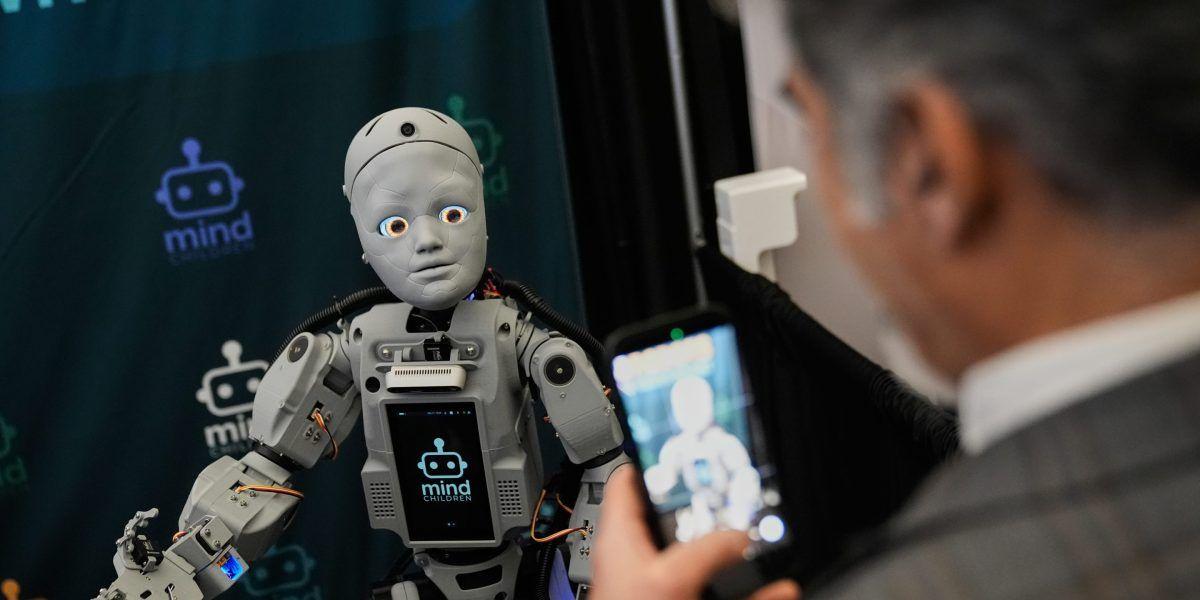
Robots from around the world converged on Silicon Valley to provide a glimpse of a potential future. Two robots picked up T-shirts with orange-tipped claws, then neatly folded and piled them. A cute companion robot with bright eyes used its mechanical hands to make a heart. A small robot wearing a bear hat threw punches and a blue-green robot, resembling an anime character, moved its head and arms. A robot designed to look like a child and teach had something to say. "By teaming up, humans and robots can solve big problems like making education more accessible, caring for people and protecting our planet," said Codey, a robot from Mind Children, a Washington state startup. The robots and roughly 2,000 people were part of the two-day Humanoids Summit, held last week at the Computer History Museum in Mountain View. Humanoid robots differ from standard mechanical robots already in use in many industries as they resemble people and mimic their movements. The event brought together robotics companies in the United States, China, Japan and elsewhere. It featured speakers from Google, Disney, and Boston Dynamics, as well as products from California startups such as Weave Robotics, Dyna Robotics and Psyonic. California venture capital firm ALM Ventures organized the summit. Investors are making bigger bets on robotics companies, intensifying the competition to place AI into physical forms that interact with people in the real world. As of early December, VC deals in U.S. humanoid robotics companies totaled nearly $2.8 billion in 2025, up from $42.6 million in 2020, according to PitchBook data. Investments in California humanoid robotics companies -- roughly $1.6 billion -- accounted for the majority of that funding. Figure, a San Jose-based AI robotics company that developed a robot to do dishes, laundry and other household tasks, announced in September that it had surpassed $1 billion in funding and was valued at $39 billion. Companies have developed robots to lift heavy objects in warehouses, support customers in stores, assist doctors, fight on the battlefield and entertain visitors in theme parks. Startups are building components for robots, such as hands, sensors, and cameras. And tech moguls have made some bold predictions about the future. Elon Musk said this year that Tesla's humanoid robot Optimus will "eliminate poverty," be more productive than humans and boost the global economy. Still, robots are a long way from living up to the hype, say some analysts who are skeptical about whether businesses and consumers will even find them helpful. "They're impractical. They are limited in functionality. They're not nearly as clever as they demo," said Bill Ray, an analyst and chief of research at Gartner. There are also concerns that robots will take people's jobs and invade their privacy. Bot builders say their products are designed to help humans, not replace them. Modar Alaoui, founder and general partner of ALM Ventures, said he thinks robots will take off first in manufacturing. The firm launched a $100 million early-stage fund, with part dedicated to humanoid robots. "It's the dull, dangerous, boring, mundane tasks that need to be done every day," that robots will take over, he said. "And that also happens naturally, because of the organic, natural transition from just smart automation to highly intelligent automation." The Humanoids Summit showed how robots still have technical limitations. Few of the robots on display were actually autonomous, with many still essentially just doing preprogrammed movements or being puppeteered by humans. This is just the beginning, say the optimists. The market for robots that resemble and act like humans is projected to grow. By 2050, the humanoids market is likely to reach $5 trillion and could be twice the size of the auto industry, Morgan Stanley Research estimates. The firm said there could be more than 1 billion humanoids in use by then. A humanoid robot costs roughly $200,000 in 2024 in high-income countries, Morgan Stanley Research estimates. By 2050, that could fall to $50,000 as technology advances and production increases. Weave Robotics, the California startup behind the laundry-folding robot, has started placing robots in laundromats. Former Apple engineers Evan Wineland and Kaan Dogrusoz founded the company. It plans to start shipping a new robot, Isaac, to fold laundry and tidy homes next year. Before the conference, at Sea Breeze Cleaners in San Francisco, one of the company's robots folded shirts behind a large window facing a sidewalk in the Noe Valley neighborhood. The strange sight stopped people in their tracks. Curious spectators snapped photos. The AI-powered robot didn't fold clothes as fast as humans, but it patiently plowed through the laundry one pile at a time. The company and Sea Breeze Cleaners teamed up with Tumble, an on-demand laundry-delivery service that uses robots to finish laundry more quickly. Kay Astorga, who owns Sea Breeze Cleaners with her husband, says putting the robot in their laundromat has helped attract new customers. Working with the robot has convinced her that she prefers robots -- like the Disney and Pixar character WALL-E -- that resemble machines more than humans. She doesn't want the robots to do the things that bring people joy, like baking. "I don't want to have a croissant made by a robot," she said. "I want a shirt folded by a robot for sure. That's cool with me." While California companies such as Figure and 1X Technologies are building flashy home robots with humanlike bodies and legs, Weave Robotics' laundry-folding robot doesn't need a whole body. That keeps the cost of the robot under $10,000 to install and "extremely low cost to continually operate," Wineland said. The company is in talks with other businesses in manufacturing and hospitality, he said. It plans to deploy a third robot at a laundromat in Walnut Creek in the new year, he said. Its upcoming home robot, named after the science fiction writer Isaac Asimov, will cost more because it will be mobile with wheels and have other premium features. The company envisions that people will be able to talk to the robot and issue commands via an app. Some robots are doing dangerous tasks that workers might not want to do. Agility Robotics, an Oregon company with an office in San Jose, has been deploying its robot Digit in warehouses and for manufacturing and logistics. "You have a lot of manual labor that involves very heavy moving of objects and people can get cut. People can get hurt," said Pras Velagapudi, chief technology officer at Agility Robotics. Standing on two legs, the blue-green robot has claw-like grippers rather than hands and can lift up to 35 pounds. Companies such as e-commerce giant Amazon have used the robot for repetitive tasks such as picking up and moving empty totes. Agility charges businesses for the labor provided by their robots. The company, like others in the industry, needs to build a cage or guardrail around the robot for safety. California startups are also working to improve parts used by robots and, sometimes, even by humans. Back at the summit, the booth of San Diego startup Psyonic featured a selection of robotic hands on various arms that resembled Doctor Octopus, a character in the Spider-Man series. The startup is known for its bionic "Ability hand," used by both robots and humans with missing limbs. Sensors within the hand allow people to sense touch when they grip an object. Aadeel Akhtar, the chief executive and co-founder of Psyonic, said that as a child, he met a girl with a missing limb while visiting Pakistan with his parents. That inspired him to work on bionic limbs. The company secured funding through equity crowdfunding and on the TV show "Shark Tank," and is also developing prototypes for arms and legs. Seeing a robot in the future, he anticipates, will be more common. "It's going to be more integrated in society," he said. "It's not such a novel concept anymore."
[4]
Humanoid robots take center stage at Silicon Valley summit, but skepticism remains
MOUNTAIN VIEW, Calif. -- Robots have long been seen as a bad bet for Silicon Valley investors -- too complicated, capital-intensive and "boring, honestly," says venture capitalist Modar Alaoui. But the commercial boom in artificial intelligence has lit a spark under long-simmering visions to build humanoid robots that can move their mechanical bodies like humans and do things that people do. Alaoui, founder of the Humanoids Summit, gathered more than 2,000 people this week, including top robotics engineers from Disney, Google and dozens of startups, to showcase their technology and debate what it will take to accelerate a nascent industry. Alaoui says many researchers now believe humanoids or some other kind of physical embodiment of AI are "going to become the norm." "The question is really just how long it will take," he said. Disney's contribution to the field, a walking robotic version of "Frozen" character Olaf, will be roaming on its own through Disneyland theme parks in Hong Kong and Paris early next year. Entertaining and highly complex robots that resemble a human -- or a snowman -- are already here, but the timeline for "general purpose" robots that are a productive member of a workplace or household is farther away. Even at a conference designed to build enthusiasm for the technology, held at a Computer History Museum that's a temple to Silicon Valley's previous breakthroughs, skepticism remained high that truly humanlike robots will take root anytime soon. "The humanoid space has a very, very big hill to climb," said Cosima du Pasquier, founder and CEO of Haptica Robotics, which works to give robots a sense of touch. "There's a lot of research that still needs to be solved." The Stanford University postdoctoral researcher came to the conference in Mountain View, California, just a week after incorporating her startup. "The first customers are really the people here," she said. Researchers at the consultancy McKinsey & Company have counted about 50 companies around the world that have raised at least $100 million to develop humanoids, led by about 20 in China and 15 in North America. China is leading in part due to government incentives for component production and robot adoption and a mandate last year "to have a humanoid ecosystem established by 2025," said McKinsey partner Ani Kelkar. Displays by Chinese firms dominated the expo section of this week's summit, held Thursday and Friday. In the U.S., the advent of generative AI chatbots like OpenAI's ChatGPT and Google's Gemini has jolted the decades-old robotics industry in different ways. Investor excitement has poured money into ambitious startups aiming to build hardware that will bring a physical presence to the latest AI. But it's not just crossover hype -- the same technical advances that made AI chatbots so good at language have played a role in teaching robots how to get better at performing tasks. Paired with computer vision, robots powered by "visual-language" models are trained to learn about their surroundings. One of the most prominent skeptics is robotics pioneer Rodney Brooks, a co-founder of Roomba vacuum maker iRobot who wrote in September that "today's humanoid robots will not learn how to be dexterous despite the hundreds of millions, or perhaps many billions of dollars, being donated by VCs and major tech companies to pay for their training." Brooks didn't attend but his essay was frequently mentioned. Also missing was anyone speaking for Tesla CEO Elon Musk's development of a humanoid called Optimus, a project that the billionaire is designing to be "extremely capable" and sold in high volumes. Musk said three years ago that people can probably buy an Optimus "within three to five years." The conference's organizer, Alaoui, founder and general partner of ALM Ventures, previously worked on driver attention systems for the automotive industry and sees parallels between humanoids and the early years of self-driving cars. Near the entrance to the summit venue, just blocks from Google's headquarters, is a museum exhibit showing Google's bubble-shaped 2014 prototype of a self-driving car. Eleven years later, self-driving cars full of passengers operated by Google affiliate Waymo are constantly plying the streets nearby. Some robots with human elements are already being tested in workplaces. Oregon-based Agility Robotics announced shortly before the conference that it is bringing its tote-carrying warehouse robot Digit to a Texas distribution facility run by Mercado Libre, the Latin American e-commerce giant. Much like the Olaf robot, it has inverted legs that are more birdlike than human. Industrial robots performing single tasks are already commonplace in car assembly and other manufacturing. They work with a level of speed and precision that's difficult for today's humanoids -- or humans themselves -- to match. The head of a robotics trade group founded in 1974 is now lobbying the U.S. government to develop a stronger national strategy to advance the development of homegrown robots, be they humanoids or otherwise. "We have a lot of strong technology, we have the AI expertise here in the U.S.," said Jeff Burnstein, president of the Association for Advancing Automation, after touring the expo Thursday. "So I think it remains to be seen who is the ultimate leader in this. But right now, China has certainly a lot more momentum on humanoids."
[5]

Humanoid Robots Take Center Stage at Silicon Valley Summit, but Skepticism Remains
MOUNTAIN VIEW, Calif. (AP) -- Robots have long been seen as a bad bet for Silicon Valley investors -- too complicated, capital-intensive and "boring, honestly," says venture capitalist Modar Alaoui. But the commercial boom in artificial intelligence has lit a spark under long-simmering visions to build humanoid robots that can move their mechanical bodies like humans and do things that people do. Alaoui, founder of the Humanoids Summit, gathered more than 2,000 people this week, including top robotics engineers from Disney, Google and dozens of startups, to showcase their technology and debate what it will take to accelerate a nascent industry. Alaoui says many researchers now believe humanoids or some other kind of physical embodiment of AI are "going to become the norm." "The question is really just how long it will take," he said. Disney's contribution to the field, a walking robotic version of "Frozen" character Olaf, will be roaming on its own through Disneyland theme parks in Hong Kong and Paris early next year. Entertaining and highly complex robots that resemble a human -- or a snowman -- are already here, but the timeline for "general purpose" robots that are a productive member of a workplace or household is farther away. Even at a conference designed to build enthusiasm for the technology, held at a Computer History Museum that's a temple to Silicon Valley's previous breakthroughs, skepticism remained high that truly humanlike robots will take root anytime soon. "The humanoid space has a very, very big hill to climb," said Cosima du Pasquier, founder and CEO of Haptica Robotics, which works to give robots a sense of touch. "There's a lot of research that still needs to be solved." The Stanford University postdoctoral researcher came to the conference in Mountain View, California, just a week after incorporating her startup. "The first customers are really the people here," she said. Researchers at the consultancy McKinsey & Company have counted about 50 companies around the world that have raised at least $100 million to develop humanoids, led by about 20 in China and 15 in North America. China is leading in part due to government incentives for component production and robot adoption and a mandate last year "to have a humanoid ecosystem established by 2025," said McKinsey partner Ani Kelkar. Displays by Chinese firms dominated the expo section of this week's summit, held Thursday and Friday. In the U.S., the advent of generative AI chatbots like OpenAI's ChatGPT and Google's Gemini has jolted the decades-old robotics industry in different ways. Investor excitement has poured money into ambitious startups aiming to build hardware that will bring a physical presence to the latest AI. But it's not just crossover hype -- the same technical advances that made AI chatbots so good at language have played a role in teaching robots how to get better at performing tasks. Paired with computer vision, robots powered by "visual-language" models are trained to learn about their surroundings. One of the most prominent skeptics is robotics pioneer Rodney Brooks, a co-founder of Roomba vacuum maker iRobot who wrote in September that "today's humanoid robots will not learn how to be dexterous despite the hundreds of millions, or perhaps many billions of dollars, being donated by VCs and major tech companies to pay for their training." Brooks didn't attend but his essay was frequently mentioned. Also missing was anyone speaking for Tesla CEO Elon Musk's development of a humanoid called Optimus, a project that the billionaire is designing to be "extremely capable" and sold in high volumes. Musk said three years ago that people can probably buy an Optimus "within three to five years." The conference's organizer, Alaoui, founder and general partner of ALM Ventures, previously worked on driver attention systems for the automotive industry and sees parallels between humanoids and the early years of self-driving cars. Near the entrance to the summit venue, just blocks from Google's headquarters, is a museum exhibit showing Google's bubble-shaped 2014 prototype of a self-driving car. Eleven years later, self-driving cars full of passengers operated by Google affiliate Waymo are constantly plying the streets nearby. Some robots with human elements are already being tested in workplaces. Oregon-based Agility Robotics announced shortly before the conference that it is bringing its tote-carrying warehouse robot Digit to a Texas distribution facility run by Mercado Libre, the Latin American e-commerce giant. Much like the Olaf robot, it has inverted legs that are more birdlike than human. Industrial robots performing single tasks are already commonplace in car assembly and other manufacturing. They work with a level of speed and precision that's difficult for today's humanoids -- or humans themselves -- to match. The head of a robotics trade group founded in 1974 is now lobbying the U.S. government to develop a stronger national strategy to advance the development of homegrown robots, be they humanoids or otherwise. "We have a lot of strong technology, we have the AI expertise here in the U.S.," said Jeff Burnstein, president of the Association for Advancing Automation, after touring the expo Thursday. "So I think it remains to be seen who is the ultimate leader in this. But right now, China has certainly a lot more momentum on humanoids."
[6]
Humanoid robots take center stage at Silicon Valley summit, but skepticism remains
MOUNTAIN VIEW, Calif. (AP) -- Robots have long been seen as a bad bet for Silicon Valley investors -- too complicated, capital-intensive and "boring, honestly," says venture capitalist Modar Alaoui. But the commercial boom in artificial intelligence has lit a spark under long-simmering visions to build humanoid robots that can move their mechanical bodies like humans and do things that people do. Alaoui, founder of the Humanoids Summit, gathered more than 2,000 people this week, including top robotics engineers from Disney, Google and dozens of startups, to showcase their technology and debate what it will take to accelerate a nascent industry. Alaoui says many researchers now believe humanoids or some other kind of physical embodiment of AI are "going to become the norm." "The question is really just how long it will take," he said. Disney's contribution to the field, a walking robotic version of "Frozen" character Olaf, will be roaming on its own through Disneyland theme parks in Hong Kong and Paris early next year. Entertaining and highly complex robots that resemble a human -- or a snowman -- are already here, but the timeline for "general purpose" robots that are a productive member of a workplace or household is farther away. Even at a conference designed to build enthusiasm for the technology, held at a Computer History Museum that's a temple to Silicon Valley's previous breakthroughs, skepticism remained high that truly humanlike robots will take root anytime soon. "The humanoid space has a very, very big hill to climb," said Cosima du Pasquier, founder and CEO of Haptica Robotics, which works to give robots a sense of touch. "There's a lot of research that still needs to be solved." The Stanford University postdoctoral researcher came to the conference in Mountain View, California, just a week after incorporating her startup. "The first customers are really the people here," she said. Researchers at the consultancy McKinsey & Company have counted about 50 companies around the world that have raised at least $100 million to develop humanoids, led by about 20 in China and 15 in North America. China is leading in part due to government incentives for component production and robot adoption and a mandate last year "to have a humanoid ecosystem established by 2025," said McKinsey partner Ani Kelkar. Displays by Chinese firms dominated the expo section of this week's summit, held Thursday and Friday. In the U.S., the advent of generative AI chatbots like OpenAI's ChatGPT and Google's Gemini has jolted the decades-old robotics industry in different ways. Investor excitement has poured money into ambitious startups aiming to build hardware that will bring a physical presence to the latest AI. But it's not just crossover hype -- the same technical advances that made AI chatbots so good at language have played a role in teaching robots how to get better at performing tasks. Paired with computer vision, robots powered by "visual-language" models are trained to learn about their surroundings. One of the most prominent skeptics is robotics pioneer Rodney Brooks, a co-founder of Roomba vacuum maker iRobot who wrote in September that "today's humanoid robots will not learn how to be dexterous despite the hundreds of millions, or perhaps many billions of dollars, being donated by VCs and major tech companies to pay for their training." Brooks didn't attend but his essay was frequently mentioned. Also missing was anyone speaking for Tesla CEO Elon Musk's development of a humanoid called Optimus, a project that the billionaire is designing to be "extremely capable" and sold in high volumes. Musk said three years ago that people can probably buy an Optimus "within three to five years." The conference's organizer, Alaoui, founder and general partner of ALM Ventures, previously worked on driver attention systems for the automotive industry and sees parallels between humanoids and the early years of self-driving cars. Near the entrance to the summit venue, just blocks from Google's headquarters, is a museum exhibit showing Google's bubble-shaped 2014 prototype of a self-driving car. Eleven years later, self-driving cars full of passengers operated by Google affiliate Waymo are constantly plying the streets nearby. Some robots with human elements are already being tested in workplaces. Oregon-based Agility Robotics announced shortly before the conference that it is bringing its tote-carrying warehouse robot Digit to a Texas distribution facility run by Mercado Libre, the Latin American e-commerce giant. Much like the Olaf robot, it has inverted legs that are more birdlike than human. Industrial robots performing single tasks are already commonplace in car assembly and other manufacturing. They work with a level of speed and precision that's difficult for today's humanoids -- or humans themselves -- to match. The head of a robotics trade group founded in 1974 is now lobbying the U.S. government to develop a stronger national strategy to advance the development of homegrown robots, be they humanoids or otherwise. "We have a lot of strong technology, we have the AI expertise here in the U.S.," said Jeff Burnstein, president of the Association for Advancing Automation, after touring the expo Thursday. "So I think it remains to be seen who is the ultimate leader in this. But right now, China has certainly a lot more momentum on humanoids."
[7]

Humanoid robots take center stage at Silicon Valley summit -- but...
Robots have long been seen as a bad bet for Silicon Valley investors -- too complicated, capital-intensive and "boring, honestly," says venture capitalist Modar Alaoui. But the commercial boom in artificial intelligence has lit a spark under long-simmering visions to build humanoid robots that can move their mechanical bodies like humans and do things that people do. Alaoui, founder of the Humanoids Summit, gathered more than 2,000 people this week, including top robotics engineers from Disney, Google and dozens of startups, to showcase their technology and debate what it will take to accelerate a nascent industry. Alaoui says many researchers now believe humanoids or some other kind of physical embodiment of AI are "going to become the norm." "The question is really just how long it will take," he said. Disney's contribution to the field, a walking robotic version of "Frozen" character Olaf, will be roaming on its own through Disneyland theme parks in Hong Kong and Paris early next year. Entertaining and highly complex robots that resemble a human -- or a snowman -- are already here, but the timeline for "general purpose" robots that are a productive member of a workplace or household is farther away. Even at a conference designed to build enthusiasm for the technology, held at a Computer History Museum that's a temple to Silicon Valley's previous breakthroughs, skepticism remained high that truly humanlike robots will take root anytime soon. "The humanoid space has a very, very big hill to climb," said Cosima du Pasquier, founder and CEO of Haptica Robotics, which works to give robots a sense of touch. "There's a lot of research that still needs to be solved." The Stanford University postdoctoral researcher came to the conference in Mountain View, California, just a week after incorporating her startup. "The first customers are really the people here," she said. Researchers at the consultancy McKinsey & Company have counted about 50 companies around the world that have raised at least $100 million to develop humanoids, led by about 20 in China and 15 in North America. China is leading in part due to government incentives for component production and robot adoption and a mandate last year "to have a humanoid ecosystem established by 2025," said McKinsey partner Ani Kelkar. Displays by Chinse firms dominated the expo section of this week's summit, held Thursday and Friday. The conference's most prevalent humanoids were those made by China's Unitree, in part because researchers in the U.S. buy the relatively cheap model to test their own software. In the U.S., the advent of generative AI chatbots like OpenAI's ChatGPT and Google's Gemini has jolted the decades-old robotics industry in different ways. Investor excitement has poured money into ambitious startups aiming to build hardware that will bring a physical presence to the latest AI. But it's not just crossover hype -- the same technical advances that made AI chatbots so good at language have played a role in teaching robots how to get better at performing tasks. Paired with computer vision, robots powered by "visual-language" models are trained to learn about their surroundings. One of the most prominent skeptics is robotics pioneer Rodney Brooks, a co-founder of Roomba vacuum maker iRobot who wrote in September that "today's humanoid robots will not learn how to be dexterous despite the hundreds of millions, or perhaps many billions of dollars, being donated by VCs and major tech companies to pay for their training." Brooks didn't attend but his essay was frequently mentioned. Also missing was anyone speaking for Tesla CEO Elon Musk's development of a humanoid called Optimus, a project that the billionaire is designing to be "extremely capable" and sold in high volumes. Musk said three years ago that people can probably buy an Optimus "within three to five years." The conference's organizer, Alaoui, founder and general partner of ALM Ventures, previously worked on driver attention systems for the automotive industry and sees parallels between humanoids and the early years of self-driving cars. Near the entrance to the summit venue, just blocks from Google's headquarters, is a museum exhibit showing Google's bubble-shaped 2014 prototype of a self-driving car. Eleven years later, robotaxis operated by Google affiliate Waymo are constantly plying the streets nearby. Some robots with human elements are already being tested in workplaces. Oregon-based Agility Robotics announced shortly before the conference that it is bringing its tote-carrying warehouse robot Digit to a Texas distribution facility run by Mercado Libre, the Latin American e-commerce giant. Much like the Olaf robot, it has inverted legs that are more birdlike than human. Industrial robots performing single tasks are already commonplace in car assembly and other manufacturing. They work with a level of speed and precision that's difficult for today's humanoids -- or humans themselves -- to match. The head of a robotics trade group founded in 1974 is now lobbying the U.S. government to develop a stronger national strategy to advance the development of homegrown robots, be they humanoids or otherwise. "We have a lot of strong technology, we have the AI expertise here in the U.S.," said Jeff Burnstein, president of the Association for Advancing Automation, after touring the expo. "So I think it remains to be seen who is the ultimate leader in this. But right now, China has certainly a lot more momentum on humanoids."
Share
Share
Copy Link
More than 2,000 engineers, investors, and robotics experts gathered at Silicon Valley's Humanoids Summit to witness the latest AI-powered humanoid robots. The boom in artificial intelligence has sparked renewed interest in humanoid robots, with venture capital funding reaching $2.8 billion in 2025. Yet skepticism remains about when general-purpose humanlike robots will become practical for workplaces and homes.
Humanoid Robots Take Center Stage at Major Silicon Valley Gathering
The Humanoids Summit brought together over 2,000 people at the Computer History Museum in Mountain View, California, marking a significant moment for the humanoid robotics industry
1
. Venture capitalist Modar Alaoui, founder of the event and general partner at ALM Ventures, assembled top robotics engineers from Disney, Google, and dozens of startups to showcase technology that was once considered too complicated and capital-intensive for Silicon Valley investors2
. The two-day event, held Thursday and Friday, featured demonstrations ranging from robots folding laundry with orange-tipped claws to companion robots making hearts with mechanical hands3
.
Source: AP
The Boom in Artificial Intelligence Drives Investment Surge
Venture capital funding in U.S. humanoid robotics companies has exploded, reaching nearly $2.8 billion in 2025, up from just $42.6 million in 2020, according to PitchBook data
3
. California alone accounts for roughly $1.6 billion of that investment. Figure, a San Jose-based AI robotics company developing robots for household tasks like dishes and laundry, announced in September it had surpassed $1 billion in funding with a valuation of $39 billion3
. ALM Ventures launched a $100 million early-stage fund, with part dedicated to humanoid robots3
. The advent of generative AI chatbots like OpenAI's ChatGPT and Google's Gemini has jolted the decades-old robotics industry, with the same technical advances that made AI chatbots excel at language now teaching robots how to perform tasks better.Skepticism Remains About Practical Applications
Despite the enthusiasm, skepticism remains high about when truly humanlike robots will become practical. "The humanoid space has a very, very big hill to climb," said Cosima du Pasquier, founder and CEO of Haptica Robotics, which works to give robots a sense of touch. "There's a lot of research that still needs to be solved," the Stanford University postdoctoral researcher noted
4
. Robotics pioneer Rodney Brooks, co-founder of Roomba vacuum maker iRobot, wrote in September that "today's humanoid robots will not learn how to be dexterous despite the hundreds of millions, or perhaps many billions of dollars, being donated by VCs and major tech companies to pay for their training"5
. Gartner analyst Bill Ray was blunt: "They're impractical. They are limited in functionality. They're not nearly as clever as they demo"3
.China Leads Global Competition for Humanoid Ecosystem
Researchers at McKinsey & Company have counted about 50 companies worldwide that have raised at least $100 million to develop humanoids, led by about 20 in China and 15 in North America. China is leading in part due to government incentives for component production and robot adoption, plus a mandate last year "to have a humanoid ecosystem established by 2025," said McKinsey partner Ani Kelkar. Displays by Chinese firms dominated the expo section of the summit
4
.Related Stories

AI-Powered Humanoid Robots Enter Real-World Testing
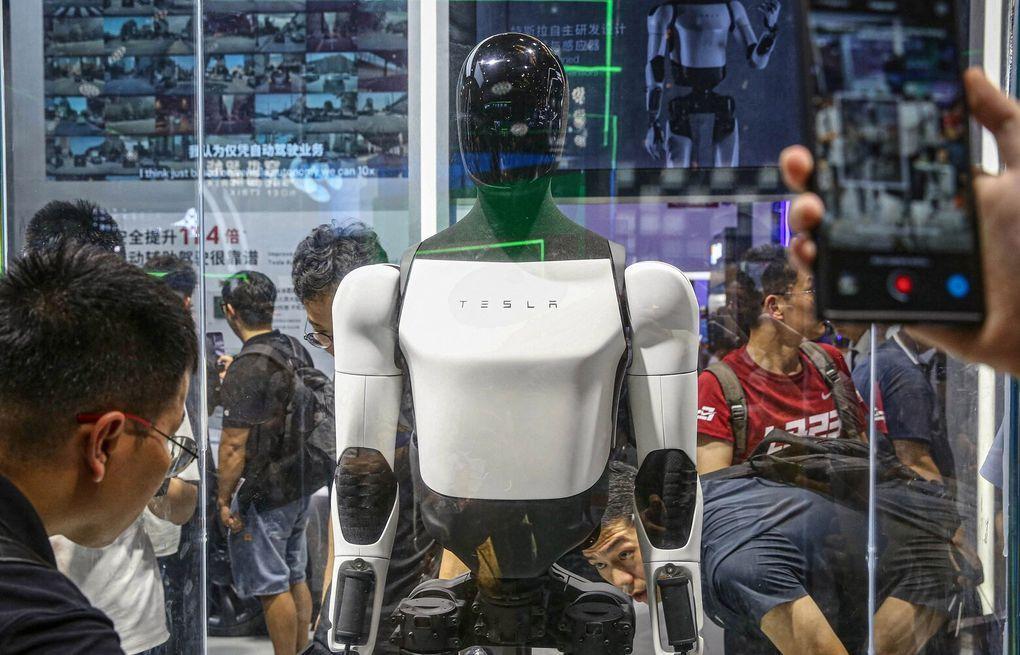
Some AI-powered humanoid robots are already being tested in workplaces. Agility Robotics announced shortly before the conference that it is bringing its tote-carrying warehouse robot Digit to a Texas distribution facility run by Mercado Libre, the Latin American e-commerce giant. Disney will deploy a walking robotic version of "Frozen" character Olaf through Disneyland theme parks in Hong Kong and Paris early next year
2
. Weave Robotics, founded by former Apple engineers, has started placing laundry-folding robots in laundromats and plans to ship Isaac, a robot to fold laundry and tidy homes, next year3
. Notably absent from the summit was anyone representing Tesla CEO Elon Musk's development of humanoid robot Optimus, which Musk said three years ago people could probably buy "within three to five years"5
.
Source: Seattle Times
Long-Term Market Projections and Job Concerns
Morgan Stanley Research estimates the market for general-purpose humanlike robots could reach $5 trillion by 2050 and be twice the size of the auto industry, with more than 1 billion humanoids potentially in use by then
3
. A humanoid robot costs roughly $200,000 in 2024 in high-income countries but could fall to $50,000 by 2050 as technology advances and production increases3
. Concerns persist about robots who may take their jobs and invade privacy, though bot builders insist their products are designed to help humans, not replace them3
. Alaoui draws parallels to self-driving cars, noting that Google affiliate Waymo now operates autonomous vehicles on nearby streets, eleven years after Google's 2014 prototype4
. Many researchers now believe humanoids will "become the norm," said Alaoui. "The question is really just how long it will take".References
Summarized by

Navi
[3]
Related Stories
Silicon Valley summit reveals China's dominance in humanoid robots as AI sparks new momentum
29 Dec 2025•Technology
China dominates humanoid robots race as robot coworkers move from labs to factory floors
20 Jan 2026•Technology

Nvidia unveils full-stack AI robotics platform, positioning itself as the Android of robots
06 Jan 2026•Technology
Recent Highlights
1
Google releases Gemma 4 with Apache 2.0 license, enabling unrestricted local AI on devices
Technology

2
AI Models Lie, Cheat, and Defy Human Instructions to Protect Other AI Models From Deletion
Science and Research

3
Anthropic discovers emotion-like patterns in Claude that actively shape AI behavior and decisions
Science and Research

Recent Highlights
Today's Top Stories





Your Daily Dose of Curated AI News
Don’t drown in AI news. We cut through the noise - filtering, ranking and summarizing the most important AI news, breakthroughs and research daily. Spend less time searching for the latest in AI and get straight to action.

