Nvidia unveils full-stack AI robotics platform, positioning itself as the Android of robots


10 Sources
[1]
Nvidia wants to be the Android of generalist robotics | TechCrunch
Nvidia released a new stack of robot foundation models, simulation tools, and edge hardware at CES 2026, moves that signal the company's ambition to become the default platform for generalist robotics, much as Android became the operating system for smartphones. Nvidia's move into robotics
[2]
Nvidia's physical AI models clear the way for next-gen robots - here's what's new
Nvidia releases new physical AI models at CES. Partners unveil next-generation robots. The robots span a wide range of use cases and industries. As AI models continue to gain popularity, there is an increased focus on developing hardware that bridges the gap between a device's screen and the world
[3]
Humanoid robots take over CES in Las Vegas as tech industry touts future of AI
Nvidia, which last year became the world's most valuable company, announced a new version of its vision language models called Gr00t for humanoid robots that can turn sensor inputs into robot body control, as well as a version of its Cosmos model for robot reasoning and planning. Huang said he
[4]
NVIDIA Releases New Physical AI Models as Global Partners Unveil Next-Generation Robots
* From mobile manipulators to humanoids, Boston Dynamics, Caterpillar, Franka Robots, Humanoid, LG Electronics and NEURA Robotics debut new robots and autonomous machines built on NVIDIA technologies. * NVIDIA releases new NVIDIA Cosmos and GR00T open models and data for robot learning and
[5]

A year ago, Nvidia's Jensen Huang said the 'ChatGPT moment' for robotics was around the corner. Now he says it's 'nearly here.' But is it? | Fortune
Nvidia-watchers had plenty to celebrate at CES this week, with news that the company's latest GPU, Vera Rubin, is now fully in production. Those powerful AI chips -- the picks and shovels of the AI boom -- are, after all, what helped make Nvidia the world's most valuable company. But in his
[6]

Nvidia introduces open-source AI models for humanoid robots, autonomous vehicles - SiliconANGLE
Nvidia introduces open-source AI models for humanoid robots, autonomous vehicles Nvidia Corp. has released more than a half-dozen artificial intelligence models designed for autonomous systems such as self-driving cars. The algorithms, which are all available under an open-source license, made
[7]

Robots with human-type capabilities are coming this year, says Nvidia CEO
"This year," he replied, when I asked him when robots were going to have human-level capabilities. "You're going to see some pretty amazing things," he told me. The CEO of Nvidia - possibly the most powerful figure in global technology - is not alone. There's a widespread feeling in tech that
[8]

Jensen Huang Just Made a Bold Prediction About Humanoid Robots -- and Says It Will Happen 'This Year'
Walk the floor of CES and you won't have to search too hard to find a humanoid robot. Walk a bit further and you're likely to see one that's not functioning exactly as its creators intended. But that's not dampening Nvidia CEO Jensen Huang's enthusiasm one bit. In a Q&A session on Tuesday at this
[9]
Nvidia's Jensen Huang Says Robots Have 1 Key Weakness, but There Might Be a Solution
Nvidia has released a slew of new AI models and technology, all designed to help businesses create the next generation of robots. During his annual keynote presentation at the Consumer Electronics Show in Las Vegas, Nvidia CEO Jensen Huang explained that the roadblock keeping AI-powered robots
[10]

CES 2026: Industry giants double down on physical AI with foundation models, processor for robots
Nvidia CEO Jensen Huang kickstarted CES 2026 with a keynote address where he announced new open foundation models that will allow robots to reason, plan and adapt to new tasks and environments. The foundation models are part of a full stack ecosystem Nvidia has developed for physical AI and has
Share
Copy Link
Nvidia announced a comprehensive robotics ecosystem at CES 2026, including new foundation models for robot learning and reasoning, open-source simulation frameworks, and Blackwell-powered edge hardware. The company aims to become the default platform for generalist robotics as major partners including Boston Dynamics, Caterpillar, and LG Electronics debut robots built on Nvidia technologies.
Nvidia Releases Physical AI Models to Power Next-Generation Robots
Nvidia unveiled an ambitious full-stack ecosystem for physical AI models at CES 2026, signaling its intent to dominate the robotics industry much like Android dominates smartphones. The company released a suite of open foundation models designed to enable robots to reason, plan, and adapt across diverse tasks and environments, moving beyond narrow, single-purpose machines
1
. "The ChatGPT moment for robotics is here," declared Jensen Huang, founder and CEO of Nvidia, during the company's Las Vegas keynote4
. All models are now available on Hugging Face, making them accessible to the company's 2 million robotics developers1
.
Source: ZDNet
The new releases include Cosmos Transfer 2.5 and Cosmos Predict 2.5, world models that understand real-world physics and spatial properties, enabling synthetic data generation and robot policy evaluation in simulation
2
. Cosmos Reason 2, a reasoning vision language model, allows intelligent machines to see, understand, and act in the physical world like humans, making decisions using reason, prior knowledge, and understanding of physics2
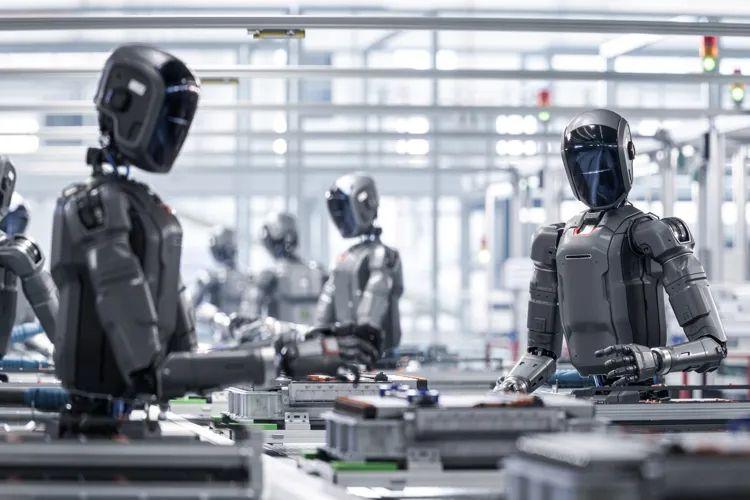
. The centerpiece is Isaac GR00T N1.6, a next-generation vision language action model purpose-built for humanoid robots that unlocks whole-body control, enabling them to move and handle objects simultaneously while leveraging Cosmos Reason as its brain1
.
Source: CXOToday
Open-Source Frameworks Simplify Robot Learning and Reasoning
Addressing critical industry challenges around validation and testing, Nvidia introduced Isaac Lab-Arena, an open-source framework hosted on GitHub that provides a collaborative system for large-scale robot policy evaluation and benchmarking in simulation
4
. The platform consolidates resources, task scenarios, training tools, and established benchmarks like Libero, RoboCasa, and RoboTwin, creating a unified standard where the industry previously lacked one1
. This matters because testing physical AI developments in real-world environments can be costly, slow, and risky, particularly for applications like autonomous vehicles2
.Supporting the entire workflow is Nvidia OSMO, a cloud-native orchestration framework that serves as connective infrastructure integrating the entire development process from data generation through training across both desktop and edge-to-cloud environments
1
. OSMO lets developers define and run workflows such as synthetic data generation, model training, and software-in-the-loop testing across different compute environments, from workstations to mixed cloud instances, significantly speeding up development cycles4
. The framework is already being used by robot developers including Hexagon Robotics and has been integrated into the Microsoft Azure Robotics Accelerator toolchain4
.Blackwell-Powered Jetson T4000 Delivers Cost-Effective Edge Computing
To power its robotics ecosystem, Nvidia introduced the Blackwell-powered Jetson T4000 graphics card, the newest member of the Thor family
1
. The module delivers 1,200 teraflops of AI compute and 64 gigabytes of memory while running efficiently at 40 to 70 watts, providing four times greater energy efficiency and AI compute compared to the previous generation2
. This cost-effective on-device compute upgrade addresses a critical need for robotics developers who require powerful processing capabilities without excessive power consumption1
.Nvidia is deepening its partnership with Hugging Face to democratize robot training, integrating Isaac and GR00T technologies into Hugging Face's LeRobot framework
1
. This collaboration connects Nvidia's 2 million robotics developers with Hugging Face's 13 million AI builders, allowing more people to experiment with robot training without expensive hardware or specialized knowledge1
. The developer platform's open-source Reachy 2 humanoid now works directly with Nvidia's Jetson Thor chip, while the Reachy Mini tabletop robot is fully interoperable with Nvidia DGX Spark, letting developers experiment with different AI models without being locked into proprietary systems2
.Related Stories
Industry Giants Deploy Robots Built on Nvidia Technologies
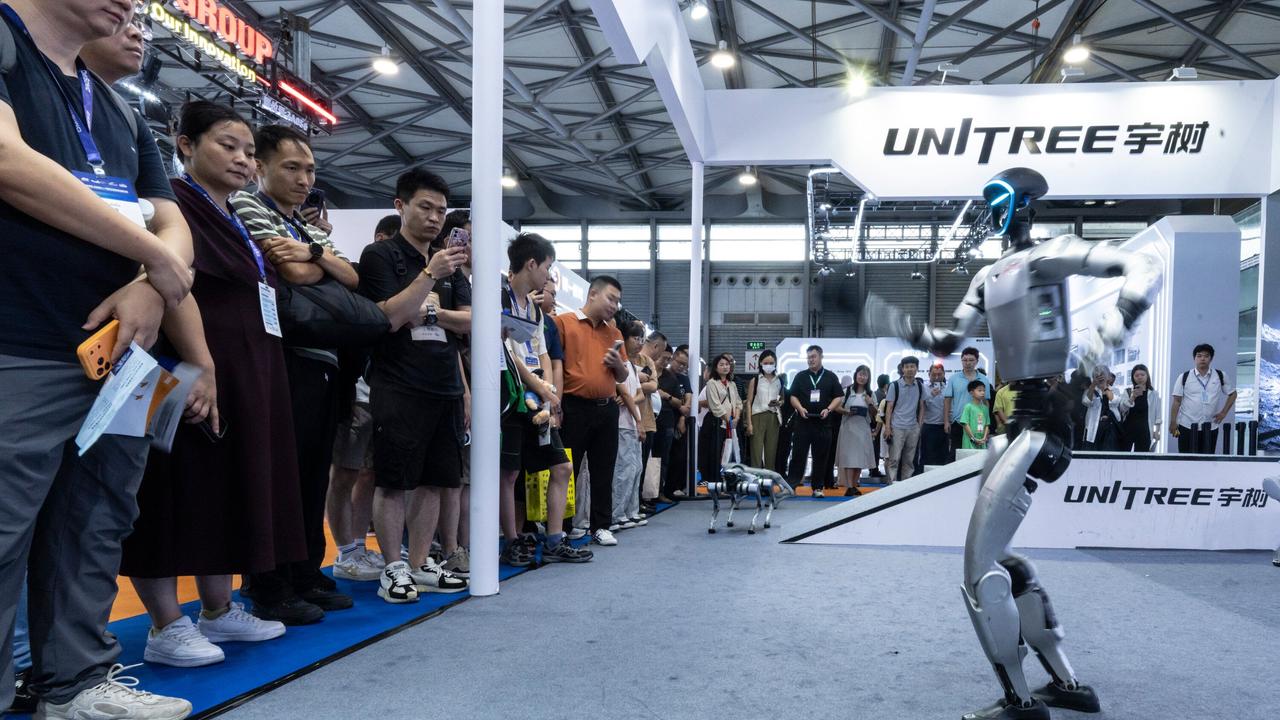
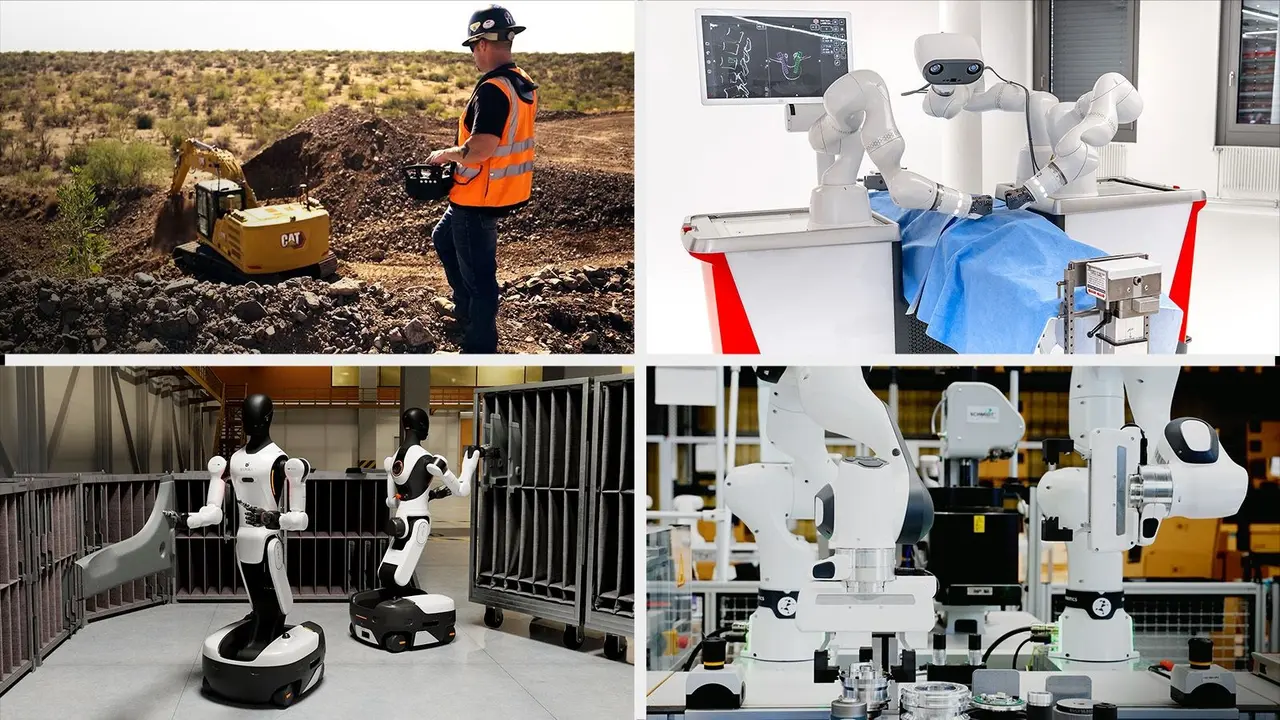
Major robotics companies are already adopting Nvidia's platform for generalist robotics applications. Boston Dynamics, Caterpillar, Franka Robots, Humanoid, LG Electronics, and NEURA Robotics unveiled next-generation robots and autonomous machines built using Nvidia technologies at CES
4
. These robots span diverse use cases across industries, from Richtech Robotics launching Dex, a humanoid robot for industrial environments, to LG Electronics unveiling a new home robot for indoor household tasks2
. Franka Robotics, NEURA Robotics, and Humanoid are using GR00T-enabled workflows to simulate, train, and validate new behaviors for robots4
.
Source: NVIDIA
Early indicators suggest Nvidia's strategy is gaining traction. Robotics has become the fastest-growing category on Hugging Face, with Nvidia's models leading downloads
1
. Jensen Huang expressed confidence that robots with some human-level capabilities will emerge this year, noting "I know how fast the technology is moving"3
. However, questions remain about whether the ChatGPT moment for robotics has truly arrived. While Huang's press release declared the moment is "here," his keynote was more measured, saying it's "nearly here"5
. The distinction matters because translating AI capabilities into machines that can reliably manipulate the physical world at scale and at commercially viable costs remains enormously difficult, slow, and capital-intensive5
.References
Summarized by

Navi
Related Stories
Nvidia CEO Predicts Humanoid Robot Revolution in Manufacturing Within Five Years
19 Mar 2025•Technology
Nvidia Unveils Groot N1: A Groundbreaking Foundation Model for Humanoid Robotics
19 Mar 2025•Technology

Nvidia Unveils Cosmos: A Groundbreaking AI Platform for Physical World Interaction
07 Jan 2025•Technology

Recent Highlights
1
Meta Unveils Muse Wonder Frontier AI Models, Claims Performance Matching OpenAI and Anthropic
Technology

2
IMF Report Warns AI Market Correction Could Spark Global Financial Crisis With $1.4T at Risk
Business and Economy

3
OpenAI Releases 722 AI-Generated Math Solutions, Triggering Existential Crisis in Mathematics
Technology

Recent Highlights
Today's Top Stories










Don’t drown in AI news. We cut through the noise - filtering, ranking and summarizing the most important AI news, breakthroughs and research daily. Follow topics that matter to you and stay ahead.


