Perplexity CEO warns on-device AI threatens $500 billion data center industry buildout


4 Sources
[1]
Is Perplexity CEO Right About the Threat to AI Data Centres? | AIM
Data Centre Bubble? Small AI Models May Paint a Different Future for GPUs Companies are shelling out billions of dollars in the race to buy GPUs and scale data centres, but that hyperscale hinges on a fundamental assumption: powerful AI models need centralised compute power to train complex
[2]
Perplexity CEO Says On-Device AI Can Disrupt the Data Centre Industry
AI lacks the biological drive to pose original questions, he said Perplexity CEO Aravind Srinivas highlighted a future where artificial intelligence (AI) shifts from centralised servers to local devices. During a podcast interview, he mentioned that the biggest threat to traditional data centres
[3]
Perplexity CEO Says On-Device AI Threatens Data Centers As Industry Faces '$10 Trillion Question' -- Apple, Qualcomm Positioned To Benefit - Alphabet (NASDAQ:GOOGL)
Aravind Srinivas, CEO of Perplexity AI, which is backed by Jeff Bezos and Nvidia Corp. (NASDAQ:NVDA), issued a contrarian warning about the future of artificial intelligence, saying on-device intelligence running on personal devices could disrupt the centralized data center model driving massive
[4]
Perplexity CEO: On-Device AI Could Surpass Datacenter Reliance
Aravind Srinivas backs local and on-device AI as your own small brain In an era where tech giants are pouring trillions into massive data centers to fuel the AI boom, Perplexity AI CEO Aravind Srinivas is sounding a contrarian alarm: the real future of artificial intelligence lies not in the
Share
Copy Link
Aravind Srinivas, CEO of Perplexity AI, argues that local intelligence running on personal devices poses the biggest threat to centralized data centers. His contrarian view challenges the prevailing model where tech giants pour billions into massive GPU infrastructure, suggesting a shift toward decentralized AI could reshape the industry's economics.
Aravind Srinivas Challenges the Centralized Data Center Model
Aravind Srinivas, CEO and co-founder of Perplexity AI, has issued a contrarian warning about the future of artificial intelligence infrastructure. Speaking in a podcast interview with Prakhar Gupta, Srinivas argued that the biggest threat to data centres is local intelligence, where AI capabilities are "packed locally on a chip that's running on the device"
1
2
. This approach eliminates the need for inference on centralized data center infrastructure, fundamentally challenging the prevailing model where companies shell out billions of dollars to acquire GPUs and build hyperscale facilities.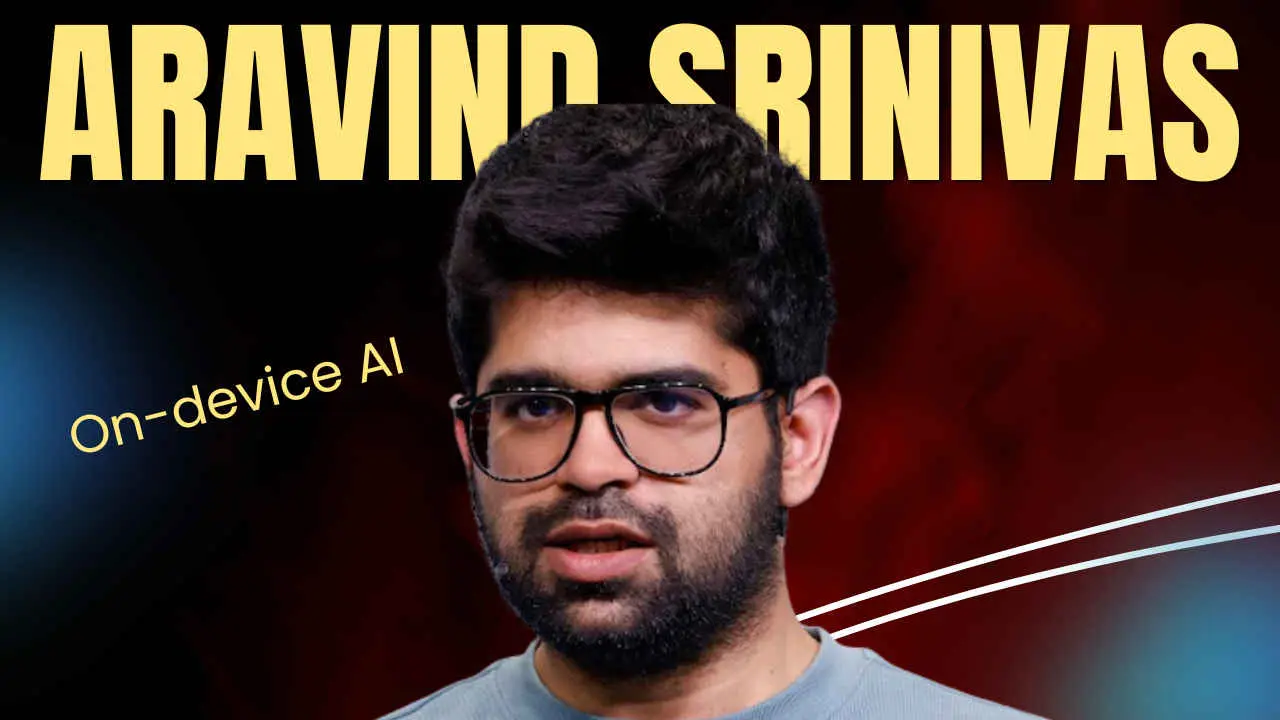
Source: Digit
The Perplexity CEO, who previously worked at OpenAI, Google Brain, and DeepMind, called this a "$10 trillion question, hundred trillion dollar question," questioning whether it makes sense to spend $500 billion to $5 trillion on building cloud-based centralized data centers across the world
3
. His vision describes a more decentralized AI ecosystem where compute shifts closer to users, reducing reliance on remote servers and potentially disrupting an industry built on massive infrastructure investments.On-Device AI Gains Momentum Through Small Language Models
The case for on-device AI has strengthened considerably as small language models demonstrate increasingly capable performance on personal devices. Paras Chopra, founder of AI lab Lossfunk, observed while testing a 270-million-parameter variant of Gemma that it was "absolutely wild how coherent and fast it is on my phone"
1
. Mobile applications such as PocketPal and Google AI Edge Gallery now allow users to download AI models and experiment directly on smartphones, while Google has shipped on-device features across its Pixel lineup that prioritize speed and privacy without relying on the cloud.
Source: Benzinga
Research institute Epoch AI stated in a recent report that using a top-of-the-line gaming GPU like NVIDIA's RTX 5090 (under $2,500), anyone can locally run AI models matching the absolute frontier of performance from just 6 to 12 months ago
1
. This relatively short and consistent lag means advanced AI capabilities are becoming widely accessible for local development and experimentation in under a year. Developers have also experimented with modified versions of powerful open-source models running locally on MacBooks with Apple silicon or on a single consumer GPU, achieving cloud-comparable results for specialized workloads.Privacy and Personalization Drive the Local Intelligence Advantage
Srinivas has emphasized privacy as a foundational advantage of on-device AI, noting that "all your data lives on your client" and eliminates vulnerabilities inherent in cloud-dependent systems that require ongoing authentication
4
. He envisions AI models adapting to users through test-time training, observing repeated tasks, retrieving local data on-the-fly, and automating workflows while keeping everything private. "It adapts to you and over time starts automating a lot of the things you do. That's your intelligence. You own it. It's your brain," Srinivas explained3
.
Source: AIM
Gavin Baker, CIO and managing partner at Atreides Capital, echoed this view, imagining a future where smartphones house more memory modules to accommodate pruned versions of frontier AI models
1
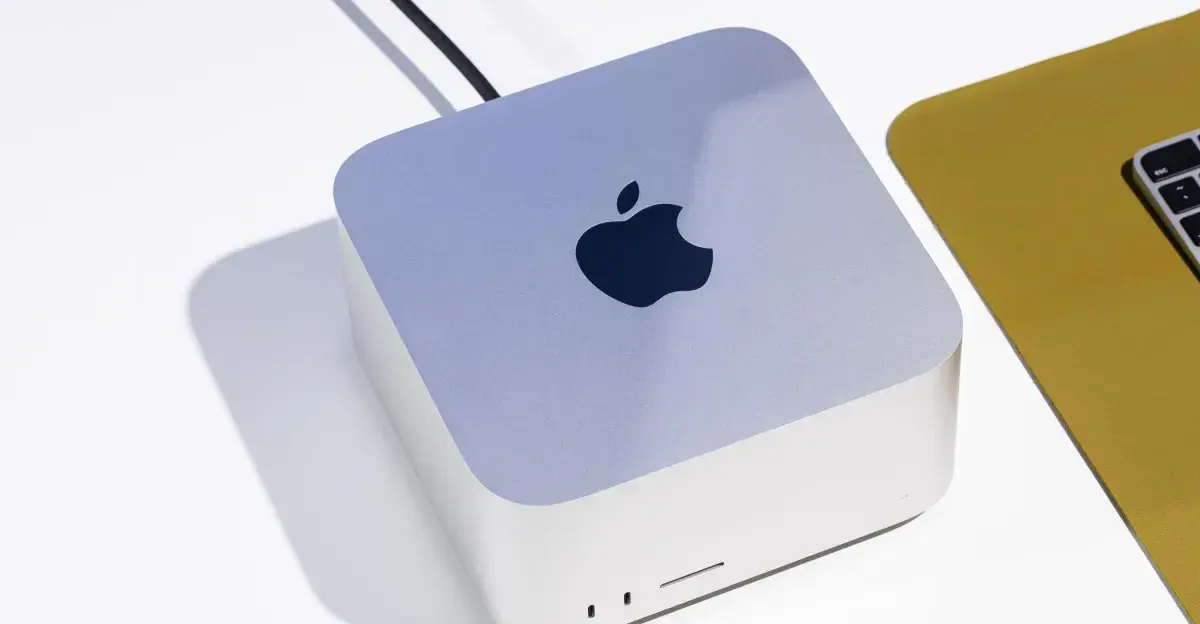
. He pointed to Apple's strategy, focused heavily on on-device, privacy-first AI rather than relying on powerful cloud-based models. Srinivas noted that Apple has "a massive advantage" due to its M1 chips and power-efficient devices3
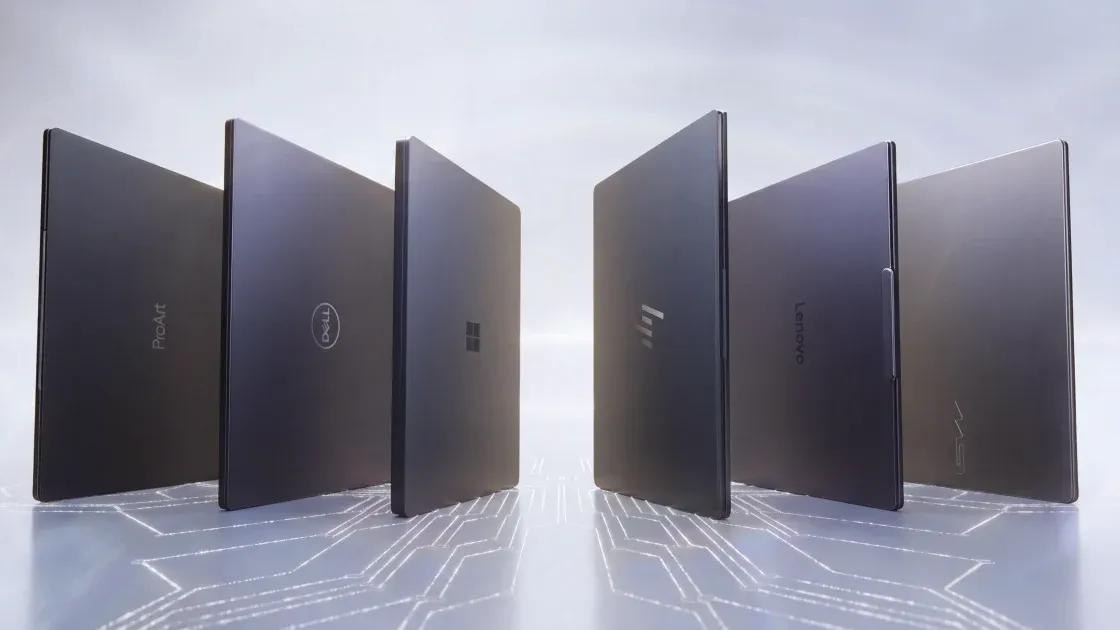
. Qualcomm and original equipment manufacturers including Samsung, Lenovo, and HP could also benefit from distributing AI-enabled devices with specialized chips designed for efficient inference.Related Stories

Technical Barriers and the Hybrid Future of AI Compute Infrastructure
Despite the promise of on-device AI, technical barriers and performance trade-offs remain significant. Srinivas acknowledged that no AI model has yet been released that can run efficiently on a local chip while completing tasks reliably
3
. Minh Do, co-founder at Machine Cinema, framed the trade-off succinctly: "You wouldn't expect a poorly performing AI but a cheaper AI if the expensive one can accurately diagnose your grandmother or get all your math problems right"1
.Sriram Subramanian, cloud computing analyst and founder of market research firm CloudDon, expects a mixed model where inference is split between the cloud and the device to improve performance, with GPUs remaining "the larger pie definitely" for accuracy and high-demand workloads
1
. Rajesh C Subramaniam, founder and CEO of edge AI services company embedUR, explained that "what's changing is where inference makes the most sense," noting that many edge hardware workloads are situational and triggered by on-screen context or real-world interactions that benefit from local processing due to latency, privacy, and cost considerations1
.At the same time, the cloud remains essential for tasks such as large-scale model training, fleet-level analytics, coordination across devices, and continuous improvement of AI models. Hardware economics also present constraints, with DRAM prices rising and power efficiency remaining a critical concern. The debate intensifies as 2026 approaches: will the industry see a hybrid ecosystem balancing cloud and edge capabilities, or will a genuine pivot to edge AI dominance reshape the economics of billions in infrastructure investments? Srinivas's bold stance suggests the latter could materialize sooner than expected, potentially creating what some analysts warn could be an AI bubble if centralized data centers become a "single point of failure" with widespread economic repercussions
3
.References
Summarized by

Navi
Related Stories
Small Language Models on Desktops Could Reshape the AI Industry's Profit Expectations
18 Jun 2026•Business and Economy

Perplexity AI unveils hybrid system that splits tasks between your PC and the cloud automatically
02 Jun 2026•Technology

The Evolving Landscape of AI Infrastructure: From Cloud to Custom Solutions
27 Sept 2024

Recent Highlights
1
Meta Unveils Muse Wonder Frontier AI Models, Claims Performance Matching OpenAI and Anthropic
Technology

2
IMF Report Warns AI Market Correction Could Spark Global Financial Crisis With $1.4T at Risk
Business and Economy

3
OpenAI Releases 722 AI-Generated Math Solutions, Triggering Existential Crisis in Mathematics
Technology

Recent Highlights
Today's Top Stories










Don’t drown in AI news. We cut through the noise - filtering, ranking and summarizing the most important AI news, breakthroughs and research daily. Follow topics that matter to you and stay ahead.


