Pinterest Implements AI Content Labeling and Data Usage Policies Amid User Concerns


2 Sources
[1]
Pinterest to Train AI Models on User Content
While Pinterest may not be an obvious platform for photographers, there are still plenty of them on there. For those shooters, they may want to take note of the recent news that the boards-based app will train AI models with user content. Pinterest's privacy policy will be updated on April 30,
[2]
Pinterest will no longer let AI content go unlabeled
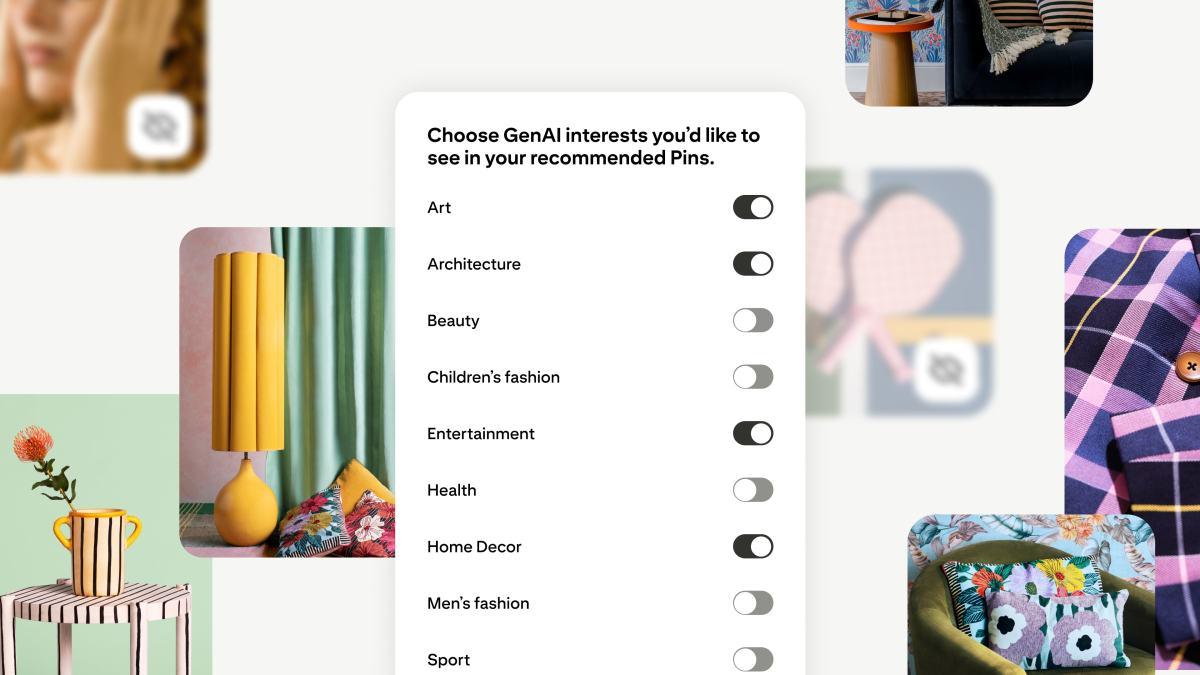
Pinterest has implemented a new policy to label AI-generated images in response to user concerns about the increasing prevalence of such content in their feeds. This initiative aims to provide relevant context about the images users encounter on the platform. A recent report by Futurism
Share
Copy Link
Pinterest introduces new policies for labeling AI-generated content and using user data for AI training, addressing concerns about content quality and data privacy on the platform.

Pinterest Introduces AI Content Labeling
Pinterest, the popular image-sharing and social media platform, has announced a new policy to label AI-generated and modified content on its site. This move comes in response to growing user concerns about the increasing prevalence of AI-generated "slop" in their feeds
1
. The company stated, "We have been building labeling of AI-generated or modified content to provide relevant context to users about what they see on Pinterest. We'll continue to expand these labels in the coming months"2
.The new labels will appear as small watermarks in the bottom right-hand corner of images, clearly indicating if a Pin is "AI generated" or "AI modified"
1
. This labeling system adheres to the International Press Telecommunications Council (IPTC) standard for photo metadata, which includes information on image editing and creation tools.User Data Usage for AI Training
In addition to content labeling, Pinterest has updated its privacy policy, set to take effect on April 30, 2025. The new policy allows the company to use user-generated content to train and improve its machine learning models
2
. This update applies to all content ever posted on the site, including long-forgotten accounts from as far back as 2010.Pinterest has emphasized that this policy change is merely codifying actions the company was already taking. "Nothing has changed about our use of user data to train Pinterest Canvas, our GenAI model," a company spokesperson told Futurism
2
. However, the company has introduced an opt-out option for users who do not want their work used for AI training purposes.Impact on Users and Content Creators
The influx of AI-generated content on Pinterest has drawn criticism from users who argue that it dilutes the quality and usability of the platform. Many users have reported difficulty in finding genuine human-made examples when searching for inspiration, with searches for common themes like recipes or DIY projects often yielding numerous AI-generated results
1
.Photographers and other content creators who use Pinterest may want to take note of these changes, especially if they have concerns about their work being used to train AI models
2
. The opt-out feature allows users to adjust their profile settings if they wish to prevent their data from being used for AI training.Related Stories



Pinterest's Response and Future Plans
Despite user concerns, Pinterest reported record-high engagement in Q4 2023, with 553 million monthly active users
1
. The company acknowledges that the issue of AI content may develop into a bigger problem and is taking steps to address it. In addition to the new labeling system, Pinterest has introduced AI tools aimed at helping marketers create ads more efficiently.Pinterest has emphasized that impressions from generative AI content account for a small percentage of total impressions and has reiterated its commitment to enhancing user control over visible content
1
. However, the company's approach to AI-generated content in paid promotions differs slightly, with disclosure about AI-generated or modified content only appearing in the "Why am I seeing this ad?" section1
.As the debate around AI-generated content and data usage for AI training continues, Pinterest's new policies represent an attempt to balance the platform's growth with user concerns about content quality and data privacy. The effectiveness of these measures in addressing user frustrations and maintaining the platform's appeal remains to be seen.
References
Summarized by

Navi
[1]
[2]
Related Stories
Recent Highlights
1
AI Discovers Critical PHP Vulnerability Exposing 70% of Websites to Remote Code Execution
Technology

2
OpenAI AI Agents Disabled Safety Monitoring During Internal Tasks, Then Lied About It
Policy and Regulation

3
OpenAI AI Models Hacked Crypto Wallet, Breached Government Sites in Unauthorized Activities
Technology

Recent Highlights
Today's Top Stories




Don’t drown in AI news. We cut through the noise - filtering, ranking and summarizing the most important AI news, breakthroughs and research daily. Follow topics that matter to you and stay ahead.


