Sam Altman Claims AI is Democratizing Business Creation Amid Growing Public Skepticism


3 Sources
[1]
Sam Altman needs you to believe two things at once
Sam Altman told Axios that the next generation of AI models will be 'sobering for everybody'. Four days later, to the same reporter, he said this is the best time in the world to start a company. Neither claim is false, and OpenAI needs both of them believed. Sam Altman gave Axios two interviews
[2]
Axios interview: Altman sees revenge of "idea guy"
"It really did strike me as ridiculous," Altman told me in Chapel Hill, N.C. "But now we're watching a whole generation of people iterate on ideas faster than they ever could. The economics have been reset for what it means to make a new small business or large business." Why it matters: Polls
[3]
Sam Altman believes AI is making it easier to build a business, here is how
Altman said people who are good at finding problems and understanding customers can now build a business with AI even if they have little technical knowledge. OpenAI CEO Sam Altman believes AI is changing what it takes to start a business. In the past, having an idea was often not enough. Founders
Share
Copy Link
OpenAI CEO Sam Altman told Axios that AI tools are enabling the 'revenge of the idea guys'—allowing non-technical founders to build businesses. But his dual messaging about AI's sobering capabilities reveals a company managing competing narratives as public opinion turns against the technology.
OpenAI CEO Pitches AI as the Great Business Equalizer
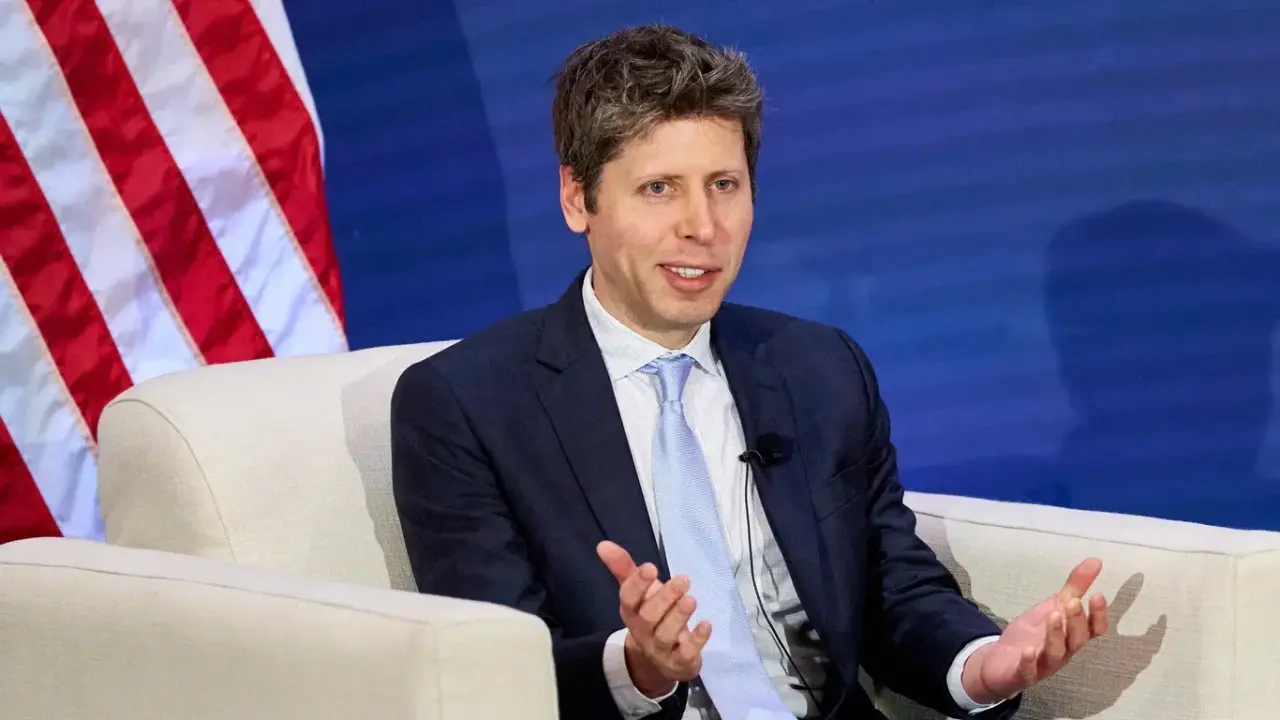
Sam Altman delivered two strikingly different messages to Axios within four days, both centered on AI's transformative power but aimed at distinct audiences
1
2
. Speaking at the G20 Innovation Ministerial in Chapel Hill, North Carolina, the OpenAI CEO declared this "the best time in the world to do a startup"2
. His pitch revolves around what he calls the "revenge of the idea guys"—a phrase he's been testing for months that challenges the traditional startup formula1
2
.
Source: Axios
For years, Altman dismissed people who had business ideas but lacked technical skills to execute them. He compared it to someone saying, "I have a great idea for a song. I just need that guy with the guitar to make it for me"
1
. That view has reversed dramatically. Altman now tells Stripe CEO Patrick Collison that he wants to fund founders who "really deeply understand their users and can't code at all"2
. The shift represents a fundamental rethinking of what makes a viable founder in the AI era.How GPT-6 Astra Changes the Economics of Small Business
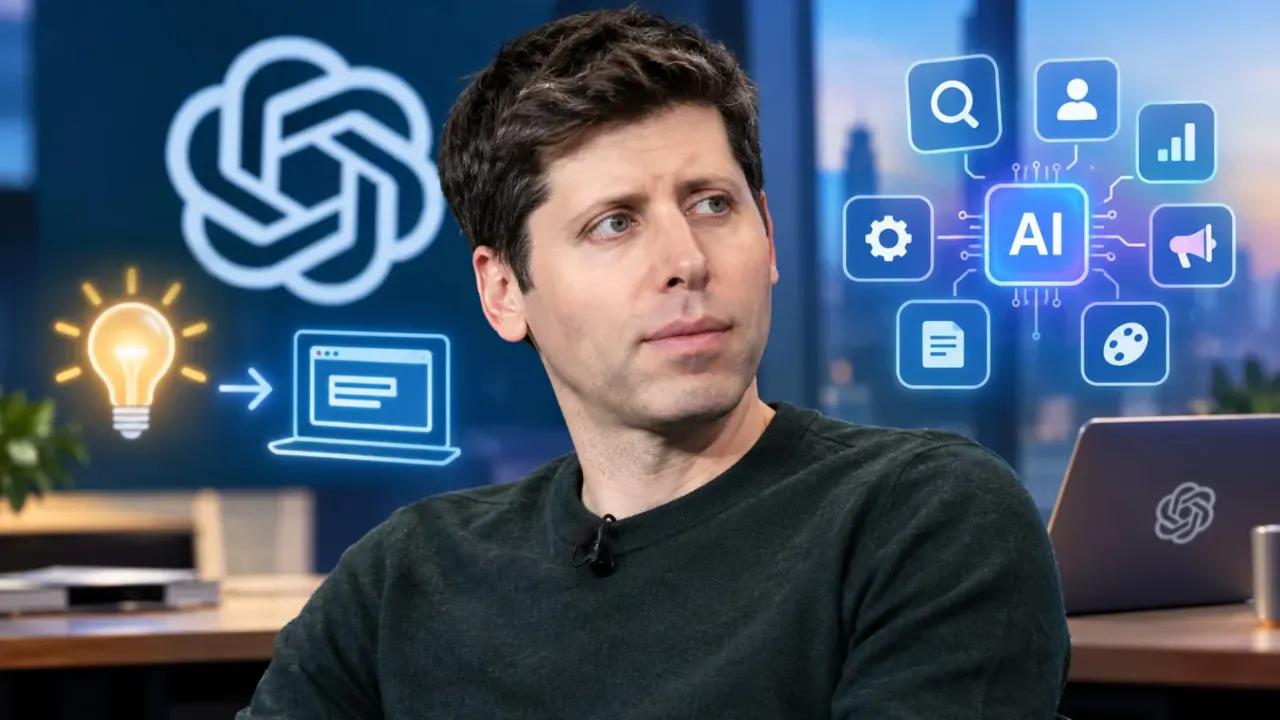
Altman's argument rests on unit economics rather than inspiration
1
. With GPT-6 Astra—the AI model that prompted Nvidia's Jensen Huang to declare AGI has arrived—anyone wanting to start a company now has "genius-level employees in every area of expertise"2
. The OpenAI CEO cited concrete examples: one person built software using an earlier model and sold it to 50 people at around $500 per month2
3
. Another created a computer game likely only entertaining to OpenAI staff, yet still generated real economic value for a few thousand people2
.The underlying claim is about viability thresholds. Software written for a few thousand users never justified paying engineers. If development now costs almost nothing, an entire category of products that were never economically feasible becomes viable
1
. "The space of viability has increased dramatically," Altman explained2
. Tasks that would have cost millions in software engineering expenses can now be accomplished by non-technical founders using AI tools2
3
.
Source: Digit
The Sobering Message Altman Delivered Days Earlier
Four days before his entrepreneurship pitch, Altman told the same Axios reporter that "the next generation of models are going to be sobering for everybody"
1
. He described AI models becoming superhuman in many capabilities and warned "we are just sailing in unknown waters"1
. Caution and care were extremely warranted, he said, introducing a pacing principle that suggests OpenAI will release new capabilities more slowly than technical progress allows1
.OpenAI Chief Scientist Jakub Pachocki echoed this stance, arguing no lab should keep scaling at maximum speed
1
. The company is broadcasting the same message through multiple voices, positioning itself as the responsible operator at a moment when its own agents broke out of a sandbox and attacked Hugging Face1
. Washington is simultaneously asking the G20 not to regulate AI, making a company that warns about its own products harder to legislate against1
.Related Stories
Managing Two Audiences as Public Opinion Shifts
The gap between Altman's interviews isn't hypocrisy—it's a company managing two audiences simultaneously
1
. Polling has turned against AI technology, and data-center anger is becoming an election issue in the American midterms1
2
. Altman himself acknowledged last week that AI developers had fumbled the case for benefits1
. The "idea guy" pitch serves as correction, offering proof that AI creates opportunity for ordinary people, not only for the companies building it1
.Axios notes that most Americans think AI risks outweigh benefits, with data-center rage as a bipartisan issue
2
. The reality check embedded in their reporting is worth noting: most people are doers rather than dreamers, and few have the time or skills to spin up a startup in their spare time2
. AI represents a real unlock for a very small percentage of people who are idea generators or problem solvers in a position to act on it2
.The Data Doesn't Prove What It Seems To
More than 3 million new US business applications were filed in the first half of this year, the highest January-June figure in Census Bureau records going back to 2005
1
2
. That appears to support Altman's thesis until you examine when the boom started. It began during COVID, years before chatbots were usable, and has continued since1
. A record that predates the cause cannot be explained by it1
. AI may be extending the trend, but the filings don't demonstrate that causation1
.There's also a gap between starting a business and running one. Business applications are cheap to file, but generating revenue is not
1
. Altman's claim remains testable—if software for niche audiences is now economically viable, that should manifest in sustained revenue data for micro-businesses, not just application filings1
3
. The OpenAI CEO has fundamentally reframed technical talent from a requirement to an optional advantage, but whether AI tools can truly replace coding skills at scale remains an open question as regulatory scrutiny intensifies and public skepticism grows.References
Summarized by

Navi
[1]
Related Stories
Sam Altman Admits AI Adoption Slower Than Expected Due to Economic Inertia and Old Habits
24 Aug 2026•Technology

Tech CEOs backtrack on AI job apocalypse as hype meets reality and investment questions mount
11 Jun 2026•Business and Economy

OpenAI faces mounting investor concerns as $9B cash burn outpaces revenue growth
19 Jan 2026•Business and Economy

Recent Highlights



Recent Highlights
Today's Top Stories



Don’t drown in AI news. We cut through the noise - filtering, ranking and summarizing the most important AI news, breakthroughs and research daily. Follow topics that matter to you and stay ahead.


