Samsung Exynos 1680 brings 33% AI performance boost and enhanced GPU to mid-range phones


3 Sources
[1]
Samsung's new Exynos 1680 promises better AI and graphics performance for mid-range phones
The new chip brings modest CPU changes but focuses on improved GPU performance and faster on-device AI. Samsung has officially taken the wraps off its new mid-range Exynos 1680 chipset, and it paints a promising picture for the company's upcoming non-flagship phones. The chip brings meaningful
[2]
Samsung Unveils Exynos 1680 SoC With 200-Megapixel Camera, 144Hz Display Supported
* Exynos 1680 boosts GPU performance by up to 16 percent * New chipset supports LPDDR5X RAM and UFS 4.1 onboard storage * Exynos 1680 also comes with support for 5G, Wi-Fi 6E and Bluetooth 6.1 Samsung has unveiled the Exynos 1680 chipset, which is expected to power the upcoming Galaxy A57 5G
[3]
Samsung Exynos 1680 4nm SoC with Xclipse 550 GPU, 8K MAC NPU announced
Samsung has introduced its latest mobile platform, the Exynos 1680, as the successor to last year's Exynos 1580. Designed primarily to facilitate a more fluid on-device artificial intelligence (AI) experience, the new chipset introduces structural upgrades across its Central Processing Unit (CPU),
Share
Copy Link
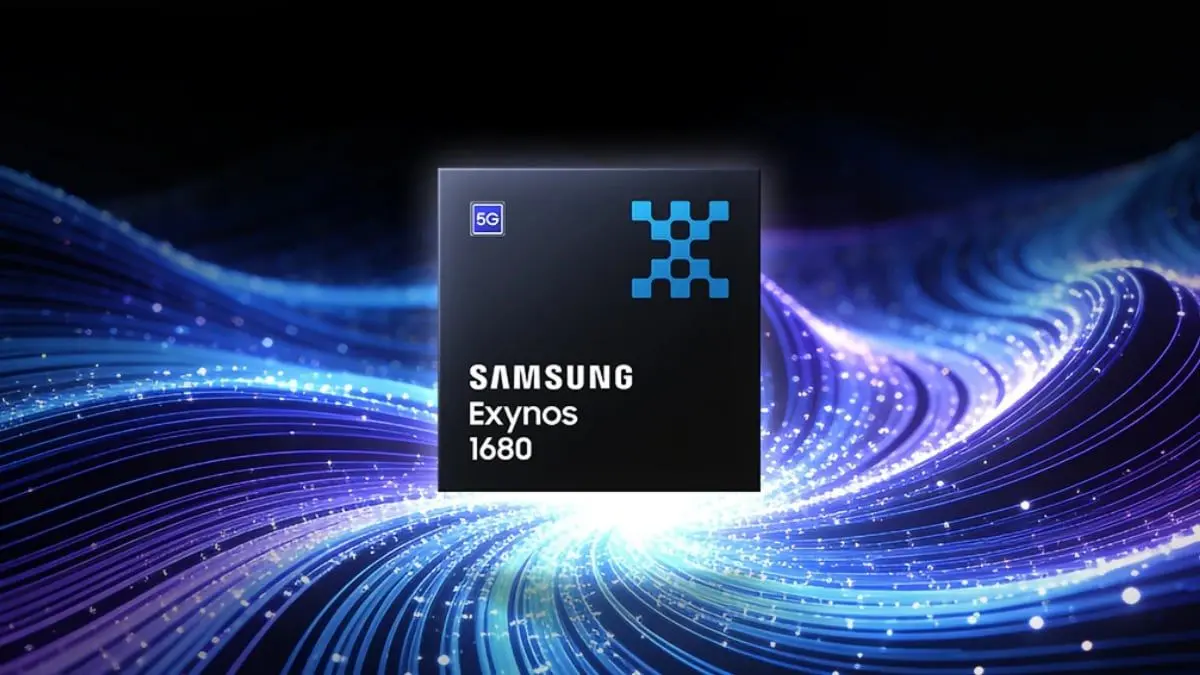
Samsung has officially unveiled the Exynos 1680 chipset, bringing significant upgrades to mid-range phones with a 33% improvement in AI performance and 16% GPU boost. The new 4nm SoC features an upgraded Xclipse 550 GPU, 8K MAC NPU delivering 19.6 TOPS, and support for LPDDR5X RAM and UFS 4.1 storage. Set to debut in the Galaxy A57 next month, the chip focuses on faster on-device AI and better graphics.
Samsung Exynos 1680 Chipset Elevates Mid-Range Phones
Samsung has officially introduced the Exynos 1680, a new mobile processor designed to bring enhanced AI performance and graphics capabilities to mid-range phones
1
. Built on a 4nm SoC process, the chipset serves as the successor to last year's Exynos 1580 and will make its market debut in the Galaxy A57 5G smartphone, which launches early next month2
. The new chip is currently in mass production and represents Samsung's continued push to deliver advanced features typically reserved for flagship devices to more affordable handsets.
Source: FoneArena
Significant AI Performance Gains Through Enhanced NPU
The Exynos 1680 chipset delivers a substantial leap in on-device AI capabilities, thanks to its upgraded NPU that achieves up to 19.6 TOPS of performance—a 33% improvement over its predecessor
1
. The new 8K MAC NPU enables the processor to handle complex machine learning tasks directly on the device without relying heavily on cloud processing3
. This enhanced AI engine supports tasks like image processing, live translation, and other AI features, allowing users to experience faster and more responsive AI-powered applications in their daily smartphone use2
.
Source: Gadgets 360
Xclipse 550 GPU Delivers 16% Graphics Performance Boost
For graphics performance, Samsung has equipped the Exynos 1680 with an upgraded Xclipse 550 GPU based on AMD RDNA 3 architecture
2
. The new GPU features a 2WGP and 2RB configuration, adding two additional Render Blocks alongside two Work Group Processors compared to the Xclipse 540 GPU found in the previous generation1
. This hardware collaboration with AMD results in a claimed 16% performance boost, which should translate to smoother visuals and better mobile gaming experiences for users2
.CPU Architecture Balances Performance and Efficiency
The Exynos 1680 features an octa-core CPU with a tri-cluster design that includes one Cortex-A720 core clocked at 2.9GHz, four Cortex-A720 cores running at 2.6GHz, and three Cortex-A520 efficiency cores at 1.95GHz
2
. While the architecture remains largely unchanged from the Exynos 1580, Samsung has replaced one efficiency core with a mid-core to better balance performance and power consumption1
. This adjustment should improve performance while keeping power usage in check, potentially leading to better battery life during day-to-day use.Related Stories

Advanced Memory, Storage, and Display Support
The Exynos 1680 chipset brings support for LPDDR5X RAM and UFS 4.1 onboard storage, ensuring faster data access and improved overall system responsiveness
1
. Display capabilities include support for FHD+ resolution at up to 144Hz refresh rate, enabling smoother visuals for gaming and scrolling2
. The chip also features Bluetooth 6.1 for improved connectivity, alongside Wi-Fi 6E and GNSS support1
.Camera and Connectivity Features
The Image Signal Processor on the Exynos 1680 is equipped to handle advanced mobile photography, supporting up to a 200-megapixel camera sensor, dual 32-megapixel setups, or a 64-megapixel sensor at 30fps
2
. Video capabilities include 4K recording and playback at 60fps, with support for HEVC, H.264, VP9, and VP8 codecs2
. AI-based image processing and improved noise reduction promise better low-light results. For connectivity, the chipset includes 5G NR FR1 and FR2 support, delivering peak download speeds of up to 5.1Gbps on sub-6GHz and 4.84Gbps on mmWave, while LTE Cat.18 support offers download speeds up to 1.2Gbps2
. Beyond the Galaxy A57, industry observers expect more Samsung phones and possibly tablets to feature the chip in the coming months3
.References
Summarized by

Navi
[1]
Related Stories
Samsung unveils Exynos 2600, world's first 2nm smartphone chip set to power Galaxy S26 series
19 Dec 2025•Technology

Samsung Unveils Exynos 2500: A Game-Changer for the Galaxy Z Flip 7
23 Jun 2025•Technology

Samsung's Exynos 2600 Chip Promises Revolutionary Camera Upgrades for Galaxy S26 Series
06 Nov 2025•Technology

Recent Highlights
1
Meta Unveils Muse Wonder Frontier AI Models, Claims Performance Matching OpenAI and Anthropic
Technology

2
IMF Report Warns AI Market Correction Could Spark Global Financial Crisis With $1.4T at Risk
Business and Economy

3
OpenAI Releases 722 AI-Generated Math Solutions, Triggering Existential Crisis in Mathematics
Technology

Recent Highlights
Today's Top Stories








Don’t drown in AI news. We cut through the noise - filtering, ranking and summarizing the most important AI news, breakthroughs and research daily. Follow topics that matter to you and stay ahead.


