Scale AI CEO's "America Must Win AI War" Stance Faces Global Pushback at Web Summit Qatar


2 Sources
[1]
Web Summit attendees aren't buying Scale AI CEO's push for America 'to win the AI war' | TechCrunch
In a bold move last month, Scale AI CEO Alexandr Wang took out a full-page ad in the Washington Post, telling President Trump that "America must win the AI war." The statement sparked mixed reactions, as seen during Wang's appearance Sunday during the opening night of Web Summit Qatar. When Wang's
[2]
Global AI industry rejects "America must win" message
Flashback: Alexandr Wang, the founder of ScaleAI, one of America's most valuable AI companies, last month took out a full-page ad in the Washington Post to proclaim that "America must win the AI war." State of play: When Axios asked for a show of hands from thousands of international attendees at
Share
Copy Link
Scale AI CEO Alexandr Wang's controversial call for American dominance in AI development receives significant opposition from international audience at Web Summit Qatar, highlighting global concerns over AI nationalism.

Scale AI CEO's Controversial Stance on AI Dominance
Alexandr Wang, CEO of Scale AI, has sparked a global debate with his recent assertion that "America must win the AI war." This controversial statement, initially made in a full-page Washington Post advertisement, faced significant pushback during Wang's appearance at Web Summit Qatar
1
2
.Global Rejection of AI Nationalism
When polled by Axios reporter Felix Salmon, an overwhelming majority of the international audience at Web Summit Qatar disagreed with Wang's stance. This reaction highlights a growing concern over AI nationalism and the potential consequences of a single country dominating AI development
1
2
.Wang's Defense and Background
Wang defended his position by emphasizing the transformative impact of AI on national security. He drew parallels to his upbringing in Los Alamos, New Mexico, "the birthplace of the atomic bomb," and expressed concerns about China potentially "leapfrogging" Western military capabilities through AI advancements
1
.The US-China AI Race
Wang framed the AI competition primarily as a two-horse race between the United States and China. He argued that baseline Large Language Models (LLMs) would likely be built on either US or Chinese technology stacks, with each reflecting different societal values such as free speech versus communist viewpoints
1
2
.AI in Government and Military Applications
The debate extends to the use of AI in government and military applications. Wang's company, Scale AI, recently announced an agreement with the Qatar government to develop 50 AI-powered government apps across various sectors
1
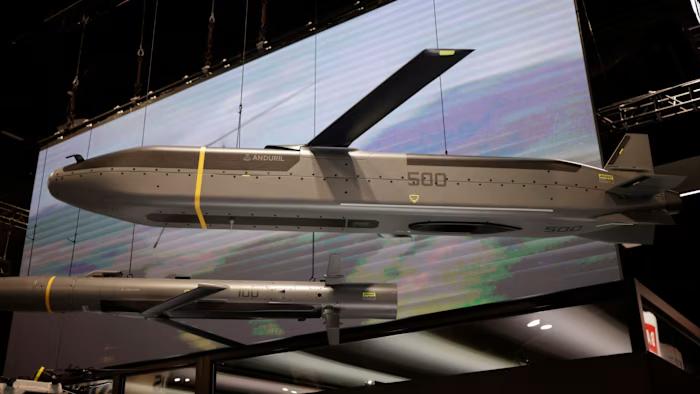
. This move coincides with growing calls from defense tech startups and VCs for increased autonomy in AI weapons, particularly in response to hypothetical scenarios involving China1
.Related Stories

Concerns Over AI Influence and Censorship
Researchers have discovered that some popular Chinese LLM models have government censorship embedded within them, raising concerns about data privacy and government influence. However, the global audience's reaction at Web Summit Qatar suggests that many are equally uncomfortable with the idea of US AI superpowers
1
2
.Scale AI's Position and Global Perception
While Wang's pro-American stance may resonate with Scale AI's Department of Defense customers, the international reception at Web Summit Qatar demonstrates a shifting global perception. American AI companies can no longer assume that their nationality automatically confers trustworthiness in the global market
2
.The Need for Cultural Sensitivity in AI Development
Acknowledging the diverse audience at Web Summit Qatar, Wang conceded that AI technology should reflect cultural differences between various countries to a meaningful degree. This recognition highlights the complex challenge of developing globally acceptable AI systems while navigating national interests and cultural sensitivities
2
.References
Summarized by

Navi
[1]
Related Stories
Scale AI CEO Alexandr Wang Meets with U.S. Officials Amid Growing Concerns Over China's AI Advancements
05 Feb 2025•Policy and Regulation

White House accuses Moonshot AI of cloning US tech as Treasury threatens sanctions
18 Jul 2026•Policy and Regulation

US-China AI competition shifts as regulation clashes with China's cost-efficient model strategy
26 Jun 2026•Policy and Regulation
Recent Highlights



Recent Highlights
Today's Top Stories



Don’t drown in AI news. We cut through the noise - filtering, ranking and summarizing the most important AI news, breakthroughs and research daily. Follow topics that matter to you and stay ahead.


