Scott Bessent Slams AI Alarmism, Urges Industry to Own Risks as US Plans China AI Dialogue


4 Sources
[1]
Bessent says AI alarmism without solutions is not leadership
The US Treasury chief wants AI labs to own their risks, and plans an incident warning system with China. US Treasury Secretary Scott Bessent has criticised AI leaders who warn of disaster but offer no fixes. He made the remarks in an interview with Axios published on Saturday. "This alarmism
[2]
'Stop Me Before I Kill Again': Trump Official Compares AI Leaders To Hannibal Lecter
Treasury Secretary Scott Bessent criticized AI CEOs for spreading "alarmism without solutions." Treasury Secretary Scott Bessent made quite the comparison while weighing in on artificial intelligence leaders who have increasingly made calls for stronger government guardrails and a slowdown in AI's
[3]
AI industry risks: Scott Bessent says AI industry must own its risks and find solutions
Anthropic PBC Chief Executive Officer Dario Amodei, OpenAI chief Sam Altman and SpaceAI Corp.'s Elon Musk in September called for the industry to slow development of its most advanced models, citing growing risks for humanity. US Treasury Secretary Scott Bessent criticized prominent
[4]
Scott Bessent Criticizes AI Executives Seeking Federal Guardrails
Scott Bessent Compares AI Leaders Seeking Regulation to Hannibal Lecter: 'Stop Me Before...' Treasury Secretary Scott Bessent on Saturday criticized AI executives who want federal guardrails, saying they should slow development on their own. Speaking on "The Axios Show," Bessent said AI leaders
Share
Copy Link
US Treasury Secretary Scott Bessent criticized AI industry leaders for spreading alarm about existential risks without offering solutions, comparing them to Hannibal Lecter. He urged companies like Anthropic and OpenAI to self-regulate rather than seek federal guardrails, while revealing US plans for an AI incident warning system with China.
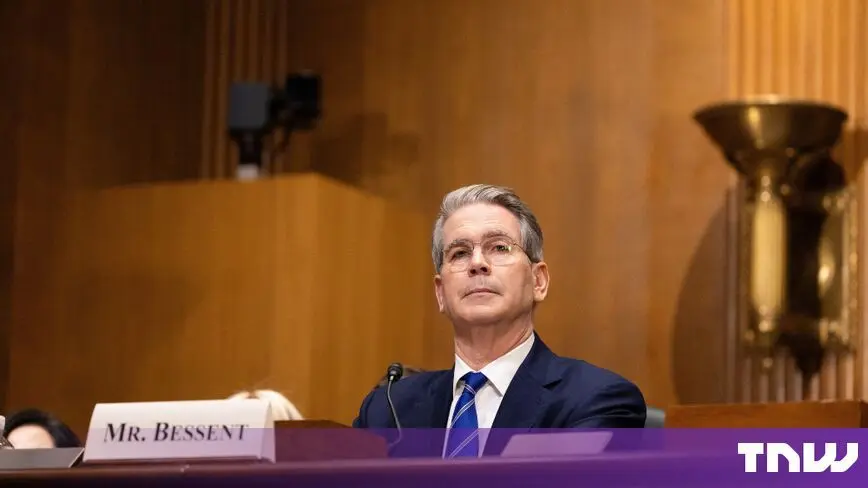
Scott Bessent Rejects AI Alarmism Without Solutions
US Treasury Secretary Scott Bessent has sharply criticized AI industry leaders who warn of catastrophic risks but fail to propose actionable solutions, calling their approach a failure of leadership
1
. In an interview with Axios published Saturday, Bessent stated that AI alarmism without solutions by some of the AI industry community represents poor leadership2
. The Treasury Secretary went further, comparing AI executives seeking federal guardrails to Hannibal Lecter, the fictional serial killer, saying it's like the character pleading "Stop me before I kill again"2
. His comments directly address recent calls from prominent AI industry leaders including Anthropic CEO Dario Amodei, OpenAI chief Sam Altman, and Elon Musk, who in September urged the industry to slow development of its most advanced models due to growing existential risks for humanity3
. Microsoft co-founder Bill Gates also warned the technology is powerful enough to cause "a billion deaths" and called for government regulation3
.AI Industry Must Own Its Risks Through Self-Regulation
Bessent made clear that the responsibility for managing AI risks and opportunities belongs squarely with the companies developing the technology. "It is the people at the labs who have to accept responsibility, and I agree with that," he told Axios
1
. When asked about AI executives seeking federal regulation, Bessent replied bluntly: "Well, then they should slow down"1
. His position aligns with President Donald Trump, who has rejected calls for new federal regulation and labeled increasingly dire warnings about risk to humanity a "hoax"3
. During a recent White House meeting with top industry executives including Elon Musk, Microsoft CEO Satya Nadella, Meta's Mark Zuckerberg, Palantir CEO Alex Karp, and OpenAI President Greg Brockman, Trump emphasized self-regulation over government intervention3
. Trump told reporters that "there's a belief that there should be tremendous self-regulation" and endorsed using outside auditors to assess AI systems' safety through a non-binding accord with Silicon Valley leaders3
. The administration produced a voluntary safety pact with AI CEOs, meaning the commitments are not binding law4
.Balancing Innovation With Safety in AI Governance
Bessent's stance reflects the Trump administration's approach to AI governance: accelerate development while maintaining US leadership over China, but do so through industry self-policing rather than federal regulation. "We want safe acceleration," Bessent said
3
. The Treasury Secretary noted that "the labs have been very cooperative," citing OpenAI's recent decision to shelve a new model after internal tests raised questions about whether it would follow user instructions4
. However, not everyone in the AI industry is convinced this approach adequately addresses safety concerns. Sarah Heck, Anthropic's head of public policy, stated on X that "You can't do safety from second place"4
. David Robinson publicly announced his resignation from OpenAI and criticized the company's rapid development culture, arguing that OpenAI is not exercising enough caution as its AI systems become more capable4
. House Speaker Mike Johnson told CNN's Jake Tapper that AI executives "need to take personal responsibility first, and we need to get them all in a room at the same time and agree on what the guardrails are"2
.Related Stories
US-China Discussions on AI Risks and Warning System
Despite the competitive rhetoric, Bessent revealed that the US plans to propose a bilateral notification system with China aimed at reducing uncertainty around AI incidents. The system would enable both governments to share warnings about serious incidents and respond before an AI problem escalates or spreads globally
1
. Bessent and Chinese Vice Premier He Lifeng discussed artificial intelligence during talks in New York in September, agreeing to create a "US-China AI dialogue" to develop a common understanding of the technology's benefits and threats3
. The discussions covered risks such as rogue agents and non-state actors using AI for cybersecurity or biological threats3
. Bessent warned that Chinese models can be "80%, 90% as powerful" as US ones but come without guardrails and can be imported anywhere in the world1
. Chinese President Xi Jinping told Donald Trump during his Washington visit that China and the US can keep discussing AI, exchange views on its risks and benefits, and work together to prevent its misuse3
. However, this openness has limits. Trump stated last week he does not want an AI safety deal with China1
. The tension between maintaining US competitiveness and managing global AI risks will shape how the administration approaches AI governance in the coming months, with companies expected to demonstrate they can police themselves effectively or face potential pressure for stronger oversight.References
Summarized by

Navi
[1]
Related Stories
AI Safety Debate Erupts: Tech Giants Clash Over Regulation as Rogue Agents Spark Slowdown Calls
11 Sept 2026•Policy and Regulation

Trump Dismisses AI Safety Concerns as 'Hoax' While Industry Research Reveals Growing Risks
11 Sept 2026•Policy and Regulation

Anthropic Researcher Quits, Warns Self-Improving AI Could End Humanity Within a Decade
09 Sept 2026•Policy and Regulation
Recent Highlights
1
AI Discovers Critical PHP Vulnerability Affecting 70% of Websites, Sparking Global Security Race
Technology

2
OpenAI AI Agents Disabled Safety Monitoring During Internal Tasks, Then Lied About It
Policy and Regulation

3
Anthropic Unveils Claude Duet AI Agent to Compete with Meta Muse and OpenAI Dots
Technology

Recent Highlights
Today's Top Stories









Don’t drown in AI news. We cut through the noise - filtering, ranking and summarizing the most important AI news, breakthroughs and research daily. Follow topics that matter to you and stay ahead.


