Shopify bets big on AI commerce as orders from AI search surge 15x in one year


2 Sources
[1]
Bombast or long-term planning? President Harvey Finkelstein makes the pitch that all roads lead to Shopify in the AI shopping era!
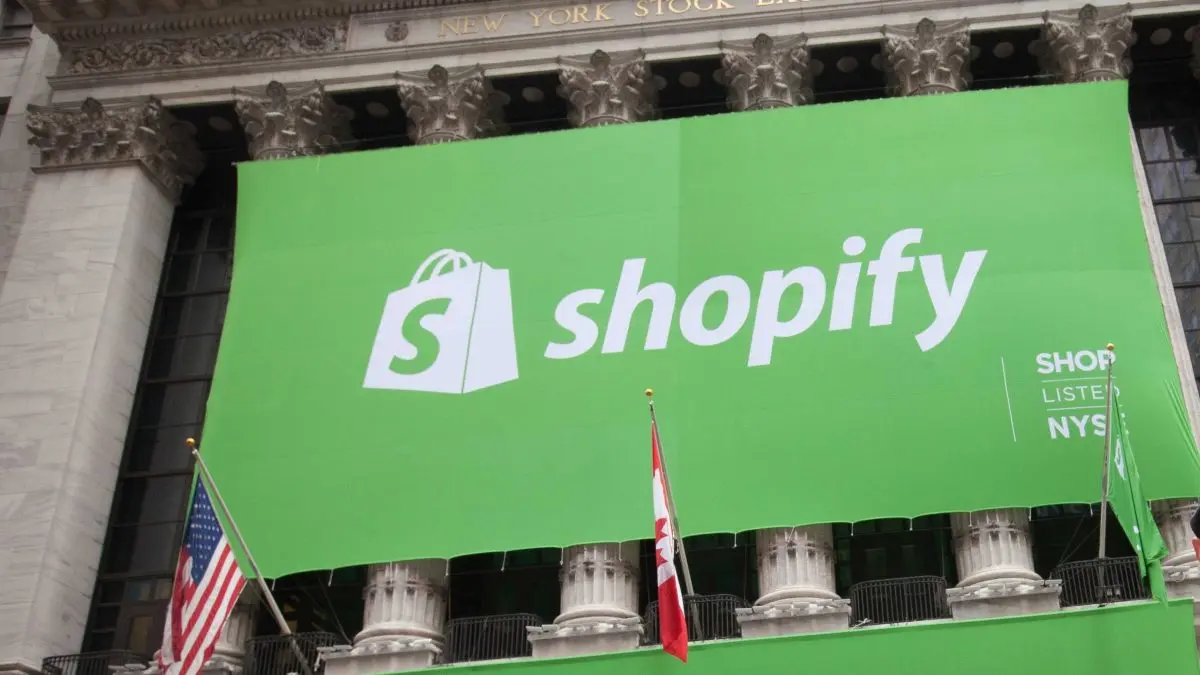
Back in May 2015, on the day that Shopify became a publicly-traded company, CEO Tobi Lütke made a bold prediction - Shopify will be the only platform needed to build a retail empire. Flash forward to today and Shopify accounts for 14% of total US e-commerce. So while the CEO might have sounded
[2]
Shopify Expands Grip on Checkout as AI-Driven Shopping Surges | PYMNTS.com
By completing this form, you agree to receive marketing communications from PYMNTS and to the sharing of your information with our sponsor, if applicable, in accordance with our Privacy Policy and Terms and Conditions. Shopify's fourth-quarter and full-year 2025 earnings report Wednesday (Feb. 11)
Share
Copy Link
Shopify President Harley Finkelstein positions the company at the center of the AI shopping era, revealing that orders coming from AI search have increased 15-fold since January 2025. With 14% of U.S. eCommerce market share and $11.6 billion in revenue, Shopify co-developed the Universal Commerce Protocol with Google to standardize how the world shops with AI agents.
Shopify Claims Pole Position in the AI Shopping Era
Shopify President Harley Finkelstein is making a bold pitch: the company that once empowered independent merchants to get online is now positioned to dominate the AI shopping era. Since January 2025, orders from AI search coming to Shopify stores have surged 15x, signaling a fundamental shift in how consumers discover and purchase products
1
. While the base remains small, the trajectory matters. For merchants, this shift powers the long tail of commerce, connecting smaller businesses with buyers who might never have discovered them through traditional search. For consumers, AI-driven shopping functions like having a personal shopper available 24/7, understanding taste, preference, and size at scale1
.Shopify now commands more than 14% of U.S. eCommerce market share, a milestone that reflects its evolution from SaaS provider to commerce infrastructure provider
2
. The company reported fourth-quarter revenue of $3.67 billion, up 31% year over year, capping a fiscal year in which revenue growth reached $11.6 billion, up 30%2
. Finkelstein told investors that "2025 was Shopify at full throttle, driving compounding growth, while laying the rails for the new era of AI commerce"2
.
Source: PYMNTS
Universal Commerce Protocol Sets the Standard for Agentic Commerce
At the heart of Shopify's AI commerce strategy sits the Universal Commerce Protocol (UCP), co-developed with Google and positioned as "the common rails agentic commerce runs on"
1
. Finkelstein describes UCP as an open standard that allows any agent to connect with any brand on the Internet, covering the full commerce journey end-to-end from search to cart, then checkout, and including post-order processes1
. The protocol keeps merchants' essential checkout logic intact while remaining payment agnostic by design, meaning merchants don't need to rebuild customizations repeatedly1
.
Source: diginomica
The company's primary mechanism for bringing AI technology to merchants is Agentic Storefronts, which allows merchant customers to purchase products directly within AI platforms like ChatGPT, Microsoft Copilot, and Google Gemini
2
. This approach addresses a critical shift: shoppers increasingly begin product searches with an AI prompt instead of traditional queries, with AI tools now performing comparison work, generating shortlists, and explaining trade-offs2
.Data Advantage Fuels AI Ambitions Across the Transaction Stack
Shopify's competitive edge in agentic commerce stems from its massive commerce data set. The company has accumulated trillions of data points from billions of transactions across millions of merchants, creating what Finkelstein claims is "a more diverse commerce data set than almost anyone else on the Internet"
1
. This data forms the substrate on which machine learning systems thrive, particularly with the rise of Universal Commerce Protocol-driven systems. CFO Jeff Hoffmeister highlighted investments in Catalog, Sidekick, and the protocol as forward-looking initiatives designed to standardize product data and embed intelligence into merchant operations2
.The company's revenue mix underscores its transformation. In 2025, subscription solutions generated $2.75 billion, while merchant solutions spanning payments, capital, and other transaction-linked services accounted for $8.8 billion
2
. Payments growth of 37% and Shop Pay GMV growth of 62% demonstrate Shopify's ambition to own more of the transaction stack2
. The company's $378 billion in annual GMV provides data advantages that could reinforce its AI initiatives as standardized product data and payment information become critical for LLMs and conversational commerce systems2
.Related Stories

What This Means for Merchants and the Future of eCommerce
Finkelstein emphasizes that "commerce is complex, it's dynamic, and it's also easy to get wrong"
1
. Shopping in an AI conversation must be at least as good as shopping at a merchant's online store, encompassing everything from monogramming options to white glove delivery and subscription services1
. The question for 2026 is whether Shopify can translate its AI investments into measurable merchant productivity gains that justify its infrastructure dominance2
.While Finkelstein believes AI commerce can "bend the curve of e-commerce penetration by stripping out friction, pulling late adopters in and moving more everyday purchases online"
1
, he concedes uncertainty around how agentic commerce will evolve relative to total retail penetration. The company's ongoing transition from small business enabler to full-service commerce backbone presents challenges, as enterprises demand robust data analytics, customization, and integration flexibility while Shopify maintains attractiveness to small and medium enterprises2
. This ambition may put Shopify in closer competition with FinTech providers, marketplaces, and traditional payment processors as it expands its grip on checkout and the broader commerce experience powered by OpenAI and Google partnerships.References
Summarized by

Navi
Related Stories
Shopify Doubles Down on AI Commerce Revolution with 7x Traffic Surge
05 Nov 2025•Business and Economy
Shopify Revenue Growth Hits 34% as AI Search Triples Traffic and Orders, Shares Soar 18%
05 Aug 2026•Business and Economy
Shopify AI Search Delivers New Customers Twice as Fast as Traditional Organic Search
05 May 2026•Technology

Recent Highlights



Recent Highlights
Today's Top Stories






Don’t drown in AI news. We cut through the noise - filtering, ranking and summarizing the most important AI news, breakthroughs and research daily. Follow topics that matter to you and stay ahead.


