Skild AI reaches $100M revenue milestone as robots learn from one video using S1 AI model


2 Sources
[1]
Skild AI hit $100M in run-rate revenue selling robots a brain that learns from one video
Skild AI says it has reached $100M in recurring revenue run-rate ten months after its first commercial deployment, with hundreds of robots running at more than 60 companies. Its S1 model learns tasks from a single video without prior training data, which is the behaviour Europe's Machinery
[2]
Skild AI hits revenue milestone on growing customer base - Bloomberg By Investing.com
Investing.com - Skild AI Inc. has reached $100 million in recurring revenue run rate, 10 months after beginning commercial use of its robotics software that helps robots learn tasks, Bloomberg reported Thursday. The startup's technology is currently used in hundreds of robots at more than 60
Share
Copy Link
Skild AI achieved $100 million in recurring revenue run-rate just 10 months after its first commercial deployment. The company's S1 AI model enables robots to master new tasks by watching a single demonstration video, with hundreds of robots now operating across more than 60 companies globally.
Skild AI Achieves Major Revenue Milestone
Skild AI has reached $100 million recurring revenue run-rate just ten months after its first commercial deployment, marking a significant shift in the robotics industry from demonstration to real-world application
1
. The robotics software now powers hundreds of robots operating across more than 60 companies, a dramatic increase from just eight companies earlier this year2
. Co-founder and CEO Deepak Pathak emphasized this represents "a new chapter for robotics, moving from an era of demos to an era of deployments"1
.
Source: The Next Web
Revolutionary S1 AI Model Enables Robots Learn From One Video
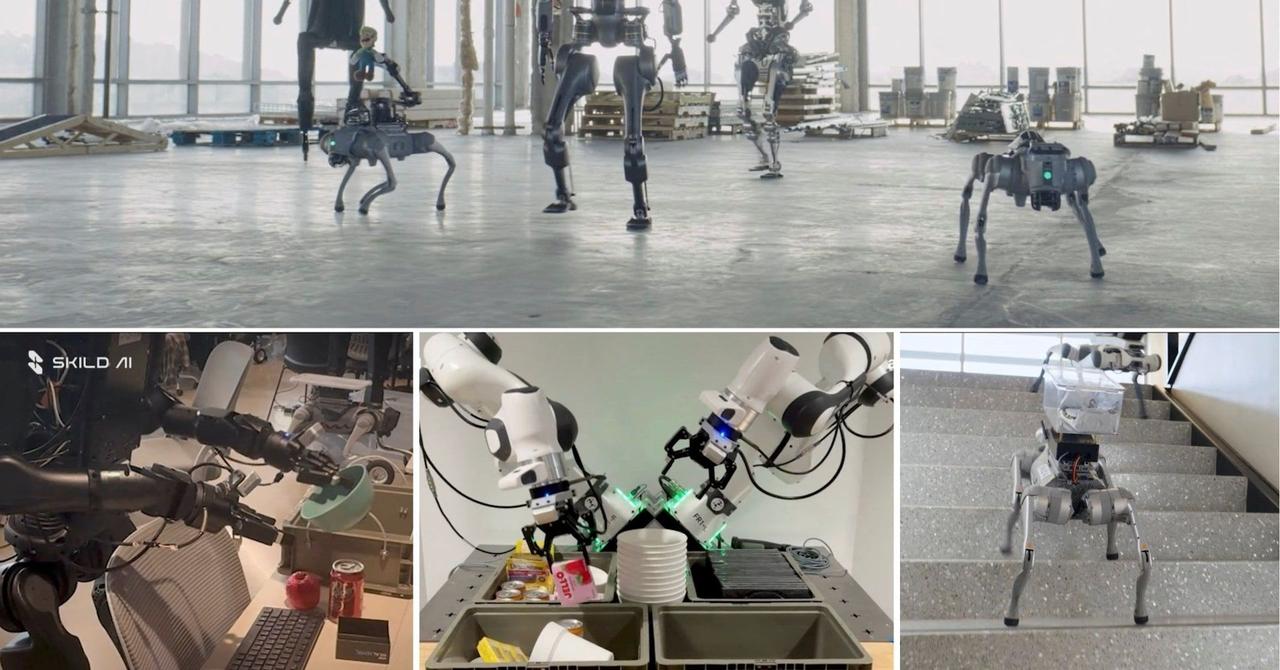
The company's breakthrough S1 AI model, launched last month, allows humanoid robots mimic new skills after watching a single demonstration video
2
. This AI-powered robot brain learns tasks through observation, handling complex sequences running past ten minutes including potting plants, brewing coffee, and assembling kits1
. Pathak described the moment when the system first flipped a pancake, a task never seen in its training data: "we could not believe it"1
. Skild's testing shows the S1 model achieves 96% success on familiar tasks and 66% on completely new ones, with one demonstration doing the work of roughly 380 post-training examples1
.Building a General Robot Brain Through In-Context Learning
Unlike traditional robotics automation that optimizes for specific tasks, Skild AI has developed a generalized AI-powered system designed for adaptability
2
. The S1 model employs in-context learning, enabling robots to master multistep tasks by watching videos and practicing2
. This approach fundamentally changes how robots acquire new capabilities, eliminating the need for extensive programming or prior training data for each individual task1
.Related Stories

Rapid Growth and Strategic Partnerships
The company secured $1.4 billion funding in January at a $14 billion valuation, more than tripling its worth from seven months earlier
1
2
. Skild announced partnerships with Nvidia and Foxconn on robotics automation in a Houston chip factory2
. In April, the company acquired Zebra Technologies' robotics automation business, expanding its operational capabilities1
. Current deployments span cafes in Japan to warehouses in the United States, though the company has not disclosed specific customer names1
.Regulatory Challenges with Self-Evolving Machinery
Europe's Machinery Regulation, effective January 20, 2027, will cover AI-based safety functions and self-evolving machinery for the first time
1
. Machines that change their behavior after deployment will require assessment by a notified body rather than relying on manufacturer declarations1
. A model whose core feature is performing tasks absent from training data sits squarely within this regulatory framework, though no such system has been assessed yet since the regime doesn't begin for sixteen months1
. Skild AI has not confirmed whether it currently sells into European markets, and wheeled humanoids from other startups are already operating in facilities like Siemens' Erlangen plant1
. Watch how Skild navigates these compliance requirements as they could shape the entire industry's approach to adaptive robotics deployment globally.References
Summarized by

Navi
[1]
Related Stories
Skild AI triples valuation to $14 billion as SoftBank leads $1.4 billion robotics software bet
14 Jan 2026•Startups

SoftBank and Nvidia in talks to fund Skild AI at $14 billion, nearly tripling its valuation
08 Dec 2025•Startups

Skild AI Unveils Groundbreaking 'Skild Brain' Model for Multi-Purpose Robots
30 Jul 2025•Technology
Recent Highlights



Recent Highlights
Today's Top Stories






Don’t drown in AI news. We cut through the noise - filtering, ranking and summarizing the most important AI news, breakthroughs and research daily. Follow topics that matter to you and stay ahead.


