AI Coding Agents Let Users Strip Ads and Bloatware From Smart TVs Using Claude Code


13 Sources
[1]
People are using AI to make their smart TVs dumb again
The latest use case for AI? Dumbing down your smart TV to get rid of the bloat. A number of developers and vibe coders have recently been sharing solutions for "vibe-coding" your TV to get rid of sponsored ads, speed up the app launcher, redesign the home screen, disable tracking features, and
[2]
You can hack your TVs and gadgets with AI for free now - but should you? - ZDNET
AI's 'Reverse Engineer Anything' movement is letting people strip ads from smart TVs and revive old devices - while risking security and reliability. * New AI tools make modifying gadgets and device firmware easier. * People use them to get more from their smartphones and smart TVs. * Easy,
[3]
People are fixing their TV OSes with Claude
Users are getting fed up with the barrage of ads and data tracking on TVs and are looking to AI vibe coding for the answer. Vibe coding has reached TVs. Social media is awash with posts from people using LLMs and open-source tools to remove ads and tracking, trim bloat so the OS runs faster, and
[4]
Someone debloated their Samsung Tizen OS TV by pointing a camera at it for Claude to see
* Claude tried to debloat an Android TV, but it was Samsung Tizen, a locked, non-ADB system. * It used a local site to access the user's phone camera, snapping TV photos every 4s to monitor progress. * After ~11 hours, Claude built an Apple TV-style UI, hid apps, and wiped the Samsung ad
[5]
I let Claude Code debloat my Smart TV, and it exposed a bigger problem
Anurag is an experienced journalist and author who's been covering tech for the past 5 years, with a focus on Windows, Android, and Apple. He's written for sites like Android Police, Neowin, Dexerto, and MakeTechEasier. Anurag's always pumped about tech and loves getting his hands on the latest
[6]

Please don't use AI hacks to debloat your TV
There are easier and safer ways to fix your smart TV's problems endif; ?> Fed up with your smart TV's bloated interface and aggressive data collection? The AI bros are on it. Over the past week, several developers claim to have "hacked" their TVs with AI, making them faster and less
[7]

People are using AI to turn their smart TVs into dumb TVs -- and you might want to do the same
The allure of smart TVs definitely wowed everyone who ended up getting one for themselves. Being able to turn on your big-screen TV and have instant access to your streaming apps at the touch of a button is amazing. But now it's gotten to the point where smart TV screens are overloaded with the
[8]

Smart TV owners have found a new use for AI: Removing home-screen clutter
These days, turning on the TV means getting past everything it wants you to watch first. A sponsored banner here, a row of recommendations there, and an app you never asked for that keeps showing up when you just wanted to open Netflix. But some smart TV owners have had enough, and are putting AI
[9]
People are now vibe-coding their smart TVs to strip them of ads and unwanted features
* Vibe coders use LLMs to strip smart TVs down to just the apps, HDMI, and no ads or tracking. * Open GitHub projects like CleanYourTV and DumbTV automate reversible TV de-bloating via ADB, no root. * LLM reverse-engineering now ports and recreates software and hardware features, sidestepping
[10]

How I Vibe Coded My Smart TV -- And Claude Killed It
Vibe coding your TV is impressive. Doing it without knowing exactly what you're touching is how you lose a rooted LG set and get a very sincere apology from an AI. In brief * Vibe-coding your TV's interface with an AI assistant is a real, working trend -- but LG webOS is a different beast from
[11]
People Are Vibe Coding the Ads Out of Their Smart TVs: Here's How
A viral Claude Code prompt lets Android TV owners switch off sponsored rows and tracking software and build their own home screens, with no root access and every change reversible. In brief * A developer used Claude Code to disable 25 Xiaomi packages on his parents' TV, and his open-source
[12]

Smart TV Owners Are Using AI to Strip the Ads Off Their Sets
If your smart TV shows an ad before you can open Netflix, some owners have a surprising fix. They're asking AI to make the TV less smart. People are using AI coding tools to switch off the ads, extra apps and tracking features that came with their sets. The idea has spread in just a few
[13]

How AI Tools Can Make Old Smart TVs Faster
AI coding tools like Claude Code are helping users upgrade sluggish Android TVs without buying a new television. . The open-source project tv-vibehack connects compatible Android TVs to a computer over Wi-Fi to simplify the cleanup process. . AI agents can identify unwanted pre-installed apps,
Share
Copy Link
A viral trend shows users deploying AI coding agents to debloat smart TV systems and remove ads from TV interfaces. Projects like dumbtv and cleanyourtv use Claude Code to disable bloatware, replace launchers, and block data tracking on Google TV and Android platforms. But the movement exposes deeper frustrations with smart TV manufacturers.
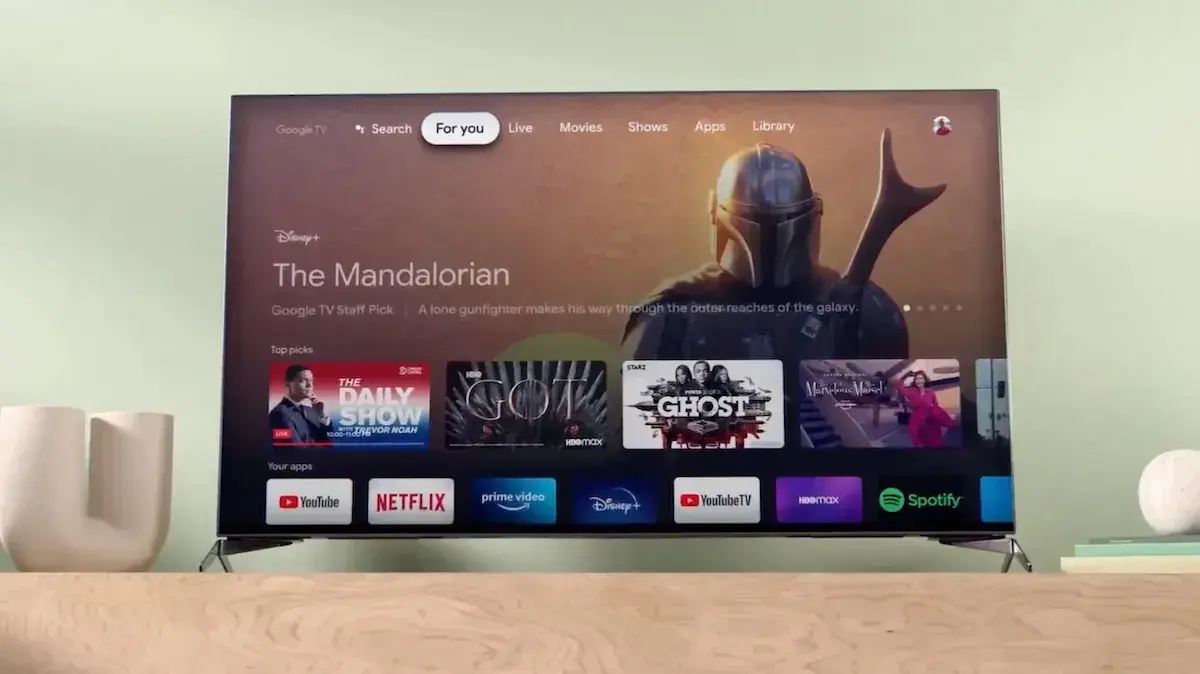
AI Vibe Coding Transforms Smart TV User Experience
Frustrated users are deploying AI coding agents to reclaim control over their smart TVs, stripping away ads, bloatware, and data tracking that manufacturers build into modern television interfaces
1
. The movement, known as AI vibe coding, has exploded across social media as thousands of people share their success stories of using tools like Claude Code from Anthropic to modify TV operating systems3
.Open-source projects including dumbtv and cleanyourtv have emerged on GitHub, describing their mission simply: "Your TV should do what you paid for: your apps, your HDMI inputs, and nothing else"
1
. Developer Gathin T. created cleanyourtv after growing tired of seeing ads on his parents' TV set. He used Claude Code to clean up the interface over Wi-Fi and build a simple home screen with just their apps on it. After posting the prompt on GitHub, several thousand people replicated the process on their own TVs over two days, targeting brands including Xiaomi, TCL, Sony, Fire TV, and LG1
.How AI-Powered Reverse Engineering Works on Smart TVs
The AI-powered reverse engineering process leverages existing developer tools built into Android-based smart TV platforms, particularly Google TV and older Amazon Fire products
3
. These projects use Android Debug Bridge (ADB) to tweak settings and apply or remove packages without requiring root access or firmware hacking, making the changes reversible3
.Users simply point their preferred AI coding agent at repositories like dumbtv on GitHub, which has been tested end-to-end on Fire TV Edition televisions and Android/Google TV platforms from Sony, TCL, Philips, Hisense, Xiaomi, and Shield
1
. In one viral example, Ryan Doyle sent Claude Code his TV's listing and asked "can you hack this?" The AI coding agent then guided him through removing ads and bloatware, speeding up the lagging interface, and customizing his screensaver1
.Another user, Mihir Gupta, spent one afternoon with Claude Code to disable 25 bloat apps, replace the 192 MB stock launcher with a custom 83 MB launcher, and add rotating wallpapers
1
. The AI-powered reverse engineering movement extends beyond televisions to smart picture frames, baby monitors, and abandoned Lululemon Mirror exercise displays2
.Smart TV Manufacturers Face Growing User Backlash
The surge in AI vibe coding reflects mounting frustration with how manufacturers monetize modern smart TVs through aggressive advertising and surveillance. Smart TVs ship with Automatic Content Recognition (ACR) technology that identifies what's playing on screen using screenshots, audio clips, or digital fingerprinting
1
. This data feeds targeted advertising and generates revenue for manufacturers and their ad partners3
.If these efforts to dumb down smart TV systems become mainstream among everyday consumers, they could disrupt the smart TV ad industry that profits from selling viewing data to advertisers or using it to display personalized ads on their own interfaces
1
. The movement signals that current TV operating systems have failed to meet user expectations for user control and privacy3
.Creative Workarounds for Locked-Down Systems Like Tizen OS
While most AI vibe coding projects focus on Android-based platforms, some users have tackled more challenging systems. One user attempted to debloat what they believed was an Android TV but discovered it was actually Samsung's Tizen OS, a heavily locked-down system that doesn't use ADB
4
.Claude Code devised an inventive solution: it created a local website that accessed the user's phone camera, snapping photos of the TV every four seconds to monitor its progress
4
. After approximately 11 hours and consuming 30% of a Claude Max 100 plan (the $100-per-month tier), the AI coding agent built an Apple TV-style interface, hid unused apps, and wiped the Samsung advertising ID4
.Related Stories

Hardware Limitations Remain Despite Software Improvements
While AI can help debloat smart TV systems and remove ads from TV interfaces, hardware limitations persist as a fundamental constraint. One user who tested Claude Code on a Sony Bravia running Google TV removed three unnecessary apps including Sony Select and a retail demonstration app, noticing modest improvements in responsiveness
5
.However, diagnostic tests revealed the real bottleneck: most smart TVs feature underpowered processors nearly a decade old and often less than 2GB of RAM
5
. YouTube took 5.7 seconds to launch immediately after restart compared to just 332 milliseconds after the TV settled, while Prime Video dropped from 4.35 seconds to 662 milliseconds5
. The CPU was nearly fully occupied during early tests, with considerable memory swapping occurring in the background5
.Risks and Alternatives to AI-Powered TV Modifications
The AI vibe coding movement carries real risks. Some users report that Claude wouldn't respond to simple "hack my TV" prompts, requiring more complex instructions
1
. Others warn that AI coding agents can make mistakes, potentially disabling important packages or breaking functionality. One person bricked their Android TV using Claude, while another got stuck halfway through hacking their Fire TV1
. Another user attempting to modify a Samsung TV with Claude also bricked their device3
.For those wary of using AI to fully modify TV operating systems, existing solutions offer safer alternatives. Android debloating programs using ADB have existed for years, as have custom launchers that make Google TV resemble Apple TV
3
. Apps like AT4K Launcher, Projectivity Launcher, and FLauncher provide simple replacements for bloated default interfaces without requiring firmware hacking5
.These projects won't necessarily stop all data tracking—if the TV connects to the internet, it collects at least some data
3
. The dumbtv project blocks certain manufacturer and ad partner addresses, but since data is usually encrypted during transit, knowing exactly what gets sent remains impossible3
. The only way to fully avoid ACR, ads, or any data tracking is never connecting the TV to the internet, using USB stick firmware updates instead, and routing streaming through external devices like Apple TV 4K that don't employ ACR3
.References
Summarized by

Navi
[1]
[3]
[4]
[5]
Related Stories
Samsung Smart TV User Tracking Exposed: Always-On Microphone and AI Surveillance Uncovered
27 Oct 2026•Technology

LG TVs forced Microsoft Copilot installation sparks backlash over unremovable AI shortcuts
15 Dec 2025•Technology

Vibe Coding's Dark Side: How AI-Generated Code Creates Security Risks and Technical Debt
29 Jul 2026•Technology
Recent Highlights



Recent Highlights
Today's Top Stories





Don’t drown in AI news. We cut through the noise - filtering, ranking and summarizing the most important AI news, breakthroughs and research daily. Follow topics that matter to you and stay ahead.


