Snap spins out AR glasses business into Specs Inc. to challenge Meta's smart glasses dominance


6 Sources
[1]
Snap is Spinning Out Its Specs AR Glasses Business
The subsidiary, Specs Inc., will keep focusing on products that build on the company's Spectacles, which create mixed-reality experiences for wearers. Snap, the company behind Snapchat, is launching Specs Inc. later this year, spinning out its smart glasses business into its own subsidiary. As
[2]
Snap seeks investments as new smart glasses unit takes on Meta
Jan 28 (Reuters) - Snap (SNAP.N), opens new tab will create an independent subsidiary for its augmented reality smart glasses, as it looks to attract external investment and challenge bigger rival Meta in the fast-growing wearables market. The launch of the Specs unit, announced on Wednesday,
[3]
Smartglasses pioneer Snapchat is going all-out to take on the Ray-Ban Meta
Social network Snapchat could be seen as one of the pioneers of modern, consumer-friendly smartglasses. However, despite its successful early start, it has lost out to brands like Meta and upstarts like Halliday and Mentra, with its own models fading into the background. That's set to change, as
[4]
Snap seeks investments as new smart glasses unit takes on Meta
Snap is launching a new unit for its augmented reality smart glasses. This move aims to attract outside investment and challenge rival Meta. The company has invested heavily in AR technology. The new smart glasses will feature an intelligence system. Snap is actively hiring for this new venture.
[5]

Snapchat's Upcoming Augmented Reality Glasses Will Launch Under a New Brand Called Specs
The Specs glasses will be cheaper than the Vision Pro, however, no release date has been confirmed yet. Snap Inc, the company behind the popular social media app Snapchat, just announced its new subsidiary called Specs. This will be a separate brand for its upcoming augmented reality smartglasses.
[6]

Snap doubles down on smart glasses with new independent unit
Jan 28 (Reuters) - Snap will create an independent subsidiary for its augmented reality smart glasses, as it looks to attract external investment and challenge bigger rival Meta in the fast-growing wearables market. The launch of the Specs unit, announced on Wednesday, comes as the success of
Share
Copy Link
Snap is launching Specs Inc. as an independent subsidiary for its augmented reality smart glasses, seeking external investments to compete with Meta's Ray-Ban glasses. After investing over $3 billion across 11 years, Snap positions its see-through lenses and AI-powered Intelligence System as a new computing paradigm, with products expected later in 2026.
Snap Creates Independent Subsidiary for AR Glasses Push
Snap is launching a new subsidiary Specs Inc. later this year, marking a strategic shift as the company behind Snapchat spins out its AR glasses business into an independent operation
1
. The move positions Specs to attract external investments while intensifying competition with Meta in the rapidly expanding smart glasses market . This restructuring provides greater operational focus and enables new partnerships, while supporting clearer valuation of the business as it approaches its public launch5
.Building on a Decade of AR Investment
Snap has invested more than $3 billion over 11 years to develop its augmented reality smart glasses, according to co-founder and CEO Evan Spiegel at the Augmented World Expo last year . The company first rolled out Spectacles in 2016, giving it a significant head start as Apple develops AI-powered glasses and Google partners with Warby Parker
1
. The original Spectacles featured cameras that shot video clips ready for Snapchat uploads, sold through special vending machines that added viral appeal3
. Despite this early momentum, Snap lost ground to Meta and emerging brands, making this subsidiary launch a critical repositioning effort.First-of-Its-Kind Intelligence System Powers New Vision
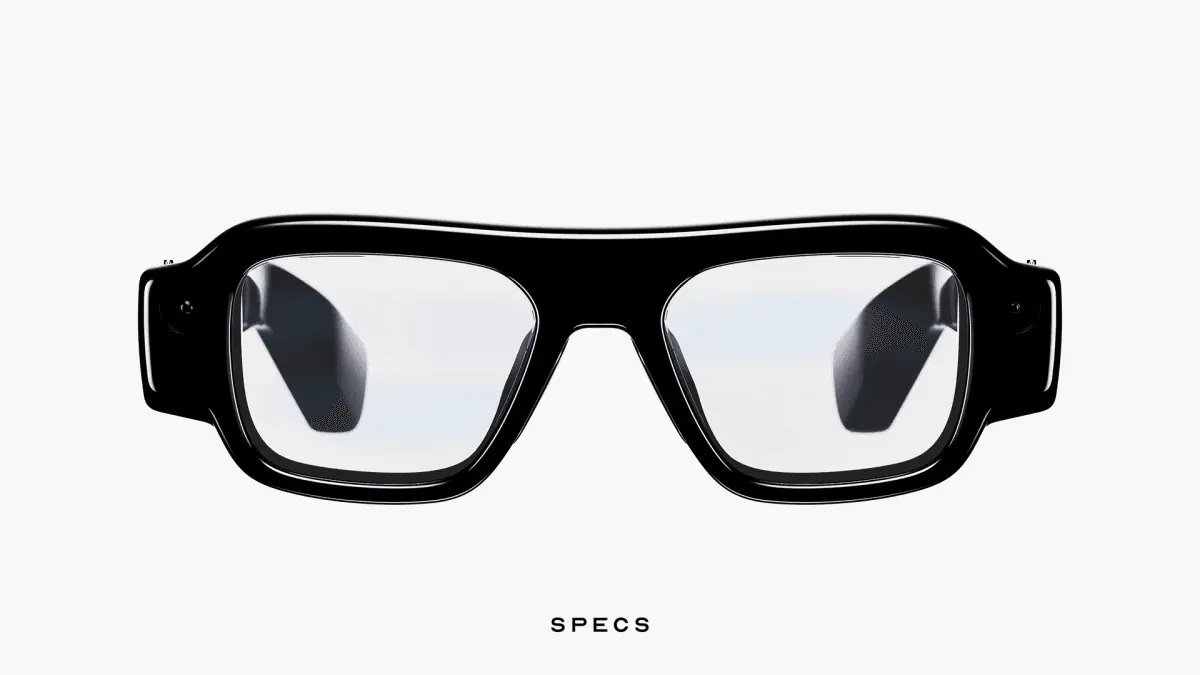
Specs products feature see-through lenses that add digital objects to the world in three dimensions, enabling natural controls with hands and voice controls
1
.
Source: CNET
The augmented reality smart glasses will include a first-of-its-kind Intelligence System designed to anticipate user needs and assist with tasks while protecting privacy . Snap describes this as a computer users will interact with less because it does more on their behalf, representing what the company calls a new computing paradigm not seen since the first Macintosh
5
. Unlike VR headsets that isolate users, these AI-powered wearables integrate digital experiences with physical surroundings, overlaying 3D digital objects onto real-time views3
.Related Stories

Taking on Meta's Market Dominance
The competition with Meta intensifies as Ray-Ban Meta smart glasses position eyewear as an early frontrunner in AI-powered gadgets. Meta dominated the smart glasses market with a 70% unit market share last year, followed by Xiaomi Corp at 8.5% and Huawei Technologies with 2.7%, according to International Data Corporation . While Meta develops its glasses with EssilorLuxottica's Ray-Ban, Snap envisions Specs as wearable replacements for productivity tools like instruction manuals and whiteboards
3
. The wearables market requires massive capital injection for hardware, software and research capabilities, where even slight supply chain disruptions impact production—a challenge that recently forced Meta to pause international expansion of its Ray-Ban Display glasses4
.Path to Commercial Launch and Market Position
Currently, Spectacles operate as a $99-a-month subscription service aimed at developers and creators rather than general audiences
1
. The new unit will open its door to minority investment and is actively recruiting for nearly 100 global positions as it moves closer to product launch4
. Francisco Jeronimo, VP of devices research at IDC, notes that success will depend less on breakthrough hardware innovation and more on ecosystem integration and software value . Ben Wood, chief analyst at CCS Insight, expects multiple products to emerge in this segment during 2026, making timing critical for Snap's commercial ambitions1
. The company's focus on keeping people present during social interactions and business activities, rather than isolated behind opaque screens like Vision Pro, differentiates its approach in a market poised for significant expansion1
.References
Summarized by

Navi
Related Stories
Snap Unveils Next-Gen AR Glasses: AI-Powered Specs Set for 2026 Consumer Launch
11 Jun 2025•Technology

Snap Specs AR glasses debut at $2,195, marking company's biggest bet on augmented reality
16 Jun 2026•Technology
Snap Unveils Fifth-Generation AR Glasses: A Leap into the Future of Augmented Reality
18 Sept 2024

Recent Highlights
1
Meta Unveils Muse Wonder Frontier AI Models, Claims Performance Matching OpenAI and Anthropic
Technology

2
IMF Report Warns AI Market Correction Could Spark Global Financial Crisis With $1.4T at Risk
Business and Economy

3
OpenAI Releases 722 AI-Generated Math Solutions, Triggering Existential Crisis in Mathematics
Technology

Recent Highlights
Today's Top Stories








Don’t drown in AI news. We cut through the noise - filtering, ranking and summarizing the most important AI news, breakthroughs and research daily. Follow topics that matter to you and stay ahead.


