Tech giants form optical interconnect alliance to solve AI infrastructure's data bottleneck


2 Sources
2 Sources
[1]
Tech titans team up to form optical interconnect alliance to solve the AI buildout's big data bottleneck -- Nvidia, AMD, Broadcom & more set sights on building PHY to break through the limitations of copper
This week, AMD, Broadcom, Nvidia, OpenAI, Meta, and Microsoft announced plans to standardize a protocol-agnostic, scale-up interconnect for AI data centers. The Optical Compute Interconnect Multi-Source Agreement (OCI MSA) group is tasked with defining an open connectivity specification for optical interconnections in AI data centers. This would allow for higher domain scale-up sizes, and enable a multi-vendor supply chain for optical interconnects, which the ongoing AI infrastructure buildout demands. The group's primary goal is to enable data centers to scale by using optical interconnections rather than relying solely on copper, which is currently hitting its physical limits for optimal data transfer speeds and power consumption. Copper is also facing significant supply chain constraints, and an industry-wide shift to optical interconnections would alleviate some of this demand. An optical interconnection would also bolster data transfer speeds, crucial for large-scale AI workloads. For copper, pushing electrical signals to high speeds results in signal degradation and unsustainable levels of power consumption; the solution is optical interconnects. Copper is inherently a lossy, resistant medium, necessitating huge amounts of power to send data over distances at high speeds. An optical physical layer (PHY) can overcome this electrical resistance challenge, allowing for higher-speed data transmission. The goal of the newly-founded group is to develop a PHY capable of delivering up to 3.2Tb/s and beyond. Given that power is an ongoing challenge in AI data center buildouts, a solution that not only stabilizes power usage but also increases interconnection speeds seems like an obvious choice. Optical cables would let more systems be concurrently connected over greater distances, without many of the penalties that come with copper, improving scale-up domains. However, optics also comes with its own downsides: Failure rates, increased heat output, higher overall costs, and overall failure rates. With the technology nascent in its application, new standards must be created in order for it to mature. Going platform-agnostic "Optical cables and the silicon photonics technology already exist when it comes to connecting different switches as part of a pluggable transfer ecosystem." said Vivek Raghunathan, CEO and co-founder at Xscape Photonics, in a recent interview with Tom's Hardware Premium. Indeed, TSMC's COUPE technology is a foundational bedrock for enabling optical and photonics in chips; where the new OCI MSA standard comes in is to enable these physical chips to effectively travel across the same lanes. The open standard developed by the OCI MSA would allow multiple vendors within the optical supply chain to offer components to a singlular, unified spec. In theory, it should drive down the cost of optics and optical interconnects at scale. Moreover, it divests the sole reliance on TSMC, as the standard would ensure interoperability between products and chips made with COUPE, and those using alternative CPO packaging platforms, effectively de-risking optical supply chains in the process. If co-packaged optics were introduced into data centers without an effective rulebook or guidelines to govern them, each vendor design would become proprietary, siloed between one another. So for larger-scale data centers that run multiple ecosystems, the OCI MSA's new spec defines a standard to let them drive on the same roads and use the same data pathways. This isn't about hooking together systems and getting them to understand each other via NVLink or UALink, but instead about offering a physical foundation to allow those protocols to travel over fibre connections. Within a data center, the OCI MSA's newly defined standard would allow a data center to theoretically run NVLink for Nvidia chips and UALink for AMD hardware, while making use of the same underlying optical infrastructure, at higher speeds than copper can realistically allow. "Fundamentally, the current copper-based interconnects just cannot meet that bandwidth requirement," Raghunathan continued. The OCI MSA's standard supports a range of optical solutions, such as pluggable optical modules, on-board optics, and chips using co-packaged optics. This would effectively break the barriers that copper currently employs. Getting in on the ground The companies involved in the newly formed alliance are all of the usual suspects: Nvidia, AMD, Microsoft, OpenAI, Broadcom, and Meta all create their own AI accelerators in some way, shape or form. Letting them assist in defining the new PHY means their products will be supported by it from day one. "Scale up focused optical technologies, protocols, and switch architectures are foundational to building scalable, multi rack, high performance AI compute domains. The OCI MSA advances this vision with a forward-looking physical layer specification setting the stage for open standards, differentiated implementations and systems architecture innovation." said Saurabh Dighe, Corporate VP of Azure and Architecture at Microsoft. From an early deployment at 200Gbps speeds all the way up to the 3.2Tb/s outlined by the alliance, it's becoming increasingly clear that to serve larger frontier models, or build toward vastly more complex AI data centers, optics is no longer an exploratory zone. It must be rolled out and served directly, if hyperscalers and AI model developers have their way. "By equipping best-in-class compute with state-of-the-art optics, the OCI MSA can deliver the scale and performance required by the next era of super-intelligence." says Gilad Shainer, SVP of networking at Nvidia. With superintelligence on the mind, speed is a non-negotiable, and the standards being drawn up reflect the rapid advancement of data center technology.
[2]
Nvidia, AMD, Meta, and Others Form AI Infrastructure Consortium
Nvidia, AMD, Broadcom joined hands with Microsoft and OpenAI to form the Optical Compute Interconnect (OCI) Multi-Source Agreement (MSA) consortium that aims to provide a pivotal shift towards a hyperscaler-driven open ecosystem to enable the development of a multi-vendor supply chain for optical scale-up interconnects. By aligning on an open specification, the OCI MSA members are promoting a robust optical ecosystem which will ensure that the future of AI interconnects is built with a flexible, multi-vendor foundation to meet the optical interconnect needs of modern AI infrastructure. The Physics and Power Mandate As LLMs advance toward super intelligence, traditional copper-based connectivity is reaching limitations in physical reach which are impacting AI cluster scale-up domain architectures. OCI will enable migration from copper-based to optical-based scale-up architectures, alleviating copper interconnect bottlenecks, according to a press statement. The OCI specification, which is available at their website is architected to be power, latency and cost optimized. It combines non-return to zero (NRZ) modulation and wavelength division multiplexing (WDM) optical technology and shifts the connectivity paradigm from a module-centric to a silicon-centric model. By enabling tighter integration of optics with compute and networking silicon, OCI unlocks meaningful gains in bandwidth density and system scalability while meeting the aggressive power targets of legacy copper-based connectivity. State-of-the-Art Compute Meets State-of-the-Art Optics By establishing an interoperable optical interface protocol, the OCI MSA enables a "plug-and-play" ecosystem. The open and interoperable specification enables hyperscalers to disaggregate any top-tier processor unit (XPU) engines and top-tier scale-up switches through a common optical physical layer (PHY), ensuring that best-in-class compute meets state-of-the-art optics. A standardized roadmap dramatically reduces integration risk, shortens development cycles and will provide the full AI rack supply chain with a clear, de-risked path for multi-generational, multi-vendor optical interconnect deployments. A Unified Technical Roadmap The Optical Scale-up Consortium (OCI MSA) has introduced a scalable open specification roadmap designed to standardize the AI rack supply chain across multiple hardware generations. By establishing high-density interfaces -- such as the 200Gbps OCI GEN1 and the 800Gbps GEN2 BiDi technology -- the framework enables seamless multi-vendor deployments of optical interconnects. This standardization supports a variety of form factors, including pluggable, on-board, and co-packaged optics (CPO), ensuring that data centers can mix and match hardware while maintaining high-speed connectivity. Looking toward future-proof infrastructure, the roadmap outlines a path to achieve massive scalability with data rates reaching 3.2Tbps per fiber and beyond. This expansion allows for significantly higher GPU counts and increased bandwidth per unit, catering to the aggressive performance demands of next-generation AI workloads. Crucially, the OCI MSA aims to deliver the power efficiency and cost-effectiveness typically associated with copper wiring, but with the vastly superior reach and throughput of advanced optical solutions. Industry leaders from the founding member companies emphasized that the OCI MSA is a critical response to the soaring power and bandwidth demands of next-generation AI. AMD and NVIDIA highlighted the necessity of an open, common optical standard to foster a robust multi-vendor ecosystem capable of supporting the "next era of super-intelligence." This sentiment was echoed by Meta and Microsoft, who noted that shifting from traditional electrical backplanes to advanced optical protocols is foundational for decoupling AI cluster growth from current physical limitations, ensuring high-performance compute domains remain scalable and cost-effective. Furthermore, Broadcom and OpenAI underscored the technical and strategic importance of this transition for the path toward Artificial General Intelligence (AGI). Broadcom pointed to the seamless integration with existing ASIC technologies as a key driver for flexibility, while OpenAI stressed that reaching AGI requires the massive network bandwidth and extended reach that only a standardized optical scale-up solution can provide. Together, these stakeholders view the OCI MSA as the essential blueprint for building the high-capacity, multi-rack supercomputers of the late 2020s.
Share
Share
Copy Link
Nvidia, AMD, Broadcom, Meta, Microsoft, and OpenAI have formed the Optical Compute Interconnect Multi-Source Agreement (OCI MSA) to standardize optical interconnections for AI data centers. The alliance aims to break through copper's physical limitations by developing an open specification that enables data rates up to 3.2Tbps and beyond, addressing the critical bandwidth and power challenges facing large-scale AI deployments.
Major tech players unite to tackle AI infrastructure challenges
Nvidia, AMD, Broadcom, Meta, Microsoft, and OpenAI have launched the Optical Compute Interconnect Multi-Source Agreement (OCI MSA), a consortium designed to standardize optical interconnect technology for AI infrastructure
1
. The alliance represents a pivotal shift toward a hyperscaler-driven open ecosystem, enabling the development of a multi-vendor supply chain for optical scale-up interconnects2
. By aligning on an open optical interconnect specification, these industry leaders are addressing the AI data bottleneck that threatens to limit the growth of next-generation AI workloads.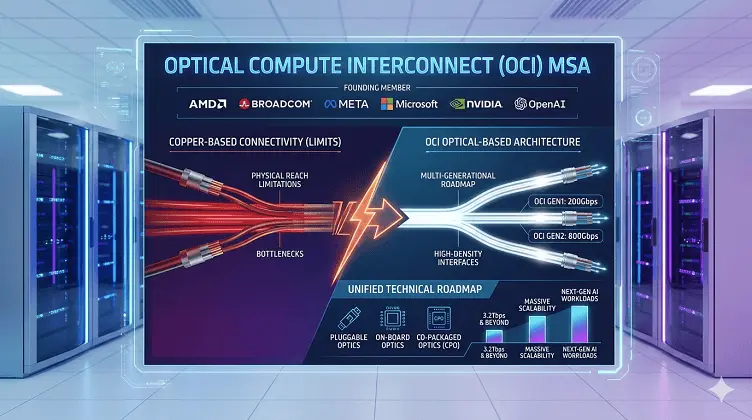
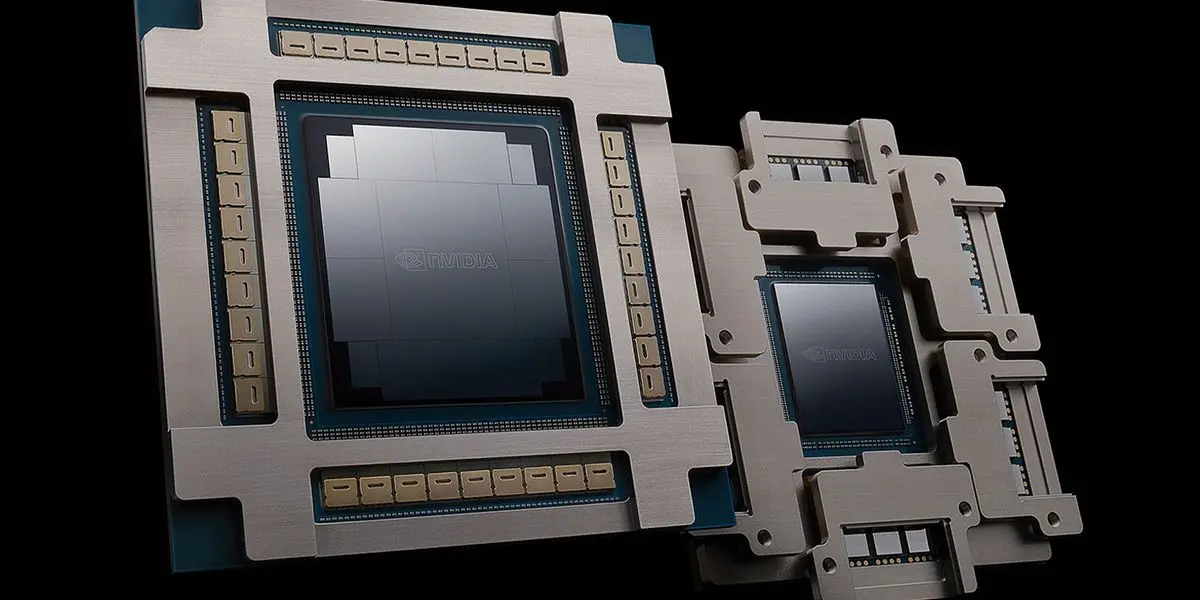
Source: CXOToday
Breaking through copper's physical limitations
Traditional copper-based solutions are reaching their physical limits as AI models advance toward super intelligence. Copper is inherently a lossy, resistant medium that requires enormous amounts of power to send data over distances at high speeds
1
. Pushing electrical signals to high speeds results in signal degradation and unsustainable levels of power consumption. An optical physical layer (PHY) can overcome this electrical resistance challenge, allowing for higher-speed data transmission while stabilizing power usage1
. The OCI MSA aims to develop a PHY capable of delivering up to 3.2Tbps and beyond, dramatically expanding bandwidth density and system scalability2
.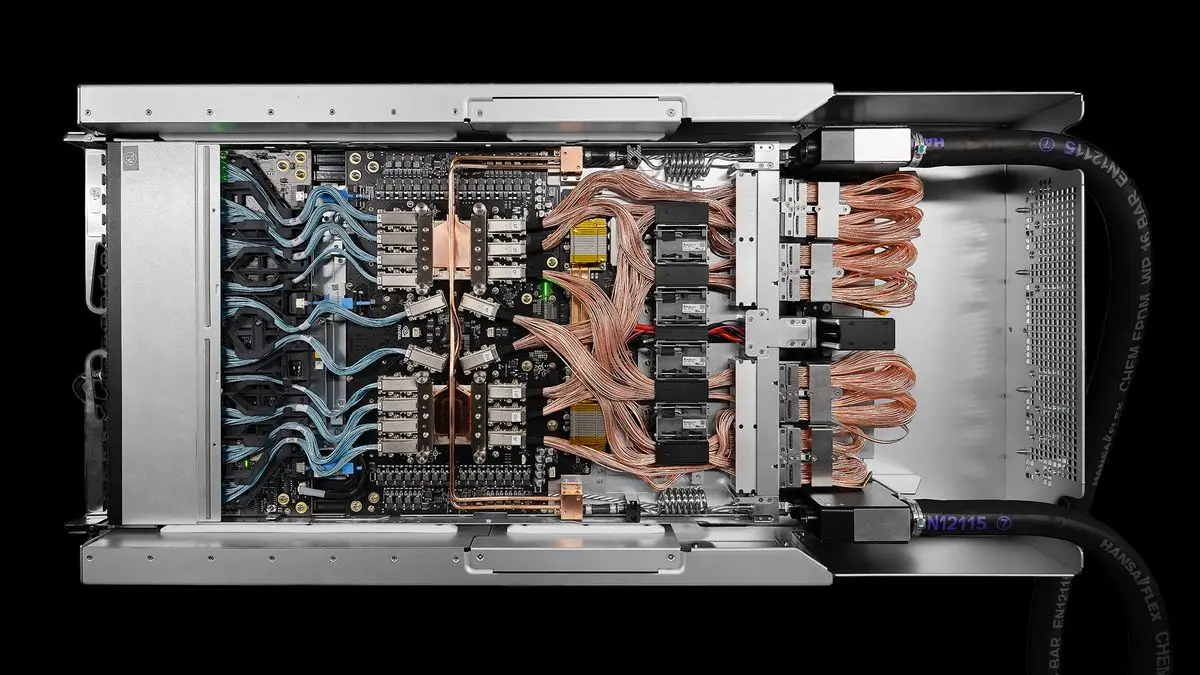
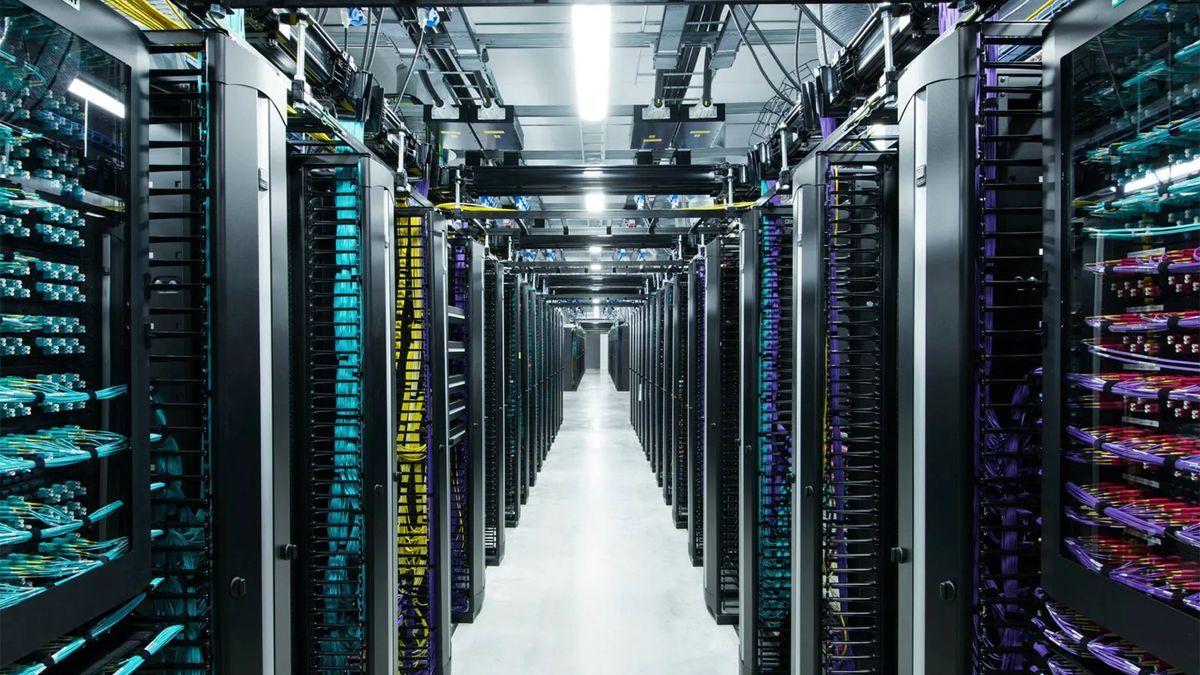
Source: Tom's Hardware
Building a protocol-agnostic foundation for AI data centers
The OCI MSA's specification is architected to be power, latency, and cost optimized, combining non-return to zero (NRZ) modulation and wavelength division multiplexing (WDM) optical technology
2
. This shifts the connectivity paradigm from a module-centric to a silicon-centric model, enabling tighter integration of silicon photonics with compute and networking silicon. Vivek Raghunathan, CEO and co-founder at Xscape Photonics, noted that "optical cables and the silicon photonics technology already exist when it comes to connecting different switches as part of a pluggable transfer ecosystem"1
. The new standard enables these physical chips to effectively travel across the same lanes, allowing AI data centers to theoretically run NVLink for Nvidia chips and UALink for AMD hardware while using the same underlying optical infrastructure at higher data transfer speeds than copper can realistically allow1
.Related Stories
Enabling plug-and-play multi-vendor deployments
By establishing an interoperable optical interface protocol, the OCI MSA enables a "plug-and-play" ecosystem that allows hyperscalers to disaggregate any top-tier processor unit (XPU) engines and top-tier scale-up switches through a common optical physical layer
2
. The consortium has introduced a scalable roadmap with high-density interfaces, including the 200Gbps OCI GEN1 and the 800Gbps GEN2 BiDi technology, supporting various form factors including pluggable, on-board, and co-packaged optics2
. This standardization dramatically reduces integration risk, shortens development cycles, and provides the full AI rack supply chain with a clear, de-risked path for multi-generational deployments. Without an effective rulebook, each vendor design would become proprietary and siloed, creating barriers for large-scale AI workloads that run multiple ecosystems1
.Strategic implications for AGI and future AI development
Industry leaders emphasized that the OCI MSA is a critical response to the soaring power and bandwidth demands of next-generation AI interconnects. Broadcom and OpenAI underscored the technical and strategic importance of this transition for the path toward Artificial General Intelligence (AGI), with OpenAI stressing that reaching AGI requires the massive network bandwidth and extended reach that only a standardized optical scale-up solution can provide
2
. Meta and Microsoft noted that shifting from traditional electrical backplanes to advanced optical protocols is foundational for decoupling AI cluster growth from current physical limitations, ensuring high-performance compute domains remain scalable and cost-effective2
. The specification is available at the consortium's website, providing transparency for the broader industry. While optical cables offer significant advantages in data bottleneck resolution, they also present challenges including failure rates, increased heat output, and higher overall costs1
. The OCI MSA's standardized approach aims to mature this nascent technology while driving down costs through an open ecosystem that ensures interoperability across different packaging platforms, effectively de-risking optical supply chains in the process1
.References
Summarized by

Navi
Related Stories
Nvidia Unveils Groundbreaking Silicon Photonics Technology for Next-Gen AI Data Centers
25 Aug 2025•Technology
UALink Consortium Incorporates to Challenge Nvidia's Dominance in AI Interconnect Technology
31 Oct 2024•Technology

Nvidia Unveils Revolutionary Silicon Photonics Switches for AI Data Centers
19 Mar 2025•Technology
Recent Highlights


Recent Highlights
Today's Top Stories










Your Daily Dose of Curated AI News
Don’t drown in AI news. We cut through the noise - filtering, ranking and summarizing the most important AI news, breakthroughs and research daily. Spend less time searching for the latest in AI and get straight to action.

