Nvidia Unveils Groundbreaking Silicon Photonics Technology for Next-Gen AI Data Centers


3 Sources
[1]
Nvidia outlines plans for using light for communication between AI GPUs by 2026 -- silicon photonics and co-packaged optics may become mandatory for next-gen AI data centers
The extreme demands of passing communication between ever-growing clusters of AI GPUs is fueling a move towards using light for communication across the networking layers. Earlier this year, Nvidia outlined that its next-generation rack-scale AI platforms will use silicon photonics interconnects
[2]
Nvidia to deploy light based GPU interconnects by 2026
The company's Quantum X InfiniBand and Spectrum X Ethernet platforms will deliver up to 409.6 Tbps using liquid cooled switches built on TSMC COUPE tech. Nvidia is planning to implement light-based communication between its artificial intelligence GPUs by 2026, utilizing silicon photonics
[3]
NVIDIA's new Spectrum-X Ethernet: silicon photonics enters the chat, a game changer for AI
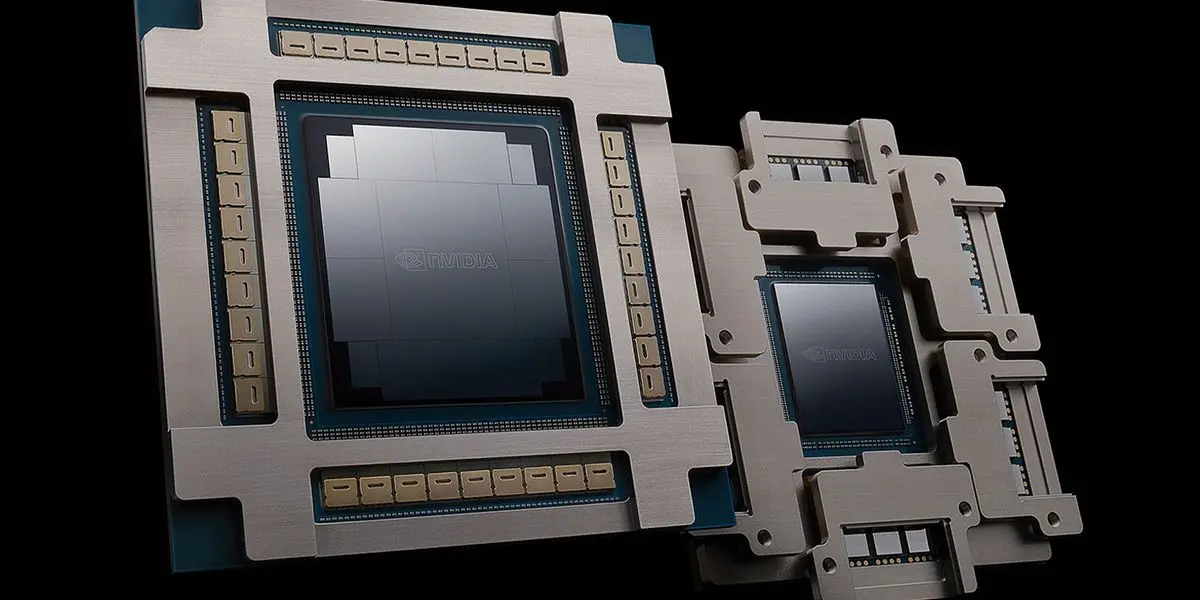
NVIDIA has just unveiled more details on its new Spectrum-X Ethernet Photonics interconnect, using next-gen silicon photonics replacing the traditional optical interconnect, and it's a "game changer" for AI. During the recent Hot Chips 2025 event, NVIDIA presented its next-gen Spectrum-X Ethernet
Share
Copy Link
Nvidia announces plans to implement light-based communication between AI GPUs by 2026, introducing Quantum-X InfiniBand and Spectrum-X Ethernet platforms with co-packaged optics for improved efficiency and scalability in AI data centers.
Nvidia's Breakthrough in Silicon Photonics
Nvidia has announced plans to revolutionize AI data centers with the introduction of light-based communication between AI GPUs by 2026
1
. This groundbreaking technology, utilizing silicon photonics interconnects with co-packaged optics (CPO), aims to achieve higher transfer rates at reduced power consumption, addressing the growing demands of large-scale AI clusters.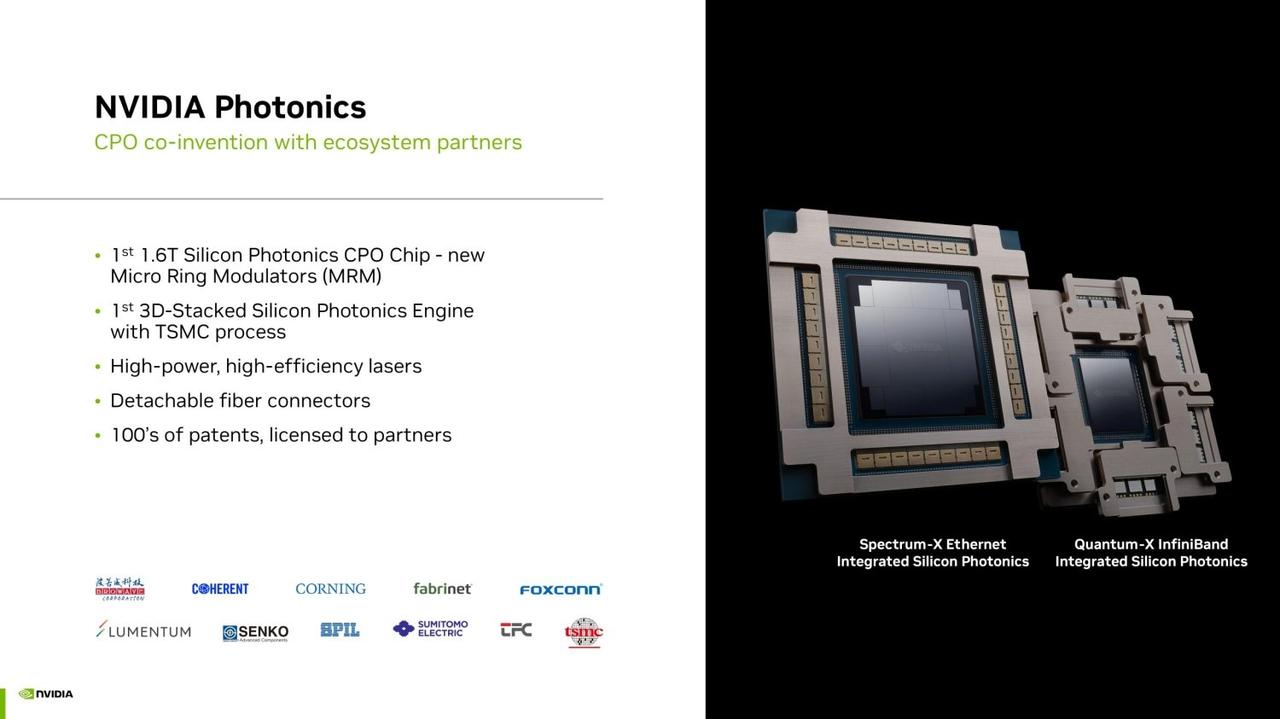
Source: TweakTown
The Need for Co-Packaged Optics
In large-scale AI clusters, thousands of GPUs must function as a unified system, presenting significant interconnection challenges. Traditional networking configurations using copper cables have become impractical for high speeds like 800 Gb/s, necessitating optical connections for nearly all server-to-switch and switch-to-switch links
1
.Advantages of Co-Packaged Optics
Nvidia's CPO technology offers substantial improvements over traditional pluggable optical modules:
- Reduced electrical loss from 22 decibels to 4 decibels
- Decreased per-port power consumption from 30W to 9W
- 3.5x increase in power efficiency
- 64x better signal integrity
- 10x boost in resiliency due to fewer active devices
- 30% faster deployment times
2
Quantum-X and Spectrum-X Platforms
Nvidia is set to introduce two major platforms leveraging CPO technology:
-
Quantum-X InfiniBand switches (early 2026):
- 115 Tb/s throughput
- 144 ports at 800 Gb/s each
- 14.5 TFLOPS of in-network processing
- Liquid-cooled design
1
-
Spectrum-X Ethernet Photonics (second half of 2026):
- Based on Spectrum-6 ASIC
- SN6810: 102.4 Tb/s bandwidth, 128 ports at 800 Gb/s
- SN6800: 409.6 Tb/s bandwidth, 512 ports at 800 Gb/s
- Liquid-cooled design
2

Source: Tom's Hardware
Impact on AI Data Centers
The implementation of CPO-based switches is expected to drive new AI clusters for generative AI applications. Key benefits include:
- Elimination of thousands of discrete components
- Faster installation and easier servicing
- Reduced power consumption per connection
- Improvements in time-to-turn-on and time-to-first-token metrics
- Enhanced long-term reliability
3
Related Stories


Collaboration with TSMC
Nvidia's development timeline aligns closely with TSMC's COUPE (Compact Universal Photonic Engine) roadmap, which unfolds in three stages:
- First generation: 1.6 Tb/s data transfer for OSFP connectors
- Second generation: 6.4 Tb/s at the motherboard level using CoWoS packaging
- Third generation: 12.8 Tb/s within processor packages
1
Future Implications

Source: Dataconomy
Nvidia emphasizes that co-packaged optics are not merely an optional enhancement but a fundamental requirement for future AI data centers. This technology is poised to be a game-changer in AI compute, enabling rapid and extensive scaling of AI factories. The company's foray into silicon photonics marks a significant step towards more efficient and powerful AI infrastructure, potentially reshaping the landscape of high-performance computing
3
.References
Summarized by

Navi
[2]
Related Stories
Recent Highlights



Recent Highlights
Today's Top Stories



Don’t drown in AI news. We cut through the noise - filtering, ranking and summarizing the most important AI news, breakthroughs and research daily. Follow topics that matter to you and stay ahead.


