The AI Dilemma in Game Development: Accusations, Experiments, and Ethical Concerns


2 Sources
[1]
A real issue: video game developers are being accused of using AI - even when they aren't
Generative AI is causing new and unusual problems for developers as players become more sensitive to the use of artificially generated 'slop' images In April, game developer Stamina Zero achieved what should have been a marketing slam-dunk: the launch trailer for the studio's game Little Droid was
[2]
Like it or not, developers are experimenting with AI for their remasters and remakes - but can they ever be any good?
Remakes and remasters are big business these days. As technology improves, these rereleases allow players to revisit a game with fresh eyes and enjoy their old favourites on modern platforms. For developers and publishers, rereleases are an efficient way to land in the hands of more players. And
Share
Copy Link
An exploration of how AI is impacting the video game industry, from false accusations of AI use to experimental remastering projects, highlighting the challenges and ethical concerns faced by developers.
The Rise of AI Accusations in Gaming
The video game industry is facing an unexpected challenge as developers are being accused of using AI-generated content, even when they aren't. Stamina Zero, an indie game studio, experienced this firsthand when their game Little Droid was criticized for supposedly using AI-generated art
1
. Despite the cover art being created by a human artist, players were quick to point out perceived AI-like qualities, such as asymmetry and unusual lighting effects.This phenomenon isn't isolated. Other developers, like Josh Caratelli of Chessplus, have faced similar accusations, even after explicitly stating that their art was commissioned from human artists
1
. The situation has become so prevalent that even industry giants like Nintendo and Wizards of the Coast have had to issue statements denying the use of AI in their products.The Impact on Indie Developers
While larger companies can weather these false accusations, indie studios are particularly vulnerable. Stamina Zero went to great lengths to prove the authenticity of their artwork, releasing a video showing the creation process
1
. However, this level of transparency isn't always enough to convince skeptics, leaving developers in a difficult position.Lana Ro of Stamina Zero expressed uncertainty about how to proceed in the future, noting that AI's ability to replicate various art styles may make it increasingly difficult to distinguish between AI and human-created content
1
. This blurring of lines is creating a crisis of trust between developers and players.AI Experiments in Game Remastering
Despite the controversies, some companies are actively exploring the potential of AI in game development. Keywords, a tech company, has launched Project Kara to investigate whether generative AI can be used to fully remaster a game
2
. This project follows their previous experiment, Project Ava, which attempted to create a 2D game entirely using AI tools.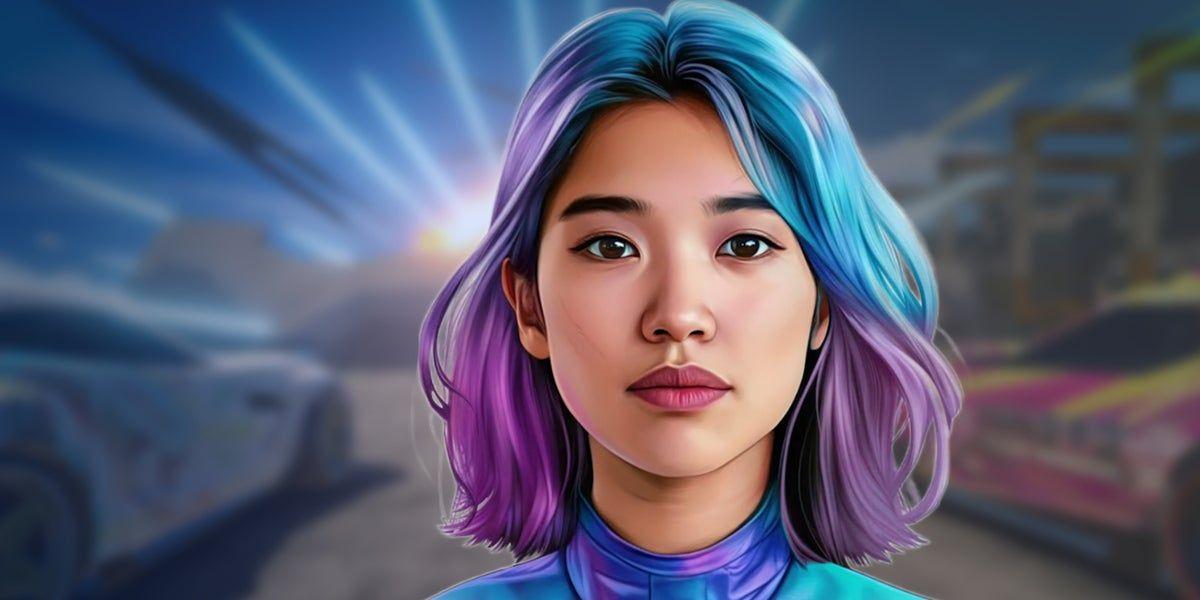
Source: Eurogamer
Project Kara involves remastering the mobile game Detonation Racing using AI tools at every step of the process. The team evaluated over 400 different generative AI tools, combining various capabilities to create a comprehensive development pipeline
2
.The Role of Human Input
James Roadley-Battin, lead artist on Project Kara, emphasized that no single AI tool was sufficient on its own. Instead, the team had to chain multiple tools together and rely on human expertise to guide the process
2
. This approach highlights the current limitations of AI in game development and the continued importance of human creativity and decision-making.Related Stories
Ethical Concerns and Industry Impact
The use of AI in game development raises several ethical concerns. These include:
- Environmental impact of power-hungry AI tools
- Potential job displacement in the creative industries
- Issues of art theft and copyright infringement
- Maintaining the quality and originality of game content
The SAG-AFTRA strike in the acting community has already highlighted some of these concerns, particularly regarding the use of AI in voice acting and performance capture
2
.The Future of AI in Game Development
As AI technology continues to advance, its role in game development is likely to grow. However, the industry is still grappling with how to integrate these tools ethically and effectively. The experiences of indie developers like Stamina Zero and the experiments conducted by companies like Keywords suggest that the relationship between AI and human creativity in game development will remain complex and contentious for the foreseeable future.
For now, it seems that the most successful approach involves using AI as a tool to enhance human creativity rather than replace it entirely. As the industry moves forward, establishing clear guidelines and transparency around AI use may be crucial in maintaining trust between developers and players.
References
Summarized by

Navi
[1]
Related Stories
AI in Video Games Triggers Player Backlash as Developers Navigate Quality vs Cost Savings
19 Feb 2026•Entertainment and Society

Generative AI in Gaming: Developers and Industry Veterans Weigh In on Its Potential and Challenges
16 Oct 2024•Technology

Game Developers Reject Generative AI Despite Tech Industry Push at GDC 2026
22 Mar 2026•Technology

Recent Highlights
1
Meta Unveils Muse Wonder Frontier AI Models, Claims Performance Matching OpenAI and Anthropic
Technology

2
IMF Report Warns AI Market Correction Could Spark Global Financial Crisis With $1.4T at Risk
Business and Economy

3
OpenAI Releases 722 AI-Generated Math Solutions, Triggering Existential Crisis in Mathematics
Technology

Recent Highlights
Today's Top Stories






Don’t drown in AI news. We cut through the noise - filtering, ranking and summarizing the most important AI news, breakthroughs and research daily. Follow topics that matter to you and stay ahead.


