The Hidden Environmental Cost of AI's Growing Presence in Everyday Life


8 Sources
[1]
As AI becomes part of everyday life, it brings a hidden climate cost
Marissa Loewen first started using artificial intelligence in 2014 as a project management tool. She has autism and ADHD and said it helped immensely with organizing her thoughts. "We try to use it conscientiously though because we do realize that there is an impact on the environment," she
[2]
What To Know About Google's AI Climate Footprint
For the climate concerned, the rise of the AI-reliant internet query is a cause for alarm. Many people have turned to ChatGPT and other services for simple questions. And even basic Google searches include an AI-derived result. Depending on how you crunch the numbers, it's possible to come up with
[3]
As AI becomes part of everyday life, it brings a hidden climate cost
Marissa Loewen first started using artificial intelligence in 2014 as a project management tool. She has autism and ADHD and said it helped immensely with organizing her thoughts. "We try to use it conscientiously though because we do realize that there is an impact on the environment," she
[4]
As AI becomes part of everyday life, it brings a hidden climate cost
As AI becomes a part of everyday life, its massive energy and water needs are coming more into focus Marissa Loewen first started using artificial intelligence in 2014 as a project management tool. She has autism and ADHD and said it helped immensely with organizing her thoughts. "We try to use
[5]

As AI Becomes Part of Everyday Life, It Brings a Hidden Climate Cost
Marissa Loewen first started using artificial intelligence in 2014 as a project management tool. She has autism and ADHD and said it helped immensely with organizing her thoughts. "We try to use it conscientiously though because we do realize that there is an impact on the environment," she
[6]

As AI Becomes a Part of Everyday Life, It Brings a Hidden Climate Cost
Marissa Loewen first started using artificial intelligence in 2014 as a project management tool. She has autism and ADHD and said it helped immensely with organizing her thoughts. "We try to use it conscientiously though because we do realize that there is an impact on the environment," she
[7]

As AI becomes part of everyday life, it brings a hidden climate cost - The Economic Times
Marissa Loewen first started using artificial intelligence in 2014 as a project management tool. She has autism and ADHD and said it helped immensely with organizing her thoughts. "We try to use it conscientiously though because we do realize that there is an impact on the environment," she
[8]

As AI becomes part of everyday life, it brings a hidden climate cost
Marissa Loewen first started using artificial intelligence in 2014 as a project management tool. She has autism and ADHD and said it helped immensely with organizing her thoughts. "We try to use it conscientiously though because we do realize that there is an impact on the environment," she
Share
Copy Link
As artificial intelligence becomes increasingly integrated into daily activities, concerns arise about its substantial energy consumption and environmental impact, prompting experts to suggest ways to mitigate these effects.
The Rise of AI and Its Environmental Impact
As artificial intelligence (AI) becomes increasingly integrated into our daily lives, from smartphones to search engines, its environmental impact is coming under scrutiny. Marissa Loewen, an early adopter of AI for project management, highlights the need for conscious use due to its environmental implications
1
3
4
5
.The Hidden Climate Cost of AI
Source: Inc.
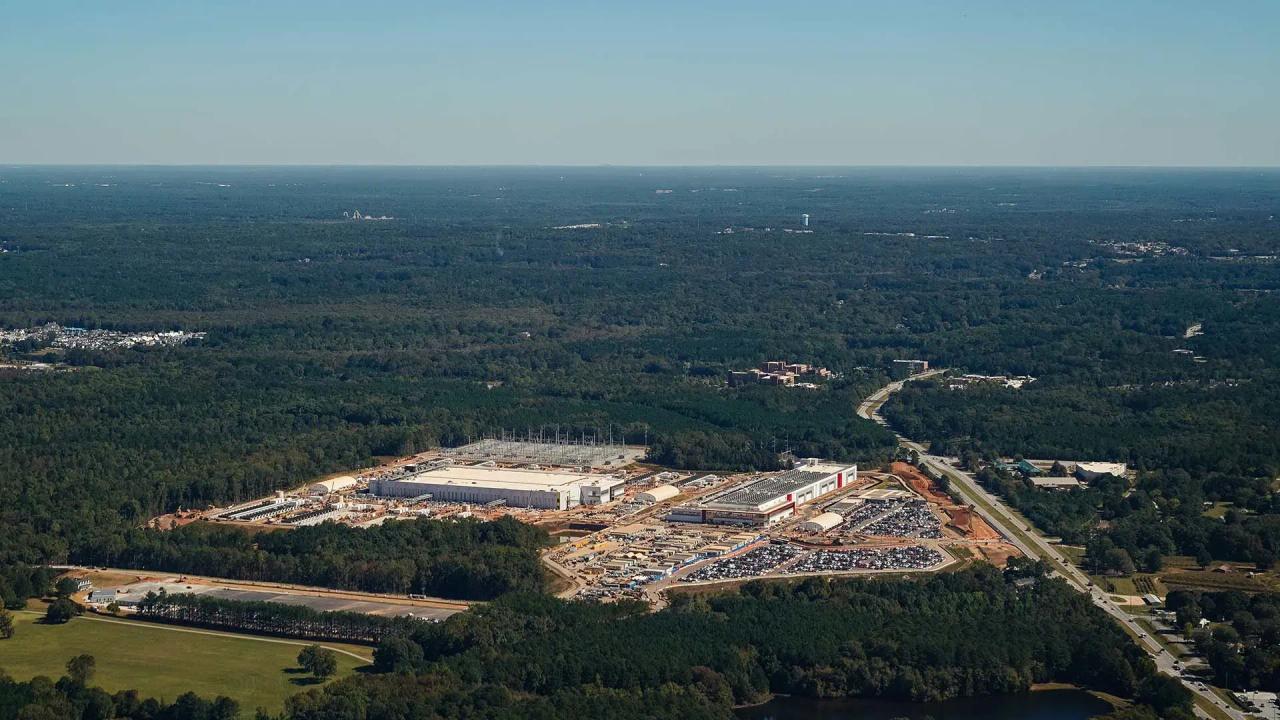
AI's operations are primarily powered by data centers, which are responsible for fielding queries, storing data, and deploying information. As AI usage grows, so does the demand for these centers, leading to increased energy consumption and potential grid reliability issues
1
3
4
5
.Noman Bashir, a computing and climate impact fellow at MIT's Climate and Sustainability Consortium, points out a critical problem: "Since we are trying to build data centers at a pace where we cannot integrate more renewable energy resources into the grid, most of the new data centers are being powered by fossil fuels"
1
3
4
5
.Water Consumption and Energy Use
Data centers not only consume significant amounts of electricity but also require vast quantities of water for cooling. Larger centers can use up to 5 million gallons (18.9 million liters) of water daily, equivalent to the water demand of a town with 50,000 residents
1
3
4
5
.Sasha Luccioni, AI and Climate Lead at Hugging Face, provides a tangible example: "generating a high-definition image uses as much energy as charging half of your phone"
1
3
4
5
.Quantifying AI's Environmental Footprint

Source: TIME
Jon Ippolito, a professor of new media at the University of Maine, has developed an app to compare the environmental impact of various digital tasks. His findings are striking:
- A simple AI prompt uses 23 times more energy than a standard Google search
- A complex AI prompt consumes 210 times more energy than a non-AI search
- A 3-second AI-generated video uses 15,000 times more energy, equivalent to leaving an incandescent bulb on for over a year
1
3
4
5
However, it's important to note that other digital activities also have significant energy costs. For instance, watching an hour of Netflix uses more energy than a complex AI text prompt, and an hour-long Zoom call with 10 participants uses 10 times that amount
1
3
4
5
.Related Stories

Mitigating AI's Environmental Impact
Experts suggest several ways to reduce AI's environmental footprint:
- Limit AI use when possible and opt for human-captured images over AI-generated ones
- Request concise answers and stop AI generation once the required information is obtained
- Use local AI models that don't rely on large data centers
- Employ eco-friendly search engines like Ecosia, which uses efficient algorithms and plants trees
1
3
4
5
Ippolito estimates that AI currently accounts for only a fraction of data center energy use, with about 85% attributed to data collection from social media sites and cryptocurrency
1
3
4
5
.The Broader Picture
While AI's environmental impact is concerning, it's part of a larger issue of digital technology's energy consumption. As Jon Ippolito notes, "It's not just about making people conscious of AI's impact, but also all of these digital activities we take for granted"
1
3
4
5
.The challenge lies in balancing the benefits of AI with its environmental costs, a task that will require conscious effort from both users and developers in the coming years.
References
Summarized by

Navi
[3]
Related Stories
The Environmental Cost of AI: Balancing Innovation with Sustainability
19 Jun 2025•Technology

AI's voracious appetite for energy threatens climate goals as data centers consume record power
24 Jun 2026•Science and Research
AI's Soaring Energy Consumption: A Growing Environmental Concern
22 May 2025•Technology

Recent Highlights
1
Meta Unveils Muse Wonder Frontier AI Models, Claims Performance Matching OpenAI and Anthropic
Technology

2
IMF Report Warns AI Market Correction Could Spark Global Financial Crisis With $1.4T at Risk
Business and Economy

3
OpenAI Releases 722 AI-Generated Math Solutions, Triggering Existential Crisis in Mathematics
Technology

Recent Highlights
Today's Top Stories







Don’t drown in AI news. We cut through the noise - filtering, ranking and summarizing the most important AI news, breakthroughs and research daily. Follow topics that matter to you and stay ahead.


