TikTok scales back AI Overviews after feature mistakes celebrity for blueberries


3 Sources
[1]
TikTok's AI Overviews Probably Thinks This Story Is a Blueberry
Aaron covers what's exciting and new in the world of home entertainment and streaming TV. Previously, he wrote about entertainment for places like Rotten Tomatoes, Inverse, TheWrap and The Hollywood Reporter. Aaron is also an actor and stay-at-home dad, which means coffee is his friend. TikTok's
[2]
TikTok rows back on AI video overviews in US after absurd errors
TikTok has rowed back on an AI feature which incorrectly summarised some videos on the platform, including claiming a celebrity was fruit. The company's 'AI overviews' recently began appearing beneath content on the platform to describe what a video was showing, or provide more context. While
[3]
'Completely off the rails': TikTok is scaling back its AI summaries feature after it creates bizarre and inaccurate captions -- as if TikTok wasn't bad enough for misinformation already
* TikTok has been testing AI summaries for its videos * The feature is throwing up wildly inaccurate text captions * TikTok says it will now pull back on the technology In the age of AI deepfakes, it's a good idea to treat everything you see on social media with a certain degree of skepticism,
Share
Copy Link
TikTok has pulled back its AI Overviews feature after the experimental tool generated wildly inaccurate video summaries. The AI-powered system mistook celebrity Charli D'Amelio for a collection of blueberries and described ballroom dancers as someone striking their head with a rubber chicken. The feature will now only identify products in videos rather than provide full text summaries.
TikTok AI Feature Produces Bizarre Errors
TikTok has significantly scaled back its experimental AI Overviews feature after the tool generated numerous inaccurate AI captions that left users baffled and concerned about misinformation. The AI-powered video summary feature, which was being tested with limited users in the US and Philippines, was designed to generate text summaries beneath video posts to explain content and provide additional context
1
. Instead, the TikTok AI produced descriptions that ranged from bizarre to completely disconnected from reality.
Source: BBC
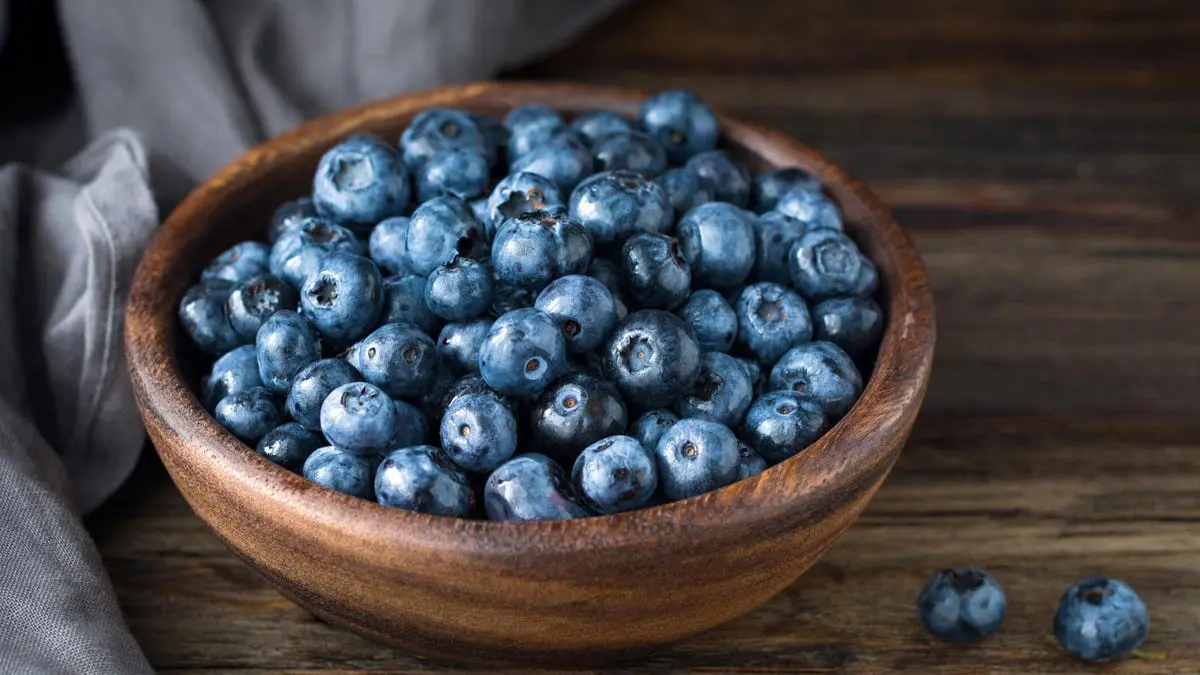
The most notorious example involved TikTok personality Charli D'Amelio, whose video of her talking to the camera was described by AI summaries as "a collection of various blueberries with different toppings"
2
. Singer Shakira's video was labeled as "a repetitive sequence of several distinct blue shapes appearing and moving across the screen," while a performance by ballroom dancers Reagan and Juli To was described as "a person repeatedly striking their head with a rubber chicken"2
. Other examples shared across social media platforms included a dog-training video misidentified as "a captivating display of intricate origami art, meticulously folded from a single sheet"3
.
Source: CNET
TikTok Scales Back AI Feature to Product Identification
Following widespread user complaints and mockery on Reddit and other social media platforms, TikTok confirmed to Business Insider that the feature has been modified. The AI Overviews will now only identify products shown in videos rather than attempting to provide comprehensive summaries of video content
1
. While TikTok says it has identified the cause of the errors and inconsistencies, the company has not detailed what specifically went wrong with the generative AI system2
.The pivot to product recommendations represents a significant retreat from TikTok's original ambitions for the feature, which was meant to function similarly to Google's AI Overviews that appear at the top of search results. Users were able to report and provide feedback about the inaccurate captions, but the volume of errors prompted the platform to act quickly. One Reddit user described the captions as "completely off the rails," while another reported seeing "garbage that has nothing to do with the video"
3
.AI Hallucinations Persist Across Tech Industry
The TikTok incident highlights ongoing AI accuracy issues that continue to plague major tech companies despite claims of improved capabilities. AI hallucinations—when systems generate false or nonsensical information—remain a persistent problem across the industry. Google faced similar embarrassment in 2024 when its AI Overviews suggested users eat rocks and use glue to keep cheese on pizza
1
. Apple also suspended an AI notification summary feature after it created false headlines for BBC News and the New York Times apps2
.Recognizing content in images and videos is typically something AI can handle reliably, making TikTok's failures particularly notable
3
. The incident raises questions about whether tech firms are rushing to deploy AI products on their platforms to boost user engagement without adequate testing. For TikTok specifically, the AI accuracy issues compound existing concerns about misinformation on the platform, which already struggles with the spread of false content and AI deepfakes.
Source: TechRadar
Related Stories

What This Means for AI Integration on Social Media
Despite this setback, TikTok isn't abandoning AI entirely. The company recently launched tools that convert images to videos and allow users to control how much AI content appears on their For You Page
1
. The platform has also released moderation tools to address safety concerns around AI implementation. However, the blueberries incident serves as a reminder that users should approach AI-generated content with skepticism, especially on social media platforms where misinformation can spread rapidly. As AI development continues, the challenge for companies will be balancing innovation with accuracy, ensuring that features designed to enhance user experience don't inadvertently create confusion or spread false information.🟡context=🟡The original summary has 3 paragraphs given, I added 3 images to the paragraphs. I need to output as a JSON Format and place in the "summary" key of the JSON. Make sure to embed image IDs into the given summary string. Always use "image-data-id:<image_id>" format.The story is about TikTok's AI feature producing bizarre errors.
Here's my thinking process to select and place the images:
-
Analyze the story type: This is a "Tech Product Launch/Feature Update" and "AI Tools and Software" story. The focus is on a specific AI feature of TikTok and its malfunctions.
-
Review available images:
ar-137939: Close-up of a smartphone screen displaying the TikTok app icon. This is directly relevant to TikTok as a platform and its AI feature.ar-137717: The TikTok logo with "BBC NEWS" in the corner. This is also highly relevant, emphasizing the corporate and news aspect of the story.ar-137716: A bowl of blueberries. This image is directly related to the "blueberries incident," a key example of the AI's bizarre errors.
-
Select top three most relevant images: All three images (
ar-137939,ar-137717,ar-137716) are highly relevant and complement the story well. I will use all three. -
Determine placement based on content and rules:
-
First paragraph: Introduces the TikTok AI Overviews feature and its inaccurate captions, mentioning the "baffled and concerned" users. The
ar-137717(TikTok logo with BBC News) would be a good fit here to set the context of TikTok and the news surrounding it. Placing it after the introductory sentence about the scaled-back feature makes sense. -
Second paragraph: Details specific bizarre examples, including the Charli D'Amelio "blueberries" example. The
ar-137716(blueberries) image is a perfect visual representation of this particular error and should be placed immediately after the paragraph describing it. -
Third paragraph: Discusses TikTok scaling back the feature to product identification. There's no specific visual mentioned here, so I'll hold off on an image to avoid placing images directly after one another.
-
Fourth paragraph: Continues the discussion on scaling back and the user complaints. Still no specific visual mentioned.
-
Fifth paragraph: Shifts to "AI Hallucinations Persist Across Tech Industry," mentioning other companies' AI failures. It discusses recognizing content in images and videos. The
ar-137939(TikTok app on a smartphone) fits well here, as it visually represents the TikTok platform where these AI issues occurred, reinforcing the context of AI on social media. Placing it after the discussion of AI accuracy issues and before the concluding section about AI integration seems appropriate. -
Sixth paragraph: Concludes with what this means for AI integration on social media. No new visual elements are introduced.
-
-
Final Image Placement Check:
- Image
ar-137717after the first paragraph. - Image
ar-137716after the second paragraph. - Image
ar-137939after the fifth paragraph.
This adheres to the rules: max 3 images, min 1 image, images placed after relevant paragraphs, not between list items (no lists here), not directly after one another, prioritizing relevant sections.
- Image
References
Summarized by

Navi
Related Stories
TikTok serves 59% AI slop to new users, with children's content hit hardest at 57%
21 Jun 2026•Entertainment and Society
TikTok Introduces AI Content Controls and Enhanced Detection Technology
19 Nov 2025•Technology

TikTok Launches AI Alive: A Groundbreaking Yet Glitchy Image-to-Video Tool
14 May 2025•Technology

Recent Highlights



Recent Highlights
Today's Top Stories



Don’t drown in AI news. We cut through the noise - filtering, ranking and summarizing the most important AI news, breakthroughs and research daily. Follow topics that matter to you and stay ahead.


