Traversal Raises $120M at $1B Valuation for AI Agents That Fix Software Failures


2 Sources
[1]
Traversal raises $120M at $1B valuation for its AI reliability agents
Kleiner Perkins, Redpoint Ventures and Khosla Ventures co-led the round. Traversal says its annual recurring revenue has grown nine times this year, as customers such as PepsiCo and Nubank widen their use. Traversal, a New York startup whose AI agents find out why company software breaks, has
[2]
Autonomous site reliability engineering startup Traversal bags $120M in funding at a $1B valuation
Traversal Inc., a startup that's trying to automate site reliability engineering tasks with artificial intelligence agents, seems to be closing in on that goal after raising $120 million in fresh funding, bringing its valuation to $1 billion. The newly minted unicorn's round was led by Kleiner
Share
Copy Link
New York-based Traversal has raised $120 million in Series B funding at a $1 billion valuation, with backing from Kleiner Perkins, Redpoint Ventures and Khosla Ventures. The startup's AI agents automate site reliability engineering tasks, helping companies like PepsiCo and Nubank diagnose and fix software failures. Traversal reports nine-times revenue growth this year as enterprises struggle with AI-generated code complexity.
Traversal Secures $120M Series B at Unicorn Valuation
Traversal, a New York startup building AI agents for site reliability engineering, has raised $120 million in Series B funding at a $1 billion valuation. Kleiner Perkins, Redpoint Ventures and Khosla Ventures co-led the round, with participation from Sequoia Capital, Battery Ventures and Amex Ventures
1
2
. Both Kleiner Perkins and Sequoia increased their stakes in the deal. The company has now raised $173 million in total since emerging from stealth in June 2025 with $48 million from Sequoia and Kleiner Perkins1
.
Source: The Next Web
Traversal reports its annual recurring revenue has grown nine-times since the start of the year, though co-founder and CEO Anish Agarwal declined to share specific revenue figures
1
. Monthly investigations conducted by customers jumped from 513 to nearly 73,000 this year, with more than 150,000 investigations run last quarter alone1
. The startup's customer base includes PepsiCo, Nubank, Harvey, DigitalOcean, American Express and Blackstone1
2
.Why AI Reliability Agents Matter for Enterprise Infrastructure
The surge in AI-generated code has created a crisis for site reliability engineering teams. Software developers have increased their code output by approximately 180% over the past two years, but this acceleration comes at a steep cost
2
. According to a report by Splunk and Oxford Economics, enterprise downtime costs have risen more than 50% during the same period, draining up to $600 billion annually from businesses worldwide2
.Agarwal argues that AI-written software breaks in fundamentally different ways than human-written code, making it harder to diagnose and fix
1
. Traditional observability tools were built for people reading dashboards, not for autonomous agents navigating complex production environments1
. Infrastructure engineers struggle to keep pace with the mounting complexity, creating an urgent need for autonomous site reliability engineering solutions.How Traversal's Technology Works
Traversal's AI agents automate the painstaking work of root-cause analysis when software failures occur. The company's Production World Model converts operational telemetry, code and deployment history into a format that AI can interpret
1
. Its Causal Search Engine then tests thousands of possible causes simultaneously, far exceeding what human engineers can accomplish manually1
.The system deploys Traversal Workers that begin investigating as soon as an alert fires. Traversal MCP shares what the system learns about production environments with AI coding agents, helping prevent future incidents
1
. The technology relies on causal machine learning, which identifies cause-and-effect relationships rather than statistical correlations2
. This approach enables Traversal to simulate how various actions affect IT infrastructure and quickly pinpoint problem sources.Agarwal shared an example of one bank that assembled thousands of engineers in a war room when customers couldn't log in. The culprit was a slow database buried deep in their systems. When a similar issue resurfaced months later, Traversal's agents identified it in five minutes
1
.Frontier Models Fall Short on Site Reliability Tasks
Traversal built ORCA-bench with Cornell Tech and Columbia University to test how well general-purpose AI agents handle site reliability engineering
1
. The benchmark includes 1,079 tasks requiring agents to diagnose and fix software failures. Results show even the best of five frontier models achieved just 25.3% accuracy on medium-difficulty incidents1
. Accuracy plummeted to 10% when incident reports were vague, and hallucination rates reached 40%1
2
."Site reliability engineering is one of the hardest problems in applied AI because every company's software environment is different, and with downtime costing companies as much as $600 billion a year, the stakes are enormous," Agarwal said
1
. The benchmark demonstrates why specialized AI reliability agents outperform general models for these critical infrastructure tasks.Related Stories
Customer Adoption Expands Beyond Incident Response
About two-thirds of Traversal's current usage extends beyond finding outage causes. Customers now deploy it for alert triage, release risk assessment and security monitoring
1
. David Vélez, founder and CEO of Nubank, noted that "Five weeks into our Traversal rollout, and it's already becoming part of how our on-call engineers work incidents"1
.The company's monthly active users have multiplied by 20 over the past year
2
. This rapid expansion suggests enterprises see value in delegating more reliability tasks to AI agents as they gain confidence in the technology's accuracy and judgment.What's Next for Traversal
Traversal plans to deploy its $120 million in fresh capital toward hiring across research, engineering and go-to-market teams
1
. Agarwal aims to build what he calls a "superintelligent AI SRE" that can match the velocity of AI-enabled developer teams2
. "After two years refining our technology, we're seeing customers expand how they use Traversal across increasingly complex production environments," he said2
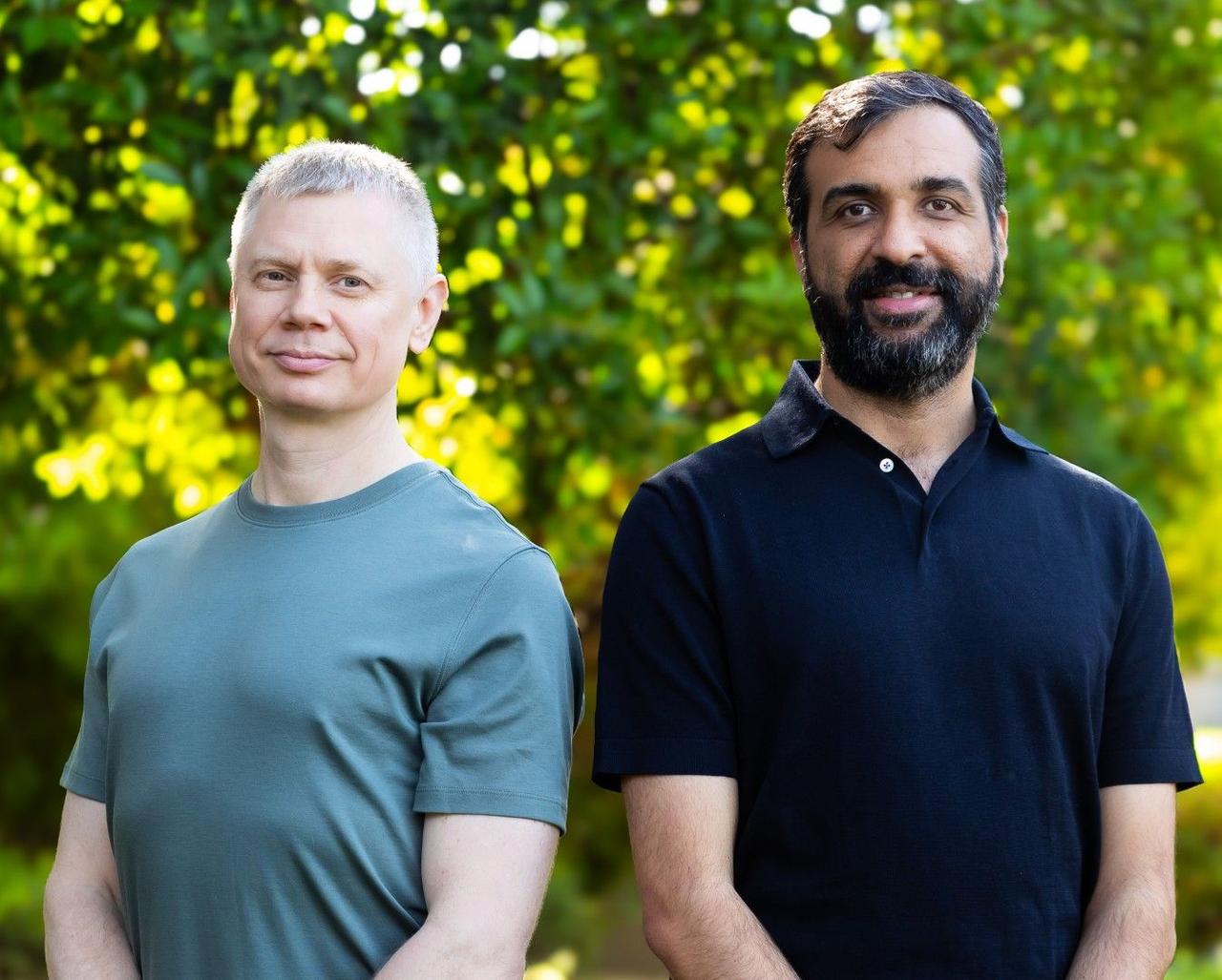
.The founding team brings deep technical credentials. Agarwal and Raj Agrawal earned PhDs at MIT, while Raaz Dwivedi completed his at UC Berkeley. Ahmed Lone came from quantitative trading at Citadel Securities. Agarwal and Dwivedi maintain faculty positions at Columbia University and Cornell Tech
1
.Kleiner Perkins partner Mamoon Hamid told Forbes that AI has "created acuteness around the problem of cyber reliability"
1
. Aditya Naganath, also from Kleiner Perkins, said Traversal is the first company bringing "real intelligence" into complex production environments. "As AI dramatically accelerates the pace at which software is written and shipped, the complexity of managing production will only grow," he predicted2
. Watch for Traversal to expand its agent capabilities beyond reactive incident response toward predictive maintenance and proactive optimization as it pursues that superintelligent AI SRE vision.References
Summarized by

Navi
Related Stories
Traversal Emerges from Stealth with $48M to Revolutionize Site Reliability in the AI Era
19 Jun 2025•Technology
Resolve AI Secures $125M Series A at Unicorn Valuation to Automate System Reliability Engineering
04 Feb 2026•Startups

Tractian Secures $120M Series C for AI-Powered Industrial Maintenance
06 Dec 2024•Technology

Recent Highlights



Recent Highlights
Today's Top Stories








Don’t drown in AI news. We cut through the noise - filtering, ranking and summarizing the most important AI news, breakthroughs and research daily. Follow topics that matter to you and stay ahead.


