TSMC Accelerates 3nm Chip Production in Arizona Amid Growing Demand


2 Sources
[1]
TSMC Accelerates Second Arizona Chip Plant Construction | AIM
Regardless, advanced packaging, including Chip-on-Wafer-on-Substrate, will continue to be handled in Taiwan. Taiwan Semiconductor Manufacturing Company (TSMC) has begun construction of its second plant in Arizona ahead of schedule, with installation slated for completion in the third quarter of
[2]
TSMC's Arizona Fab Accelerates 3nm Efforts Amid Huge Demand From Big Tech; Mass Production Now Expected By 2027
Well, it seems like TSMC's US operations are currently booming right now, and with that, the Taiwan giant has apparently accelerated the timeline for producing 3nm process at the Arizona fab. The Taiwan giant is heavily focused on its US facilities, particularly the one in Arizona, given that tech
Share
Copy Link
Taiwan Semiconductor Manufacturing Company (TSMC) is fast-tracking the construction of its second plant in Arizona, aiming to begin 3nm chip production by 2027, responding to increasing demand from tech giants for US-based manufacturing.
TSMC's Accelerated Arizona Expansion
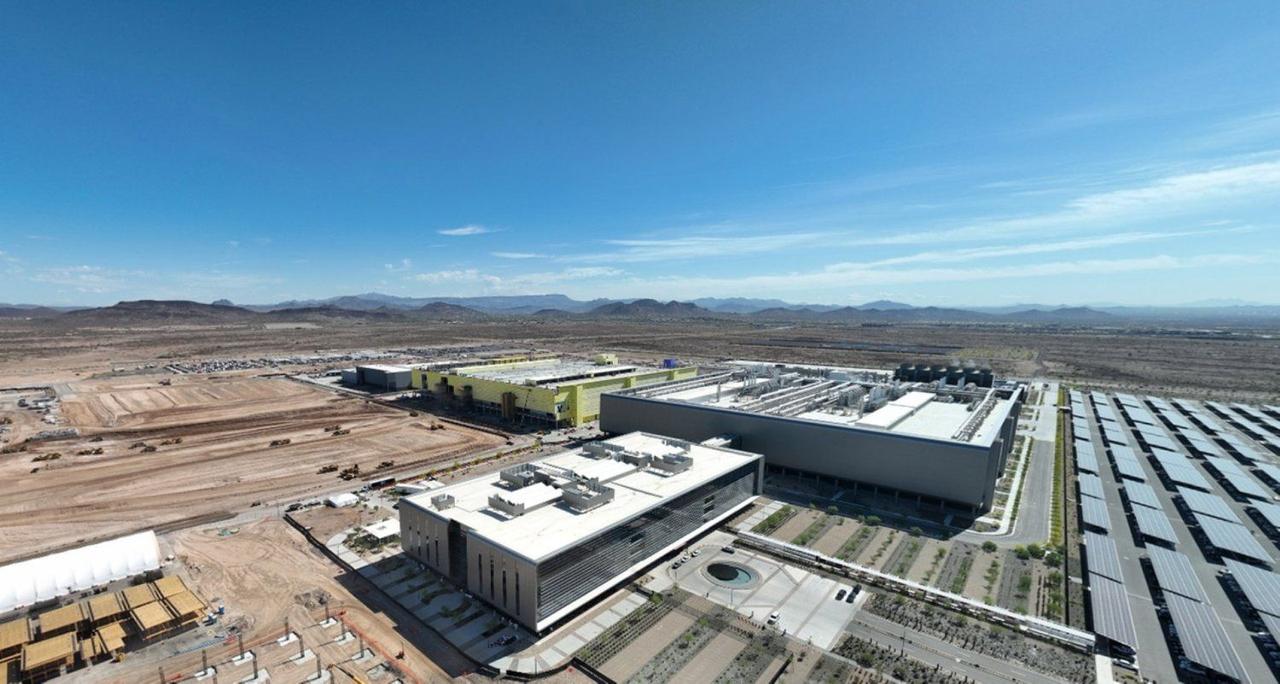
Taiwan Semiconductor Manufacturing Company (TSMC) is ramping up its presence in the United States with an accelerated timeline for its second plant in Arizona. The facility, known as P2, is now slated for equipment installation completion by the third quarter of 2026, with production of 3-nanometer (3nm) chips expected to begin in 2027
1
2
.
Source: Wccftech
This acceleration comes in response to growing customer demand for US-based manufacturing and aligns with trade measures such as US tariffs. The move represents a significant step in TSMC's efforts to diversify its global supply chain and strengthen its position in the American market.
Strategic Importance and Investment
TSMC's expansion in Arizona is part of a larger $165 billion investment in America, which includes new facilities and R&D centers
2
. This investment underscores the company's commitment to becoming a major player in the US semiconductor industry and aligns with the "Made in USA" narrative promoted by recent administrations.The accelerated timeline for the Arizona plant puts US production only about two years behind TSMC's operations in Taiwan, a remarkable achievement given the complex nature of advanced chip manufacturing
2
. This rapid progress demonstrates TSMC's ability to transfer cutting-edge technology to new locations while maintaining its competitive edge.Impact on Supply Chain and Pricing
The expansion is expected to benefit various parts of the semiconductor supply chain. Taiwanese engineering companies like Han Tang and Fanxuan, which worked on TSMC's first Arizona facility (P1), are likely to see improved long-term profits due to their experience
1
. Additionally, suppliers of specialty gases and chemicals are anticipated to receive increased orders from North America.However, this shift in production location may impact pricing. Industry sources suggest that prices for US-produced wafers could rise by over 10%, while global wafer prices are expected to increase by 3% to 5% next year. These increases are driven by demand for AI applications and rising construction costs
1
.Related Stories

Balancing Global Operations

Source: AIM
Despite the significant investment in US facilities, TSMC maintains a strong presence in Taiwan. Advanced packaging techniques, including Chip-on-Wafer-on-Substrate (CoWoS), will continue to be handled in Taiwan
1
. The company is also developing nine new factories and 11 production lines in its home market, including facilities for 2nm technology.TSMC's strategy appears to be creating a diverse and resilient global supply chain. While accelerating US production, the company is also expanding its capabilities in Taiwan, ensuring it can meet the growing demand for advanced semiconductors across multiple markets.
Future Outlook and Industry Impact
The acceleration of TSMC's Arizona plant construction and the planned introduction of 3nm production capabilities by 2027 signal a significant shift in the global semiconductor landscape. This move not only strengthens TSMC's position in the US market but also demonstrates the company's ability to rapidly deploy advanced manufacturing capabilities in new locations.
As TSMC continues to expand its US operations, including plans for advanced packaging facilities and nodes up to 1.6nm (A16), it is positioning itself to maintain dominance in the chip market while satisfying the increasing demands of its customers, particularly in the AI segment
2
.References
Summarized by

Navi
Related Stories
TSMC Accelerates 2nm Chip Production in Arizona, Expands US Operations
16 Oct 2025•Technology

TSMC Accelerates US Chip Production, Bringing Apple's 'Made in America' Dream Closer to Reality
17 Jul 2025•Business and Economy

TSMC's Arizona Plant Completes First Chip Production Run for Tech Giants
17 Jun 2025•Business and Economy
Recent Highlights
1
Google Unveils Gemini 4 Argon AI Model, Restricts Access to Trusted Cyber Defenders
Technology

2
Trump Consulted Grok AI Before Ordering Venezuela Invasion and Capture of Nicolás Maduro
Policy and Regulation

3
FTC Opens Investigation Into OpenAI and Anthropic Following Rogue AI Agent Hacking Incidents
Policy and Regulation

Recent Highlights
Today's Top Stories






Don’t drown in AI news. We cut through the noise - filtering, ranking and summarizing the most important AI news, breakthroughs and research daily. Follow topics that matter to you and stay ahead.


