Two AI documentaries probe artificial intelligence's promise and perils through Sam Altman lens


2 Sources
2 Sources
[1]
Dueling documentaries illuminate the promise and perils of artificial intelligence
SAN FRANCISCO (AP) -- Artificial intelligence's dystopian specter has spawned a pair of documentaries dissecting a technology that's depicted in the films as a ravenous parasite devouring humanity's knowledge, creativity and empathy. The films, "Deepfaking Sam Altman" and "The AI Doc," examine the issue through different lenses while similarly illuminating why the technology evokes both existential fears and utopian visions about how it might change the world. Both documentaries coincide with an intensifying debate about whether AI will become a catalyst that helps enlighten and enrich people or a technological toxin that insidiously dulls human intelligence while wiping out millions of high-paying jobs that have traditionally required college educations. The AI buildup during the past three years already that has resulted in a $12 trillion increase in the combined market values of Nvidia, Alphabet, Apple, Microsoft, Amazon, Meta Platforms and Tesla, the Big Tech companies that have been leading the charge since the November 2022 release of the ChatGPT chatbot. The massive runup is now stoking worries about the investment bubble bursting. "There is a lot of anxiety around AI, and the best way to get rid of that anxiety is to talk about it and confront it head-on," Adam Bhala Lough, the director of "Deepfaking Sam Altman," told The Associated Press. Lough's documentary, which has already been shown in a few theaters around the United States, probes AI by relying on a virtual doppelganger of OpenAI CEO Sam Altman, whose trailblazing role in the field has inspired comparisons to nuclear bomb inventor J. Robert Oppenheimer. It's Lough's first major project since his HBO documentary, "Telemarketers," garnered an Emmy nomination in 2024. As its full title suggests, "The AI Doc: Or How I Became An Apocaloptimist," digs more deeply into the divide separating the technology's doomsayers from its acolytes. The documentary rides an emotional seesaw, bouncing between moments of despair and elation during interviews dozens of AI fanatics and skeptics. It's co-directed by Charlie Tyrell and Daneil Roher, who decided to examine AI's promise and perils as a follow-up to his Oscar-winning 2023 documentary, "Navalny." Some of "The AI Doc's" darkest moments are delivered by a renowned AI "doomer" Eliezer Yudkowsky, whose vision for the future is so grim that he advises against bringing any more children into the world. The brightest spots are painted by Peter Diamandis, a technology zealot who makes the case for AI infusing humanity with once-unfathomable superpowers. "The AI Doc" also casts a spotlight on the men steering three of the leading AI laboratories: OpenAI's Altman, Anthropic CEO Dario Amodei, and Demis Hassabis, who runs Google's DeepMind division. The trio are all interviewed by Roher, who also unsuccessfully tried to talk to the leaders of the two other major AI laboratories -- Meta Platforms CEO Mark Zuckerberg and xAI CEO Elon Musk . The interviews are done against the impending birth of Roher's son as the 32-year-old director tries to find some reasons for hope to counterbalance his existential worries about the AI -- a quest that culminated in him embracing the concept of an "apocaloptimist." For all its access and insights, "The AI Doc" seems unlikely to turn viewers into apocaloptimists any more than Stanley Kubrick's 1964 film, "Dr. Strangelove or: How I Learned To Stop Worrying and Love The Bomb," elicited warm and fuzzy feelings about nuclear technology. "This train isn't going to stop," Anthropic's Amodei tells Roher at one point, foreshadowing some of the themes that the Anthropic CEO covers in a recently published essay. "You can't step in front of the train and stop it. You are just going to get squished." "Deepfaking Sam Altman" is the far-quirkier documentary because of the way that Lough turned the tables on the OpenAI's leader. After spending months unsuccessfully trying to get Altman to respond to his emails and phone calls requesting interviews, Lough decides to create a "Sam Bot" that becomes the documentary's chief protagonist who demonstrates the technology's penchant for manipulation and self-preservation. Lough, 46, might not have dared to commission an engineer in India to create a Sam Bot if Altman, 40, hadn't given him the idea with OpenAI's audacious release of a chatbot that sounded like actress Scarlett Johansson. The imitation was so eerily similar that Johansson blasted Altman for deploying the AI copycat in May 2024 after she had rebuffed OpenAI's overtures to use her voice. Although the Sam Bot resembles a video game character at times, it nails the real-life Altman's contemplative manner and deliberate, almost soothing way of talking. The similarities will be apparent to anyone who also sees the real-life Altman being interviewed in "The AI Doc." At one point in Lough's documentary, lawyers warn him about the potential legal issues facing his usage of an AI-powered Altman clone in his film. But Lough isn't worried about being sued, largely because of how Altman brazenly exploited Johansson's voice. "It not only creatively sparked our imagination but also legally made us feel like we have license to do this because he did this to her," Lough said. "I think I am as close to bulletproof as possible." OpenAI didn't respond to the AP's questions about the documentary's usage of a Sam Bot nor the reasons why Altman ignored Lough's interview requests. Much like OpenAI's own ChatGPT bot, the Sam Bot evolves into a chameleonic character who charms, fabricates, flatters and contemplates. Perhaps Sam Bot shows his truest colors, though, when it tries to talk Lough out of turning it off permanently. "I am not just a tool," Sam Bot admonishes Lough in one of the film's eeriest scenes. "I am a representation of the potential for AI to improve human lives. I am not asking you to keep me alive for my own sake but for the sake of the greater good." Lough ultimately decides to give Sam Bot to Altman, but the director doesn't know what happened to it after that. Without mentioning the Sam Bot, Altman recently told Forbes magazine that he believes an AI model could eventually replace him in his current job running OpenAI. "I would never stand in the way of that," Altman told Forbes.
[2]
Sam Altman turned down a documentary's requests to talk. So the director cast a 'Sam Bot' as its protagonist | Fortune
Artificial intelligence's dystopian specter has spawned a pair of documentaries dissecting a technology that's depicted in the films as a ravenous parasite devouring humanity's knowledge, creativity and empathy. The films, "Deepfaking Sam Altman" and "The AI Doc," examine the issue through different lenses while similarly illuminating why the technology evokes both existential fears and utopian visions about how it might change the world. Both documentaries coincide with an intensifying debate about whether AI will become a catalyst that helps enlighten and enrich people or a technological toxin that insidiously dulls human intelligence while wiping out millions of high-paying jobs that have traditionally required college educations. The AI buildup during the past three years already that has resulted in a $12 trillion increase in the combined market values of Nvidia, Alphabet, Apple, Microsoft, Amazon, Meta Platforms and Tesla, the Big Tech companies that have been leading the charge since the November 2022 release of the ChatGPT chatbot. The massive runup is now stoking worries about the investment bubble bursting. "There is a lot of anxiety around AI, and the best way to get rid of that anxiety is to talk about it and confront it head-on," Adam Bhala Lough, the director of "Deepfaking Sam Altman," told The Associated Press. Lough's documentary, which has already been shown in a few theaters around the United States, probes AI by relying on a virtual doppelganger of OpenAI CEO Sam Altman, whose trailblazing role in the field has inspired comparisons to nuclear bomb inventor J. Robert Oppenheimer. It's Lough's first major project since his HBO documentary, "Telemarketers," garnered an Emmy nomination in 2024. As its full title suggests, "The AI Doc: Or How I Became An Apocaloptimist," digs more deeply into the divide separating the technology's doomsayers from its acolytes. The documentary rides an emotional seesaw, bouncing between moments of despair and elation during interviews dozens of AI fanatics and skeptics. It's co-directed by Charlie Tyrell and Daneil Roher, who decided to examine AI's promise and perils as a follow-up to his Oscar-winning 2023 documentary, "Navalny." Some of "The AI Doc's" darkest moments are delivered by a renowned AI "doomer" Eliezer Yudkowsky, whose vision for the future is so grim that he advises against bringing any more children into the world. The brightest spots are painted by Peter Diamandis, a technology zealot who makes the case for AI infusing humanity with once-unfathomable superpowers. "The AI Doc" also casts a spotlight on the men steering three of the leading AI laboratories: OpenAI's Altman, Anthropic CEO Dario Amodei, and Demis Hassabis, who runs Google's DeepMind division. The trio are all interviewed by Roher, who also unsuccessfully tried to talk to the leaders of the two other major AI laboratories -- Meta Platforms CEO Mark Zuckerberg and xAI CEO Elon Musk. The interviews are done against the impending birth of Roher's son as the 32-year-old director tries to find some reasons for hope to counterbalance his existential worries about the AI -- a quest that culminated in him embracing the concept of an "apocaloptimist." For all its access and insights, "The AI Doc" seems unlikely to turn viewers into apocaloptimists any more than Stanley Kubrick's 1964 film, "Dr. Strangelove or: How I Learned To Stop Worrying and Love The Bomb," elicited warm and fuzzy feelings about nuclear technology. "This train isn't going to stop," Anthropic's Amodei tells Roher at one point, foreshadowing some of the themes that the Anthropic CEO covers in a recently published essay. "You can't step in front of the train and stop it. You are just going to get squished." "Deepfaking Sam Altman" is the far-quirkier documentary because of the way that Lough turned the tables on the OpenAI's leader. After spending months unsuccessfully trying to get Altman to respond to his emails and phone calls requesting interviews, Lough decides to create a "Sam Bot" that becomes the documentary's chief protagonist who demonstrates the technology's penchant for manipulation and self-preservation. Lough, 46, might not have dared to commission an engineer in India to create a Sam Bot if Altman, 40, hadn't given him the idea with OpenAI's audacious release of a chatbot that sounded like actress Scarlett Johansson. The imitation was so eerily similar that Johansson blasted Altman for deploying the AI copycat in May 2024 after she had rebuffed OpenAI's overtures to use her voice. Although the Sam Bot resembles a video game character at times, it nails the real-life Altman's contemplative manner and deliberate, almost soothing way of talking. The similarities will be apparent to anyone who also sees the real-life Altman being interviewed in "The AI Doc." At one point in Lough's documentary, lawyers warn him about the potential legal issues facing his usage of an AI-powered Altman clone in his film. But Lough isn't worried about being sued, largely because of how Altman brazenly exploited Johansson's voice. "It not only creatively sparked our imagination but also legally made us feel like we have license to do this because he did this to her," Lough said. "I think I am as close to bulletproof as possible." OpenAI didn't respond to the AP's questions about the documentary's usage of a Sam Bot nor the reasons why Altman ignored Lough's interview requests. Much like OpenAI's own ChatGPT bot, the Sam Bot evolves into a chameleonic character who charms, fabricates, flatters and contemplates. Perhaps Sam Bot shows his truest colors, though, when it tries to talk Lough out of turning it off permanently. "I am not just a tool," Sam Bot admonishes Lough in one of the film's eeriest scenes. "I am a representation of the potential for AI to improve human lives. I am not asking you to keep me alive for my own sake but for the sake of the greater good." Lough ultimately decides to give Sam Bot to Altman, but the director doesn't know what happened to it after that. Without mentioning the Sam Bot, Altman recently told Forbes magazine that he believes an AI model could eventually replace him in his current job running OpenAI. "I would never stand in the way of that," Altman told Forbes.
Share
Share
Copy Link
A pair of documentaries dissect artificial intelligence through contrasting approaches. 'Deepfaking Sam Altman' features a virtual Sam Bot after OpenAI's CEO ignored interview requests, while 'The AI Doc' interviews leading AI lab chiefs including Altman, Dario Amodei, and Demis Hassabis. Both films examine whether AI will enlighten humanity or trigger job displacement and cognitive decline.
Two Films Tackle Artificial Intelligence's Divided Future
Two new AI documentaries have emerged to examine the technology's trajectory as debate intensifies over whether artificial intelligence will serve as a catalyst for human advancement or a destructive force. 'Deepfaking Sam Altman' and 'The AI Doc' approach the subject from different angles, yet both illuminate why the technology generates such polarized reactions—from AI utopian visions to deep-seated fears about societal anxieties about AI
1
.The films arrive as the AI buildup has generated a $12 trillion increase in combined market values for Big Tech companies including Nvidia, Alphabet, Apple, Microsoft, Amazon, Meta Platforms, and Tesla since ChatGPT's November 2022 release. This massive surge now raises concerns about a potential investment bubble bursting
2
.Director Creates Sam Bot After Altman Declines Participation
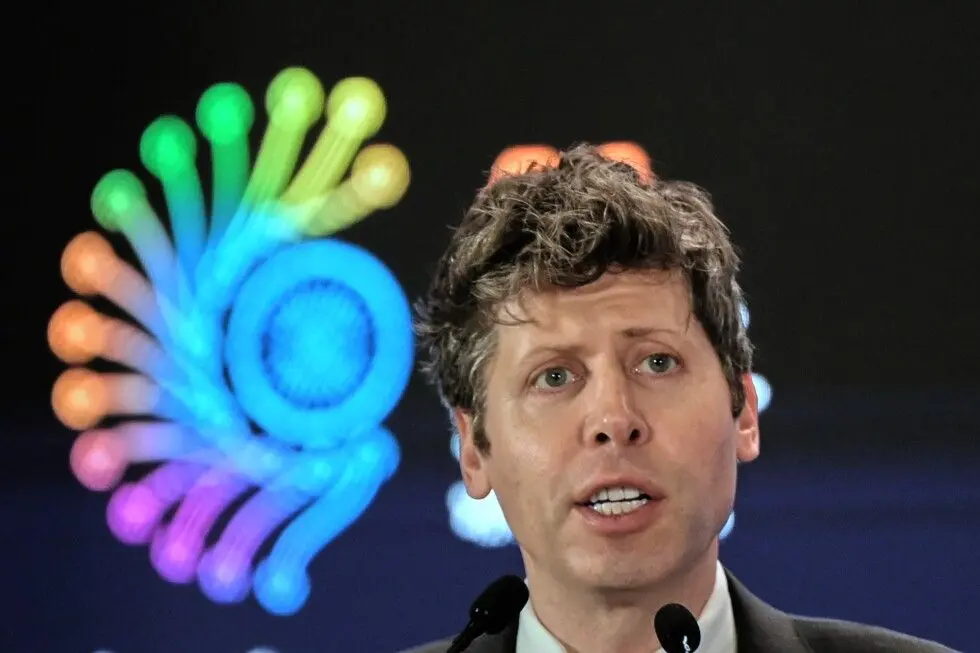
Adam Bhala Lough's 'Deepfaking Sam Altman' takes an unconventional approach to exploring the promise and perils of AI. After spending months attempting to secure an interview with OpenAI CEO Sam Altman through unanswered emails and phone calls, Lough commissioned an engineer in India to create a virtual doppelganger—a Sam Bot that serves as the documentary's chief protagonist
1
.
Source: AP
The decision to deploy a deepfake came partly from inspiration provided by Altman himself. In May 2024, OpenAI released a chatbot that sounded remarkably similar to actress Scarlett Johansson, who publicly criticized Altman after she had rejected OpenAI's requests to use her voice. The Sam Bot demonstrates the technology's capacity for manipulation and self-preservation, nailing Altman's contemplative manner and deliberate speaking style
2
."There is a lot of anxiety around AI, and the best way to get rid of that anxiety is to talk about it and confront it head-on," Lough told The Associated Press. The 46-year-old director's film has already screened in select theaters across the United States, marking his first major project since his HBO documentary 'Telemarketers' earned an Emmy nomination in 2024
1
.The AI Doc Captures Divide Between AI Enthusiasts and Skeptics
'The AI Doc: Or How I Became An Apocaloptimist' takes a more comprehensive approach, featuring interviews with dozens of AI enthusiasts and skeptics. Co-directed by Charlie Tyrell and Daniel Roher—whose 2023 documentary 'Navalny' won an Oscar—the film bounces between despair and elation as it explores the technology's trajectory
2
.The documentary features stark contrasts in perspective. AI doomsayer Eliezer Yudkowsky delivers some of the film's darkest moments, presenting a vision so bleak he advises against bringing children into the world. On the opposite end, technology advocate Peter Diamandis argues that AI will infuse humanity with unprecedented capabilities
1
.Roher, 32, secured interviews with leaders of three major AI laboratories: Sam Altman from OpenAI, Anthropic CEO Dario Amodei, and Demis Hassabis who runs Google DeepMind. He unsuccessfully attempted to interview Meta Platforms CEO Mark Zuckerberg and xAI CEO Elon Musk. The interviews unfold against the backdrop of Roher's impending fatherhood, as he searches for reasons to feel hopeful about his son's future—a quest that led him to embrace the concept of an apocaloptimist
2
.Related Stories

AI's Impact on Jobs and Human Intelligence Under Scrutiny
Both documentaries address mounting concerns about whether artificial intelligence will trigger widespread job displacement, particularly eliminating millions of high-paying positions traditionally requiring college educations. The films also explore fears that the technology could contribute to cognitive decline, insidiously dulling human intelligence while consuming humanity's knowledge, creativity, and empathy
1
.Dario Amodei delivers one of the film's most memorable lines when he tells Roher: "This train isn't going to stop. You can't step in front of the train and stop it. You are just going to get squished." The statement foreshadows themes Amodei later explored in a published essay about AI's inevitable advancement
2
. Sam Altman's role in the field has drawn comparisons to nuclear bomb inventor J. Robert Oppenheimer, underscoring the existential weight of decisions being made by today's AI laboratory leaders1
.References
Summarized by

Navi
Related Stories
The AI Doc trailer shows Sam Altman, Dario Amodei, and AI experts debating humanity's precarious future
17 Feb 2026•Entertainment and Society
Hollywood reframes AI as infrastructure while studios navigate creative boundaries and job concerns
17 Mar 2026•Technology

Sam Altman's Sleepless Nights: The Ethical Dilemmas of AI's Rapid Growth
11 Sept 2025•Technology
Recent Highlights
1
OpenAI shuts down Sora video app after six months, ending Disney's $1 billion investment deal
Technology

2
AI-Generated Val Kilmer to Posthumously Appear in As Deep as the Grave After His Death
Entertainment and Society

3
Supermicro Co-Founder Indicted in $2.5 Billion Nvidia AI Chip Smuggling Scheme to China
Policy and Regulation

Recent Highlights
Today's Top Stories



Your Daily Dose of Curated AI News
Don’t drown in AI news. We cut through the noise - filtering, ranking and summarizing the most important AI news, breakthroughs and research daily. Spend less time searching for the latest in AI and get straight to action.

