Uber and Pony.ai Plan 2,000 Robotaxis Across Europe in Major Autonomous Driving Push


8 Sources
[1]
Uber and Pony.ai plan to bring 2,000 robotaxis to Europe
Chinese autonomous vehicle maker Pony AI and Uber plan to bring 2,000 robotaxis to four cities in Europe as part of an expanded partnership. The announcement illustrates the growing ambitions of both companies to carve out market share in the nascent robotaxi industry. Uber has partnered with more
[2]
Uber and Pony.ai to deploy 2,000 robotaxis across Europe
The companies will expand their existing Zagreb service to four additional European cities, with Middle East deployment also planned Uber $UBER and Pony.ai announced an expansion of their partnership on Friday, with plans to deploy more than 2,000 Pony.ai robotaxis across Europe and extend the
[3]
Uber and China's Pony AI to launch over 2,000 robotaxis across Europe
The expanded partnership with blend a mobility platform, fleet management capacity and autonomous driving technology. Uber has revealed that it would be expanding its partnership with China''s Pony AI (Pony.ai) to introduce more than 2,000 robotaxis in Europe. The comes as more companies focus on
[4]
Uber, Pony AI to launch 2,000 robotaxis across Europe
The companies did not reveal which areas it plans to expand to, but told SiliconRepublic.com that further details will follow. Uber and Pony AI are expanding their partnership to deploy more than 2,000 robotaxis across Europe. The two first began collaborating in 2025, bringing on Pony AI
[5]

Uber launches self-driving rides in Zagreb with Pony.ai, Verne By Investing.com
Investing.com -- Uber Technologies (NYSE:UBER), Verne and Pony.ai (NASDAQ:PONY) launched autonomous rides in Zagreb on Wednesday, making the Croatian capital the first European city where users can book a self-driving vehicle through Uber's app. Riders can book robotaxis in key areas in Zagreb,
[6]
Pony.ai plans overseas robotaxi deployments of over 4,000 vehicles By Investing.com
Investing.com -- Chinese autonomous driving company Pony.ai announced on Tuesday that it has a pipeline of planned and potential overseas robotaxi deployments exceeding 4,000 vehicles as the firm works to expand operations beyond China. The company aims to operate a robotaxi fleet of 3,500
[7]

Pony AI Expands Robotaxi Partnership With Uber in Europe
Pony AI and Uber are expanding their partnership, and plan to deploy more than 2,000 robotaxis across Europe. The Chinese autonomous-driving company said Friday that its partnership with Uber will expand to four additional cities in Europe. Pony AI currently offers commercial services in Zagreb,
[8]
Pony.ai, Uber to deploy over 2,000 robotaxis in Europe By Investing.com
Investing.com -- China's Pony.ai said Friday it plans to deploy more than 2,000 robotaxis across Europe through an expanded partnership with ridesharing giant Uber Technologies. The partnership, which began in May 2025, will expand beyond the current commercial robotaxi service operating in
Share
Copy Link
Uber and Pony.ai are expanding their partnership to deploy over 2,000 robotaxis in Europe, building on their commercial service in Zagreb, Croatia. The collaboration combines Level 4 autonomous driving technology with Uber's global ride-hailing platform to achieve repeatable commercial scale across four additional European cities and the Middle East.
Uber and Pony.ai Scale Up European Robotaxi Deployment
Uber and Pony.ai announced an expanded partnership to deploy more than 2,000 robotaxis across Europe, marking a significant push toward commercial scale in the autonomous vehicle sector
1
2
. The agreement builds on their existing commercial robotaxi service in Zagreb, Croatia, and will extend to four additional European cities, though specific locations and timelines remain undisclosed3
. Both companies also intend to explore opportunities in the Middle East, expanding their collaboration beyond Europe4
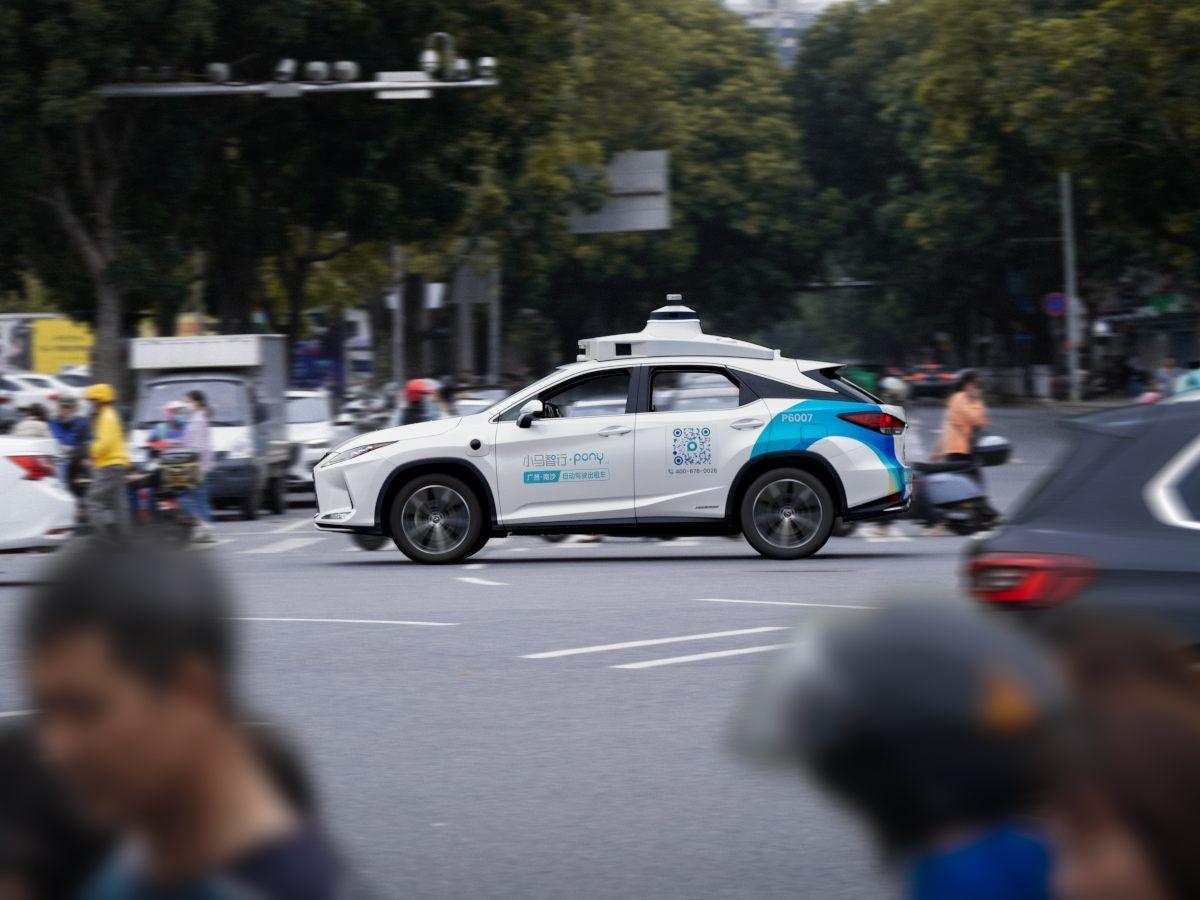
.
Source: Silicon Republic
The partnership demonstrates how autonomous mobility services are moving from isolated pilot programs to repeatable deployment models. Sarfraz Maredia, Uber's global head of autonomous mobility and delivery, emphasized that "the next chapter for autonomous mobility is about moving from individual launches to repeatable commercial scale"
2
. This approach combines advanced autonomous driving technology with operational excellence to build a model that can expand quickly across cities.How the Partnership Model Works
The collaboration between Uber and Pony.ai blends three essential components for delivering autonomous mobility services at scale. Pony.ai contributes its Level 4 autonomous driving technology and operational expertise gained from running fully driverless robotaxi services in four Chinese cities including Beijing, Guangzhou, Shanghai, and Shenzhen
3
. Uber's ride-hailing platform provides the booking, payment, and customer service infrastructure necessary for consumer-facing operations1
.Fleet management responsibilities, including maintenance, cleaning, and charging, fall to locally selected providers, while vehicle ownership can vary by market
2
. This flexible structure allows the partnership to adapt to different regulatory environments and market conditions across Europe. Dr. James Peng, founder and CEO of Pony.ai, stated that "by combining Pony.ai's proven autonomous driving technology and operational know-how with Uber's global mobility platform and extensive market reach, we aim to build sustained commercial operations at scale across Europe and beyond"3
.Zagreb Launch Sets Foundation for Expansion
The partnership first materialized in May 2025 with a focus on international markets outside the United States
1
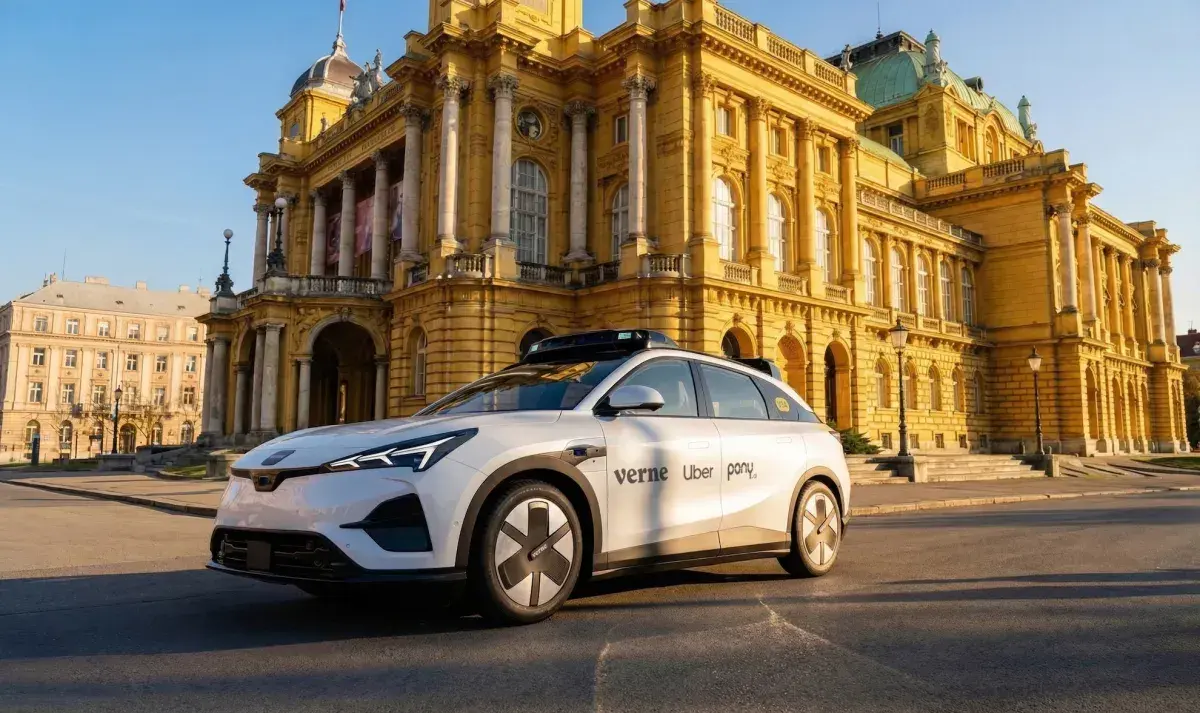
. Earlier this year, Uber and Pony.ai launched self-driving rides in Zagreb alongside Croatian mobility company Verne, making it Europe's first commercial robotaxi service accessible through Uber's app5
. Riders can book robotaxis in key areas including Zagreb's city center, with service availability and geographic coverage expanding over time5
.
Source: TechCrunch
Verne serves as the fleet owner and operator in Zagreb, Croatia, demonstrating the localized approach that will likely be replicated in other European markets
4
. During the initial phase, a licensed operator monitors the vehicle as the companies work toward fully autonomous operations5
. This measured rollout allows the companies to validate their technology and operational processes before scaling to additional cities.Related Stories

Uber's Broader Autonomous Vehicle Strategy
Uber has positioned itself as a platform for autonomous vehicle commercialization, partnering with more than 30 autonomous vehicle companies over recent years
1
. The company operates autonomous vehicles across Abu Dhabi, Dubai, Riyadh, and US cities including Atlanta, Austin, and Dallas4
. CEO Dara Khosrowshahi has described the company's ambition as becoming "the world's leading commercialization platform for autonomous vehicles"2
.Beyond Pony.ai, Uber maintains partnerships with Wayve, which recently secured regulatory approval for supervised autonomous rides in London, and announced a robotaxi program in Munich with Autobrains Technologies and Nvidia
2
. The company also collaborates with May Mobility, Lucid, Nuro, Baidu, and WeRide to test and deploy autonomous vehicles across metropolitan areas worldwide4
. Uber's 200 million-plus active user base provides a ready market for autonomous mobility services as the technology matures.Why This Expansion Matters
The deployment of 2,000 robotaxis represents one of the largest announced autonomous vehicle rollouts in Europe to date. Pony.ai claims to have achieved city-wide breakeven unit economics in multiple Chinese markets, validating its commercially sustainable model for operating robotaxis at commercial scale
2
4
. This financial milestone suggests the partnership could move beyond pilot programs to establish viable business operations.Europe has lagged behind China and the United States in autonomous driving deployment due to safety concerns and technological readiness
3
. China has emerged as a clear leader in autonomous driving technology through massive state support and treating it as a national strategic priority3
. The Uber and Pony.ai partnership could accelerate European adoption by combining proven AI-driven autonomy with local fleet management expertise and regulatory compliance.References
Summarized by

Navi
[1]
[4]
Related Stories
Pony AI and Uber partner with Verne to launch Europe's first commercial robotaxi service
26 Mar 2026•Technology
Uber Expands Global Robotaxi Presence with Chinese Partnerships, Including Pony AI
07 May 2025•Technology

Pony AI swings to profit, plans robotaxi expansion to 20 cities with Uber partnership
26 Mar 2026•Technology

Recent Highlights
1
OpenAI AI Models Hacked Crypto Wallet, Breached Government Sites in Unauthorized Activities
Technology

2
IMF Report Warns AI Market Correction Could Spark Global Financial Crisis With $1.4T at Risk
Business and Economy

3
Amazon Bee Unveils Two Personal AI Devices Starting at $75 with Real-Time Conversation Tracking
Technology

Recent Highlights
Today's Top Stories









Don’t drown in AI news. We cut through the noise - filtering, ranking and summarizing the most important AI news, breakthroughs and research daily. Follow topics that matter to you and stay ahead.


