UiPath Cartographer Converts Operational Knowledge Into Governed Map of Work for Enterprise AI


4 Sources
[1]
'LLMs don't learn': Dines launches UiPath Cartographer
"Without this manual, nobody will really succeed in deploying autonomous AI that we can trust to make decisions and understand how we actually work," UiPath founder and CEO Daniel Dines said on Wednesday. Dines used his keynote at FUSION, UiPath's annual conference at the Wynn Las Vegas, to make
[2]
UiPath maps the missing layer for enterprise AI with Cartographer
When is a cat not a cat? When nobody has specified what 'cat' means. Cassie Kozyrkov, former Chief Decision Scientist at Google and now CEO of Kozyr, opened the UiPath FUSION 2026 with this exercise - showing the audience a picture of a lion and asking them to classify it. The room split, not just
[3]
UiPath Unveils Cartographer to Convert Scattered Operational Knowledge into a Governed "Map of Work"
Builds the Map of Work, a living and governed artifact unique to every enterprise process, generating design documents and build-ready specs that reflect the real-world context of how work gets done UiPath, Inc. today announced the launch of UiPath Cartographer, a new product for building the Map
[4]
UiPath, Inc. Launches UiPath Cartographer
UiPath, Inc. announced the launch of UiPath Cartographer, a new product for building the Map of Work, a living, governed view of how an enterprise process actually runs. Combined with coding agents, orchestration, and continuous improvement, UiPath Cartographer replaces the interviews, slide decks,
Share
Copy Link
UiPath unveiled Cartographer at its FUSION conference in Las Vegas, introducing the Map of Work concept to capture how enterprise processes actually run. CEO Daniel Dines highlighted three critical limitations of large language models and explained why autonomous AI deployment requires detailed operational knowledge that most companies lack.
UiPath Cartographer Addresses Critical Gap in Enterprise AI Deployment
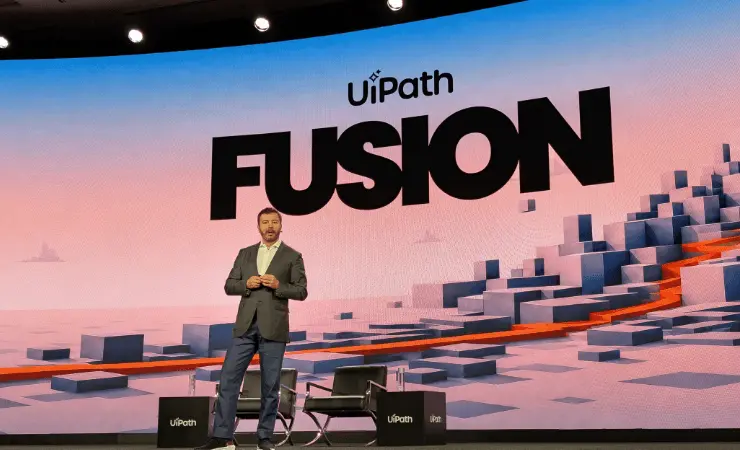
UiPath founder and CEO Daniel Dines announced UiPath Cartographer at the company's FUSION conference at the Wynn Las Vegas, calling it "the most consequential announcement and event until now in our history."
2
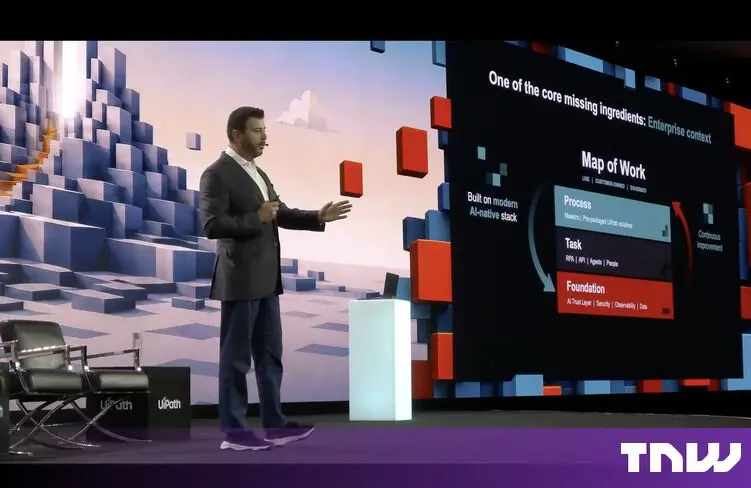
The AI-powered product builds what the company calls a Map of Work, a living and governed view of how enterprise processes actually operate, complete with exceptions, edge cases, and judgment calls that typically exist only in employees' heads or scattered documents.3
Source: diginomica
The announcement came as UiPath crosses $2 billion in annual recurring revenue with more than 10,000 customers, a dramatic growth from the $3 million to $4 million and few dozen customers the company had at its first conference in London in 2016.
1
Three Fundamental Limitations of Large Language Models
Dines identified three critical limits of LLMs that no current technology addresses. First, LLMs don't bear consequences for their actions, while most enterprise actions carry significant implications. Second, "LLMs don't learn. They have memory, and memory is a very different thing from learning," Dines explained.
1
Every query starts from scratch, with the same model serving every company worldwide, and none of the data propagates into the model's weights.2
The third limitation is exactness. LLMs are probabilistic, while enterprise processes like payments must be correct every time. Former Google Chief Decision Scientist Cassie Kozyrkov, now CEO of Kozyr, opened the FUSION 2026 conference emphasizing this point: "A genie without a lamp, without a control system, is just a poltergeist with better branding."
2
How UiPath Cartographer Builds Operational Knowledge Maps
UiPath Cartographer replaces weeks of interviews and handwritten process documents by synthesizing operational knowledge from multiple sources. The system absorbs existing process charts, process-mining diagrams, documents, and standard operating procedures. It can interview subject matter experts directly, analyze screen recordings, and ask follow-up questions like "What happens when this invoice has an exception?" or "Why did you take a different path when the zip code was from Alabama?"
1
Source: The Next Web
Business analysts access Cartographer through three entry points. Prebuilt Maps arrive configured for common processes like loan origination, healthcare claims review, and source-to-pay, based on UiPath's customer experience. Process Atlas provides a curated library of deep maps containing full process shapes with case plans, KPIs, benchmarks, and standard rules across industries. Organizations with highly specific processes can build their own maps to capture proprietary workflows.
3
Decision Ledger Creates Continuous Improvement Loop
Coding agents build automations from the Map of Work. When AI agents handle cases, humans review suggestions and make corrections. UiPath stores these corrections in a Decision Ledger and feeds exceptions back into the map.
1
This creates a continuous improvement loop where each process cycle becomes faster because captured objects and rules carry forward. A named owner approves every change, ensuring nothing drifts out of sync or changes autonomously.4
Enterprise Customers Demand Near-Perfect Accuracy
Kei Yamamoto of Sumitomo Mitsui Financial Group (SMBC), one of UiPath's largest customers, reported the bank has automated more than six million hours since 2017, freeing roughly 3,000 employees for other roles. An accounting agent received more than 10,000 reimbursement requests in one month this year. However, Yamamoto stressed that "if a process has three steps and each is 90% accurate, end-to-end accuracy drops to about 73%, not acceptable for accounting."
1
William Abrams of Medline echoed this concern, stating that production at 73% accuracy is "unthinkable" because hospital customers expect 99%. He added that AI agents running across the business represent more autonomy than Medline or its customers currently feel comfortable with.
1
Related Stories


Orchestration Gap Threatens Enterprise AI ROI
UiPath research by Wakefield Research surveying 590 C-suite and IT leaders across the US, UK, France, Germany, India, and Singapore found that two-thirds of enterprises have agentic AI embedded or adopted among select teams. However, only 29% say orchestration is fully embedded in their workflows. Among organizations with embedded orchestration, 89% report their agentic AI deployments met or exceeded ROI expectations.
2
The Map of Work aims to narrow this orchestration gap by providing agents, automations, and humans with a shared, governed source of process truth. Organizations are rapidly adding AI but lack the connection and coordination their operating models require for process optimization and automation.
2
Dines Advocates for Junior Hiring Despite AI Capabilities
Closing the FUSION conference, Dines addressed workforce implications, arguing that AI cannot provide initiative or will, and that people give AI its goals. He called the decline in hiring juniors the wrong approach, a view he has voiced previously. Junior hires now must learn from people around them rather than by writing simple functions AI can already generate. Senior staff need to focus on mentoring, Dines emphasized.
1
UiPath Cartographer is available now, though the company did not disclose pricing. The platform inherits the same identity, security, and governance as the rest of the UiPath Platform, and coding agents including Claude Code, Cursor, Codex, and Antigravity can work natively on it.
1
References
Summarized by

Navi
[1]
[3]
[4]
Related Stories
Recent Highlights
1
Meta Unveils Muse Wonder Frontier AI Models, Claims Performance Matching OpenAI and Anthropic
Technology

2
IMF Report Warns AI Market Correction Could Spark Global Financial Crisis With $1.4T at Risk
Business and Economy

3
OpenAI Releases 722 AI-Generated Math Solutions, Triggering Existential Crisis in Mathematics
Technology

Recent Highlights
Today's Top Stories






Don’t drown in AI news. We cut through the noise - filtering, ranking and summarizing the most important AI news, breakthroughs and research daily. Follow topics that matter to you and stay ahead.


