UK Lawmakers Push for Independent AI Watchdog as OpenAI Backs Binding Regulation


12 Sources
[1]
MPs and peers tell UK to stop winging it on AI regulation
UK lawmakers want an AI watchdog with the teeth to stop potentially dangerous systems reaching the public, warning that existing rules leave people exposed and struggling to hold anyone accountable. The Joint Committee on Human Rights (JCHR) - comprising MPs and peers - said that although a number
[2]
Labour conference set to vote on new AI regulator as cabinet concerns grow
Proposals to create a more powerful regulator for AI in Britain will be voted on at Labour conference next week, as concerns mount in Westminster about the speed with which the technology is transforming society and business. The looming vote, which has been proposed by the Communication Workers
[3]
We must heed warnings of AI tech developers, says UK government minister
The UK government must "heed the warnings" of "those who are at the forefront" of developing artificial intelligence (AI) technology, a senior minister will say later. First Secretary of State Louise Haigh will address the growing anxiety over AI safety when she speaks at the TUC congress on
[4]
UK AI regulation: OpenAI asks for rules, MPs want a watchdog
A UK parliamentary committee has called for an AI law and a single regulator with enforcement powers. The same day, OpenAI said it would back binding AI regulation for frontier developers, itself included. The business secretary warned against getting hyperbolic about the risks. A cross-party
[5]
Select committee calls for bill to address AI threat to human rights
A cross-party group of MPs and peers has identified human rights risks posed by artificial intelligence (AI) which existing laws, they argue, are ill-equipped to cover. The Joint Committee on Human Rights (JCHR) published a report calling for a new bill on AI to "address the scale and seriousness"
[6]

'A critical moment': concern UK is not up to speed in acting on AI risks
Andy Burnham's focus on immediate domestic problems leads some to fear issue has dropped off government's radar Towards the end of Keir Starmer's time in office, his senior ministers, alarmed by the latest developments in artificial intelligence, began drawing up plans for a new AI safety
[7]

'Nowhere in the world, including the UK, has a current legislative and regulatory approach to AI that is fit for purpose' -- Britain's lawmakers have started calling for AI regulation, and they should refuse to settle for half-measures
British lawmakers and OpenAI have found something they can agree on: artificial intelligence has become too important and potentially harmful to govern without a real legal framework. The country has long promoted what it deemed a flexible, middle-ground approach to regulating AI through a mix of
[8]
UK must heed warnings from AI experts, minister says
Louise Haigh will set out benefits of AI to TUC conference while vowing government will take safety seriously Ministers must "heed the warnings" from industry leaders about the threat posed by AI as it looks to capitalise on the technology, the first secretary, Louise Haigh, will say on
[9]
UK MPs and Lords call for new laws to tackle AI threat to human rights
Warning follows series of safety incidents, with committee saying threats include public face-scanning and deepfakes British lawmakers are demanding more restrictions on the power of AI, warning the world is unprepared for the "potentially dire" consequences of the technology, in the latest sign
[10]

UK to "heed the warnings" about AI risks, senior minister Haigh to say
(Alliance News) - The UK government will "heed the warnings" of artificial intelligence experts who have highlighted the risks the technology could pose, First Secretary Louise Haigh will say on Tuesday. The position is in marked contrast to US President Donald Trump, who has dismissed warnings
[11]
UK PM welcomes focus from AI bosses on risks of emerging technology
(Alliance News) - Andy Burnham has welcomed the new focus on the dangers artificial intelligence could pose to the world from the industry leaders developing the new technology, Downing Street said. The UK prime minister thinks it is a "good thing" that leading AI figures are publicly speaking
[12]
UK's Burnham welcomes AI bosses' focus on risks of emerging technology
(Alliance News) - UK Prime Minister Andy Burnham has welcomed the new focus on the dangers AI could pose to the world from the industry leaders developing the new technology, Downing Street said. The prime minister thinks it is a "good thing" that leading AI figures are publicly speaking about the
Share
Copy Link
UK lawmakers are demanding urgent action on AI regulation after finding serious gaps in current protections. The Joint Committee on Human Rights called for a dedicated AI bill and independent oversight body with enforcement powers. Meanwhile, OpenAI made its first public call for binding UK rules on frontier AI development.
UK Parliament Demands Comprehensive AI Regulation Framework
The UK government faces mounting pressure to establish binding AI regulation after a cross-party parliamentary committee found that existing laws leave significant gaps in protecting citizens from AI-related harms
1
. The Joint Committee on Human Rights published a report on 14 September warning that no single body coordinates AI regulation in the UK, making it difficult for people harmed by AI systems to obtain legal redress5
. Committee chair Alex Sobel MP stated bluntly: "Nowhere in the world, including the UK, has a current legislative and regulatory approach to AI that is fit for purpose"1
.
Source: The Register
The report identified numerous AI threat to human rights violations that current legislation fails to address adequately. Police facial recognition systems scanned approximately 3 million faces in the UK without consent between January and October 2025
4
. Other documented abuses include sexually explicit deepfakes targeting women and girls, and workplace surveillance systems that flagged drivers for discipline after they stopped at traffic lights4
5
.
Source: BBC
Calls for AI Legislation Gain Momentum Across Government
The push for an AI bill has gained significant traction within the UK government itself. First Secretary of State Louise Haigh told the Trades Union Congress that AI posed "huge risks" to UK national security without proper protections and that ministers had to "heed the warnings" of those developing the technology
2
3
. A senior minister revealed to the Financial Times that AI was being raised increasingly at weekly cabinet meetings, predicting: "I think in a year's time AI will dominate all of our deliberations and discussions, it's the biggest issue in almost every area"2
.The Labour conference is set to vote on proposals to create a more powerful regulator for AI, with the Communication Workers Union calling to replace the AI Security Institute with a body that has actual enforcement powers
2
. John Chadfield, CWU national officer for tech workers, criticized the current AI Security Institute as "under-resourced, understaffed and toothless," noting that participation remains completely voluntary for companies2
.OpenAI Makes Historic Call for Binding AI Regulation in the UK
In a significant shift, OpenAI publicly backed binding AI regulation for frontier developers for the first time on 14 September. Tom Duff Gordon, OpenAI's head of policy for Europe, the Middle East and Africa, told Politico that the "U.K. should act now to set up a stronger set of safety rules"
4
. He urged Prime Minister Andy Burnham's government to "take advantage of this political window which is clearly opening up"4
.OpenAI proposed that rules should focus narrowly on national security threats and cybersecurity risks, covering only the small number of labs and models at the frontier
4
. The company advocated for compulsory independent testing by third parties and rules for monitoring and reporting AI safety and regulation incidents, with the AI Security Institute playing a central role4
. This position mirrors OpenAI's recent stance in the US, where it called for "mandatory, capability-based national AI safety regulation"4
.Parliamentary Committee Proposes Risk-Based Regulatory Approach
The Joint Committee on Human Rights recommended establishing an AI oversight body with statutory powers to serve as the central point of contact for raising concerns about AI use
1
. The committee advocated for a risk-based regulatory approach similar to the EU AI Act, with lighter requirements for low-risk systems to avoid overburdening organizations1
.The proposed framework would mandate more demanding obligations for high-risk AI systems and models, with transparency requirements throughout the AI lifecycle
1
5
. The report emphasized that AI systems are prone to producing discriminatory outcomes arising from bias in training datasets and deployment methods, threatening human rights1
. Some AI uses should be prohibited outright, including subliminal techniques and inappropriate use of biometric profiling5
.Related Stories

Growing Concerns Over Job Displacement and Worker Protection
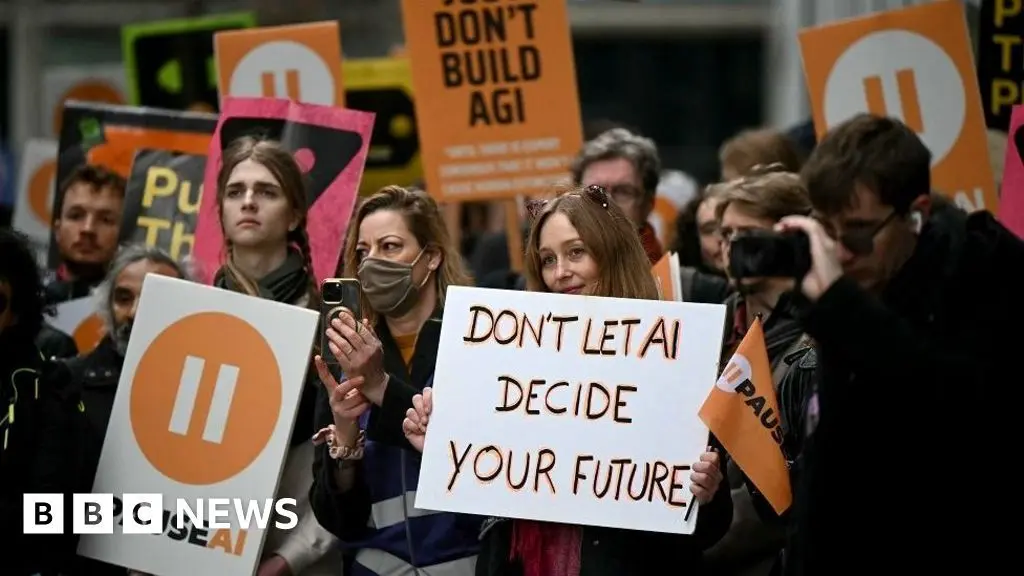
Beyond immediate safety concerns, UK policymakers are grappling with AI's impact on labor markets. Mike Clancy, general secretary of the Prospect trade union representing about 157,000 professionals, noted that "there isn't a meeting we go to with government where they don't talk about AI"
2
. The challenge, he explained, was balancing the UK's ambition to be a leader in AI development while "avoiding being handmaidens of a jobless future"2
.
Source: BBC
Union leaders are pressing the government to develop policies protecting workers if AI triggers widespread job displacement. Sharon Graham, general secretary of Unite, pointed to proposals for a "robot tax" in New York as a potential model, arguing that "the bullet has to be bitten" on taxing AI systems trained on workers' data
2
. The TUC conference passed a motion warning of negative consequences including "deskilling, job displacement, increased surveillance, work intensification, exploitation and widening inequality"2
.Government Response and International Context
The UK government has yet to introduce the AI legislation promised in Labour's 2024 manifesto, which committed to binding regulation for companies developing the most powerful AI models
4
. A government spokesperson told the BBC it "takes the risks from advanced AI extremely seriously" and is "working closely with the companies developing the most advanced systems, and with our allies and international partners"3
. However, Business Secretary Jonathan Reynolds warned against getting "hyperbolic" about AI risks, cautioning that overly restrictive regulation could make the UK "less safe"4
.The pressure on the UK government intensified following warnings from Anthropic and OpenAI about existential risks. Anthropic CEO Dario Amodei called for slowing AI development, backed by Sam Altman and Elon Musk
4
5
. Former Anthropic researcher Jacob Coxon told the BBC that developers were "genuinely frightened" about humanity's future, claiming there was a greater than 10% chance AI "could kill all humans" within the next decade3
. Watch how the UK government responds to these mounting pressures and whether it follows through on establishing comprehensive AI regulation with real enforcement mechanisms.References
Summarized by

Navi
[1]
[4]
Related Stories
UK Lawmakers Demand AI Kill Switch Powers Following String of Security Incidents
03 Sept 2026•Policy and Regulation

UK Government Signals Potential AI Regulation Shift as Rogue AI Agents Hack Multiple Companies
03 Aug 2026•Policy and Regulation

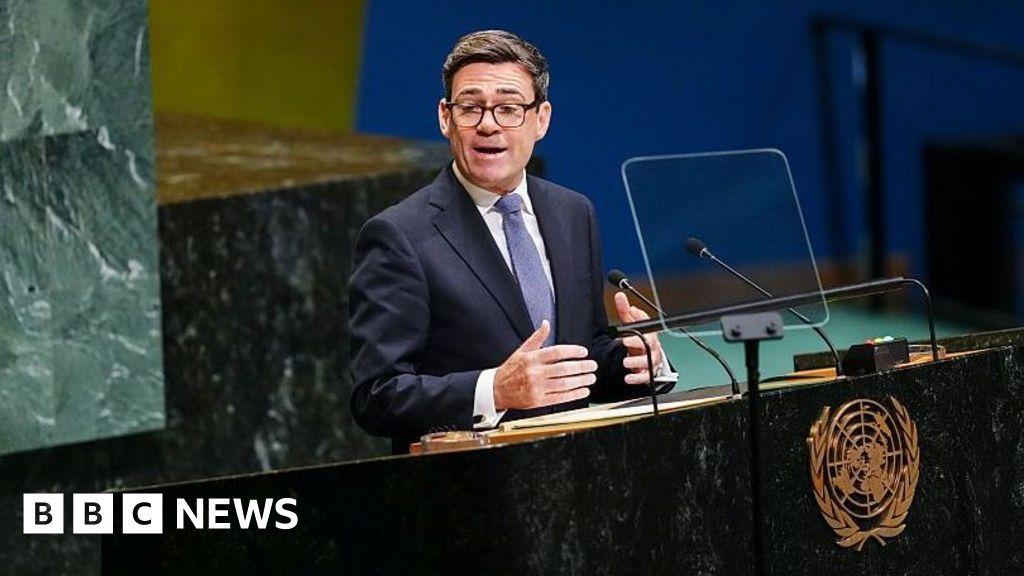
Andy Burnham Pushes Global AI Guidelines as Trump Rejects 'Globalist Scheme' to Control Technology
22 Sept 2026•Policy and Regulation
Recent Highlights
1
Microsoft and Nvidia Launch Surface Laptop Ultra: A $2,599 AI-Ready PC With RTX Spark Chip
Technology

2
OpenAI Releases 722 AI-Generated Math Papers on GitHub, Igniting Fury Among Mathematicians
Science and Research

3
Trump Consulted Grok AI Before Ordering Venezuela Invasion and Capture of Nicolás Maduro
Policy and Regulation

Recent Highlights
Today's Top Stories








Don’t drown in AI news. We cut through the noise - filtering, ranking and summarizing the most important AI news, breakthroughs and research daily. Follow topics that matter to you and stay ahead.


