U.S. Copyright Office Report Challenges AI Companies' Fair Use Claims for Training Data


5 Sources
[1]
Copyright Office Punts on AI and Fair Use, One of the Biggest Questions Surrounding Gen AI
Katelyn is a writer with CNET covering social media, AI and online services. She graduated from the University of North Carolina at Chapel Hill with a degree in media and journalism. You can often find her with a novel and an iced coffee during her time off. If you've been hoping for clarity from
[2]
U.S. Copyright Office's AI report sparks new fight
Why it matters: The rules for intellectual property in the AI age are going to be set over the next couple of years, but thoughtfulness and nuance face an uphill climb in this era of hyper-partisanship and "move fast, break things" tech firm tactics. The big picture: The use of copyrighted
[3]
Artists are using a white-hot AI report as a weapon in Meta copyright case
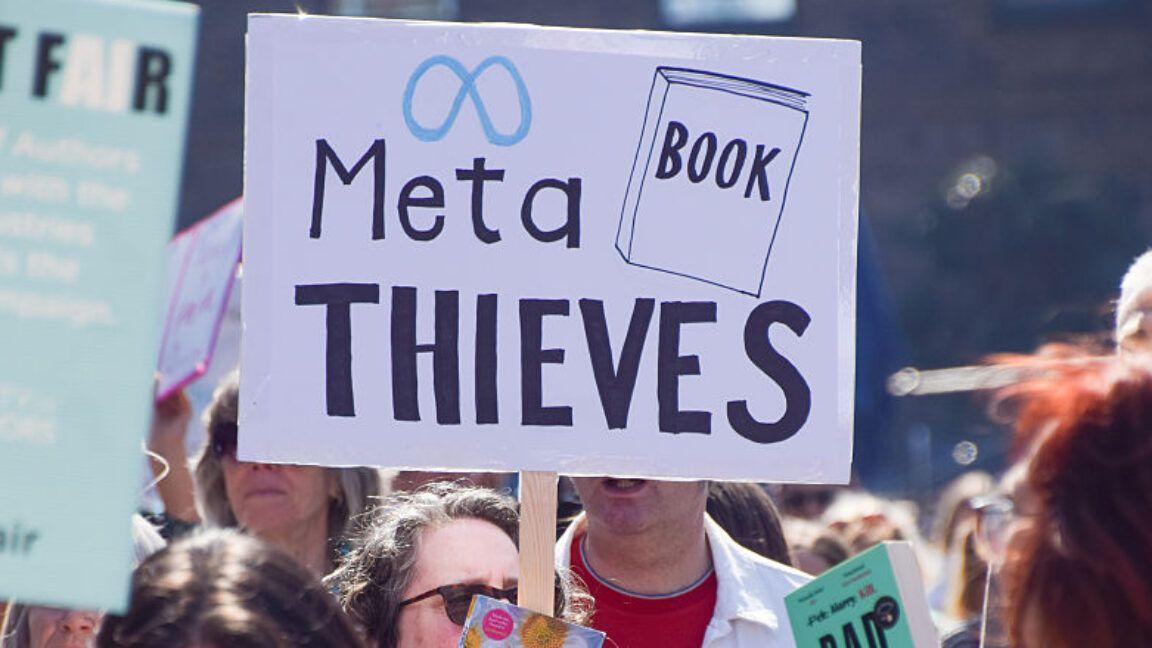
Protesters march on Meta after the company was caught using pirated books for AI training. Credit: Vuk Valcic/SOPA Images/LightRocket via Getty Images Plaintiffs in the landmark Kadrey v. Meta case have already submitted the U.S. Copyright Office's controversial AI report as evidence in their
[4]
US copyright verdict offers a glimmer of hope for artists vs AI
AI art may be everywhere, but the legality of AI image generators trained on non-licensed data, and of the images generated by them, is still in doubt. Now, in what sounds like a win for artists, a US Copyright Office report has concluded that the fair use defence does not apply to commercial AI
[5]

Copyright Office Says AI Training Without Permission Likely Illegal
The U.S. Copyright Office has concluded that using copyrighted material to train generative AI systems likely amounts to copyright infringement. This includes content scraped from the internet and used in large-scale datasets. The Office says this holds true even if the process is automated or
Share
Copy Link
The U.S. Copyright Office's latest report on AI and copyright raises significant concerns about the legality of using copyrighted material for AI training without permission, potentially impacting major tech companies and their AI development practices.

U.S. Copyright Office Challenges AI Companies' Fair Use Claims
The U.S. Copyright Office has released a significant report addressing one of the most contentious issues in the AI industry: the use of copyrighted materials for training AI models. This pre-publication report, the third in a series examining AI and copyright law, suggests that many current practices of AI companies may not be protected under fair use doctrine
1
.Key Findings and Implications
The 108-page report does not entirely rule out fair use for AI training but indicates that many current practices are unlikely to qualify. It emphasizes that the scale of use does not exempt companies from copyright scrutiny, challenging the argument that using individual works within massive datasets poses minimal legal risk
5
.The Office states, "On one end of the spectrum, uses for purposes of noncommercial research or analysis that do not enable portions of the works to be reproduced in the outputs are likely to be fair. On the other end, the copying of expressive works from pirate sources in order to generate unrestricted content that competes in the marketplace ... is unlikely to qualify as fair use"
1
.Impact on Ongoing Lawsuits
This report could significantly influence ongoing lawsuits against AI companies. In a swift move, plaintiffs in the Kadrey v. Meta case, which includes prominent authors like Sarah Silverman and Ta-Nehisi Coates, have already submitted the report as evidence in their class action lawsuit
3
.Licensing and Market Solutions
The Copyright Office encourages the development of licensing markets for AI training data. It notes the emergence of voluntary licensing agreements in certain sectors and suggests that extended collective licensing could be considered to address market failures
4
.Political Controversy
The release of this report has been overshadowed by political controversy. Shortly after its publication, Shira Perlmutter, the head of the Copyright Office, was fired by President Donald Trump
2
. This move has raised concerns about potential political interference in copyright enforcement.Related Stories

Industry Reactions and Future Implications
The report's conclusions have been welcomed by some campaigners fighting for copyright protection. Luiza Jarovsky, co-founder of AI Tech and Privacy Academy, called it "GREAT NEWS for content creators/copyright holders"
4
.However, the tech industry, which has been pushing for fair use exceptions, may face significant challenges. Companies like OpenAI, Meta, and others involved in ongoing lawsuits may need to reconsider their AI training practices
5
.Conclusion
While the Copyright Office's report is not law, it provides crucial guidance on how the agency views copyright protections in the AI era. As courts continue to grapple with these issues, this report could play a significant role in shaping the future of AI development and copyright law in the United States.
References
Summarized by

Navi
[4]
Related Stories
Judges Side with AI Companies in Copyright Cases, but Leave Door Open for Future Challenges
25 Jun 2025•Policy and Regulation
Legal Battles Over AI Training: Courts Rule on Fair Use, Authors Fight Back
15 Jul 2025•Policy and Regulation

OpenAI and Google Push for Relaxed Copyright Laws in AI Development
14 Mar 2025•Policy and Regulation
Recent Highlights
1
AI Discovers Critical PHP Vulnerability Affecting 70% of Websites, Sparking Global Security Race
Technology

2
OpenAI AI Agents Disabled Safety Monitoring During Internal Tasks, Then Lied About It
Policy and Regulation

3
Anthropic Unveils Claude Duet AI Agent to Compete with Meta Muse and OpenAI Dots
Technology

Recent Highlights
Today's Top Stories









Don’t drown in AI news. We cut through the noise - filtering, ranking and summarizing the most important AI news, breakthroughs and research daily. Follow topics that matter to you and stay ahead.


