HHS unveils AI strategy to expand adoption across healthcare divisions amid data privacy concerns


4 Sources
[1]
US health department unveils strategy to expand its adoption of AI technology
HHS billed the plan as a "first step" focused largely on making its work more efficient and coordinating AI adoption across divisions. But the 20-page document also teased some grander plans to promote AI innovation, including in the analysis of patient health data and in drug development. "For
[2]
Robert F. Kennedy Jr. turns to AI to make America healthy again | Fortune
The U.S. Department of Health and Human Services on Thursday outlined a strategy to expand its use of artificial intelligence, building on the Trump administration's enthusiastic embrace of the rapidly advancing technology while raising questions about how health information would be
[3]
US Health Department Unveils Strategy to Expand Its Adoption of AI Technology
NEW YORK (AP) -- The U.S. Department of Health and Human Services on Thursday outlined a strategy to expand its use of artificial intelligence, building on the Trump administration's enthusiastic embrace of the rapidly advancing technology while raising questions about how health information would
[4]
Health Department Debuts Plans for Integrating AI | PYMNTS.com
By completing this form, you agree to receive marketing communications from PYMNTS and to the sharing of your information with our sponsor, if applicable, in accordance with our Privacy Policy and Terms and Conditions. The new strategy, announced Monday (Dec. 8), is part of a broader plan to make
Share
Copy Link
The U.S. Department of Health and Human Services released a comprehensive AI strategy aimed at expanding adoption of AI technology across its operations. The 20-page plan outlines five key pillars including governance, risk management, and patient care applications, while projecting a 70% increase in AI implementations by 2025. However, experts raise questions about data privacy protections and whether rigorous standards will be maintained under current leadership.
HHS Rolls Out Comprehensive AI Strategy
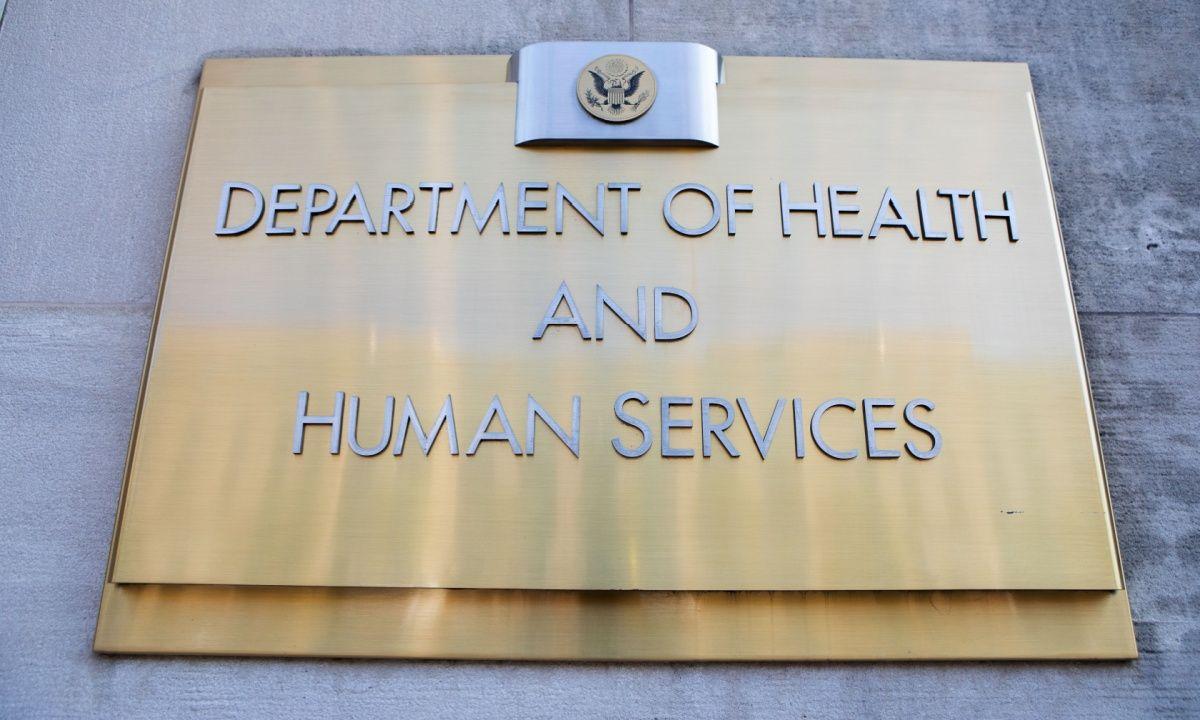
The U.S. Department of Health and Human Services unveiled its AI strategy on Thursday, marking a significant push to expand adoption of AI technology across federal healthcare operations
1
. The 20-page document, described as a "first step," focuses primarily on boosting departmental efficiency and coordinating AI integration across divisions including the CDC, CMS, FDA, and NIH4
. Deputy HHS Secretary Jim O'Neill framed the initiative as essential to cutting through bureaucracy, stating it was "time to tear down these barriers to progress and unite in our use of technology to Make America Healthy Again"2
.
Source: PYMNTS
Five Pillars Define AI Adoption in Healthcare
The AI strategy identifies five key pillars for implementation: creating a governance structure that manages risk, designing a suite of AI resources for departmental use, empowering employees to use AI tools, funding programs to set standards for AI in research and development, and incorporating AI in public health and patient care
3
. HHS has already made ChatGPT available to every employee and promotes a "try-first" culture to streamline administrative tasks1
. The department had 271 active or planned AI implementations in the 2024 financial year, with projections showing a 70% increase by 20252
.Patient Health Data Analysis and Drug Development Applications
Beyond internal operations, the plan teases ambitious applications in patient health data analysis and drug development
1
. HHS divisions are working to deliver "personalized, context-aware health guidance to patients by securely accessing and interpreting their medical records in real time"3
. This aligns with broader industry trends where almost half of healthcare organizations have generative AI in production use for documentation and clinical summaries, and 72% of surveyed physicians believe AI could improve diagnostic ability4
.Related Stories

Data Privacy Concerns Overshadow Innovation Plans
The strategy has sparked significant concerns about data privacy and risk management among experts. Oren Etzioni, an artificial intelligence expert, warned that "ambition brings risk when dealing with the most sensitive data Americans have: their health information"
2
. Darrell West from the Brookings Institution noted the document "promises to strengthen risk management but doesn't include detailed information about how that will be done," pointing out that while safeguards exist for individual records, "not as many protections" cover aggregated information being analyzed by AI tools3
. HHS previously faced criticism for data sharing practices when it handed over Medicaid recipients' personal health data to Immigration and Customs Enforcement officials1
.Leadership Questions and Political Context
The AI strategy follows President Donald Trump's repeal of Joe Biden's executive order that established guardrails for AI use, signaling the administration's intent to remove barriers to integrating artificial intelligence across federal government
2
. Questions persist about whether rigorous standards will be maintained under Health Secretary Robert F. Kennedy Jr.'s leadership. Etzioni expressed doubt that HHS could meet the strategy's calls for "gold standard science" and transparency, citing Kennedy's track record with scientific principles3
. Ironically, some within Kennedy's own "Make America Health Again" movement have voiced concerns about tech companies accessing personal health information1
. Despite these concerns, experts acknowledge that if executed carefully with proper governance, this could represent a significant modernization of agency operations.
Source: AP
References
Summarized by

Navi
Related Stories
Trump administration expands its use of AI to hunt for healthcare fraud across federal programs
21 May 2026•Policy and Regulation

RFK Jr. Says AI Better Than Doctors at Corporate-Backed MAHA Summit—Experts and Fact-Checks Disagree
30 Sept 2026•Policy and Regulation

HHS Under RFK Jr. Rolls Out ChatGPT for All Staff, Raising Concerns
10 Sept 2025•Policy and Regulation

Recent Highlights
1
Microsoft and Nvidia Launch Surface Laptop Ultra: A $2,599 AI-Ready PC With RTX Spark Chip
Technology

2
OpenAI Releases 722 AI-Generated Math Papers on GitHub, Igniting Fury Among Mathematicians
Science and Research

3
Trump Consulted Grok AI Before Ordering Venezuela Invasion and Capture of Nicolás Maduro
Policy and Regulation

Recent Highlights
Today's Top Stories









Don’t drown in AI news. We cut through the noise - filtering, ranking and summarizing the most important AI news, breakthroughs and research daily. Follow topics that matter to you and stay ahead.


