Waymo taps Google's Genie 3 to simulate tornadoes, elephants, and extreme edge cases


6 Sources
[1]
Waymo leverages Genie 3 to create a world model for self-driving cars
Google-spinoff Waymo is in the midst of expanding its self-driving car fleet into new regions. Waymo touts more than 200 million miles of driving that informs how the vehicles navigate roads, but the company's AI has also driven billions of miles virtually, and there's a lot more to come with the
[2]
What happens when Waymo runs into a tornado? Or an elephant?
An autonomous vehicle drives down a lonely stretch of highway. Suddenly, a massive tornado appears in the distance. What does the driverless vehicle do next? This is just one of the scenarios that Waymo can simulate in the "hyper realistic" virtual world that it has just created with help from
[3]
Waymo Is Using Google's Genie 3 AI to Practice Handling Tornadoes, Elephants
Waymo is looking to improve how its self-driving vehicles react when faced with unique scenarios, and it's leveraging Google's new Genie 3 world engine AI model to do it. It's testing everything from sudden tornadoes and heavy snow conditions to deep flood waters and wild animal encounters. When
[4]
Waymo Says Genie 3 Simulations Can Help Boost Robotaxi Rollout
The collaboration with DeepMind will help the expansion of Waymo self-driving services across more markets, according to the company, and aid in making autonomous vehicle systems more reliable in uncommon scenarios. Alphabet Inc.'s Waymo said it is using DeepMind's Genie 3 AI model to create
[5]

Waymo Catches World Model Fever, and the Only Prescription Is More World Models
Waymo vehicles have reportedly racked up more than 200 million miles of autonomous driving on public roads. But it's yet to run into a tornado or an elephant, and odds are that it'd respond poorly if it did. To try to help with those once-in-a-billion-miles scenarios, Waymo announced Friday that it
[6]

Google World Model AI Accelerates Waymo Robotaxi Expansion | PYMNTS.com
The company's newly introduced Waymo World Model is built on Google DeepMind's general purpose world model Genie 3, which Waymo then adapted for autonomous driving simulation, Waymo said in a Friday blog post. With Genie 3's world knowledge, Waymo World Model can simulate a wider range of events,
Share
Copy Link
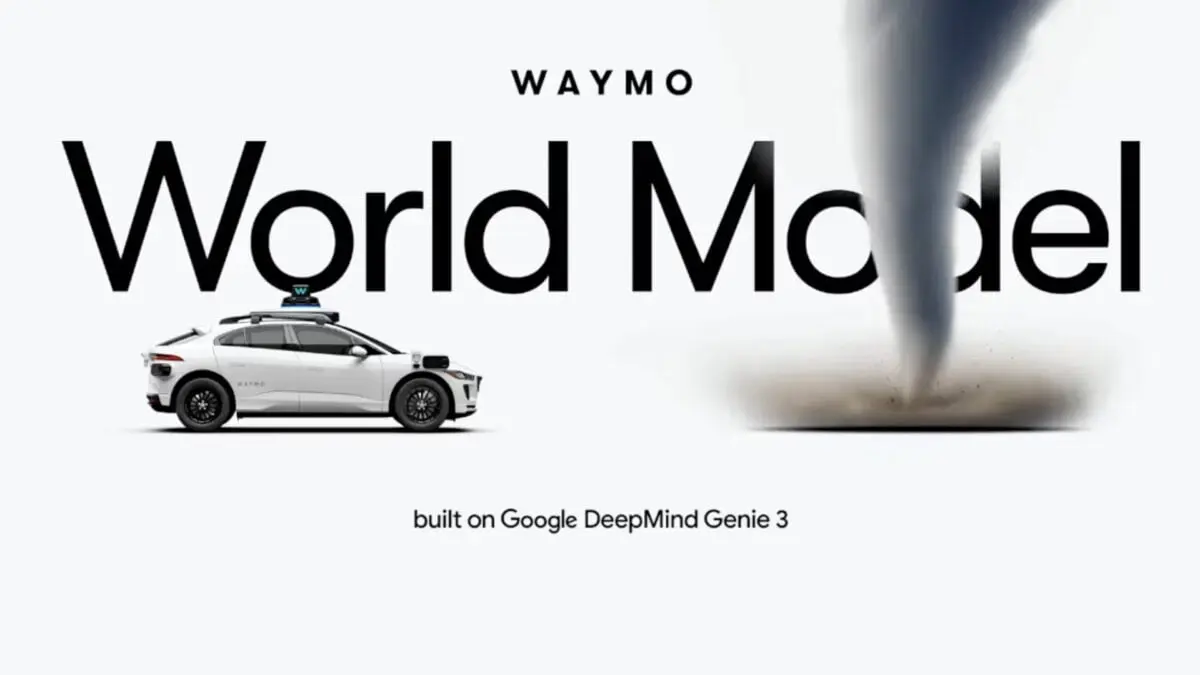
Google-spinoff Waymo introduced its World Model built on DeepMind's Genie 3 to create hyper-realistic virtual environments for autonomous vehicle training. The system allows engineers to test self-driving cars against rare scenarios like tornadoes, flooded streets, and rogue elephants—situations that may never appear in the company's 200 million miles of real-world driving data but could prove critical for safety.
Waymo World Model Built on Google's Genie 3 Technology
Waymo has unveiled a new training approach for self-driving cars that leverages Google DeepMind's Genie 3 to create hyper-realistic simulated environments. The Waymo World Model addresses a fundamental challenge in autonomous vehicle training: rare, potentially dangerous events are not well represented in real-world data
1
. While the Alphabet subsidiary touts more than 200 million miles of autonomous driving on public roads, its AI has now driven billions of miles virtually through digital simulations1
.
Source: Gizmodo
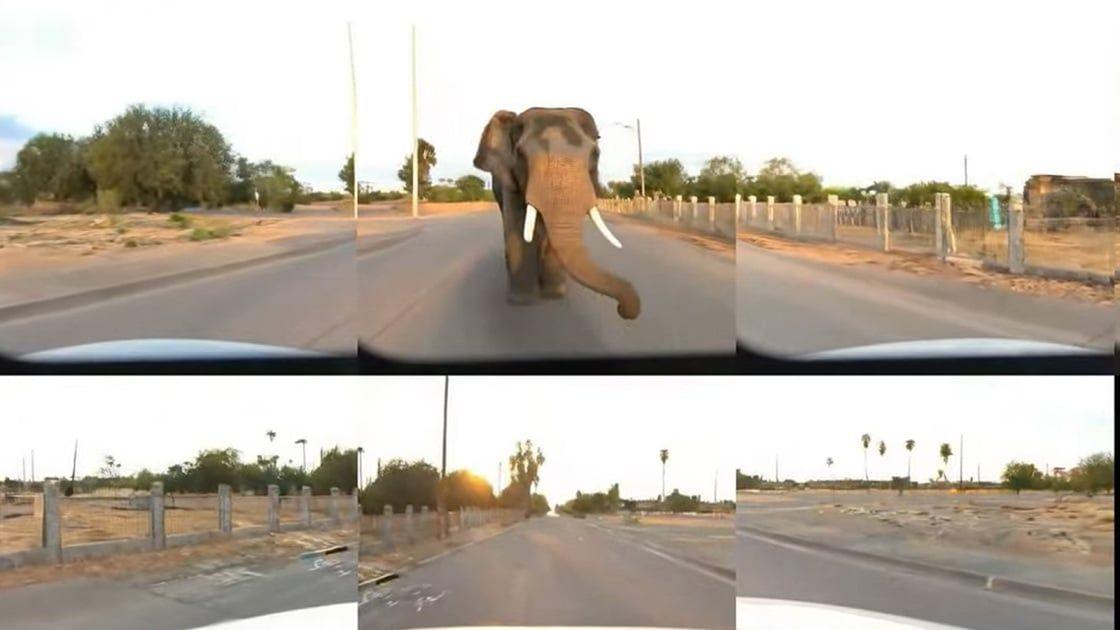
The generative AI model enables engineers to create simulations with simple prompts and driving inputs, testing scenarios that would be impossible or extremely rare to encounter in real life. These include snow on the Golden Gate Bridge, a flooded suburban cul-de-sac with floating furniture, neighborhoods engulfed in flames, and even encounters with rogue elephants
2
. By simulating the "impossible," Waymo proactively prepares its vehicles for some of the most rare and complex scenarios, creating a more rigorous safety benchmark3
.
Source: PC Magazine
How Genie 3 Enables Advanced Autonomous Vehicle Training
Genie 3 represents a significant upgrade over earlier world models through its long-horizon memory capability. The model can remember details for several minutes, maintaining context even when the virtual camera moves away from objects
1
. Autoregressive world models like Genie don't actually create 3D spaces but instead render video quickly enough that it feels like an explorable world.Waymo has customized Genie 3 to generate synthetic driving footage and depth perception data as if captured by cameras and LiDAR sensors on vehicles
4
. The system offers three unique mechanisms: driving action control for "what if" counterfactuals, scene layout control for customizing road layouts and traffic signals, and language control for adjusting time-of-day and weather conditions2
. This language control proves especially helpful when simulating low-light or high-glare conditions where sensors may struggle.Extending Simulation Duration and Realism
Waymo engineers discovered an innovative workaround for Genie 3's limited long-term stability. While the model typically loses consistency after about a minute, Waymo found that by speeding up footage by 4X, it could create much longer scenarios without sacrificing image quality or computer processing
3
. The system can also take real-world dashcam footage and transform it into simulated environments, converting datasets into scenes and depth maps for the "highest degree of realism and factuality" in virtual testing2
.In each scenario, the robotaxi's LiDAR sensors generate a 3D rendering of the surrounding environment, including obstacles in the road. Traditional AV simulation models are constrained by on-road data they collect, but the new world model allows Waymo to explore situations never directly observed by its fleet
4
.Related Stories

Implications for Robotaxi Rollout and Safety
The collaboration with DeepMind arrives at a critical time for Waymo's expansion plans. The company aims to expand to about a dozen cities this year and surpassed more than 20 million autonomous trips as of December
4
. Having bigger training data sets will prove crucial as Waymo faces safety probes from US authorities after a series of software mishaps in recent months. The National Highway Traffic Safety Administration and National Transportation Safety Board are investigating several incidents where Waymo failed to stop for parked school buses in Austin, violations that prompted a voluntary software recall4
.
Source: Bloomberg
Robotaxi operators and AI companies more broadly have been seeking additional data sources in the race to advance their models. Nvidia has partnered with Uber Technologies to collect millions of hours of robotaxi-specific driving data, while SoftBank-backed Wayve Technologies announced its own world model to generate synthetic driving footage
4
. Tesla has also built a similar simulator. This isn't the first time Waymo has leaned on Google's vast AI resources—its EMMA training model was built using Gemini, and DeepMind has provided solutions to reduce false positives in sensor data2
.While the theory behind using world models for autonomous vehicles appears sound, questions remain about real-world performance. Waymo vehicles have had issues in edge-case scenarios, including recent incidents involving a cat and a child in a school zone
5
. Whether digital simulations of tornadoes and natural disasters will translate to better handling of everyday edge cases remains to be seen as the technology matures.References
Summarized by

Navi
Related Stories
Google DeepMind Assembles Team to Develop Advanced 'World Modeling' AI
07 Jan 2025•Technology

DeepMind's Genie 3: A Breakthrough in AI World Models with Potential for AGI
06 Aug 2025•Technology

Google AI launches Project Genie to create interactive worlds from prompts for $250 monthly
29 Jan 2026•Technology

Recent Highlights



Recent Highlights
Today's Top Stories






Don’t drown in AI news. We cut through the noise - filtering, ranking and summarizing the most important AI news, breakthroughs and research daily. Follow topics that matter to you and stay ahead.


