10,000 Authors Publish Empty Book to Protest AI Companies Using Their Work Without Permission


3 Sources
[1]
Thousands of authors publish 'empty' book in protest over AI using their work
About 10,000 writers including Kazuo Ishiguro, Philippa Gregory and Richard Osman join copyright campaign Thousands of authors including Kazuo Ishiguro, Philippa Gregory and Richard Osman have published an "empty" book to protest against AI firms using their work without permission. About 10,000
[2]
Authors protest AI at London Book Fair with 'empty' book
Thousands of authors feature in a new "empty" book titled "Don't Steal This Book" - a protest over AI firms using creative professionals' work without their permission. "The UK government must not legalise book theft to benefit AI companies," reads the back cover of a new book being distributed at
[3]
Thousands of authors publish "empty" book in protest over AI and copyright
Around 10,000 writers have published an "empty" book to protest against artificial intelligence companies using their work without permission or payment. The book, titled Don't Steal This Book, contains only a list of contributors' names and is being distributed at the London Book Fair. Among the
Share
Copy Link
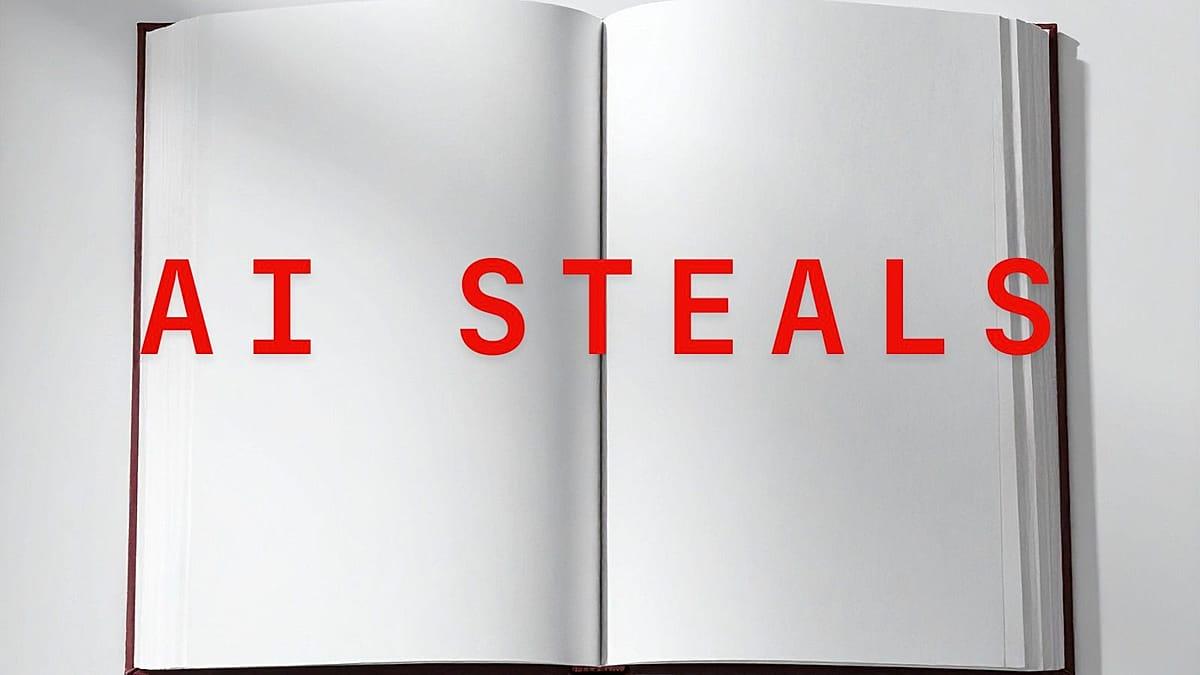
Around 10,000 writers including Kazuo Ishiguro, Philippa Gregory, and Richard Osman have published Don't Steal This Book, containing only their names, to protest AI firms training on copyrighted material without permission or payment. The empty book protest arrives at the London Book Fair as the UK government prepares its assessment on proposed copyright law changes that could legalize AI companies using creative work under an opt-out system.
10,000 Authors Join Empty Book Protest Against AI
Around 10,000 writers have launched an unprecedented authors protest against AI companies using copyrighted work without permission or payment
1
. The protest centers on Don't Steal This Book, an intentionally empty book containing only a list of contributor names, distributed at the London Book Fair this week2
. Among the prominent authors are Nobel laureate Kazuo Ishiguro, bestselling novelist Philippa Gregory, Richard Osman, Slow Horses author Mick Herron, Noughts and Crosses writer Malorie Blackman, historian David Olusoga, and novelist Marian Keyes1
.
Source: GameReactor
The empty book protest carries a stark message on its back cover: "The UK government must not legalise book theft to benefit AI companies"
2
. The initiative was organized by Ed Newton-Rex, a composer and campaigner for protecting artists' copyright, who argues that the AI industry is "built on stolen work ... taken without permission or payment"1
. Newton-Rex emphasized that "this is not a victimless crime - generative AI competes with the people whose work it is trained on, robbing them of their livelihoods"2
.UK Government Assessment Looms Over Copyright Debate
The timing of this protest is strategic. The UK government assessment on proposed changes to copyright law is due by March 18, just one week after the London Book Fair distribution
1
. Ministers must deliver both an economic impact assessment and a progress update on a consultation about the legal overhaul, against a backdrop of mounting anger among creative professionals about how AI firms are using their work1
.
Source: Euronews
The main government proposal has triggered particular outrage across creative industries. It would allow AI companies using copyrighted work without the owner's permission unless the owner explicitly signals they want to opt out of the process
1
. This opt-out system has drawn fierce opposition from artists and writers who argue it fundamentally reverses the burden of protecting intellectual property. Elton John has been among the high-profile critics, calling the government "absolute losers" over the prospect of relaxed copyright law1
.Multiple Proposals on the Table for Copyright Regime
Beyond the controversial opt-out proposal, ministers have suggested three additional options: leaving the situation unchanged, requiring AI companies to seek licenses for using copyrighted material, or allowing AI firms to use copyrighted work with no opt-out for creative companies and individuals
1
. The government has also refused to rule out a copyright waiver for using material for "commercial research" purposes, which creative professionals fear could be exploited by AI models to take artists' work without permission1
.Malorie Blackman stated plainly: "It is not in any way unreasonable to expect AI companies to pay for the use of authors' books"
1
. The dontstealthisbook.com website warns: "If they don't, this is what we'll be left with: empty pages, writers without pay, and readers deprived of the next book they'll love"2
.Related Stories

Industry Responds With Licensing Initiative
Alongside the protest, publishers are launching their own solution. Publishers' Licensing Services, a non-profit industry body, is establishing a collective licensing initiative at the London Book Fair
1
. The scheme invites the sector to sign up in the expectation it will provide legal access to published works for AI training, potentially offering a middle ground between unrestricted use and complete prohibition.The tension reflects a global struggle over how AI should access training data. AI requires vast amounts of data, including copyright-protected work taken from the open web, to develop tools such as chatbots and image generators
1
. This has triggered lawsuits on both sides of the Atlantic. Last year, Anthropic, developer of the Claude chatbot, agreed to pay $1.5bn to settle a class-action lawsuit by book authors who said the startup took pirated copies of their works to train its flagship product1
.A government spokesperson responded: "The government wants a copyright regime that values and protects human creativity, can be trusted, and unlocks innovation. We will continue to engage closely with the creative sector on this issue, and we will meet our commitment to update parliament by March 18th"
1
. The March 18 deadline will be closely watched by authors, publishers, and AI companies alike as it could reshape how AI development intersects with book theft concerns and the protection of creative work for years to come.References
Summarized by

Navi
Related Stories
UK Government's AI Plan Sparks Controversy Over Copyright and Creative Industries
15 Jan 2025•Policy and Regulation

Authors Unite Against AI in Publishing: Over 1,000 Sign Petition Urging Publishers to Limit AI Use
29 Jun 2025•Technology
UK Government's AI Copyright Proposals Spark Controversy in Creative Industries
25 Feb 2025•Policy and Regulation

Recent Highlights



Recent Highlights
Today's Top Stories



Don’t drown in AI news. We cut through the noise - filtering, ranking and summarizing the most important AI news, breakthroughs and research daily. Follow topics that matter to you and stay ahead.


