A Fed governor wants the US ready for AI job disruption before it arrives


4 Sources
[1]
Fed's Barr: US should prepare for 'serious' AI job disruption, widening inequality
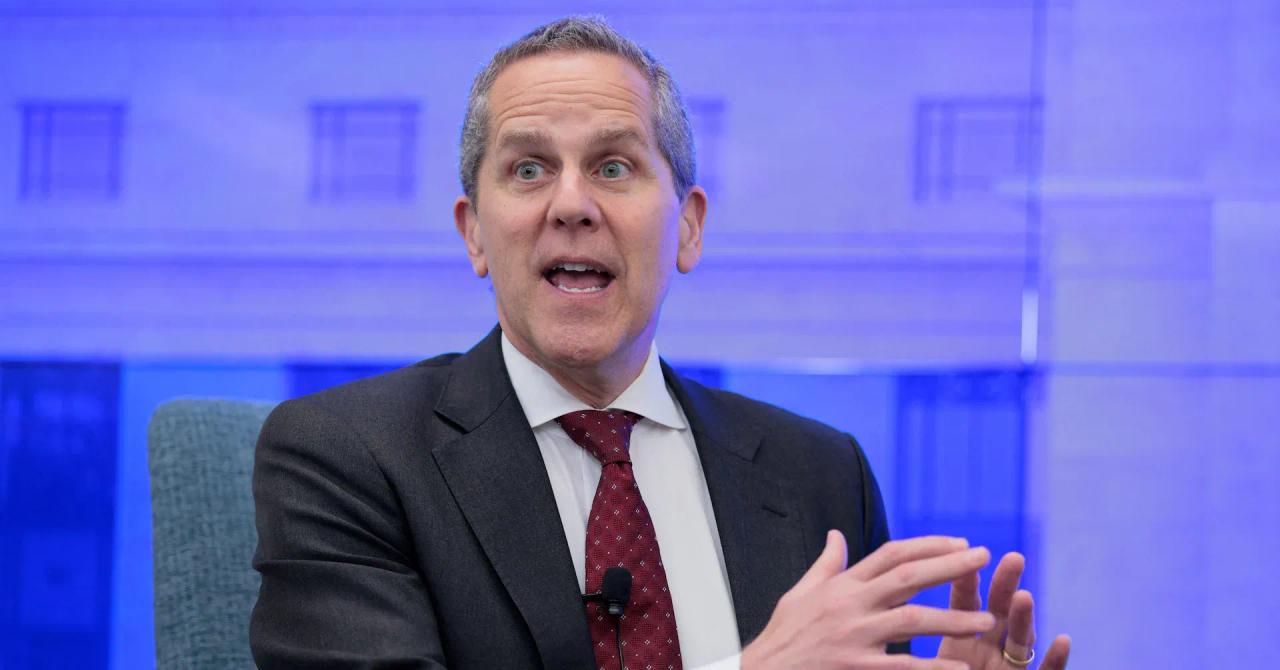
WASHINGTON, Nov 12 (Reuters) - The US should be prepared for "serious short-term disruptions" to the job market because of artificial intelligence which, depending on how fast it is deployed, could begin displacing workers at scale and widening inequality in favor of investors, Fed Governor Michael
[2]
Fed's Barr Warns AI Could Lower Prices While Concentrating Market Power | PYMNTS.com
Speaking at Yale University, Barr said AI's economic effects will depend on whether it complements workers or replaces them, how widely businesses can access it, and whether competition prevents its benefits from accumulating among a handful of dominant companies. His remarks presented competing
[3]
Fed's Barr warns AI adoption may deepen inequality risks By Investing.com
Investing.com -- Federal Reserve Governor Michael Barr said the fast adoption of artificial intelligence could increase inequality in the near term and warned that policymakers must prepare for possible serious short-term disruptions in the job market. Speaking at Yale University, Barr said the
[4]
Fed's Barr: US should prepare for 'serious' AI job disruption, widening inequality
WASHINGTON, Nov 12 (Reuters) - The US should be prepared for "serious short-term disruptions" to the job market because of artificial intelligence which, depending on how fast it is deployed, could begin displacing workers at scale and widening inequality in favor of investors, Fed Governor Michael
Share
Copy Link
Fed Governor Michael Barr warns of serious AI-driven labor disruption and widening inequality, and urges the US to act while adoption is still early.
Michael Barr, a governor of the US Federal Reserve, warned on Thursday that the country should prepare for possible serious short-term disruption to its labor market as AI spreads
1
3
. He also flagged gains that could flow to investors rather than workers, depending on how fast the technology is deployed. The evidence of harm he offered, though, is thin, with some signs AI is actually lifting demand and adding jobs. "So far, there has been relatively little displacement of workers by AI," he said2
.
Source: Reuters
Two futures
Speaking at Yale, Barr said there were two ways this could go
1
2
. In one, competition keeps AI cheap and widely available, which could let small businesses tap skills and information that once belonged to big firms. In the other, a few winning companies capture the gains and labor's share of national income keeps falling.The second path already has a statistical marker. Labor's share of national income fell to a record-low 52.8% in the second quarter of 2026, a fall Barr partly attributes to measurement quirks. The share had held roughly steady between 60% and 65% from World War Two until the early 2000s, and he said the downward trend survives adjustment
1
4
2
.Concentration could feed on itself, he said. Data, computing power and model improvements could give the leading AI firms scale advantages, which AI helping to build better AI could reinforce
2
. He also pointed to market power: dominant companies could charge higher markups as customers run out of alternatives, so falling prices alone would not prove the benefits are widely shared2
. "No one knows the degree to which the benefits will be shared," he said, warning that concentrated market power "may help drive a widening of inequality that would strain the American Dream"1
. Competition has kept access broad so far, and smaller language models may meet many companies' needs; whether that lasts is the open question2
.Who is exposed
Barr said the workers most at risk in the near term are younger and less experienced ones, in some sectors where AI already looks like a substitute for labor
1
4
2
. Tasks that are routine enough to automate within clear guardrails, with predictable results, may go quickly, he said2
. Work that turns on judgment, relationships or creativity is more likely to benefit from humans and machines working together. Rapid change of that kind would be hard for workers to adjust to1
.Related Stories
Why now
The warning landed two days after midterm elections that swung partly on backlash to the rapid AI buildout
1
4
. Days before it, a task force that Chairman Kevin Warsh appointed to study AI's economic effects is scheduled to hold a public forum in San Francisco on Monday1
4
. Barr's speech did not touch monetary policy or his own economic outlook3
. He urged policymakers to move while adoption is still in its early stages, through investment in job creation, training and connecting workers with new opportunities3
2
. He proposed no specific regulation.
Source: PYMNTS
"Now is the time for society to begin to consider how to address these potential challenges -- while AI adoption is in its relatively early stages -- so we can realize the long-term benefits for society," he said
3
.References
Summarized by

Navi
Related Stories
Fed Governor Barr Outlines Two AI Economic Transformation Scenarios at Singapore FinTech Festival
12 Nov 2025•Business and Economy

Federal Reserve governors warn AI could trigger unemployment spike that monetary policy can't fix
18 Feb 2026•Policy and Regulation

Fed Governor Barr: AI and Fintech Collaboration to Reshape Banking Landscape
05 Apr 2025•Business and Economy

Recent Highlights


Recent Highlights
Today's Top Stories






Don’t drown in AI news. We cut through the noise - filtering, ranking and summarizing the most important AI news, breakthroughs and research daily. Follow topics that matter to you and stay ahead.


