Michigan Senate Candidate Abdul El-Sayed Calls AI an 'Existential Crisis,' Proposes Strict Regulations


3 Sources
[1]
El-Sayed, Releasing His Platform on A.I., Calls It an 'Existential Crisis'
Dr. Abdul El-Sayed of Michigan is the first Democrat running in a battleground Senate race to publicly call for a pause on artificial intelligence development. Dr. Abdul El-Sayed, the Democratic nominee for Senate in Michigan, called Tuesday for a ban on superintelligent artificial intelligence
[2]
Abdul El-Sayed issues AI policy designed to rally progressives
The Michigan Democratic Senate candidate's "AI Under Control" proposal would freeze development of powerful AI systems and data centers. Michigan Democratic Senate candidate Abdul El-Sayed on Tuesday unveiled a proposal to freeze development of advanced AI models and data centers, seeking to
[3]
El-Sayed labels AI 'existential threat'
Michigan Senate candidate Abdul El-Sayed (D) labeled AI an "existential threat" Tuesday, as he laid out a framework that aims to get the technology "under control." El-Sayed, who is locked in a tight race with former Rep. Mike Rogers (R), called for a pause on frontier AI development and a ban on
Share
Copy Link
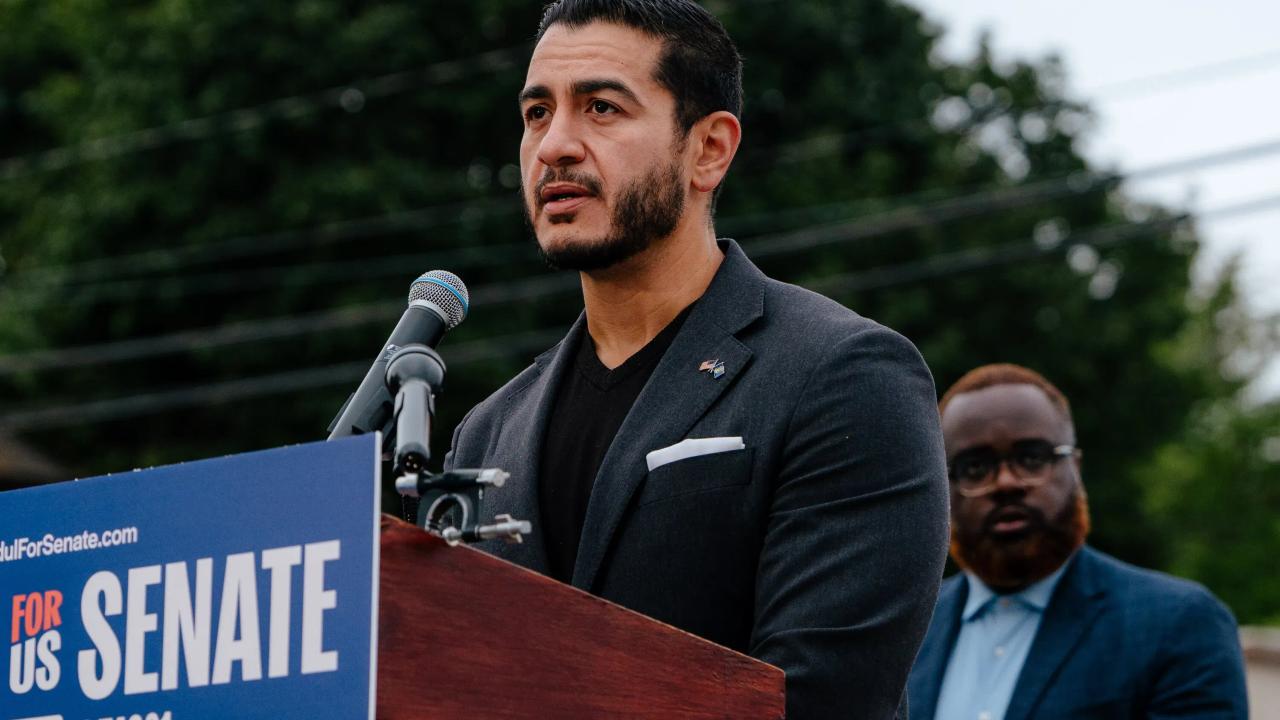
Michigan Democratic Senate nominee Abdul El-Sayed released a comprehensive AI policy platform calling for a pause on AI development and a ban on superintelligent AI. His "AI Under Control" proposal includes creating a cabinet-level agency to regulate the industry and banning recursive self-improvement, positioning AI regulation as a key midterm election issue.
Abdul El-Sayed Unveils Comprehensive AI Policy Platform
Michigan Democratic Senate nominee Abdul El-Sayed released a detailed AI policy platform on Tuesday, becoming the first Democrat running in a battleground Senate race to publicly call for a pause on AI development
1
. His "AI Under Control" proposal demands a freeze on training and releasing the most powerful AI systems until policymakers establish new guardrails2
. The Michigan Senate candidate called AI regulation an existential crisis that requires immediate action, stating: "If we don't act quickly, we may get to a point at which we cannot act because it's too late"1
.
Source: NYT
Ban on Superintelligent AI and Recursive Self-Improvement
El-Sayed's AI policy calls for a complete ban on superintelligent AI and proposes prohibiting recursive self-improvement, the process where AI systems design and train their successors
1
2
. The proposal builds on legislation introduced by progressive lawmakers Sen. Bernie Sanders and Rep. Greg Casar2
. "Right now, the whims of a few tech billionaires are the only thing stopping AI from developing to the point that it poses an existential threat to humanity," El-Sayed said3
. His framework also requires AI labs to install kill switches that could shut down rogue systems if necessary3
.Cabinet-Level AI Agency and Enforcement Mechanisms
The pause on AI development would remain in effect until a cabinet-level agency is established to regulate the industry
1
. This cabinet-level AI agency would inspect AI labs building frontier AI models, block the release of dangerous products, and order shutdowns of any rogue systems2
. El-Sayed's AI regulation framework includes criminal penalties for executives who "recklessly break the rules" and mandatory reporting of security incidents3
. The proposal also calls for whistleblower protections for employees who expose AI dangers and a national plan to respond to AI emergencies, involving regular government drills2
.Political Context and Voter Sentiment on AI Data Centers
AI regulation has emerged as a pressing issue in midterm races, particularly in the Midwest, which has experienced an AI data centers boom
1
. According to a New York Times/Siena poll conducted in September, Michigan voters said Abdul El-Sayed would do a better job than his opponent Mike Rogers at addressing AI data centers by an 11-point margin1
2
. While only 2 percent of Michigan voters listed AI and data centers as their most important issue, Democrats and independents were more likely than Republicans to prioritize it2
.
Source: Washington Post
Related Stories

Contrast with Republican Opponent and Trump Administration
El-Sayed directly contrasted his position with his Republican opponent Mike Rogers and President Trump, stating: "Donald Trump, Mike Rogers, and their Big Tech billionaire donors can't be trusted to keep either Michigan or humanity safe from the existential dangers of unrestrained AI"
2
3
. Trump has taken a hands-off approach to AI regulation, preferring to let companies police themselves amid concerns that stricter limits could cause the U.S. to fall behind China as a national security threat3
. Rogers, who holds at least $1.7 million in investments in companies benefiting from the AI and data center boom, endorsed a one-year moratorium on data centers in Michigan in August2
. However, Rogers has not released a comprehensive AI policy platform1
.Earlier AI Proposals and Public Benefit Corporations
Under an earlier iteration of his platform, El-Sayed suggested all frontier AI companies should be chartered as public benefit corporations and divested from major tech companies, with the public holding a 50 percent stake in the firms and receiving dividends
3
. He also called for restrictions barring AI from denying medical care, independently firing weapons, conducting mass surveillance, and making life-or-death decisions3
. The timing of El-Sayed's announcement follows recent warnings from AI researchers about existential threats and statements from industry executives calling for a slowdown in development. Dario Amodei of Anthropic expressed concerns that AI might take over the internet within the next year1
.References
Summarized by

Navi
[2]
[3]
Related Stories
Mike Johnson Adjourns Congress Despite Urgent Calls for AI Regulation from Industry Leaders
13 Sept 2026•Policy and Regulation
AI industry floods midterm elections with $150 million as battle over regulation intensifies
19 Feb 2026•Policy and Regulation

Progressive Democrat Will Lawrence Harnesses AI Fears in Michigan's 7th Congressional District Race
19 Sept 2026•Entertainment and Society
Recent Highlights



Recent Highlights
Today's Top Stories



Don’t drown in AI news. We cut through the noise - filtering, ranking and summarizing the most important AI news, breakthroughs and research daily. Follow topics that matter to you and stay ahead.


