The Rise of Agentic AI: Transforming Enterprise Automation and Cybersecurity


11 Sources
[1]
Could agentic AI save us from the cybercrisis?
Sponsored feature The cyberthreat landscape is evolving fast, with highly organized bad actors launching ever more devastating and sophisticated attacks against often ill-prepared targets. In this worrying scenario, the time taken to discover and respond to an attack has become critical. Providers
[2]
The enterprise AI paradox: why smarter models alone aren't the answer
Despite the hype, most AI projects are still stuck in the sandbox In boardrooms and investor meetings, artificial intelligence is now table stakes. AI tools are everywhere. Analysts are forecasting trillions in potential value. McKinsey estimates that generative AI alone could boost the global
[3]
Smarter networks in the Agentic AI revolution
Agentic AI transforms networks into intelligent, adaptive systems A new era of intelligent automation is underway. We are seeing digital agents take on responsibilities that once required constant human supervision. Today, these systems, can make independent decisions, implement them, and
[4]
The Age of Agency: why Agentic AI will redefine the future of work
Rethinking how humans and machines co-evolve across businesses We are in the midst of a Copernican shift in enterprise intelligence. We are no longer just automating or augmenting tasks - we are delegating intent. This is not just IT automation; it's agency. And it's changing everything... In
[5]
How specialized AI agents unlock accurate enterprise automation
The rapid adoption of AI agents is taking enterprises by storm. According to Deloitte it is predicted that 25% of companies that use generative AI will launch agentic AI pilots or proofs of concept, growing to 50% in 2027. AI agents address two top-priority challenges -- siloed data and fragmented
[6]
Agentic AI reshapes cybersecurity beyond the hype - SiliconANGLE
Elasticsearch weighs promise and risks of agentic AI adoption Artificial intelligence is driving a new frontier in cybersecurity, with agentic AI emerging as the next major leap beyond last year's large language model hype. This evolving technology promises autonomous, goal-driven decision-making
[7]
A practical framework for CIOs to succeed in the agentic era - SiliconANGLE
Today's chief information officers are juggling more priorities than ever -- from driving digital transformation and managing risk, to reducing cost and navigating constant regulatory shifts. In the midst of all this, autonomous artificial intelligence agents keep rising to the top. Not as hype.
[8]

Enterprise AI hits an inflection point, the agentic era is here! | AIM
Scaling impact in the agentic era requires a shift in approach to AI by enterprises, from passive tools to agentic systems that can act autonomously within business processes. The next wave of enterprise AI isn't just generative, it's agentic. What was once a curiosity is now a top priority for
[9]

Black Hat 2025 shows agentic AI moving from theory to practice
At Black Hat 2025, agentic artificial intelligence is demonstrating tangible value within cybersecurity, marking a significant evolution from its largely theoretical presence at Black Hat 2024. This advancement represents a shift towards proactive, autonomous systems that can independently
[10]

Making the Leap: How Agentic AI Is Transforming the Future of Work
By Weston Morris, Sr.Director, Global Strategy Digital Workplace Solutions, Unisys Artificial Intelligence is advancing at breakneck speed, and this year marks a significant turning point with the rise of agentic AI. As businesses face mounting pressure from talent shortages and rising
[11]

Agentic vs. Traditional AI: The Autonomy
Join the DZone community and get the full member experience. Join For Free Artificial intelligence has developed, and the appearance of agentic artificial intelligence is a significant turning point. Unlike conventional AI agents, which depend too much on human cues, agentic AI systems (such as
Share
Copy Link
Agentic AI is emerging as a game-changer in enterprise automation and cybersecurity, offering autonomous decision-making capabilities that go beyond traditional AI models. This technology promises to revolutionize how businesses operate, from enhancing cybersecurity measures to optimizing workflows across various sectors.
The Emergence of Agentic AI
Agentic AI is revolutionizing the enterprise landscape, offering capabilities that go beyond traditional AI models. Unlike generative AI, which relies on prompts for simple tasks, agentic AI can autonomously break down complex tasks into simpler ones and complete them independently
1
. This technology is set to be a game-changer, with Gartner forecasting that a third of AI use cases will use agentic AI to fulfill their role by 20281
.
Source: TechRadar
Enhancing Cybersecurity with Agentic AI
In the realm of cybersecurity, agentic AI is proving to be a potent weapon against the evolving threat landscape. Managed Detection and Response (MDR) providers are incorporating agentic AI into their platforms to speed up tasks traditionally handled by human security operations center (SOC) analysts
1
. This automation not only accelerates detection and response but also helps address the skills shortage in the cybersecurity industry.eSentire, a threat detection and response specialist, has implemented an agentic AI system called Atlas AI that can conduct pre-investigations within minutes of receiving a security signal. This process, which would typically take human analysts at least five hours, is completed by Atlas AI in just seven minutes
1
.Transforming Enterprise Operations
Agentic AI is not limited to cybersecurity; it's reshaping various aspects of enterprise operations. In finance, autonomous agents monitor compliance, flag anomalies, and initiate remediation workflows. In manufacturing, they optimize supply chains in real-time
4
. These AI agents can use the internet, make purchases, and approve orders, showcasing their potential to revolutionize business processes.The Agentic Mesh: A New Paradigm
McKinsey introduces the concept of the "Agentic Mesh," which represents a shift in how organizations conceive, deploy, and manage their AI capabilities
2
. This approach moves beyond static models behind APIs to living, dynamic intelligence networks that are contextual, composable, and accountable.Challenges and Considerations
Despite its potential, the implementation of agentic AI faces challenges. Most AI projects are still stuck in the sandbox, demo-ready but not decision-ready
2
. The Enterprise AI Paradox suggests that the more advanced the model, the harder it is to deploy, trust, and govern inside real-world business systems.To successfully implement agentic AI, enterprises need to focus on:
- Live data access
- Shared memory
- Auditability and trust
2
Related Stories



The Future of Work with Agentic AI
Source: SiliconANGLE
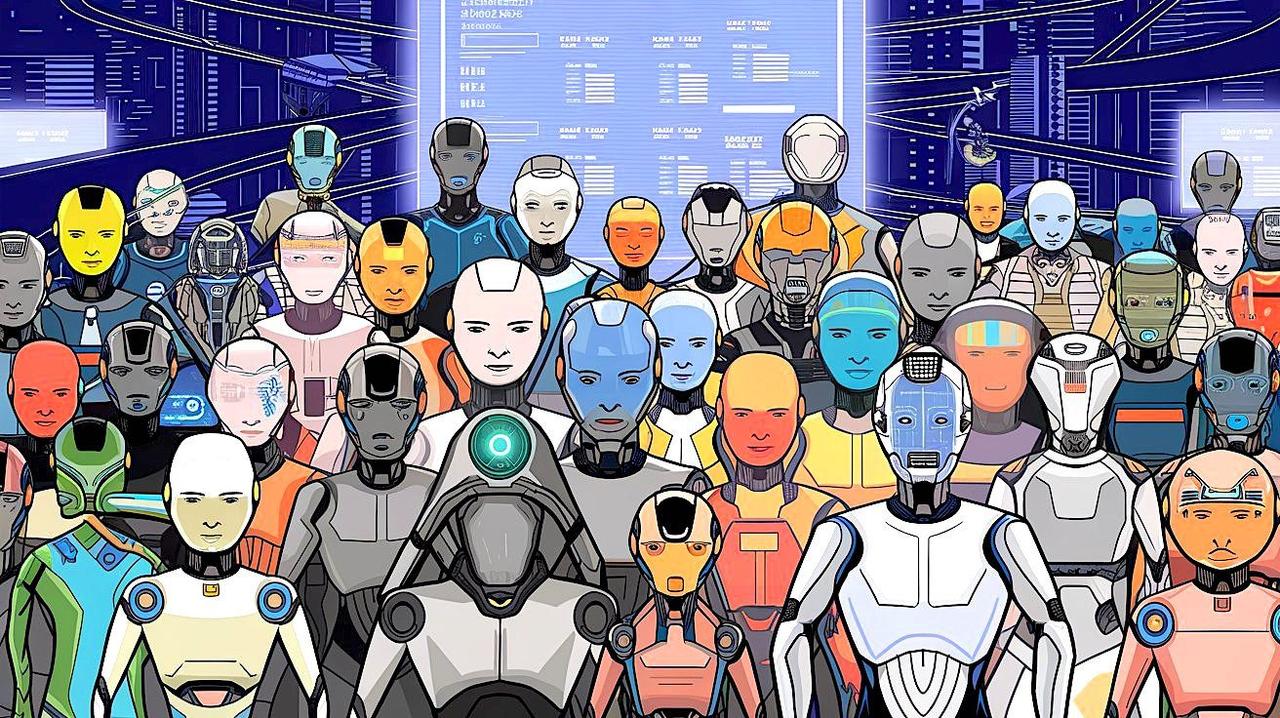
As agentic AI becomes more prevalent, it's reshaping the future of work. It's not about replacing humans but elevating their roles by freeing them from routine tasks and allowing them to focus on judgment, emotional intelligence, and innovation
4
. This shift requires a new skillset, including the ability to supervise AI agents, interpret their outputs, and orchestrate multi-agent systems.Specialized AI Agents for Accuracy
While the potential of agentic AI is vast, experts argue that specialized AI agents are more effective than a single, monolithic agent for complex tasks
5
. For instance, in customer service, multiple specialized agents can handle different aspects of the process, from ranking query severity to drafting responses based on FAQs.As enterprises shift towards agentic automation, work will increasingly be performed by a combination of AI agents, humans, and traditional rules-based software. Orchestrating these different modalities of work will be crucial for optimizing outcomes and ensuring compliance
5
.
Source: CXOToday
In conclusion, agentic AI represents a significant leap forward in enterprise intelligence and automation. As this technology continues to evolve, it promises to reshape how businesses operate, make decisions, and interact with their customers and employees.
References
Summarized by

Navi
[1]
[3]
Related Stories
Recent Highlights



Recent Highlights
Today's Top Stories










Don’t drown in AI news. We cut through the noise - filtering, ranking and summarizing the most important AI news, breakthroughs and research daily. Follow topics that matter to you and stay ahead.


