AI and government debt now top the eurozone's financial risk list, ECB deputy says


11 Sources
[1]
ECB VP says AI, debt have become prominent stability risks
FRANKFURT, Nov 16 (Reuters) - Artificial intelligence and sovereign debt worries stand out 'very prominently' among the euro zone's financial stability risks and require policymaker attention, European Central Bank Vice President Boris Vujcic said on Monday. The ECB has long highlighted debt
[2]
AI borrowing binge has 'historic parallels' with subprime bubble, says ECB
Concerns raised that hyperscalers are building up trillions of dollars in off-balance sheet commitments through contracts with other tech groups The European Central Bank has warned that the global debt-fuelled AI investment boom has "parallels" with the subprime mortgage bubble that triggered the
[3]
European Central Bank sees 'historical parallels with the dotcom and subprime bubbles' because of AI's 'rapid shift' into debt finance
For most of this year, markets have been asking how big the AI bubble is and how bad it gets if it pops. On Wednesday, the European Central Bank went through the boom against the last big credit bust, point by point, using the companies' own filings. In its twice-yearly Financial Stability Review,
[4]
ECB warns of market risks if AI boom stalls
Frankfurt (Germany) (AFP) - The European Central Bank warned Monday of growing risks from an "abrupt repricing" in markets and big losses if investor sentiment about artificial intelligence sours. The comments from the ECB's vice president Boris Vujcic add to mounting concerns about the sector as
[5]

ECB draws parallels between AI boom and dotcom bubble
The European Central Bank drew parallels between the AI boom and the dotcom bubble in its Financial Stability Review on Wednesday, warning that a wave of large IPOs could signal late-cycle exuberance as tech giants pile on debt, leaving markets exposed to an abrupt sell-off. The European Central
[6]

ECB warns of market risks if AI boom stalls
The European Central Bank warned Monday of growing risks from an "abrupt repricing" in markets and big losses if investor sentiment about artificial intelligence sours. The comments from the ECB's vice president Boris Vujcic add to mounting concerns about the sector as investors increasingly
[7]
European Central Bank: ECB VP says AI, debt have become prominent stability risks
Boris Vujcic, the Vice President of the European Central Bank, expressed serious concerns about financial stability risks associated with artificial intelligence and sovereign debt. As AI technology accelerates, the potential for market vulnerabilities and cybersecurity issues grows. Additionally,
[8]

ECB Warns Rapid AI Expansion Threatens EU Financial Stability | PYMNTS.com
A European Central Bank official is warning that rapid artificial intelligence (AI) expansion could threaten the region's financial stability. AI stock market valuations remain stretched and the risk of a repricing has risen, European Central Bank Vice President Boris Vujčić said Monday (Nov.
[9]

ECB Urges Overhauls to Protect Financial System From AI, Government Debt -- Update
Europe's ambition to increase nonbank financing for business must be accompanied by measures to preserve the stability of the financial system in the face of twin threats from artificial intelligence and government debt, the European Central Bank's vice president said Monday. Policymakers have
[10]
ECB Urges Overhauls to Protect Financial System From AI, Government Debt
Europe's ambition to increase nonbank financing for business must be accompanied by measures to preserve the stability of the financial system in the face of twin threats from AI and government debt, the European Central Bank's vice president said Monday. Policymakers have identified a shortfall
[11]
ECB VP says AI, debt have become prominent stability risks
FRANKFURT, Nov 16 (Reuters) - Artificial intelligence and sovereign debt worries stand out 'very prominently' among the euro zone's financial stability risks and require policymaker attention, European Central Bank Vice President Boris Vujcic said on Monday. The ECB has long highlighted debt
Share
Copy Link
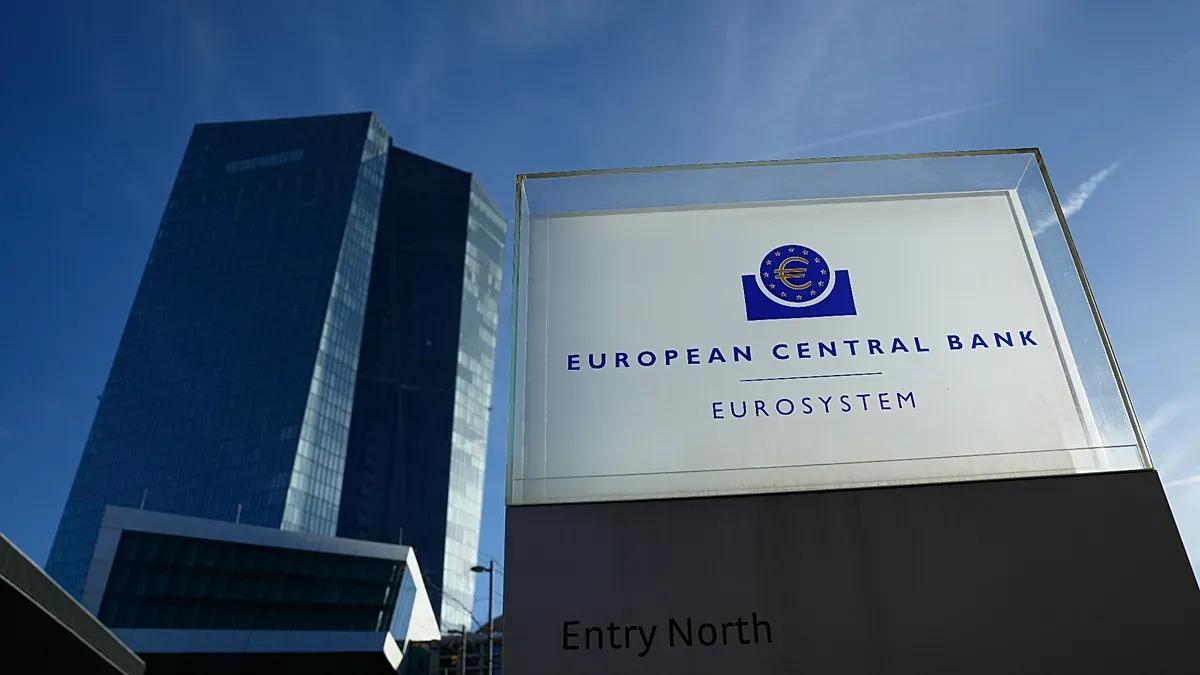
The European Central Bank now ranks AI among the biggest threats to the eurozone's financial system, putting it alongside sovereign debt at the top of its risk list
1
. The warning came in two instalments: a speech by vice president Boris Vujcic in Frankfurt on Monday, and the bank's twice-yearly Financial Stability Review, published Wednesday, which put a number on the debt hidden inside the AI boom9
2
.Vujcic, the eurozone central bank's number two, told his Euro Finance Week audience that the two risks "stand out very prominently compared to the situation a year ago"
9
. He said the two have grown more acute over the past year and now demand policymakers' attention1
. AI, he said, has become a system-wide worry with several new channels beyond equity valuations, reaching into debt markets, cybersecurity and operational safety1
8
. The speech landed amid market jitters after the scandal that toppled Nvidia's chief executive and the Democratic US midterm wins4
8
.
Source: Reuters
He estimated that major US technology firms will need up to $5.5 trillion of financing through 2030, a scale he called unprecedented
1
7
.The debt the accounts do not show
Wednesday's review quantified the part regulators cannot easily see. Eight big US tech firms, among them Alphabet, Amazon, Meta, Microsoft and Anthropic, held more than $4 trillion in off-balance-sheet commitments in the second quarter of 2026
2
5
3
. The bank's estimate, drawn from securities filings, counts debt-like obligations that sit outside the liabilities2
5
3
. The pool exceeds the debt those companies record on their balance sheets2
5
3
.
Source: Euronews
The report also flagged a 2008-style mismatch. Per the bank, debt maturities outlast the useful lives of much of the financed equipment
3
. Advanced AI chips are estimated to last one to three years, while most hyperscalers have stretched their server accounting lives from three years in 2020 to six3
. Big tech bond spreads have widened against similarly rated companies, and credit default swap spreads for several firms have climbed to record levels3
. The bank reads that as a hint markets view the rating agencies as too benign3
.The 2008 echo, and where the bank says it breaks
The review drew historical parallels with the dotcom and subprime bubbles while stopping short of naming the AI boom a bubble
2
5
. It noted that hyperscalers' earnings have so far broadly kept up with expectations2
3
. The bank also lists ways the current boom differs from 2008. The dotcom bust was equity-financed and brought only a shallow recession, though a US shock would still contract eurozone growth, it notes3
.The review also describes circular financing. Cloud providers and AI labs buy chips from chipmakers that often finance the purchases
1
3
. Chipmakers and cloud providers may in turn invest in AI labs that commit to buying their hardware and services1
3
. Per the bank, such circular deals inflate the revenues each side records, making the true size of demand hard to gauge1
3
."A reassessment of the AI narrative may trigger an abrupt repricing in markets and significant valuation losses," Vujcic warned, potentially forcing fund redemptions and asset sales
10
. US IPO volumes, measured against the size of the economy, are on track to pass their dotcom-era high9
5
. The bank's staff put this year's proceeds at an estimated $212 billion, up from about $44 billion in 20259
5
. SpaceX led the wave with a record IPO in June5
. "Historically, such surges have often coincided with market peaks, pointing to the risk of excessive investor optimism," Vujcic said9
. It also warned that large listings can pass unquantified risk on to less informed buyers, retail investors among them5
.The review cites one hedge fund as a case study: Situational Awareness's assets fell from about $45 billion to $10 billion in July after leveraged AI bets went wrong
5
3
. US tech and AI firms make up 16% to 26% of eurozone non-banks' equity holdings, and banks get nearly a fifth of their funding from those non-banks4
5
. That is how an AI sell-off could reach the lenders. Eurozone banks look solid, with profitability at a decade high and bad loans at a record low of 2.2% in September5
. It is why the bank's prescriptions target the non-bank sector instead.Related Stories
France, and the rules the bank wants
France's ten-year borrowing costs topped 5% in October, the first time since 2002
2
5
. Its spread over German bonds rose as high as 1.75 percentage points, the highest since the 2011 euro crisis2
5
. The bank said it sees no justification for deploying its emergency bond tool for now2
5
. Yields across Europe have climbed since the US-Iran war pushed up energy prices and inflation expectations9
. Eurozone governments are borrowing at the highest pace since the pandemic, driven mainly by German defence and infrastructure spending5
. The European Commission forecasts EU public debt rising to 85.6% of gross domestic product by 20285
. Vujcic raised the question of whether AI's borrowing needs could crowd out governments competing for the same capital1
. The report itself sees little evidence so far that tech bond issuance is crowding out other borrowers2
."My key message today is that Europe needs more market-based finance," Vujcic said. "At the same time, however, a larger role for non-banks must go hand in hand with stronger system-wide safeguards"
10
. The reforms he floated should be considered, not adopted9
. Investment funds would match withdrawal terms to asset liquidity, money market funds would hold bigger stress buffers, and hedge funds could face leverage limits or margin requirements9
.Anthropic, maker of the Claude models, was expected to price its IPO on Wednesday and start trading on Nasdaq the next day, in what could be history's second-largest IPO
4
5
.
Source: France 24
References
Summarized by

Navi
[4]
Related Stories
ECB Warns of AI Stock Bubble and Financial Stability Risks
20 Nov 2024•Business and Economy

European Central Bank Warns AI Market Correction Is Likely Despite Tech Rally
18 Aug 2026•Policy and Regulation

Central banks warn AI bubble could trigger global recession as Big Tech spending hits $1 trillion
25 Jun 2026•Policy and Regulation

Recent Highlights


Recent Highlights
Today's Top Stories









Don’t drown in AI news. We cut through the noise - filtering, ranking and summarizing the most important AI news, breakthroughs and research daily. Follow topics that matter to you and stay ahead.


