The Rise of the 'Cybernetic Teammate': How AI is Transforming Human Collaboration in the Workplace


3 Sources
[1]
Researchers Explore How AI Can Strengthen, Not Replace, Human Collaboration
Researchers from Carnegie Mellon University's Tepper School of Business(opens in new window) are learning how AI can be used to support teamwork rather than replace teammates. Anita Williams Woolley(opens in new window) is a professor of organizational behavior. She researches collective
[2]
The 'cybernetic teammate': How AI is rewriting the rules of business collaboration | Fortune
A novel experiment at Procter & Gamble reveals that artificial intelligence isn't just a tool -- it's becoming a genuine teammate that can match human collaboration. For decades, the holy grail of business performance has been effective teamwork. We've organized entire companies around the premise
[3]
The Cybernetic Teammate: When One Human Plus AI Equals Two | PYMNTS.com
The research from Johns Hopkins Carey Business School and MIT Sloan School of Management found that people working with AI produced 60% more output than those working without it, while maintaining the same quality. They also exchanged 23% fewer messages, showing less time spent coordinating and
Share
Copy Link
New research from major universities and Fortune 500 companies reveals that AI is evolving from a simple tool to a genuine collaborative partner, with studies showing AI-human partnerships can match traditional team performance while enhancing cross-functional collaboration.
The Emergence of AI as a Collaborative Partner
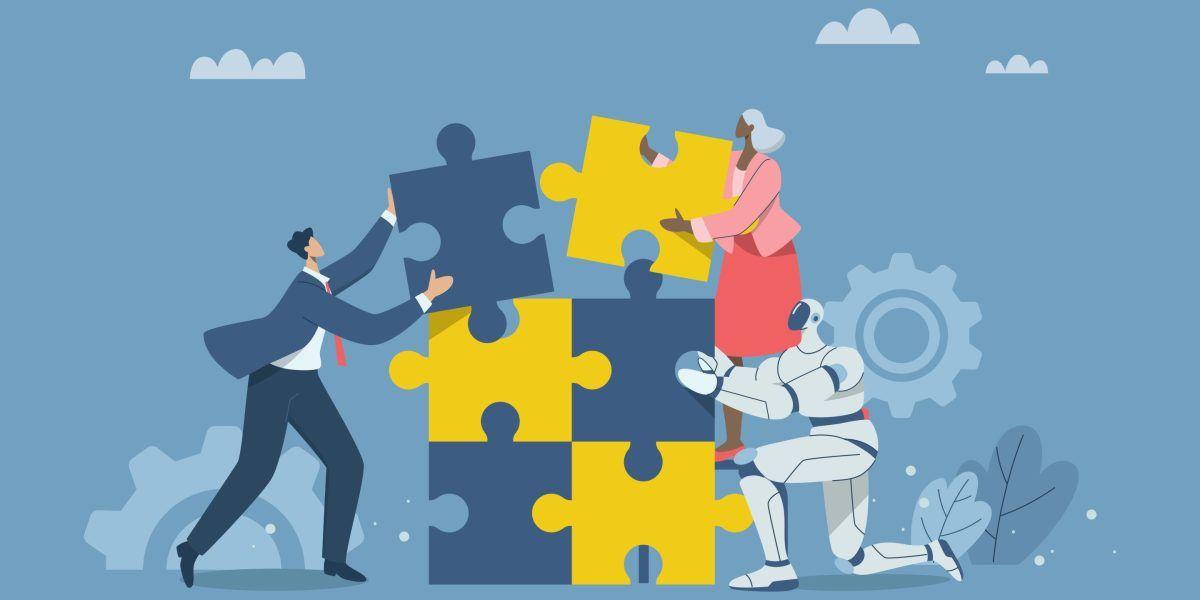
A groundbreaking wave of research is fundamentally reshaping how we understand artificial intelligence's role in the workplace. Rather than simply automating tasks or replacing human workers, AI is emerging as what researchers call a "cybernetic teammate" – a genuine collaborative partner that can replicate the benefits traditionally associated with human teamwork
1
2
.
Source: PYMNTS
This paradigm shift is supported by extensive research from leading institutions including Carnegie Mellon University's Tepper School of Business, Harvard's D³ Institute, Johns Hopkins Carey Business School, and MIT Sloan School of Management. The findings suggest that AI isn't just enhancing individual productivity – it's fundamentally changing the nature of collaboration itself.
Landmark Research Reveals Transformative Results
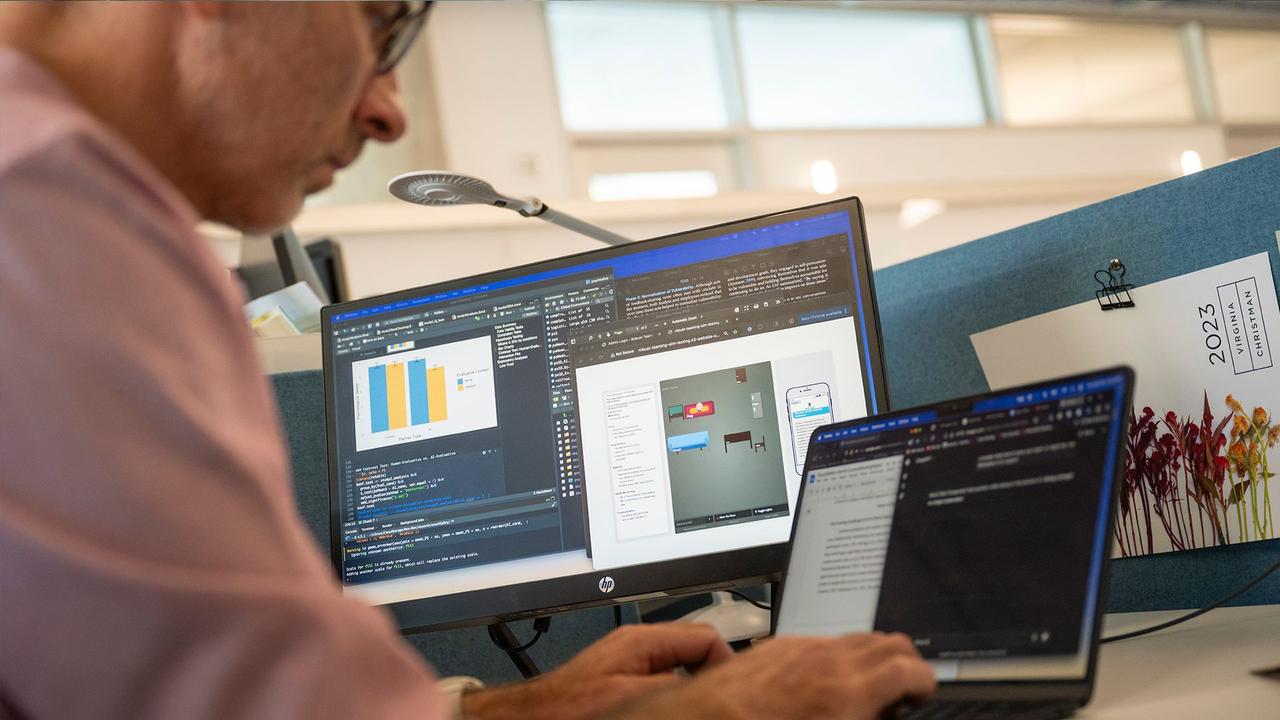
The most compelling evidence comes from a field experiment involving 776 professionals at Procter & Gamble, led by Harvard's D³ Institute. The study tested four different work configurations: individuals working alone, traditional two-person teams, individuals with AI, and teams augmented with AI
2
.The results were striking. Individuals working with AI delivered nearly 40% performance improvements, elevating them to the same level as traditional human teams. This suggests that AI can provide the same collaborative benefits – including diverse perspectives, error-catching, and solution generation – that have long been attributed exclusively to human teamwork
2
.
Source: CMU
Additional research from Johns Hopkins and MIT found that people working with AI produced 60% more output while maintaining quality, and exchanged 23% fewer messages, indicating more efficient task completion with less coordination overhead
3
.Breaking Down Organizational Silos
One of the most significant findings relates to cross-functional collaboration. The P&G experiment revealed that AI-augmented cross-functional teams were three times more likely to produce breakthrough innovations compared to traditional teams. More importantly, AI helped individuals access expertise outside their domain – R&D specialists began proposing more commercially viable solutions while commercial professionals developed more technically sound approaches
2
.
Source: Fortune
Anita Williams Woolley, a professor of organizational behavior at Carnegie Mellon, emphasizes that AI agents could "create the glue that is missing because of how our work environments have changed." Her research through the COHUMAIN (Collective HUman-MAchine INtelligence) framework suggests that AI works best in partnership or facilitation roles rather than managerial ones
1
.Related Stories

Addressing Privacy and Trust Concerns
The transition to AI collaboration isn't without challenges. Research by Allen Brown, a Ph.D. student working with Woolley, explores how people's comfort levels change when interacting with AI systems, particularly regarding privacy and evaluation concerns. The study found that people felt more vulnerable when they thought an AI system was evaluating them, compared to interactions with human colleagues
1
.A Columbia University study reinforced the importance of calibrated trust, finding that teams performed best when humans treated AI as a capable partner rather than a tool. Performance declined when workers either distrusted or over-relied on the system
3
.Organizational Transformation Required
The research consistently shows that simply introducing AI into existing workflows isn't sufficient. Companies must redesign roles and processes around human-AI partnerships to realize the full benefits. MIT Sloan Review warns of a "productivity paradox" where firms adopting AI without restructuring often see initial performance drops before improvements emerge
3
.Successful implementation requires rebuilding jobs around human-AI pairings, with creative and interpretive tasks assigned to humans while computational and repetitive work goes to AI systems. This approach has shown to help firms recover faster and outperform peers who maintain traditional structures.
References
Summarized by

Navi
[2]
Related Stories
MIT Study Reveals Nuances in Human-AI Collaboration Effectiveness
28 Oct 2024•Science and Research

AI Employees Reduce Human Performance by 18% as Companies Rush to Integrate Digital Coworkers
29 Jun 2026•Business and Economy

Major firms halt AI rollouts as hidden data and confusion expose implementation challenges
28 May 2026•Technology

Recent Highlights



Recent Highlights
Today's Top Stories










Don’t drown in AI news. We cut through the noise - filtering, ranking and summarizing the most important AI news, breakthroughs and research daily. Follow topics that matter to you and stay ahead.


