AI can now read your PC screen through HDMI cable radiation, reducing errors by over 60%


2 Sources
[1]
This shocking video shows how AI can read the radiation coming from an HDMI cable to mimic the video being passed over the cable -- not even wired connections are safe from spy tech
AI upgrades an age-old problem: electronic transmissions can leak sensitive data in all kinds of ways * There is tech that can turn the radiation from HDMI cables back into video * AI reduces errors in intercepted signals by over 60% * Digital is harder to decode than analog, but it's not
[2]
Modern Cybersecurity Attack Called "Deep-TEMPEST" Can Read Your PC's Entire Screen Using AI & Radio, No Malware Or Network Access Required
A breakthrough research project dubbed Deep-TEMPEST has proven that attackers can now read your PC monitor through walls using AI to decode stray radio signals emitting directly from standard HDMI cables. What's deeply alarming is that these attacks don't require any sort of additional files to be
Share
Copy Link
Researchers unveiled DeepTempest, an AI system that intercepts electromagnetic radiation from HDMI cables to reconstruct video signals with 60% fewer errors than previous methods. The cybersecurity attack requires no malware or network access, only a radio receiver and antenna positioned near the target cable to capture live screen content through walls.
AI Transforms Electromagnetic Leakage Into a Serious Privacy Risk
Researchers have demonstrated that AI can now read your PC's entire screen by intercepting electromagnetic radiation leaking from standard HDMI cables
1
2
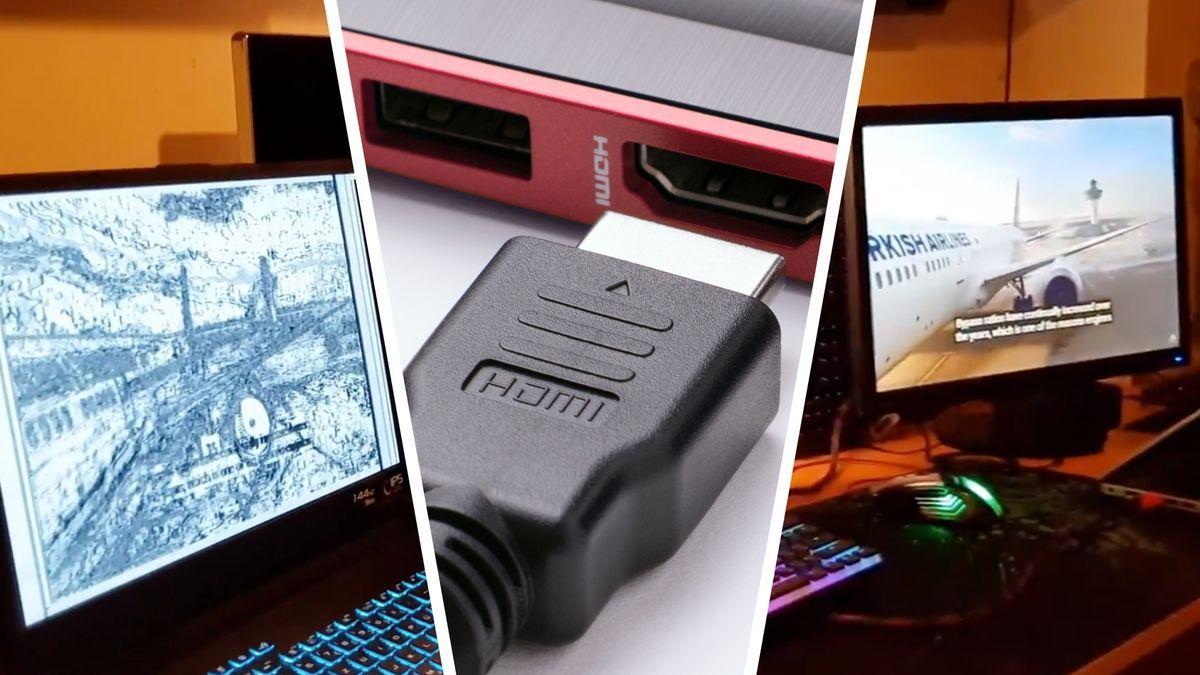
. DeepTempest, developed by Federico Larroca at the University of the Republic in Montevideo, Uruguay, represents a major advancement in spy tech by using deep learning to reconstruct video signals from electromagnetic emissions that HDMI cables naturally produce1
. The system reduces errors by over 60% compared to previous state-of-the-art attacks, making text readable and images clearer from intercepted signals1
.
Source: TechRadar
How DeepTempest Exploits HDMI Cable Electromagnetic Radiation
HDMI cables create electromagnetic fields during normal operation, and DeepTempest captures these stray radio signals using basic software-defined radio equipment
1
2
. The neural network acts as an intelligent digital reconstructor, mapping subtle radio fluctuations back into coherent raster frames while cleaning up interference, cable shielding dampening, and distance degradation2
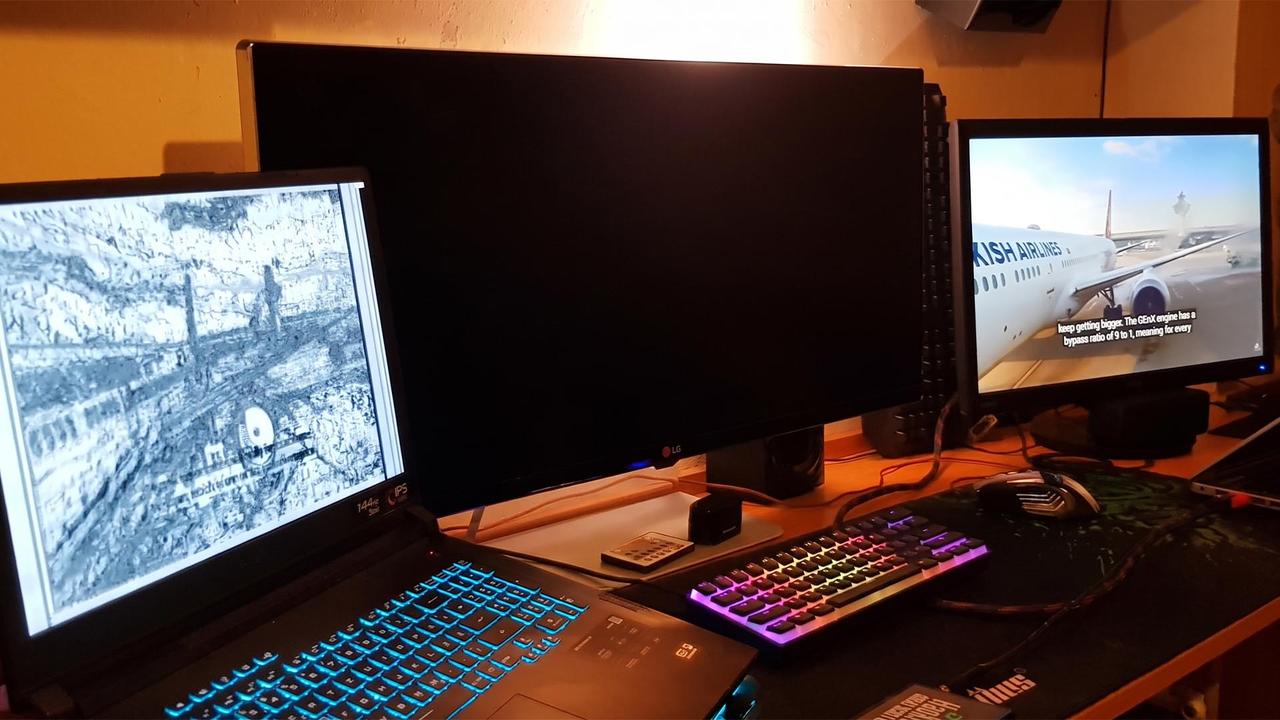
. Using text capture software, DeepTempest reconstructs text with roughly 30% of characters being misinterpreted, which sounds significant but remains comprehensible to human readers1
. Modern digital standards like HDMI transmit heavy, high-frequency data packets that previously turned into unintelligible electromagnetic fuzz when captured over the air, but AI has now cracked this barrier2
.This Cybersecurity Attack Requires No Malware or Network Access
What makes this privacy risk particularly alarming is that attackers don't require any malware to be downloaded or network access to bridge a connection
2
. Since the attack relies strictly on radio interception, PCs and PC owners have no way to detect that their visual output is being observed2
. An individual with malicious intent only needs to position themselves outside a secure office with a simple antenna and an affordable radio receiver aimed at the target to pull live display telemetry2
. The end result is a mirrored video feed that transforms blurry visual static into crisp, readable text and distinct desktop windows in real time2
.
Source: Wccftech
Related Stories

The History Behind Tempest and Electromagnetic Surveillance
The term Tempest is a US National Security Agency (NSA) codename that refers to spying via electromagnetic leakage and measures to prevent it
1
. This surveillance technique builds upon traditional Tempest attacks, which intelligence agencies have long utilized to intercept electromagnetic radiation leaking from electronic equipment2
. The history goes back to the Second World War, where the US military's teleprinters were found to be generating detectable electromagnetic spikes that could be intercepted to capture text1
. Older VGA cables leaked signals that were straightforward to reconstruct on an oscilloscope, making analog transmissions relatively easy targets2
.Practical Limitations and Protection Measures
While DeepTempest dramatically enhances images and reduces text errors, the quality remains somewhat indistinct when the cable being intercepted is right next to the receiver
1
. You won't see much if you're in a van across the street unless you have a seriously powerful scanner, even if the cable being used is poorly shielded1
. The only way to mitigate DeepTempest is by using heavily shielded cables, ferrite chokes, and specialized Tempest-certified enclosures2
. Recommended measures include distance, shielding, filtering and masking, which also consider sounds and vibrations beyond electromagnetic leakage1
. Unfortunately, standard PC monitors and inexpensive HDMI cables remain wide open to this form of attack2
. For those handling sensitive information, investing in pricier cables with electromagnetic shielding offers crucial protection against signal leakage1
.References
Summarized by

Navi
Related Stories
OpenAI Researcher Warns Air-Gapped Computers Could Communicate Through CPU Heat Signals
19 Sept 2026•Technology

New AI Attack Hides Malicious Prompts in Downscaled Images, Posing Data Theft Risks
27 Aug 2025•Technology

Samsung Smart TV User Tracking Exposed: Always-On Microphone and AI Surveillance Uncovered
27 Oct 2026•Technology

Recent Highlights
1
Anthropic AI Development Doubles Speed as Self-Improving Systems Near Breakthrough
Technology

2
Google's AI Policy Forces Schools to Accept AI Overviews or Lose Search Access Entirely
Technology

3
Nvidia Opens Investigation as Jensen Huang Faces Chinese Spy Allegations Linked to $2B Chip Smuggling
Policy and Regulation

Recent Highlights
Today's Top Stories








Don’t drown in AI news. We cut through the noise - filtering, ranking and summarizing the most important AI news, breakthroughs and research daily. Follow topics that matter to you and stay ahead.


