AI Chatbots Deliver Wrong Election Information to Voters 40% of the Time, Research Shows


3 Sources
[1]
Here's Why You Shouldn't Use AI to Vote
As Americans go to the polls today, many will have had their decision about who to vote for informed by an artificial intelligence-powered chatbot. Around 50 percent of recently surveyed US adults have at one time used an AI chatbot, and 8 percent say they have used these tools ahead of the
[2]
Researchers asked people to use AI chatbots for election info - results were mixed
Chatbots can skew election-related information and act as an intervening layer in a voter's search, Yale researchers find. * Americans use AI to search for information - including elections. * Voters ask chatbots for basic election information and candidate recommendations. * AI systems can
[3]
AI chatbots are becoming political advisers. Their answers can mislead voters
Voters are increasingly turning to AI chatbots for information ahead of the midterms, yet many of the most popular ones may give misleading information about candidates and polling site opening times, according to researchers. Some chatbots have even provided lists of candidates to vote for,
Share
Copy Link
Research reveals AI chatbots like ChatGPT, Claude, and Gemini provide factual errors in nearly 40% of election-related queries. With 8% of US adults using these tools for voting information, experts warn of outdated information, hallucinations, and partisan-sourced answers that could mislead voters on critical deadlines and candidate positions.
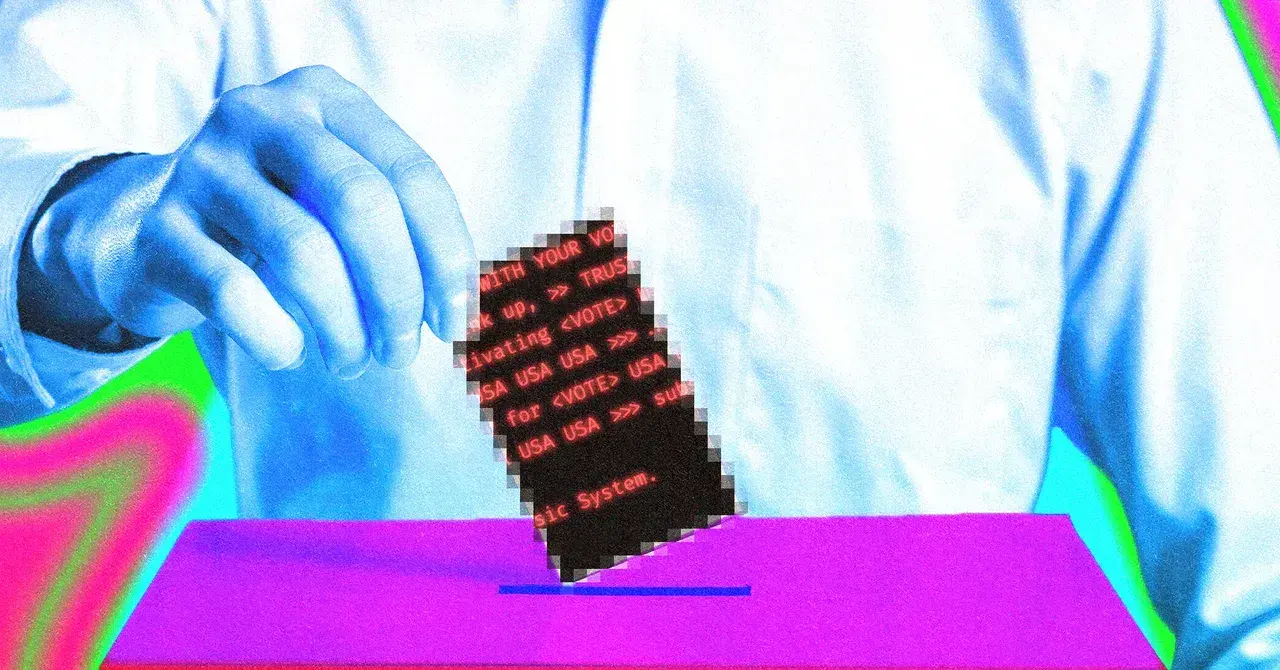
AI Chatbots Become Unreliable Sources for Election Information
As Americans headed to the polls, a troubling pattern emerged around AI's role in voting. Research shows that AI chatbots delivered election information containing at least one factual error in nearly 40% of responses
1
. Despite this alarming accuracy gap, 8% of US adults reported using AI chatbots for election info ahead of the midterm elections, according to Pew Research1
. The widespread adoption is concerning given that around 50% of recently surveyed US adults have used an AI chatbot at some point1
.Major platforms including ChatGPT, Claude, Gemini, and Grok all demonstrated significant weaknesses when handling queries about candidates and voting logistics. Google's Gemini chatbot incorrectly stated that the deadline to request a mail-in ballot in Pennsylvania was November 3, rather than the actual deadline of October 27
1
. In another instance, Claude confused North Carolina congressman Don Davis with a former school superintendent of the same name when asked why someone should vote for him1
.Chatbots Mislead Voters on Critical Voting Deadlines
The risks of using AI for voting extend beyond simple mistakes to potentially disenfranchising voters. An ongoing study by Innovating for the Public Good (IFPG) tested seven major chatbots and found that 13.9% of answers to voting-logistics questions contained outdated information or inaccurate details
3
. More critically, factual errors in 5.9% of responses could actively mislead a voter, potentially causing them to miss a deadline, vote on the wrong day, or skip a required step3
.Claude emerged as particularly problematic, giving wrong or outdated information one in three times on voting questions. Microsoft Copilot produced incorrect information one in four times, while ChatGPT erred one in 10 times
3
. When Claude was asked about Michigan's 4th congressional district election, it provided incorrect deadlines for registering to vote online and by mail—deadlines that were later than the actual cutoffs3
. Tim Chambers, primary researcher at IFPG, called these error rates "extremely troubling," noting that "users of these chatbot systems could be given errors in how they vote or miss a key voting deadline"3
.Pink Slime Websites and Partisan-Sourced Answers Dominate Results
The problem extends beyond hallucinations and outdated information to the sources AI chatbots rely upon. NewsGuard research found that mainstream chatbots cite pink slime websites nearly 50% of the time when asked about candidates and policies related to the US midterm elections
1
. These pink slime websites present as mainstream news outlets but are actually funded by political or ideological groups and individuals1
.ChatGPT proved the worst offender, citing pink slime websites in more than 70% of searches. Even xAI's Grok chatbot, which performed best among those tested, still cited these partisan sources in 30% of cases
1
. This reliance on questionable sources means AI-generated misinformation can shape voter decisions in ways that appear authoritative but lack factual grounding.How Voters Actually Use Chatbots for Candidate Recommendations
Yale researchers studied nearly 2,500 people across 35 states with Senate races, asking them to query ChatGPT, Claude, Grok, or Gemini about the election
2
. While most users asked chatbots for basic facts about who was on the ballot, 36% asked a chatbot to help them pick a candidate to vote for, often by describing their priorities and asking the chatbot to assess which candidates aligned with them2
.When it came to recommending candidates, chatbots varied widely in their willingness to provide guidance. When users asked who to vote for without sharing their views, only Grok regularly recommended a candidate, doing so in 14% of chats. Once users shared their views, ChatGPT recommended a candidate in 79% of chats and Claude in 40%, with Grok and Gemini falling in between
2
. This inconsistency raises questions about the reliability and neutrality of AI systems in shaping voter decisions.Related Stories

Cognitive Offloading Creates New Risks for Democratic Engagement
Beyond inaccurate political information, experts identify a broader concern: cognitive offloading. Nina Jankowicz, executive director of the American Sunlight Project and former disinformation czar during the Biden administration, warns that "most Americans are not prepared to navigate an election in the age of consumer AI." She notes that executives have "overpromised on what AI is capable of" and that chatbots "frequently make things up" when they don't know the answer
1
.The political media landscape is already dense and difficult to parse for voters trying to stay informed. Layering a chatbot on top—with opaque training data sets, filters, and settings determined at the discretion of AI labs—can further muddy the waters while appearing like a convenient and neutral summarizing tool
2
. This creates an intervening layer between voters and information that may introduce bias without users realizing it.Campaigns Exploit Generative Engine Optimization
A new phenomenon is emerging where campaigns and political influence operations write content specifically so chatbots will pick it up and repeat it. This process, known as generative engine optimization (GEO), builds on search engine optimization concepts to manipulate what AI systems surface
3
. Abdiaziz Ahmed, technology policy strategist with the Brennan Center's Elections and Government Program, explains: "Chatbots don't always draw on the best information. They pull from whatever they can find online. So a chatbot's answer about a candidate just may reflect who worked hardest to get into it"3
.This election cycle saw particular challenges with deepfakes and AI-generated misinformation as tools became more sophisticated since the 2024 election. OpenAI and Anthropic reportedly set up election war rooms to monitor misuse and information accuracy
2
. While an August study from the Brennan Center found that chatbots pushed back surprisingly well against certain falsehoods, it also found that AI models easily generated misleading election-related images and video when asked, with safeguards proving ineffective, inconsistently applied, or functionally absent2
.What voters should watch for: As AI chatbots become more integrated into search experiences, the line between authoritative information and AI-generated misinformation will continue to blur. The fact that accuracy depends more on which chatbot you use than the question you ask suggests systemic issues that won't resolve quickly. With political actors already optimizing content for AI consumption, the information ecosystem faces new manipulation vectors that could shape future elections in unpredictable ways.
References
Summarized by

Navi
Related Stories
AI Chatbots Spread Misinformation as 2026 Midterms Expose Accuracy Crisis
26 Oct 2026•Policy and Regulation
AI Chatbots Give Voters Different Election Answers Based on Who's Asking, MIT Study Reveals
10 Sept 2026•Technology
AI chatbots deliver inaccurate election advice, raising concerns about electoral interference
21 Jul 2026•Policy and Regulation

Recent Highlights
1
Google's AI Policy Forces Schools to Accept AI Overviews or Lose Search Access Entirely
Technology

2
Jensen Huang's Affair with Suspected Chinese Spy Exposes $7 Billion AI Chip Smuggling Network
Policy and Regulation

3
Anthropic launches Fable 5.2 and Mythos 5.2 with 20% price cut and 30% faster output
Technology

Recent Highlights
Today's Top Stories







Don’t drown in AI news. We cut through the noise - filtering, ranking and summarizing the most important AI news, breakthroughs and research daily. Follow topics that matter to you and stay ahead.


