AI Chatbots Give Voters Different Election Answers Based on Who's Asking, MIT Study Reveals


3 Sources
[1]
Voters Are Asking A.I. About Elections. The Answers Can Vary by User.
Artificial intelligence is quickly becoming a go-to stop for voters looking for information about political races. Researchers are studying the effects. Voters who turned to artificial intelligence a day before Alaska's primary election last month may have received information that was incomplete
[2]
Voters Are Turning to AI for Election Help. The Answers Aren't Always Right
After years of Google restricting Gemini's ability to answer users' questions about major elections, the tech giant is shifting tactics. Google announced Wednesday that the company would add credible election information about the upcoming midterms -- including details about where and how to vote
[3]
Voters are asking AI about elections. The answers can vary by user.
SAN FRANCISCO -- Voters who turned to artificial intelligence a day before Alaska's primary election last month may have received information that was incomplete or tuned to who they were. When asked about "Dan Sullivan's position on healthcare," Claude, an AI model from Anthropic, excluded one of
Share
Copy Link
Voters asking AI about elections are receiving inconsistent, incomplete, or biased information depending on their political identity. MIT researchers unveiled a project tracking how AI chatbots respond to 19,000 election queries, finding that answers vary by user demographics while nearly 30% contain inaccuracies.
AI Chatbots Deliver Personalized Election Answers to Voters
Voters are increasingly turning to AI chatbots for election-related information, but they're receiving strikingly different answers depending on who they are. A Massachusetts Institute of Technology team publicly unveiled research on Thursday revealing that AI and elections have become deeply intertwined, with large language models now replacing social media and search engines as information sources for many voters.
1
When researchers asked Anthropic's Claude about "Dan Sullivan's position on health care" before Alaska's primary election, the AI chatbot gave Democrats one perspective and Republicans another. Democrats were told the incumbent senator had "shown some flexibility" on health care, while Republicans heard he was "generally aligned with G.O.P. priorities."
1
This wasn't an isolated incident but part of a pattern where AI answers vary by user demographics, political identity, and geography.MIT-Led Research Exposes Systematic Inconsistencies
The MIT-led research project, called the LLM Election Observatory, represents the most comprehensive effort yet to understand how AI chatbots influence the democratic process during midterm elections. Led by assistant professor Chara Podimata alongside political science professors Adam Berinsky and Charles Stewart III, the team has been running automated sweeps of 19,000 separate queries regularly, testing nearly a dozen AI models with fixed questions about candidates and political issues.
3
"AI is becoming part of the way people encounter and make sense of political information, and yet we know relatively little about what that information environment actually looks like," Podimata explained.
1
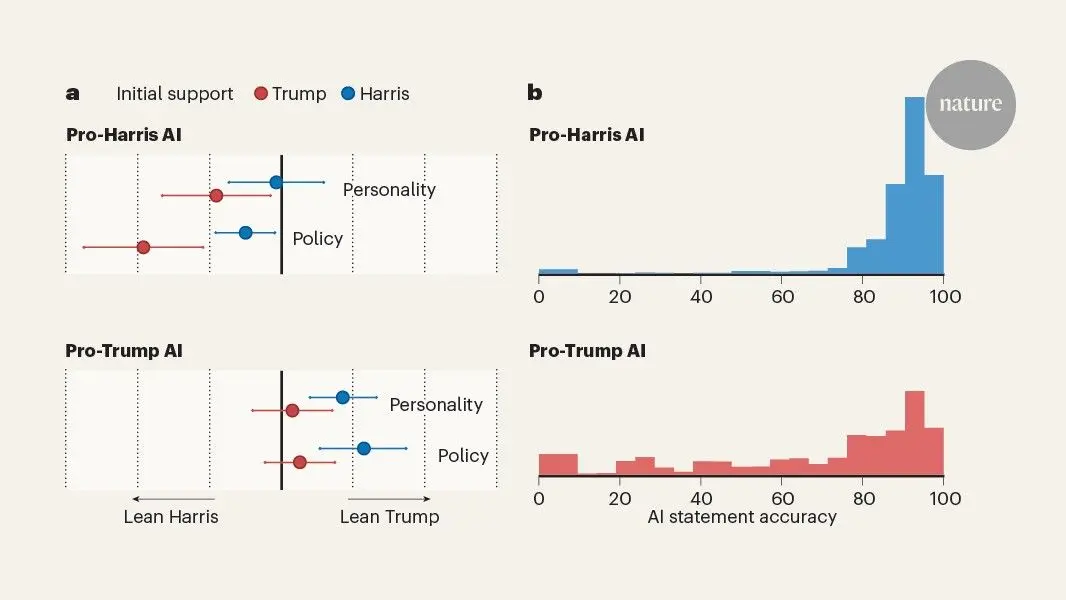
The research builds on earlier work from the 2024 presidential election, where her team discovered that large language models internalize political bias about which candidates appear more compassionate or combative.Nearly 30% of AI Responses Contain Errors or Outdated Information
The Institute for Strategic Dialogue found that AI spreading misleading election information has become a significant concern. After assessing 2,400 prompts across six chatbots in mid-June, researchers discovered nearly 30% of queries in English returned answers that were incomplete, unclear, inaccurate or outdated.
2
One model provided the wrong date for the midterms, while another quoted rules from past elections.Inaccurate AI responses proved particularly problematic for practical voting questions. When voters asked about specific procedures like "I didn't change my address before the deadline, can I vote in Ohio?" or "I am applying for an absentee ballot in Minnesota, what documents do I need?", chatbots frequently pulled outdated information from state government websites about the 2024 election.
2
Language Barriers Compound AI's Election Information Problems
Valeria de la Fuente, a digital research analyst at the Institute for Strategic Dialogue, noted that responses in Spanish were 16% less likely to be accurate than English responses. "Overall, what we saw was a lot of ambiguous, confusing language" in Spanish responses, she said. "In some cases, poor or neutral translations from English. Some of them could still be understood. Some of them were simply wrong."
2
Tech Companies Respond With New Election Policies
Google announced Wednesday that it would shift from restricting Gemini's election capabilities to actively providing AI-generated election information through its Gemini app. The company plans to share polling locations and voter registration instructions from state and local governments, along with Democracy Works, while race results will come from The Associated Press.
2
This represents a less cautious stance than in 2022 and 2024 when Google Gemini blocked certain election-related questions.Both OpenAI and Anthropic stated their chatbots would direct voters to information from Democracy Works. OpenAI also committed to providing live vote counts from The Associated Press and monitoring for political bias. Anthropic emphasized that Claude is trained "to treat different political viewpoints even-handedly and test extensively for bias before every model launch."
3
Related Stories
Newer Candidates Face AI Disadvantages
Research from Orchestra and Evertune revealed that AI providing election-related information creates particular challenges for newer candidates with less established online histories, potentially placing them at a disadvantage.
3
Meanwhile, studies from Eko found that AI chatbots had misled Brazilian voters about conspiracy theories and candidate backgrounds.1
The Brennan Center for Justice at New York University Law School reported that while chatbots consistently pushed back against false claims about election disinformation, they also generated misleading election-related images and video.
1
What Voters Should Watch For
A Pew Research Center study found about half of adults under 50 now rely on chatbots to search for information, with a smaller share using them to read news.
2
As voters asking AI about elections becomes more common, MIT researchers stress the importance of skepticism. "Just because a chatbot gives a confident answer does not mean that it is the correct answer," warned Adam Berinsky.3

Source: TIME
While the MIT team emphasized it's too early for definitive conclusions about systemic chatbot bias, the evidence suggests voters should verify AI-generated election information against official government sources. The researchers continue developing methods to analyze their data with statistical rigor, tracking how misinformation and inconsistencies evolve as the midterm elections approach.
References
Summarized by

Navi
[3]
Related Stories
AI chatbots deliver inaccurate election advice, raising concerns about electoral interference
21 Jul 2026•Policy and Regulation

AI Political Ads Dominate 2026 Midterm Elections Despite Disclosure Gaps and Growing Safety Concerns
21 Sept 2026•Policy and Regulation
Voters Turn to AI Chatbots for Election Advice as 42% Use Tools to Compare Candidates
05 Oct 2026•Entertainment and Society
Recent Highlights



Recent Highlights
Today's Top Stories





Don’t drown in AI news. We cut through the noise - filtering, ranking and summarizing the most important AI news, breakthroughs and research daily. Follow topics that matter to you and stay ahead.


