7 Sources
[1]
AI chip maker SambaNova raises $1B at $11B valuation, 5 months after last mega round
AI chip company SambaNova Systems has raised $1 billion at an $11 billion valuation led by General Atlantic, in a first close of its Series F round, with more investors expected to join soon. "In the next few weeks, a few more investors will be coming in, and the second close is likely to finish up," Rodrigo Liang, CEO and co-founder of SambaNova, told TechCrunch. The latest round comes roughly five months after the Palo Alto, California-based startup company unveiled its SN50 chip, alongside a $350 million Series E in February. SambaNova had also been in acquisition talks with Intel, a deal valuing it at roughly $1.6 billion, according to a December report from Bloomberg News. Asked whether closing its Series E and F rounds meant SambaNova, founded in 2017, had settled on staying independent, Liang was noncommittal. He said the company keeps fielding interest. "We're always being approached." The door is open to such an exit in this dynamic AI market, the CEO said, but momentum and growth will most likely drive the company toward "being public at some point." SambaNova's ties to Intel, a backer since its Series C and a participant in this latest round, have deepened. Five months ago, the nine-year-old startup announced a multi-year partnership with Intel to support AI inference development based on Intel's Xeon chip. The two now co-develop products and take them to market together. "That gives us a great relationship with them that lets us leverage the scale of Intel with the technology we have," Liang said. Alongside the new funding, SambaNova said it has been selected by JPMorganChase as an "inference-infrastructure partner," with its SN40L and SN50 systems set to power secure, on-premises AI inference at the bank. "Having JPMorgan Chase decide they're going to use SambaNova for their inference solution is a big deal," Liang told TechCrunch. "It sends a message to the banking industry that it's time not to completely depend on cloud services. These banks want heterogeneous [infrastructure]." Liang said the JPMorgan win was a signal to the broader market. Banks "of the caliber of JP Morgan" are now building their own private, secure infrastructure to run inference on their most sensitive models, he said, a move he expects to resonate beyond banking. Enterprises and governments are "just starting their AI journey," Liang continued, with most of the growth so far concentrated among tech's model makers and frontier labs, leaving what he called "a huge amount of revenue" still on the table. SambaNova launched its SN40L in September 2023, available in the cloud, and on-premises from November 2023. Its next-generation SN50, unveiled in February 2026, is due to begin shipping to customers in the second half of 2026, with SoftBank as its first deployment partner, Liang noted. Liang said SambaNova's edge as "premium inference" running the largest models and running them fast. Today's frontier models span trillions of parameters, and he said SambaNova was built specifically to handle them at that scale. The company fits multi-trillion-parameter models onto a single rack which helps them run quickly. SambaNova sees three types of customers. The first is sovereign clouds, where governments fund local partners to build private clouds, a push Liang expects SambaNova to figure centrally in. The second is neoclouds. The third is enterprises building for their own use. In addition to JPMorgan, it also names Saudi Aramco, Intel, and other Japanese firms as customers. SambaNova will use the proceeds to scale the business and shore up its supply chain against what Liang called an incredible wave of demand. "We're using that capital to secure the supply chain," he said, describing it as essential to fulfilling orders and buying the materials the company needs to deliver over the next 12 months. Other investors participating in the round include Seligman Ventures, T. Rowe Price Associates, and Capital Group. New and existing investors also joined, including A&E Investment, Assam Ventures, Battery Ventures, Cambium Capital, BlackRock, Kabila Capital, QFO Capital, Qatar Investment Authority (QIA), Vista Equity Partners, and Volantis.
[2]
SambaNova hits $11 billion valuation as investors back Nvidia chip challengers
SambaNova CEO on IPO prospects: Excited for what the next 12 months will bring But SambaNova is also focused on so-called on-premise deployments where its server units can be installed at a data center owned by a specific company. On Wednesday, JPMorgan Chase said it would deploy SambaNova's systems for "on-prem inference in our demanding enterprise AI workloads." SambaNova has said that on-premises inference can mean faster, more secure AI as it's controlled by the company using it rather than a third-party cloud provider or AI lab. Public market investors have been bullish on the semiconductor sector, which is often dubbed the "picks and shovels" of the AI buildout. The PHLX semiconductor index, which tracks a basket of chip stocks, is up around 80% this year. But there has been a flurry of activity in the private markets around chip companies that are trying to challenge the incumbents. On Wednesday, Sunghyun Park, the CEO of South Korean startup Rebellions, told CNBC exclusively that it is gearing up for an initial public offering on the Kospi in the first or second quarter of 2027. Last year, Nvidia signed a deal to license technology from inference chip startup Groq.
[3]
SambaNova raises fresh funding at an $11bn valuation as the Nvidia-alternative trade heats up
The AI chip startup is now worth roughly five times what it was a few months ago, a jump that says as much about investor appetite as about the company. SambaNova has raised fresh funding at an $11bn valuation, according to Bloomberg, capping a run in which the AI chip startup has roughly quintupled its worth in a matter of months. The figure is up from the roughly $10bn valuation reported when the round was first taking shape in late June. The speed of the re-rating is the story here as much as the number. A company valued at around $2bn earlier in the year is now, on paper, worth more than five times that, a swing driven by investors racing to back any credible alternative to Nvidia. That same hunger has propelled rival bets, from Qualcomm's move on Modular to a scatter of inference-focused startups. SambaNova builds chips and systems designed to run large AI models efficiently, using an architecture it calls a Reconfigurable Dataflow Unit rather than the graphics-derived design Nvidia popularised. Its pitch to customers is lower cost and lower power on the inference workloads that now dominate AI spending. Money has followed the pitch. The company has raised close to $1.5bn over its life from a roster that includes SoftBank's Vision Fund, Vista Equity Partners, Intel, GV, BlackRock and Temasek. The wider AI chip market is where the enthusiasm comes from. As spending shifts from training models to running them, the cost of inference has become the number that decides whether an AI product makes money, and buyers want more than one company setting the price. Its most recent prior round, a $350m raise, closed only in February, which makes the leap in valuation since then all the sharper. Rounds that used to be spaced a year or more apart are now landing within months as demand for compute outpaces supply. There is an unusual figure at the top of the company. SambaNova's chairman is Lip-Bu Tan, who is also chief executive of Intel, a tie that links the startup to one of the incumbents it is partly trying to route around. That relationship has already produced hardware. Intel and Foxconn have joined SambaNova to build rackscale AI infrastructure, pairing its dataflow chips with the manufacturing muscle needed to ship systems at volume. The backdrop to all of this is a market desperate for options. Nvidia still dominates AI training and much of inference, and its customers, cloud providers and model labs alike, have every incentive to fund a second source. That is why capital keeps flowing to challengers even before they have proven they can take meaningful share. European entrants such as Fractile have drawn similar interest on the same thesis, that inference at scale is too large and too expensive to leave to one supplier. Whether SambaNova can convert a soaring valuation into durable revenue is the open question. Founded roughly nine years ago, it has cycled through pitches from training to enterprise inference as the market has shifted under it. It is not short of company at the front of that queue. A cluster of specialist firms, including Cerebras and Groq, is chasing the same opening, each arguing that its particular design suits the economics of inference better than a general-purpose GPU. A valuation like this also raises the question of an exit. Numbers in the double-digit billions tend to point towards a public listing, and an $11bn private tag is the sort of milestone that usually sharpens talk of an IPO. Neither SambaNova nor its investors have detailed the exact size of the new round or how the proceeds will be spent. What the $11bn tag makes clear is that, for now, the money is betting on the alternatives well ahead of the results.
[4]
SambaNova raises $1 billion Series F at $11 billion valuation
SambaNova completed the first close of $1 billion in Series F financing on Wednesday, valuing the AI chip company at $11 billion post-money, with JPMorgan $JPM Chase joining as an inference infrastructure customer. General Atlantic led the round, with significant participation from Seligman Ventures, T. Rowe Price $TROW Associates, and Capital Group. New and existing investors include BlackRock $BLK, Intel $INTC Capital, the Qatar Investment Authority, Battery Ventures, Vista Equity Partners, and Volantis, among others, the company said. SambaNova said a second close is expected in the coming weeks. JPMorgan Chase will deploy SambaNova's SN40 and SN50 systems to run AI workloads on its own premises rather than through a third-party cloud provider. "At JPMorganChase, AI infrastructure has to meet a very high bar for performance, control and reliability," said Darrin Alves, chief information officer of infrastructure platforms at JPMorganChase, in a statement. SambaNova co-founder and CEO Rodrigo Liang said the JPMorgan relationship signals a broader shift. "For banks and for other industries where data is incredibly important, bringing this infrastructure on prem, bringing this infrastructure with models that are then under your control with your private data, and having all within your firewalls is an incredibly important aspect of running AI in a very secure and private manner," Liang said. Inference -- the computational process of generating responses from a trained AI model -- is the focus of SambaNova's custom chip and hardware system business. Its chips are designed to work alongside Nvidia $NVDA products rather than replace them. Liang told Bloomberg that SambaNova's SN40 and SN50 chips can run the decode portion of inference five to ten times faster than competing approaches, freeing up capacity for other tasks. SambaNova will use the proceeds to expand production capacity, scale deployments for enterprise, sovereign AI, and neo-cloud customers, and continue investing in chips, systems, and software, the company said. Liang told TechCrunch that securing the supply chain against strong demand is a priority use of the capital. Earlier this year, in February, SambaNova closed a $350 million Series E that brought Intel on both as a strategic partner and an investor. Prior acquisition discussions between the two companies had broken down, and regulators granted antitrust approval for the investment arrangement in May, according to Reuters. Liang said the company is considering an IPO in 2027, most likely in the U.S., according to CNBC.
[5]
Chipmaker SambaNova bags $1bn in Series F at $11bn valuation
SambaNova last announced a $350m Series E raise in February. Intel-backed SambaNova secures $1bn in funding to expand its lucrative AI chipmaking business, as demand for its inference technology continues to grow. The Series F round, which drives up SambaNova's valuation to $11bn, was led by General Atlantic, with participation from long-term backer Intel Capital, alongside Cambium Capital, BlackRock and the Qatar Investment Authority. A&E Investment, Assam Ventures, Battery Ventures, Kabila Capital, QFO Capital, Vista Equity Partners and Volantis also participated in the raise. The new capital comes at a time of accelerating momentum for SambaNova, which last announced a $350m Series E in February. In recent months, the company launched its specialised SN50 chips that prioritise token efficiency, and announced a multi-year collaboration with Intel to deliver cost-efficient AI inference solutions to customers and roll out an Intel-powered AI cloud. The 2017-founded SambaNova has close ties with Intel, whose CEO Lip-Bu Tan serves as chairperson on SambaNova's board. SambaNova said it will use proceeds from the latest raise to expand capacity, accelerate product innovation and scale deployments. Continuing on its growth momentum, the chipmaker plans to continue investing across chips, systems, software, and full-stack AI infrastructure. Alongside the funding, SambaNova has announced JPMorganChase as its latest customer to deploy the SN40 and SN50 chips. "SambaNova's platform is differentiated, built for a market where inference has become foundational to enterprise and industry transformation," said MartÃn Escobari, the co-president and head of global growth equity at General Atlantic. "Rodrigo and the team are driving deep technical innovation to achieve growing commercial momentum while demand for inference is accelerating well ahead of supply. We are pleased to lead this round to support SambaNova in shaping the next generation of AI infrastructure." SambaNova CEO Rodrigo Liang told CNBC last month that "business is growing at an incredibly rapid rate", adding that he is "really excited" about the current IPO market. Don't miss out on the knowledge you need to succeed. Sign up for the Daily Brief, Silicon Republic's digest of need-to-know sci-tech news.
[6]
US chip startup SambaNova scores billion-dollar funding round
American AI chip startup SambaNova secured $1 billion in new funding. This investment values the company at an impressive eleven billion dollars. The company focuses on AI inference, which is crucial for user queries. This funding will support SambaNova's infrastructure development and expansion. Newcomers like SambaNova aim to challenge Nvidia's market dominance. American AI chip startup SambaNova said Wednesday it had been valued at $11 billion, in a $1 billion fundraising round announced at the Raise Summit industry event in Paris. The company's juiced valuation highlights the growing importance of its specialist area of AI "inference", the process by which AI models generate a response to users' everyday queries, over the arduous and costly effort of "training" new models from scratch. Founded in 2017 and backed by US semiconductor heavyweight Intel, California-based SambaNova will use the latest cash infusion to "continue investing across chips, systems, software, and full-stack AI infrastructure," the company said in a statement. Although the market for AI computing power has been surging since the release of OpenAI's ChatGPT three years ago, it gained still more momentum around the turn of 2026 as more people began using AI agents. These tools can carry out computing tasks from programming to sending emails in response to users' natural-language prompts. But their capabilities are founded on vast processing power furnished by data centres stuffed with high-performance semiconductors. For now, those chips are largely provided by multi-trillion-dollar US giant Nvidia, whose dominance has made it the largest company in the world by market capitalisation. Newcomers like SambaNova are betting that they can carve out a niche with their chips designed specifically for cost-effective inference, rather than brute processing power.
[7]
SambaNova raises $1 billion at $11 billion valuation By Investing.com
Investing.com -- AI chip startup SambaNova raised $1 billion in a Series F funding round led by General Atlantic at an $11 billion post-money valuation, the company announced Wednesday. The funding round included participation from Seligman Ventures, T. Rowe Price Associates and Capital Group. Additional investors included A&E Investment, Assam Ventures, funds and accounts managed by BlackRock, Intel Capital and the Qatar Investment Authority. SambaNova produces custom chips, hardware systems and cloud services designed for inference, which is the process by which AI models respond to user queries. The company plans to use the funds to expand capacity, scale deployments globally and continue investing in chips, systems, software and full-stack AI infrastructure for customers. SambaNova also announced that JPMorgan Chase selected it as an inference infrastructure partner, deploying its SN40 and SN50 systems for AI inference. In February, SambaNova raised $350 million to fund expansion of its SN50 AI chip and formed a partnership with Intel to deliver inference solutions for AI-native companies. The partnership included a $35 million Intel investment in SambaNova, which received U.S. antitrust clearance in May after acquisition talks between the companies ended. In April, corporate records showed Intel had planned to invest another $15 million in SambaNova, which would increase Intel's ownership to 9%. SambaNova did not immediately respond to a request for comment on Intel's current stake size and its contribution to the Series F round. In April 2021, SambaNova raised $676 million in a funding round led by SoftBank Group's Vision Fund 2 at a valuation exceeding $5 billion. This article was generated with the support of AI and reviewed by an editor. For more information see our T&C.
Share
Copy Link
AI chip maker SambaNova has closed the first part of its Series F funding round at an $11 billion valuation, raising $1 billion led by General Atlantic. The round comes just five months after its $350 million Series E in February, marking a dramatic valuation jump from roughly $2 billion earlier this year. JPMorgan Chase joins as a key customer for on-premise AI inference.
AI chip company SambaNova has raised $1 billion at an $11 billion valuation in the first close of its Series F funding round, led by General Atlantic
1
. The Palo Alto-based AI chip startup expects additional investors to join in a second close within the coming weeks, according to CEO and co-founder Rodrigo Liang1
. Other participants in the round include Seligman Ventures, T. Rowe Price Associates, Capital Group, BlackRock, Intel Capital, Qatar Investment Authority, Battery Ventures, Vista Equity Partners, and Volantis4
.The latest funding round arrives just five months after SambaNova closed a $350 million Series E in February alongside the unveiling of its SN50 chip
1
. The speed of this valuation increase stands out, with the company worth roughly $2 billion earlier in the year now valued at more than five times that amount3
. This rapid re-rating reflects investor appetite for any credible Nvidia alternative as spending shifts from training models to running them3
.
Source: TechCrunch
Alongside the funding announcement, SambaNova revealed that JPMorgan Chase has selected it as an inference infrastructure partner, deploying the company's SN40L and SN50 systems to power secure, on-premise AI inference at the bank
1
. Liang described the JPMorgan win as "a big deal" that sends a message to the banking industry about moving away from complete dependence on cloud services1
."For banks and for other industries where data is incredibly important, bringing this infrastructure on prem, bringing this infrastructure with models that are then under your control with your private data, and having all within your firewalls is an incredibly important aspect of running AI in a very secure and private manner," Liang told Qz
4
. The move highlights how enterprises of JPMorgan's caliber are building their own private, secure AI infrastructure to run inference on their most sensitive models, a trend Liang expects to resonate beyond banking1
.
Source: Silicon Republic
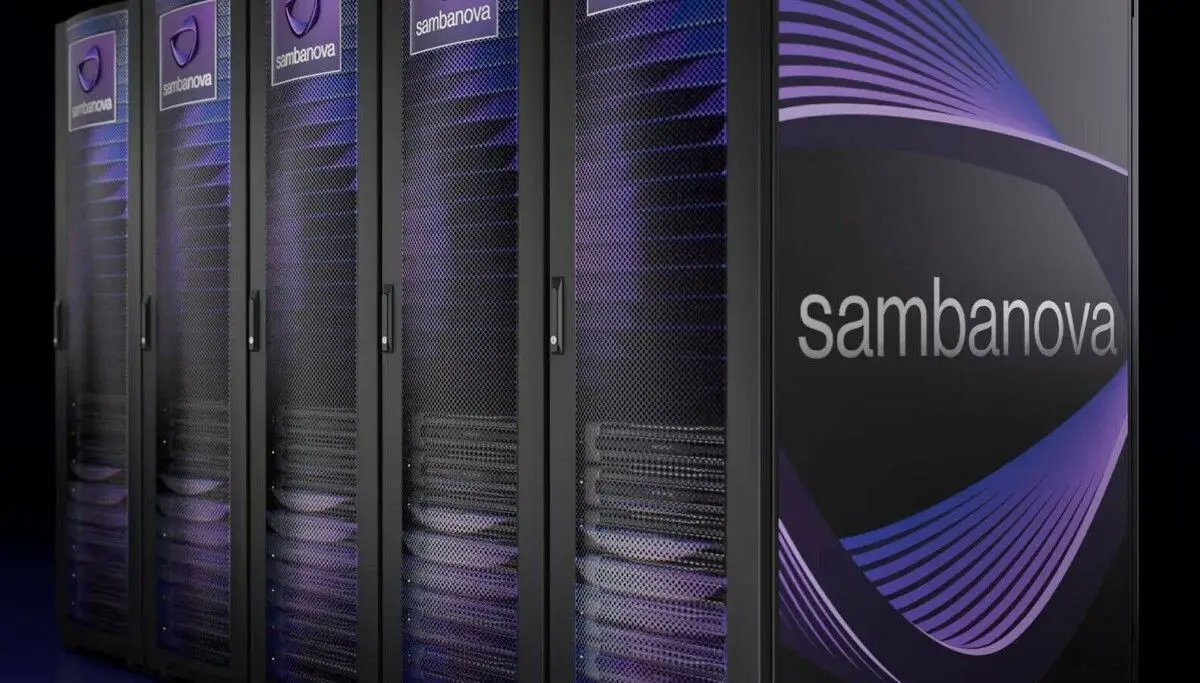
SambaNova builds AI hardware using an architecture it calls a Reconfigurable Dataflow Unit rather than the graphics-derived design Nvidia popularized
3
. The company positions itself as offering "premium inference" capable of running the largest models quickly, with its systems designed to fit multi-trillion-parameter models onto a single rack1
. Liang told Bloomberg that SambaNova's SN40 and SN50 chips can run the decode portion of AI inference five to ten times faster than competing approaches4
.The SN50 chip, unveiled in February 2026, is scheduled to begin shipping to customers in the second half of 2026, with SoftBank as its first deployment partner
1
. The company's earlier SN40L launched in September 2023 for cloud deployment and became available for on-premises use from November 20231
.Related Stories
SambaNova's ties to Intel, a backer since its Series C and a participant in this latest round, have strengthened significantly
1
. Five months ago, the startup announced a multi-year partnership with Intel to support AI inference development based on Intel's Xeon chip, with the two companies now co-developing products and taking them to market together1
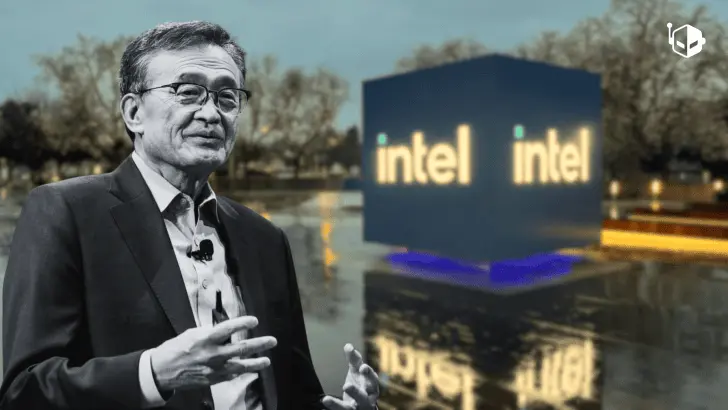
. Intel CEO Lip-Bu Tan serves as chairperson on SambaNova's board5
. This relationship follows earlier acquisition discussions between the two companies that had broken down, with a deal that would have valued SambaNova at roughly $1.6 billion according to a December report from Bloomberg News1
.The broader semiconductor sector has seen bullish investor sentiment, with the PHLX semiconductor index up around 80% this year
2
. Private market activity around chip companies challenging incumbents has intensified, with South Korean startup Rebellions gearing up for an IPO on the Kospi in the first or second quarter of 20272
. Last year, Nvidia signed a deal to license technology from inference chip startup Groq2
.
Source: ET
SambaNova will use the proceeds to scale the business and secure its supply chain against what Liang described as an incredible wave of demand
1
. "We're using that capital to secure the supply chain," he said, describing it as essential to fulfilling orders and buying the materials needed to deliver over the next 12 months1
. The company will also expand production capacity and scale deployments for enterprise, sovereign AI, and neo-cloud customers4
.When asked whether closing its Series E and Series F rounds meant the company had settled on staying independent, Liang remained noncommittal, noting that momentum and growth will most likely drive the company toward "being public at some point"
1
. Liang told CNBC that the company is considering an IPO in 2027, most likely in the U.S.4
. Founded in 2017, SambaNova targets three customer types: sovereign clouds where governments fund local partners to build private clouds, neoclouds, and enterprises building for their own use1
. Beyond JPMorgan Chase, the company counts Saudi Aramco, Intel, and Japanese firms among its customers1
.Summarized by
Navi
[3]
[5]
07 Feb 2026•Startups

24 Feb 2026•Technology

31 Oct 2025•Business and Economy

1
Policy and Regulation

2
Policy and Regulation

3
Policy and Regulation