Cerebras Systems raises $5.5B in blockbuster IPO after nearly burning out with $8M monthly spend


23 Sources
[1]
$60B AI chip darling Cerebras almost died early on, burning $8M a month | TechCrunch
Today, Cerebras Systems is a public company that sells AI chips for inference to giants like OpenAI and AWS. It held a blockbuster IPO on Thursday, with both of its co-founders billionaires, and ended the week worth about $60 billion. But in 2019, when it was three years old, it came dangerously
[2]
Cerebras raises $5.5B, kicking off 2026's IPO season with a bang | TechCrunch
Cerebras raised $5.5 billion in its IPO on Thursday, pricing shares at $185 Wednesday evening, way higher than its range ($115 to $125, later raised to $150-$160), even as it increased the size of the offering to 30 million shares. And pre-market trading indicates that shares are going to open
[3]
Cerebras risked it all on dinner plate-sized AI accelerators a decade ago. Today it's worth $66 billion
Cerebras Systems has done what many chip startups aspire to but few ever achieve. On Thursday, the company and long-time Nvidia rival raised $5.55 billion in an initial public offering (IPO), making the company worth more than $66 billion on its first day of trading. The milestone didn't happen
[4]
Cerebras boosts IPO price to raise $5.5bn
AI chipmaker Cerebras Systems has raised $5.5bn in its initial public offering, valuing the company at about $40bn, a fresh sign of strong investor demand for AI and semiconductor shares. The IPO marked an early test of Wall Street's appetite for new AI listings ahead of the hotly anticipated
[5]
What you need to know about Nvidia competitor Cerebras after wild IPO
Cerebras: What you need to know about the Nvidia competitor after wild IPO Cerebras Systems' monster debut on Thursday didn't just place it among tech's biggest-ever IPOs -- it was a crystal clear signal of unstoppable demand for chips to power AI, as tech giants scramble to find alternatives to
[6]

Cerebras raises $5.55bn in the biggest US tech IPO since Snowflake
Priced at $185, above the marketed range, the wafer-scale chip company opens trading on Thursday at a $56.4bn valuation. The OpenAI deal is what got the book covered. The customer concentration footnote is what the next quarter has to answer. Cerebras Systems priced its IPO at $185 per share on
[7]
Cerebras prices IPO above expected range, as Wall Street braces for AI tsunami
Andrew Feldman, co-founder and CEO of Cerebras Systems, speaks at the Raise summit in Paris on July 8, 2025. The annual conference gathers global leaders and key speakers in tech and AI. Cerebras Systems, a maker of artificial intelligence chips, priced its IPO at $185 a share on Wednesday, above
[8]

Cerebras Sees Sizzling Demand For IPO Shares
Cerebras Systems priced shares for its upcoming IPO at $185 a piece late Wednesday -- well above the projected range of $150 to $160 -- raising at least $5.55 billion for the company and valuing it at $56.4 billion, according to a CNBC report. Shares of the company, which develops AI computing
[9]

Cerebras soars almost 70% by market close in a true blockbuster IPO | Fortune
In 2024, Cerebras filed to go public. In 2025, the company withdrew its IPO. And yesterday, Cerebras hit the public markets, at long last. The chipmaker, which designs and manufactures AI inference chips, has long billed itself as an Nvidia challenger, and its first day stock pop certainly
[10]
Cerebras bumps up IPO range as it looks to raise up to $4.8 billion
Cerebras CEO Andrew Feldman speaks to the media at the Colovore office in Santa Clara, Calif., on March 12, 2024. Artificial intelligence chipmaker Cerebras Systems has increased the estimated price range for its initial public offering. It's now looking to sell at $150 to $160 per share,
[11]

Cerebras Systems IPO set to raise more than $5.5bn
Cerebras founders, from left: Sean Lie, Gary Lauterbach, Michael James, Jean-Philippe Fricker and Andrew Feldman. Image: Rebecca Lewington The pricing of the 30m class A common stock shares is significantly higher than was expected. Cerebras Systems, the AI chipmaker aiming to rival Nvidia, is
[12]

Cerebras stock almost doubles from its initial offering price after the biggest tech IPO in years raised $5.5B - SiliconANGLE
Cerebras stock almost doubles from its initial offering price after the biggest tech IPO in years raised $5.5B Cerebras Systems Inc. today opened trading as a public company at $350 a share, 89% above its offering price, as it kicked off what looks like a huge year for initial public
[13]
Cerebras prices its shares at $185 ahead of biggest tech IPO in years - SiliconANGLE
Cerebras prices its shares at $185 ahead of biggest tech IPO in years Cerebras Systems Inc. has officially priced its stock at $185 per share ahead of the most anticipated initial public offering of the year today, well above its expected range of between $150 and $160 per share. It means the
[14]

Cerebras IPO Creates Billions for CEO Andrew Feldman and Early A.I. Chip Backers
Andrew Feldman, Benchmark, Foundation Capital and other early Cerebras backers are among the biggest winners from the A.I. chip startup's blockbuster public debut. Cerebras Systems didn't just go public this week; it minted billionaires and delivered one of the biggest venture paydays in years.
[15]

Cerebras shares skyrocket in debut as AI mania grips markets
Cerebras Systems, a chip designer, saw its shares surge 89% on its Nasdaq debut, raising $5.55 billion. The company's innovative wafer-scale engine, designed for AI processing, attracted significant investor interest, with major clients like Amazon and OpenAI. This IPO highlights the booming market
[16]
Report: AI chipmaker Cerebras to increase IPO price target amid surging investor demand - SiliconANGLE
Report: AI chipmaker Cerebras to increase IPO price target amid surging investor demand Artificial intelligence chipmaker Cerebras Systems Inc. is expected to increase the size and price of its initial public offering later today as investor demand for access to its shares continues to
[17]

Cerebras Isn't Just Challenging Nvidia -- It's Challenging How AI Computing Works - Cerebras Systems (NASD
Beyond GPU Clusters Unlike Nvidia's model of connecting thousands of GPUs through increasingly complex networking infrastructure, Cerebras has built its pitch around wafer-scale computing -- giant chips designed to reduce latency and avoid some of the bottlenecks associated with massive GPU
[18]
Nvidia Competitor Cerebras Sees Massive Stock Surge In Public Debut - Cerebras Systems (NASDAQ:CBRS)
Cerebras Systems shares are climbing with conviction. What's driving CBRS stock higher? Strong First‑Day Demand Drives Shares Cerebras priced its offering at $185 per share, but demand was strong enough that the stock opened at $350 when trading began, setting the tone for a powerful debut on
[19]
2026's Biggest IPO So Far: AI Chipmaker Cerebras Targets $4.8 Billion Raise, But What Do Prediction Marke
Cerebras Systems is set to be the largest IPO of 2026 so far, with the AI chipmaker on track to raise up to $4.8 billion at a $48.8 billion valuation after its order book closed roughly 20 times oversubscribed. The Sunnyvale company lifted its price range to $150 to $160 per share from $115 to
[20]

Why the hottest tech IPO of the year matters for the AI race with China and in the Middle East
Chris Buskirk, co-founder and chief investment officer of 1789 Capital, a key Cerebras investor, says the company's IPO is geopolitically significant. On Thursday, shares of Sunnyvale, California-based AI chipmaker Cerebras went public and nearly doubled in the moments after it opened on the
[21]

Cerebras Systems prices IPO at $185 per share on Nasdaq By Investing.com
Cerebras Systems Inc. announced the pricing of its initial public offering at $185.00 per share for 30 million shares of Class A common stock. The AI infrastructure company expects to raise $5.55 billion from the offering. The company granted underwriters a 30-day option to purchase up to 4.5
[22]
Nvidia, AMD, Broadcom And Now Cerebras: AI Chip Trade Gets A New Name - Broadcom (NASDAQ:AVGO), NVIDIA (N
The AI chip trade is getting a new public-market name this week. Cerebras Systems is expected to price its IPO on Wednesday, with shares potentially beginning to trade on Nasdaq under the ticker CBRS as early as Thursday, subject to final pricing and the registration statement becoming
[23]

Cerebras to raise IPO price range to $150-$160 as demand surges, sources say
May 10 (Reuters) - Cerebras Systems is set to raise the size and price of its initial public offering as soon as Monday, as demand for the artificial intelligence chipmaker's shares continues to climb, two people familiar with the matter told Reuters on Sunday. The company is considering a new IPO
Share
Copy Link
Cerebras Systems raised $5.5 billion in its IPO, valuing the AI chipmaker at roughly $60 billion. But the company's success story nearly ended in 2019 when it was burning $8 million monthly trying to solve a technical problem that had stumped the semiconductor industry for decades. The breakthrough came in July 2019 when the team finally cracked the packaging challenge for its dinner plate-sized chip.
Cerebras Systems Achieves $60 Billion Valuation After Blockbuster IPO
Cerebras Systems raised $5.5 billion in its Cerebras IPO on Thursday, pricing shares at $185—far above its initial range of $115 to $125 and even beyond the revised $150-$160 target
2
. The AI chipmaker ended its first week of trading worth approximately $60 billion, with co-founder CEO Andrew Feldman's stake valued at nearly $1.9 billion and co-founder CTO Sean Lie's at about $1 billion1
. The company closed its first day trading on Wall Street with a market cap just below $100 billion, placing it among tech's biggest-ever IPOs alongside companies like Meta and Alibaba5
.
Source: FT
The milestone represents a dramatic turnaround for the AI chip company, which first filed to go public in 2024 but shelved those plans amid concerns about a large investment from Abu Dhabi-based Group 42 and an endless review from CFIUS
2
. IPO ambitions resurfaced in April when Cerebras reported revenues of $510 million in 2025, up 76 percent year-over-year, and a massive swing to $237.8 million in net income compared to losing nearly half a billion the year before2
.The Near-Death Experience That Almost Killed the AI Hardware Industry Disruptor
Today's success masks a harrowing near-failure that nearly destroyed Cerebras Systems in 2019. When the company was three years old, it was burning $8 million a month trying to solve one technical problem that no one in the semiconductor industry thought could be done
1
. "At this point, we had incinerated nearly $200 million trying to solve one technical problem," Feldman told TechCrunch1
.Every few weeks, Feldman made the painful walk to board meetings to report another failure and more money burned. The problem centered on "packaging"—everything after manufacturing the silicon itself, including adhering it to a motherboard, delivering power, managing heating and cooling, and creating the pipes that would deliver and return data
1
. Cerebras' chips were 58 times larger than typical GPUs and used 40 times as much power as anybody had ever used1
. There were no premade heat sinks, no vendors, and no manufacturing partners for such a large-scale AI chip.The team destroyed an enormous number of chips through trial and error. In one instance, they had to invent their own machine that could bolt-in 40 screws simultaneously to secure the wafer to a board without cracking it
1
. The breakthrough came in July 2019 when the entire founding team stood in the lab watching lights flash on the computer, stunned they'd solved the problem. "That was one of the greatest moments of my life," Feldman said1
.Revolutionary Wafer-Scale Engine Architecture Challenges Nvidia Competitor Status
Source: The Register
Founded in 2015 by former SeaMicro head Andrew Feldman, Cerebras Systems took a radically different approach to chip design
3
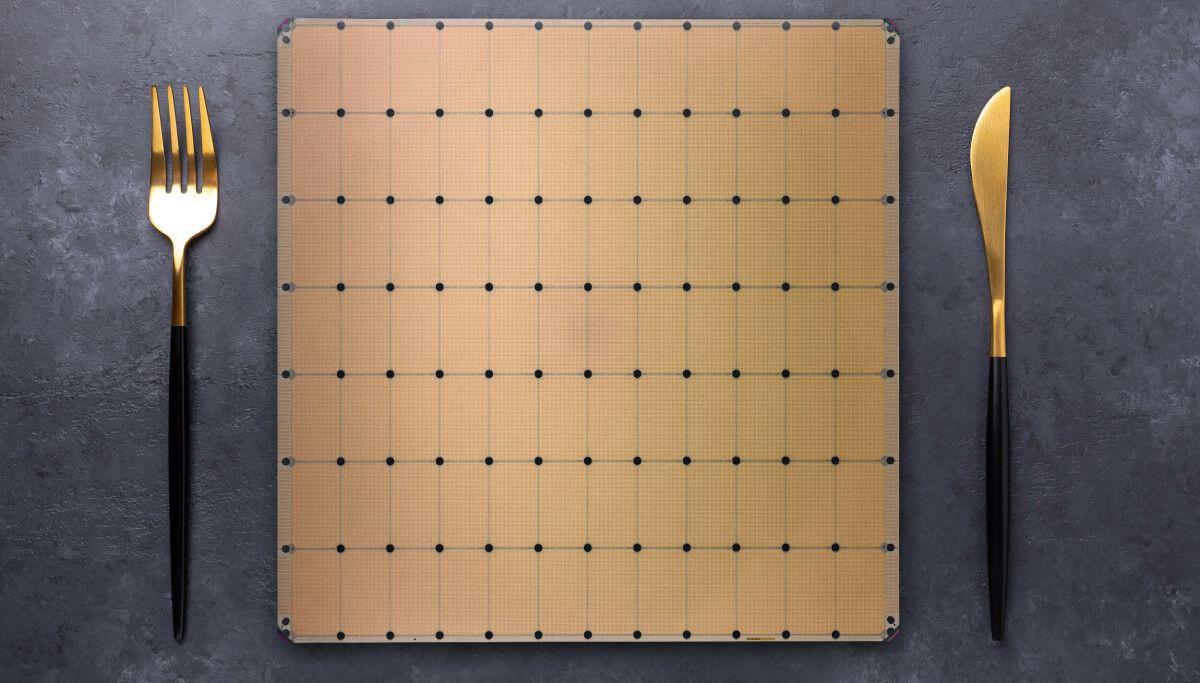
. Rather than cutting up a wafer into smaller chips just to reconnect them again, Cerebras created the Wafer-Scale Engine (WSE), a giant AI chip measuring 46,225 square mm—about the size of dinner plate-sized AI accelerators3
.The microprocessor industry had spent over 50 years making CPUs faster by cramming more transistors onto silicon wafers and dicing them into tinier pieces. But AI required so much AI computing power that many chips had to be strung together and forced to communicate
1
. Cerebras' founders believed turning a whole wafer into one giant, powerful chip would work faster.The first-generation WSE featured a novel compute engine designed to speed up highly sparse matrix multiply-accumulate operations common in deep learning, boosting effective computational output from 2.65 16-bit petaFLOPS to 26.5
3
. By the third iteration, the WSE-3 boasted massive memory bandwidth of 21 PB/s—nearly 1000x faster than Nvidia's new Rubin GPUs3
.Related Stories

AI Inference Capabilities Drive Customer Partnerships and Market Position
While Cerebras initially focused on AI training, the company announced an inference-as-a-service offering in mid-2024 to rival competing chip startups like Groq and SambaNova
3
. The massive SRAM capacity and memory bandwidth made Cerebras AI accelerators particularly well suited to high-speed large language models inference3
. According to Artificial Analysis, Cerebras' kit can churn out more than 2,200 tokens per second when running GPT-OSS 120B High, 2.8x faster than the next closest GPU cloud Fireworks3
.Cerebras now counts OpenAI, Amazon Web Services, G42, and Saudi's Mohamed bin Zayed University of Artificial Intelligence as customers
2
. OpenAI recently endorsed the technology in a $20 billion deal that will eventually deploy 750 megawatts of Cerebras' chips and involve co-designing hardware4
. OpenAI also extended Cerebras a $1 billion working capital loan secured by warrants that conditionally grant OpenAI about 33 million shares—worth over $9 billion at Friday's closing price of $2791
.
Source: Silicon Republic
As part of the loan deal, Cerebras agreed not to sell to specific OpenAI competitors, though Feldman said this restriction is temporary and "designed to make sure that we could get OpenAI the capacity"
1
. The company has also struck partnerships with Meta, Mistral, Cognition, and Windsurf4
.Market Timing Captures Surge in Demand for AI Computing Infrastructure
The Cerebras IPO marked an early test of Wall Street's appetite for new AI listings ahead of hotly anticipated debuts from OpenAI and Anthropic, which could follow Elon Musk's SpaceX into public markets as soon as this year
4
. The valuation represents a significant jump from a private financing in September that priced the Silicon Valley company at $8.1 billion4
.Like other chip providers, Cerebras benefits from an industry-wide shortage of computing power that Big Tech companies and AI startups need
4
. That computing crunch has intensified this year with the arrival of agentic AI tools like Claude Code, which require even more processing power for AI inference involved in responding to queries4
. "We've now arrived at the era of agentic AI, where inference is key," noted industry observers5
.Cerebras argues its large size is well suited to inference because it eliminates the need to link many smaller chips together, which can slow responses to users' AI queries
4
. The company faces challenges common to semiconductor companies, including securing manufacturing space at Taiwan Semiconductor Manufacturing Company when big companies have snapped up much capacity4
. Very large chips pose particular manufacturing challenges because they're more likely to contain flaws, though Cerebras says its GPU architecture can accommodate these flaws, boosting production yields and margins4
.References
Summarized by

Navi
[3]
Related Stories
Cerebras Systems files for IPO after landing $20 billion OpenAI deal and challenging Nvidia
18 Apr 2026•Business and Economy

AI chipmaker Cerebras targets $3.5 billion in IPO backed by massive OpenAI partnership
02 May 2026•Business and Economy

Cerebras Systems raises $1B at $23B valuation as Benchmark doubles down with $225M investment
04 Feb 2026•Business and Economy

Recent Highlights



Recent Highlights
Today's Top Stories







Don’t drown in AI news. We cut through the noise - filtering, ranking and summarizing the most important AI news, breakthroughs and research daily. Follow topics that matter to you and stay ahead.


