7 Sources
7 Sources
[1]
AI Chipmaker Cerebras Systems Files Publicly Again for US IPO
Cerebras Systems Inc., an artificial intelligence chipmaker and data center operator, filed publicly for an initial public offering months after withdrawing a previous attempt to list. The Sunnyvale, California-based company had net income of $87.9 million on revenue of $510 million for 2025, compared with a net loss of $484.8 million on revenue of $290.3 million a year earlier, according to a filing Friday with the US Securities and Exchange Commission. Cerebras filed confidentially for an IPO that could raise about $2 billion, people familiar with the matter said in March, about six months after filing to withdraw its previous registration. In that time, investors and megacap technology companies have rapidly accelerated their multibillion-dollar investments into building AI infrastructure on the expectation that it will transform the world economy. The infrastructure firm is part of a growing cohort seeking to challenge market leader Nvidia Corp. with giant chips that can handle massive amounts of data in one go. Chief Executive Officer Andrew Feldman has said that Cerebras' hardware runs AI models much faster than Nvidia. It also operates its own data centers. Cerebras had been reliant on business from G42, an Abu Dhabi AI firm. The relationship led to a review by the Committee on Foreign Investment in the US. Cerebras said last March that all open issues with CFIUS had been resolved. In February, Cerebras raised about $1 billion in a funding round that valued the firm at $23 billion including money raised. The funding was led by Tiger Global Management with participation from investors including Benchmark, Fidelity Management & Research Co., and Advanced Micro Devices Inc. The fresh valuation was a significant increase from a September round that valued the company at $8.1 billion. Read more on IPOs: For the latest news on equity capital markets activity in the US, Canada and Latin America, follow the channel or visit NI BFWECMUS. To subscribe to ECM Watch, Bloomberg's daily roundup of news from around the region, click here. The offering is being led by Morgan Stanley, Citigroup Inc., Barclays Plc and UBS Group AG. The company plans for its shares to trade on the Nasdaq Global Select Market under the symbol CBRS.
[2]
Nvidia rival Cerebras reveals US IPO filing as AI boom drives listings
April 17 (Reuters) - AI chipmaker Cerebras Systems disclosed its filing for a U.S. initial public offering on Friday, bringing the Nvidia (NVDA.O), opens new tab rival closer to the public markets as optimism builds around a broader revival in the listings market. The company, which develops high-performance processors for artificial intelligence workloads, withdrew its earlier IPO filing in October, days after raising more than $1 billion in a funding round that valued it at $8 billion. The IPO market is regaining momentum after a brief slowdown in March, when volatility driven by geopolitical tensions and a selloff in technology stocks curbed investor appetite. A recent pickup in listings suggests companies are returning to the market as sentiment stabilizes, with issuers and bankers betting that the recovery seen earlier this year can extend into the coming months. Analysts expect companies tied to the AI market to spearhead tech sector listings, as firms see significant growth potential from the wider adoption of generative AI. Cerebras is aiming to list on the Nasdaq under the ticker symbol "CBRS." Morgan Stanley, Citigroup, Barclays and UBS are the lead underwriters of the offering. Reporting by Manya Saini and Pragyan Kalita in Bengaluru; Editing by Shilpi Majumdar and Pooja Desai Our Standards: The Thomson Reuters Trust Principles., opens new tab
[3]
AI chipmaker Cerebras set to file for IPO as soon as today
Cerebras Systems CEO Andrew Feldman attends The Grove by Village Global at Carneros Resort and Spa in Napa, Calif., on Dec. 12, 2025. Cerebras, a producer of chips that run artificial intelligence models, will file to go public on Friday, two people familiar with the matter told CNBC. The people spoke on condition of anonymity, in order to discuss internal matters. Cerebras declined to comment. For years, Cerebras sought to sell chips to companies, but it has begun operating the chips inside its own data centers as a cloud service on behalf of clients. In January, Cerebras touted plans to provide up to 750 megawatts of computing power to OpenAI through 2028 in an agreement valued at over $10 billion. OpenAI has since expanded its relationship with Cerebras in an agreement worth over $20 billion and will get warrants to buy Cerebras shares, one person said. The Information previously reported on the arrangement. Another major expansion could be on the way. On Oracle's March earnings call, CEO Clay Magouyrk mentioned that the database and cloud company offers chips from Cerebras and other suppliers. But at the time, Oracle's price list did not contain references to Cerebras.
[4]
Cerebras, an A.I. Chip Maker, Files to Go Public as Tech Offerings Ramp Up
The Silicon Valley chip maker filed a prospectus just as SpaceX, Anthropic and OpenAI prepare for their own listings, in what is shaping up to be a wave of enormous initial public offerings. An expected wave of technology initial public offerings is kicking into high gear. On Friday, the Silicon Valley artificial intelligence chip maker Cerebras took a key step toward listing its shares on the stock market by unveiling an investor prospectus. In the filing, Cerebras revealed that its revenue rose 75 percent last year to $510 million and that it swung to an annual profit of $238 million from a net loss in 2024. Cerebras had initially filed to list its shares in the fall of 2024, before raising additional funding and withdrawing its offering plans without providing a reason. Now it is moving to go public again, ahead of a slew of potentially enormous offerings from high-profile companies. Earlier this month, SpaceX, Elon Musk's rocket and satellite maker that is valued at more than $1 trillion, filed to list its shares in what is likely to be one of the largest ever public offerings. The A.I. companies OpenAI and Anthropic have also taken early steps to go public. These companies could suck the oxygen out of other I.P.O.s by commanding most investor attention. Cerebras, based in Sunnyvale, Calif., makes specialized computer chips for building A.I. technologies and delivering them to businesses and consumers. The market is dominated by the Silicon Valley chip maker Nvidia. Cerebras and others are trying to make a dent in Nvidia's chip empire. Google and Amazon are pulling in billions of dollars in revenues with their specialized A.I. chips. Other start-ups trying to grab a piece of the booming chip market include Graphcore and SambaNova. Its first prospectus in 2024 showed that Cerebras's business relied heavily on a single customer that was also an investor: G42, an A.I. company backed by the United Arab Emirates. In total, G42 represented 87 percent of Cerebras's revenue in the first half of 2024. In that 2024 prospectus, Cerebras said it had notified CFIUS, or the Committee on Foreign Investment in the United States, about selling shares to G42 so that the committee could review the partnership for national security risks. Several months later, the company announced that CFIUS had cleared the sale, before pulling its I.P.O. plans. Since then, Cerebras has landed two major U.S. companies -- Amazon and OpenAI -- as customers. Both are constructing massive computer data centers to build and deliver A.I. technologies. (The New York Times has sued OpenAI and Microsoft for copyright infringement of news content related to A.I. systems. The two companies have denied the claims.) In its prospectus on Friday, Cerebras revealed that it generated $510 million in revenue in 2025, up from $290 million in 2024. Though the company's chips can be used to build A.I. technologies, much of its business has been driven by the tech industry's growing need to deliver A.I. system to customers -- a technical process called "inference." "As it turns out, inference is cool," Cerebras's chief executive and co-founder, Andrew Feldman, told The Times in January after signing the agreement with OpenAI. Profit totaled $238 million last year, compared with a loss of $482 million in 2024, according to the prospectus. Cerebras warned in the filing that a substantial portion of its revenue would continue coming from a limited number of customers. G42 represented 24 percent of its revenues last year, down from 87 percent in the first half of 2024. But the company said that the Mohamed bin Zayed University of Artificial Intelligence, or MBZUAI, a research lab in the U.A.E., accounted for 62 percent of its revenue last year. Cerebras added that its deal with OpenAI was valued at more than $20 billion. Cerebras was founded in 2016 by Mr. Feldman and the chip industry veterans Jean-Philippe Fricker, Michael James, Gary Lauterbach and Sean Lie. Like other start-ups, the company saw the growing demand for chips that could help build A.I. and began designing its own. One challenge that A.I. companies faced at the time was connecting many chips so they could work together to analyze massive amounts of data, an essential part of building modern A.I. systems. To address this, Cerebras created a chip around 56 times larger than those made by competitors to help crunch data faster. Cerebras began shipping its chips in 2019. The company has raised over $2.55 billion in venture capital funding, valuing it at $23 billion. In 2023, the company began building supercomputers for G42. The partnership later came under scrutiny as the Commerce Department weighed whether to place trade restrictions on G42 because of its work with China's military. G42 has denied having connections to the Chinese government and military. Cerebras is among the companies working with the U.A.E. to build A.I. data centers in the Middle East, projects that could be delayed by the ongoing war in the region.
[5]
AI chip developer Cerebras Systems files to go public amid rapid revenue growth - SiliconANGLE
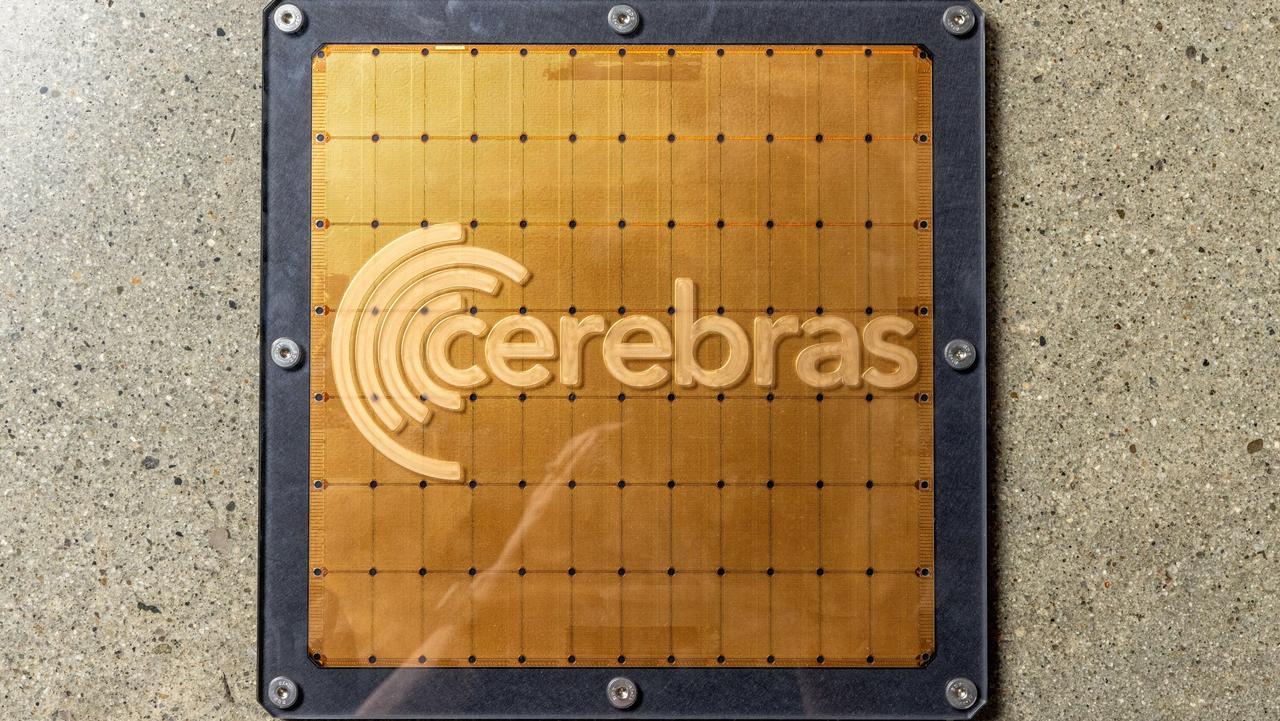
AI chip developer Cerebras Systems files to go public amid rapid revenue growth Cerebras Systems Inc., the developer of the wafer-size WSE-3 artificial intelligence chip, today filed to go public. The move comes about 18 months after the company's first attempt to list its shares. It filed for an initial public offering in September 2024, but withdrew the paperwork late last year. Cerebras explained at the time that its original IPO filing "no longer reflected the current state of our business." In 2024, the chipmaker lost $485 million on sales of $290.3 million. Last year, it swung to a $87.9 million profit. Cerebras' revenue rose by 76% in the same time frame to $510 million. The company disclosed in today's IPO filing that it has secured a $125 million revolving credit facility from Morgan Stanley. The funds will be used to finance deals with data center developers and operators. Cerebras is expanding its data center capacity to support the growth of its Training Cloud and Inference Cloud services, which provide access to hosted AI infrastructure. The company's services are powered by its flagship WS-3 chip. It's an AI accelerator 58 times the size of the B200, a high-end Nvidia Corp. graphics card that debuted in 2024 and remains highly popular. The WSE-3 contains 4 transistors organized into 900,000 cores. According to Cerebras, Morgan Stanley will upscale its revolving credit line to as much as $850 million following the IPO. The company also disclosed in the filing that it has received a separate $1 billion loan from OpenAI Group PBC. Last December, the ChatGPT developer agreed purchase 750 megawatts worth of inference infrastructure from Cerebras. The chipmaker revealed today that the deal is worth more than $20 billion. Additionally, it gives OpenAI the option to add another 1.25 gigawatts of capacity through 2030. Cerebras has issued OpenAI warrants to purchase up to 33.4 million shares. Those warrants will vest if the AI model developer goes through with its plan to purchase 2 gigawatts of computing capacity by 2030. Cerebras stated in its IPO filing that the contract "represents a substantial portion of our projected revenues over the next several years." Last month, Cerebras inked a high-profile chip deal with another high-profile customer. Amazon Web Services Inc. agreed to deploy the WSE-3 in its data centers as part of a new "disaggregated architecture." The workflow through LLMs process prompts comprises two steps known as the prefill and decode stages. AWS' disaggregated architecture will use its internally-developed AWS Trainium chips to perform prefill calculations. The WSE-3, in turn, will be responsible for the decode phase. Decode calculations are similar to those used by the prefill workflow, but they require more memory bandwidth. That's a measure of how fast data can move between a chip's logic and memory circuits. The WSE-3 provides 27 petabytes per second of memory bandwidth, more than 200 times the amount offered by Nvidia's NVLink interconnect. Cerberus's product roadmap "includes the development of a disaggregated inference-serving solution," the company stated in its IPO filing. "Disaggregated inference would allow Cerebras to operate alongside other architectures, serving as the high-performance engine for decode while other systems handle prefill." Cerebras plans to list its shares on the Nasdaq under the ticker symbol "CBRS."
[6]
Nvidia rival Cerebras discloses US IPO filing as AI boom drives listings - The Economic Times
AI chipmaker Cerebras Systems revealed its filing for a US initial public offering on Friday, bringing the Nvidia rival closer to the public markets as it seeks to tap into growing optimism around a broad revival in the listings market. This is the company's second attempt to list after it withdrew a previous IPO filing in October, days after a more than $1 billion fundraise that valued it at about $8 billion. Cerebras aims to challenge Nvidia with a different kind of artificial intelligence chip that avoids dependence on high-bandwidth memory, one of the industry's biggest bottlenecks. It is focused on inference, the process by which AI systems respond to user queries, and has tied much of its growth to OpenAI, including a $20 billion multi-year deal under which the ChatGPT creator will deploy 750 megawatts of Cerebras chips. The listing adds to signs the IPO market is regaining momentum after a brief slowdown in March, when volatility driven by geopolitical tensions and a tech stocks selloff curbed investor appetite. A recent pickup in listings suggests companies are returning to the market as sentiment stabilizes, with issuers and bankers betting that the recovery seen earlier this year can extend into the coming months. Analysts expect artificial intelligence-linked companies to spearhead tech sector listings on expectations of significant growth from wider generative AI adoption. Delay in initial offering Cerebras' revenue rose to $510 million in the year to December 31, from $290.3 million a year earlier. It posted a profit of $1.38 per share, compared with a $9.90-per-share loss a year ago. The company first filed paperwork with the U.S. Securities and Exchange Commission in 2024, before postponing and ultimately withdrawing its IPO last year. Reuters earlier reported that the previous delay followed a US national security review of UAE-based tech conglomerate G42's minority investment in the AI chipmaker. G42, which had been both an investor and one of Cerebras' largest customers, drew increased scrutiny from U.S. authorities amid concerns that Middle Eastern companies could provide China access to advanced American AI technology, Reuters previously reported. The company announced in 2025 that it had obtained clearance from the Committee on Foreign Investment in the United States. Sunnyvale, California-based Cerebras is known for its wafer-scale engine chips, designed to speed up the training and inference of large AI models and compete with products from Nvidia and other AI chipmakers. Cerebras is aiming to list on the Nasdaq under the ticker symbol "CBRS". Morgan Stanley, Citigroup, Barclays and UBS are the lead underwriters for the offering.
[7]
AI firm Cerebras Systems files for proposed Nasdaq IPO By Investing.com
AI company Cerebras Systems has on Friday filed for a proposed Nasdaq IPO. Cerebras Systems builds the world's largest computer chips, specifically designed to accelerate AI training and inference. They are best known for their Wafer-Scale Engine, a massive single processor that overcomes traditional performance bottlenecks by keeping data and memory on a single piece of silicon. The company builds computer systems for complex AI deep learning applications. The company's revenue increased from $24.6 million in 2022 to $78.7 million in 2023 and to $290.3 million in 2024, representing a more than tenfold increase over three years. The company's revenue increased to $510.0 million in 2025, representing year-over-year growth of 76%. The company earned net income of $237.8 million in 2025 and incurred a net loss of $481.6 million in 2024. The company incurred a non-GAAP net loss of $75.7 million in 2025 and $21.8 million in 2024, after excluding the impact of stock-based compensation expense and change in fair value (extinguishment) of forward contract liability from its GAAP net income (loss). Morgan Stanley, Citigroup, Barclays, and UBS will serve as lead underwriters.
Share
Share
Copy Link
AI chipmaker Cerebras Systems has filed publicly for an IPO after withdrawing its previous attempt, revealing $510 million in revenue for 2025—a 76% jump—and swinging to an $87.9 million profit. The company disclosed a $20 billion deal with OpenAI and partnerships with Amazon Web Services, positioning itself as a formidable Nvidia rival in the booming AI infrastructure market.
Cerebras Systems, an AI chipmaker and data center operator, has filed publicly for an Initial Public Offering months after withdrawing its previous attempt to list
1
. The Sunnyvale, California-based company revealed impressive financial results in its Friday filing with the US Securities and Exchange Commission, showing net income of $87.9 million on revenue of $510 million for 2025, compared with a net loss of $484.8 million on revenue of $290.3 million a year earlier1
. This 76% revenue growth signals the company's rapid expansion in the AI boom5
.
Source: SiliconANGLE
The AI chipmaker filed confidentially for an IPO that could raise about $2 billion in March, approximately six months after filing to withdraw its previous registration
1
. The company plans for its shares to trade on the Nasdaq Global Select Market under the symbol CBRS, with Morgan Stanley, Citigroup, Barclays and UBS leading the offering2
.Cerebras Systems is part of a growing cohort seeking to challenge market leader Nvidia with giant chips that can handle massive amounts of data in one go
1
. Chief Executive Officer Andrew Feldman has stated that Cerebras' hardware runs AI models much faster than Nvidia1
. The company's flagship WSE-3 chip is an AI accelerator 58 times the size of Nvidia's B200 graphics card, containing 4 trillion transistors organized into 900,000 cores5
.
Source: NYT
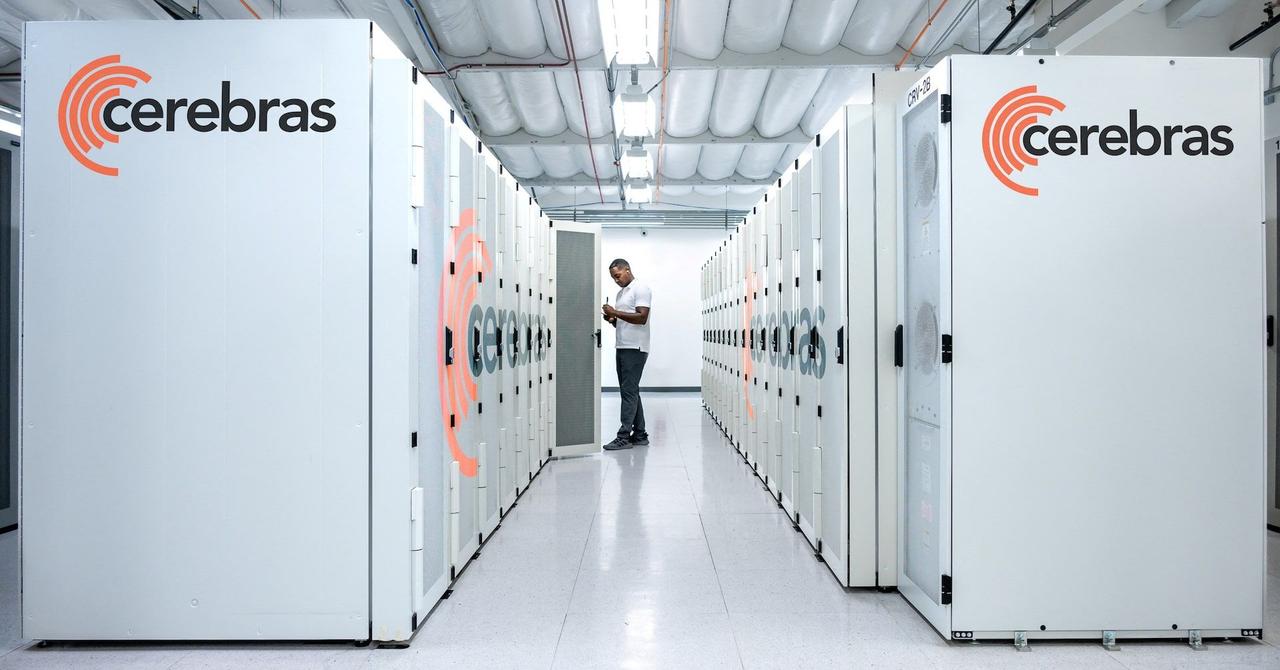
For years, Cerebras sought to sell chips to companies, but it has begun operating the chips inside its own data centers as a cloud service on behalf of clients
3
. This shift to providing AI infrastructure through its Training Cloud and Inference Cloud services has driven much of the company's business growth, particularly as the tech industry's need to deliver AI systems to customers—a technical process called inference—has expanded4
.
Source: Reuters
Cerebras revealed in its filing that it has secured a deal with OpenAI valued at more than $20 billion
4
. In January, Cerebras touted plans to provide up to 750 megawatts of computing power to OpenAI through 2028 in an agreement initially valued at over $10 billion3
. OpenAI has since expanded its relationship with Cerebras and will receive warrants to buy Cerebras shares3
.The company disclosed that OpenAI has the option to add another 1.25 gigawatts of capacity through 2030, and has issued OpenAI warrants to purchase up to 33.4 million shares that will vest if the AI model developer purchases 2 gigawatts of computing capacity by 2030
5
. Cerebras stated in its IPO filing that the contract "represents a substantial portion of our projected revenues over the next several years"5
. Additionally, the company received a separate $1 billion loan from OpenAI Group5
.Last month, Cerebras inked a high-profile chip deal with Amazon Web Services, which agreed to deploy the WSE-3 in its data centers as part of a new "disaggregated architecture"
5
. On Oracle's March earnings call, CEO Clay Magouyrk mentioned that the database and cloud company offers chips from Cerebras and other suppliers3
.In its first prospectus in 2024, Cerebras showed that its business relied heavily on G42, an Abu Dhabi AI firm that represented 87 percent of its revenue in the first half of 2024
4
. The relationship led to a review by CFIUS, or the Committee on Foreign Investment in the United States. Cerebras said last March that all open issues with CFIUS had been resolved1
. G42 represented 24 percent of its revenues last year, down from 87 percent in the first half of 2024, though the Mohamed bin Zayed University of Artificial Intelligence, a research lab in the U.A.E., accounted for 62 percent of its revenue last year4
.Related Stories
In February, Cerebras raised about $1 billion in a funding round that valued the firm at $23 billion including money raised
1
. The funding was led by Tiger Global Management with participation from investors including Benchmark, Fidelity Management & Research Co., and Advanced Micro Devices. The fresh valuation was a significant increase from a September round that valued the company at $8.1 billion1
.Cerebras disclosed in its IPO filing that it has secured a $125 million revolving credit facility from Morgan Stanley to finance deals with data center developers and operators
5
. According to Cerebras, Morgan Stanley will upscale its revolving credit line to as much as $850 million following the IPO5
.The IPO market is regaining momentum after a brief slowdown in March, when volatility driven by geopolitical tensions and a selloff in technology stocks curbed investor appetite
2
. A recent pickup in listings suggests companies are returning to the market as sentiment stabilizes, with issuers and bankers betting that the recovery seen earlier this year can extend into the coming months2
.Cerebras is moving to go public ahead of a slew of potentially enormous offerings from high-profile companies. Earlier this month, SpaceX filed to list its shares in what is likely to be one of the largest ever public offerings, while AI companies OpenAI and Anthropic have also taken early steps to go public
4
. Analysts expect companies tied to the AI market to spearhead tech sector listings, as firms see significant growth potential from the wider adoption of generative AI2
. Investors and megacap technology companies have rapidly accelerated their multibillion-dollar investments into building AI infrastructure on the expectation that it will transform the world economy1
.Summarized by
Navi
1
Policy and Regulation

2
Technology

3
Policy and Regulation