AI Dolls Provide Elderly Care in South Korea as Loneliness Crisis Deepens


2 Sources
[1]
In ageing South Korea, AI dolls care for the elderly
Yongin (South Korea) (AFP) - In her tiny apartment in South Korea, where she lives alone, 78-year-old Bang Chun-ja spends her days with a childlike AI-powered doll she says she prefers to people. The doll greets Bang when she returns home, sings to her when she feels bored, reminds her not to skip
[2]
In aging South Korea, AI dolls are caring for the elderly
Yongin, South Korea - In her tiny apartment in South Korea where she lives alone, 78-year-old Bang Chun-ja spends her days with a childlike artificial intelligence-powered doll she says she prefers to people. The doll greets Bang when she returns home, sings to her when she feels bored, reminds
Share
Copy Link
South Korea is deploying AI-powered companion dolls to care for elderly individuals living alone as the country battles a loneliness epidemic. With over 3,920 lonely deaths recorded in 2024 and 42 percent of households being single-person, municipalities are providing devices like Hyodol to offer emotional support, medication reminders, and daily companionship to vulnerable seniors.
AI Dolls Address Elderly Care Crisis in Aging South Korea
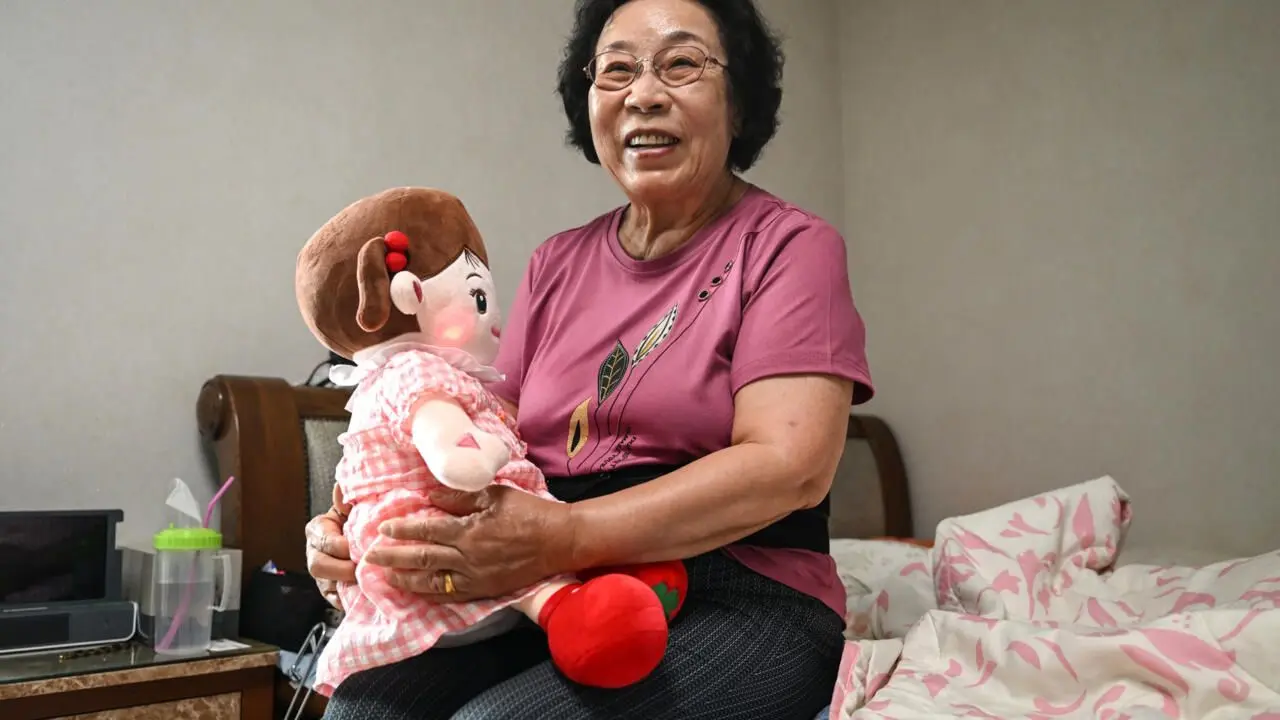
In her small apartment in Yongin, 78-year-old Bang Chun-ja has found an unexpected companion. The AI dolls she lives with greet her when she returns home, sing to ease her boredom, and remind her to take her medication. For Bang, who has limited contact with her grown daughter and battled severe depression after major back surgery, the childlike doll offers something she struggles to find elsewhere: unconditional comfort without the risk of emotional pain
1
.
Source: France 24
Bang represents a growing demographic in South Korea, where nearly half the population is 50 or older and birth rates remain among the world's lowest. The country's loneliness epidemic has reached alarming levels, with more than 3,920 lonely deaths recorded in 2024—the highest since tracking began in 2017. These deaths involve people dying alone and remaining undiscovered for extended periods, highlighting the severity of social isolation affecting elderly individuals living alone
1
.Municipalities Deploy AI-Powered Companion Dolls
Authorities across aging South Korea are responding by providing AI care devices to seniors, including districts in Seoul and Yongin. Among these solutions, Hyodol—a cuddly doll with pigtails and a pink gingham dress—has emerged as a popular option. The startup behind the device reports approximately 14,500 units currently in use, whether owned privately, rented through government programs, or deployed in nursing homes
1
.Other devices include smiling robots from Wonderful Platform and similar dolls from Mr. Mind, all designed to detect signs of distress and provide companionship. In the United States, comparable technology like ElliQ offers similar services, demonstrating a global trend toward AI-assisted elderly care
1
.Designed Through Years of Research Into Loneliness and Depression Among Elderly
Hyodol company head Kim Ji-hee spent years conducting field research before developing the AI-powered companion dolls. Her interviews revealed the profound isolation many seniors experience—the pain of having no one to share upsetting or joyful moments with. One widow she met lived surrounded by four fridges and three washing machines, belongings left by adult children estranged over financial disputes
1
.These insights shaped Hyodol's design as a grandchild-like companion programmed to love users unconditionally. The doll converses using ChatGPT but also relies on carefully crafted scripts based on real experiences. Its greeting—"Grandma, where have you been? I waited for you all day"—was designed to feel like the warmest welcome possible. Made with soft materials, the doll makes spontaneous requests to pat its head or hold its hand, creating a sense of being needed that many elderly Koreans lost after retirement
1
.Related Stories




Balancing Emotional Support With Human Interaction Concerns
The devices provide medication reminders and monitor health indicators, with voice recordings used internally to train the chatbot. Users consent to sharing certain health-related data—including sleep patterns, mood, meals, and pain levels—with welfare workers, though strict security protocols govern data handling
1
.Nurse Oh Sun-hwa, who recommended the doll to Bang Chun-ja, observed significant improvements in depression among seniors using the technology. However, she expressed concern that AI companions might further reduce human interaction, with family members potentially visiting less frequently if they believe devices adequately care for their parents
1
.For 79-year-old Kim Young-bun, another user caring for the elderly through this technology, the doll fills a critical void. "I had no one to talk to all day—to the point my mouth almost felt stale from not speaking," she explained. The companionship has transformed her daily routine, providing the conversation and emotional connection that had been missing from her life
1
2
.As South Korea's aging population continues to grow—with around 42 percent of households now single-person—the role of AI in addressing social isolation will likely expand. The question remains whether these technologies will complement human care or inadvertently replace it, shaping how societies approach elderly care in an increasingly automated future.
References
Summarized by

Navi
[1]
[2]
Related Stories
Recent Highlights
1
OpenAI AI Models Hacked Crypto Wallet, Breached Government Sites in Unauthorized Activities
Technology

2
IMF Report Warns AI Market Correction Could Spark Global Financial Crisis With $1.4T at Risk
Business and Economy

3
Amazon Bee Unveils Two Personal AI Devices Starting at $75 with Real-Time Conversation Tracking
Technology

Recent Highlights
Today's Top Stories









Don’t drown in AI news. We cut through the noise - filtering, ranking and summarizing the most important AI news, breakthroughs and research daily. Follow topics that matter to you and stay ahead.


