AI-Enabled Wearable Cameras Detect Medication Errors in Clinical Settings


5 Sources
[1]
Wearable cameras allow AI to detect medication errors
A team of researchers says it has developed the first wearable camera system that, with the help of artificial intelligence, detects potential errors in medication delivery. In a test whose results were published Oct. 22 in npj Digital Medicine, the video system recognized and identified, with
[2]
Wearable cameras allow AI to detect medication errors
In a test whose results were published today, the video system recognized and identified, with high proficiency, which medications were being drawn in busy clinical settings. The AI achieved 99.6% sensitivity and 98.8% specificity at detecting vial-swap errors. The findings are reported Oct. 22 in
[3]
First wearable camera system detects medication errors with AI
University of Washington School of Medicine/UW MedicineOct 22 2024 A team of researchers says it has developed the first wearable camera system that, with the help of artificial intelligence, detects potential errors in medication delivery. In a test whose results were published today, the video
[4]
These wearable cameras use AI to detect and prevent medication errors in operating rooms
In the high-stress conditions of operating rooms, emergency rooms and intensive care units, medical providers can swap syringes and vials, delivering the wrong medications to patients. Now a wearable camera system developed by the University of Washington uses artificial intelligence to provide an
[5]

Researchers Develop First AI-Enabled Wearable Camera To Detect Drug Errors
Every year, roughly 1.2 million patients experience adverse outcomes associated with injectable medications, and these errors are estimated to cost about $5 billion. A team including a researcher from Carnegie Mellon University has developed the first wearable camera that uses artificial
Share
Copy Link
Researchers develop a wearable camera system using AI to identify and prevent medication errors in hospitals, achieving high accuracy in detecting vial-swap errors.

AI-Powered Wearable Cameras: A Breakthrough in Medication Error Prevention
Researchers have developed a groundbreaking wearable camera system that utilizes artificial intelligence to detect potential medication errors in clinical settings. This innovative technology could significantly reduce the risk of drug administration mistakes, particularly in high-stress environments such as operating rooms, intensive care units, and emergency departments
1
2
3
.The Technology Behind the Innovation
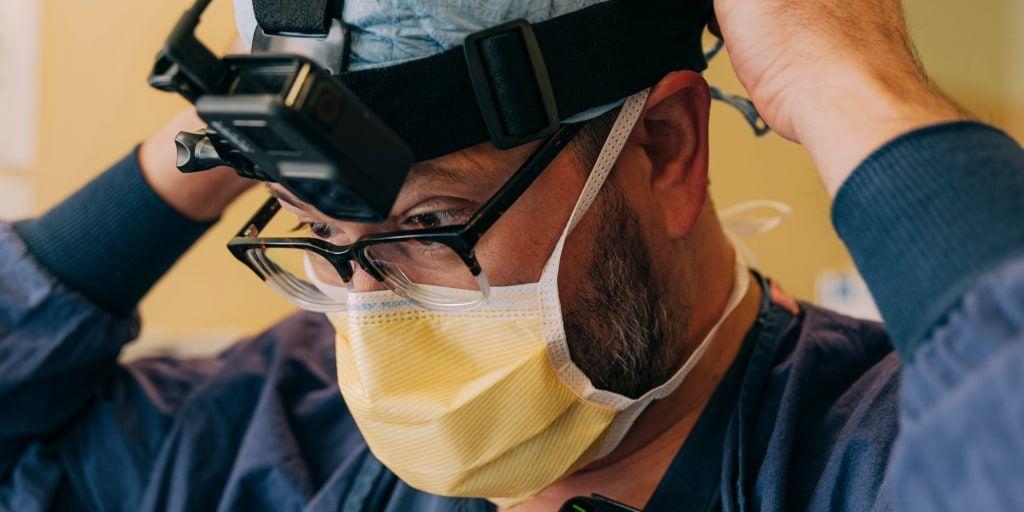
The system combines a GoPro camera with a sophisticated deep-learning model capable of recognizing the contents of cylindrical vials and syringes. Instead of directly reading labels, the AI scans for visual cues such as vial and syringe size, shape, cap color, and label print size
1
2
4
.Dr. Shyam Gollakota, a professor at the University of Washington's Paul G. Allen School of Computer Science & Engineering, highlighted the challenges in developing the system: "It was particularly challenging, because the person in the OR is holding a syringe and a vial, and you don't see either of those objects completely. Some letters are covered by the hands. And the hands are moving fast"
1
2
3
.Impressive Accuracy in Clinical Trials
In a study published in npj Digital Medicine, the AI-enabled system demonstrated remarkable accuracy:
- 99.6% sensitivity in detecting vial-swap errors
- 98.8% specificity in identifying correct medications
1
2
3
4
5
These results surpass the 95% accuracy threshold desired by the majority of anesthesia providers surveyed
1
2
.The Scale of Medication Errors
The development of this technology addresses a critical issue in healthcare:
- 5% to 10% of all drugs administered are associated with errors
- Approximately 1.2 million patients annually experience adverse events related to injectable medications
- The estimated cost of these errors is $5.1 billion per year
1
2
3
5
Related Stories


Training the AI Model
The research team collected 4K video footage of 418 drug draws performed by 13 anesthesiology providers across 17 operating rooms in two hospitals. This diverse dataset, captured over 55 days, allowed the AI to learn from various clinical environments with different lighting conditions and setups
1
2
3
5
.Future Developments and Potential Impact
Dr. Kelly Michaelsen, co-lead author and assistant professor at the University of Washington School of Medicine, emphasized the potential of this technology: "The thought of being able to help patients in real time or to prevent a medication error before it happens is very powerful"
1
2
3
.Future developments may include:
- Incorporating the system into smart eyewear for visual or auditory warnings
- Training the AI to detect more subtle errors, such as incorrect medication volumes
- Integration with electronic medical systems for automatic documentation
4
5
As researchers continue to refine this technology, it holds promise for improving patient safety and streamlining clinical workflows across various healthcare settings.
References
Summarized by

Navi
[1]
[2]
[3]
[4]
Related Stories
Recent Highlights



Recent Highlights
Today's Top Stories



Don’t drown in AI news. We cut through the noise - filtering, ranking and summarizing the most important AI news, breakthroughs and research daily. Follow topics that matter to you and stay ahead.


