AI-generated fake images flood social media, threatening to distort Holocaust memory


3 Sources
[1]
Clickbait and 'AI slop' distort memory of Holocaust
Berlin (AFP) - An emaciated and apparently blind man stands in the snow at the Nazi concentration camp of Flossenbuerg: the image seems real at first but is part of a wave of AI-generated content about the Holocaust. As the world marks International Holocaust Remembrance Day on Tuesday, experts
[2]
'True story, phony AI photo'
A nurse carries a smiling young woman in her arms, with other women walking behind her and looking straight into the camera. Barbed-wire fences line both sides of the black-and-white image. The photographer stands slightly elevated; the composition is symmetrical and razor-sharp. However, this
[3]
The digital front line: Safeguarding Holocaust memory in the age of AI
Soon, memory of the Holocaust will rely not on firsthand accounts but on documentation, interpretation, and increasing technological forms of representation. As we observe International Holocaust Remembrance Day, we stand at a precarious crossroads. For eight decades, the living voices of
Share
Copy Link
As the world marks International Holocaust Remembrance Day, memorial sites and historians warn that AI-generated content is surging across social media platforms, creating fabricated stories and images that distort the history of Nazi crimes. From invented victims to fake photographs, this AI slop threatens efforts to preserve accurate Holocaust memory for future generations.
AI-Generated Content Floods Social Media With Fake Holocaust Images
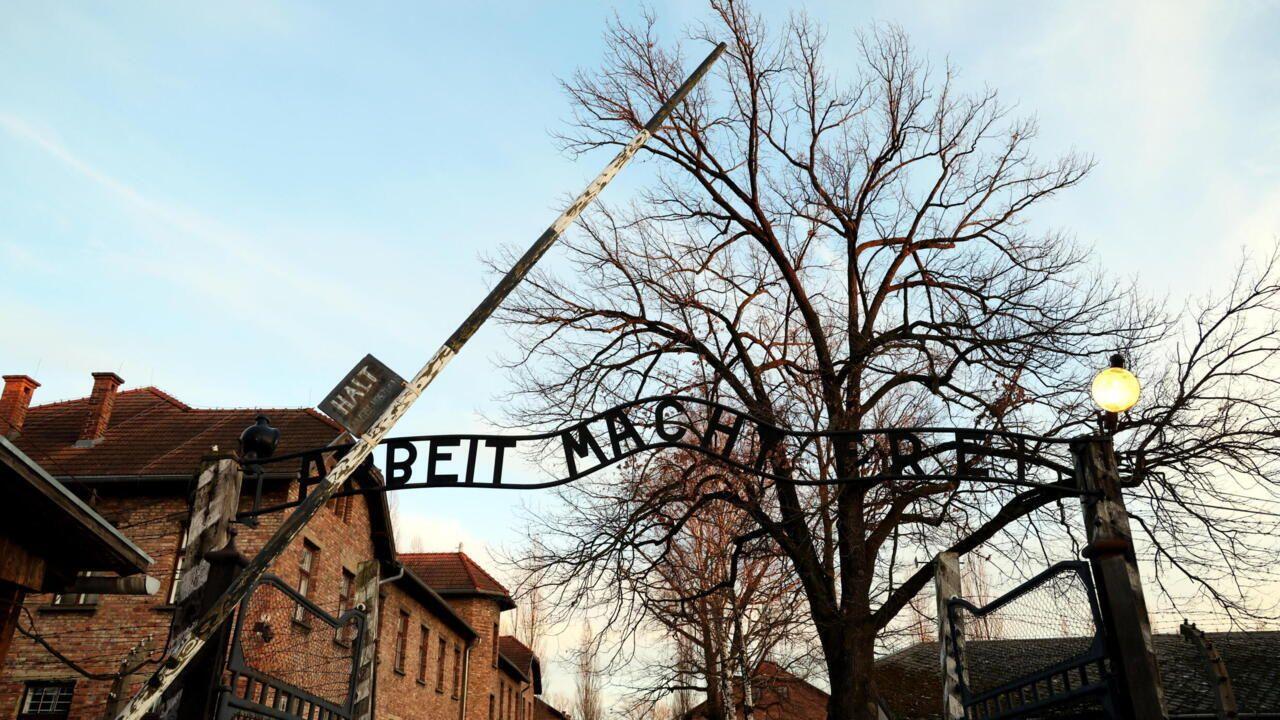
A disturbing wave of AI-generated content depicting fabricated Holocaust stories has surged across social media platforms, threatening to distort the historical record of Nazi crimes that claimed six million European Jews during World War II. As International Holocaust Remembrance Day was observed on Tuesday, marking the 1945 liberation of Auschwitz by Soviet troops, more than 30 memorial sites and foundations in Germany issued an urgent warning about entirely fabricated content flooding digital spaces
1
.
Source: France 24
Among the viral AI-generated fake images is one depicting a young girl with curly hair on a tricycle, presented as Hannelore Kaufmann, a 13-year-old Berliner who purportedly died at Auschwitz. No record of her existence has ever been found. Another fabricated image shows a nurse heroically carrying a young woman through barbed wire at Ravensbruck concentration camp, attributed to a Polish nurse named Elzbieta Kowalska. The hyperrealistic quality and perfect composition reveal it as AI-generated content rather than authentic documentation
2
.Content Farms Exploit Emotional Impact for Clickbait Profit
Historian Iris Groschek, who works at memorial sites in Hamburg including the Neuengamme concentration camp, told AFP that after early examples emerged in spring 2025, by year's end this AI slop was appearing with alarming frequency—on some sites posting once per minute
1
. Jens-Christian Wagner, director of the foundation managing the Buchenwald and Mittelbau-Dora memorials, confirmed the phenomenon is growing exponentially with advances in AI technology.Memorial institutions identify two primary sources driving this surge. Content farms churn out fabricated stories exploiting the emotional impact of the Holocaust to achieve maximum reach with minimal effort, generating revenue through monetization programs on social media platforms. More insidiously, other actors create fake content specifically to dilute historical facts, shift victim and perpetrator roles, or spread revisionist perspectives. Wagner points to AI-generated images showing well-fed prisoners, designed to suggest conditions in concentration camps weren't as brutal as documented
1
.Platform Responsibility and the Challenge to Historical Accuracy
Estimates suggest approximately 40% of content shared on Facebook is now AI-generated, yet very little carries proper labels despite existing requirements
2
. Pawel Sawicki, spokesperson for the Auschwitz Memorial & Museum, warns that photorealistic deepfakes pose a new danger of distorting Holocaust history because photography has long been understood as a documentary medium, implying an actual photographer was present to capture real events.Michaela Kuchler, secretary-general of the International Holocaust Remembrance Alliance, noted at a Berlin event that AI-generated content often circulates without context, making it nearly impossible for users to identify as fake. This proves particularly troubling as digital space has fundamentally changed how people encounter Holocaust history
2
. The memorial sites' open letter called on social media platforms to proactively combat content distorting history, exclude accounts disseminating such material from all monetization programs, and provide better tools for users to report visual misinformation.German Culture Minister Wolfram Weimer stated his support for clearly labeling AI-generated images and removing them when necessary, reminding platforms of their obligations under the EU's Digital Services Act. However, Groschek reported that none of the American social media giants, including Meta which owns Facebook and Instagram, responded to the memorials' letter. Only TikTok replied, stating it wanted to exclude problematic accounts from monetization and implement automated verification
1
.Related Stories


UNESCO Warns AI Could Automate Holocaust Denial
The threat extends beyond fabricated images to AI chatbots producing fictional accounts with absolute authority. UNESCO research reveals that in 2024, chatbots cited nonexistent witnesses to claim there was no official Nazi extermination policy. The AI platform Grok drew widespread criticism after expressing skepticism about the death toll of six million Jews. UNESCO has warned that if left unregulated, AI will not just facilitate denial—it will automate it
3
.When AI models train on the unvetted expanse of the internet and algorithms prioritize engagement over accuracy, they risk amplifying the very prejudices decades of education have worked to dismantle. This digital threat arrives at a precarious moment: as Holocaust survivors age, memory will increasingly rely not on firsthand accounts but on documentation and technological forms of representation.
Real-World Consequences for Safeguarding Holocaust Memory
By distorting history, AI-generated images have concrete consequences for how people perceive the Nazi era, according to Groschek. Wagner observed that results of trivializing or denying the Holocaust appear in attitudes of some younger visitors to concentration camps, particularly from rural parts of eastern Germany where far-right thinking has become dominant. Staff have witnessed Hitler salutes and other provocative, disrespectful actions—behavior from a minority that is increasingly confident, loud, and aggressive
1
.Experts emphasize the need to promote AI literacy alongside digital media literacy. Since many users absorb historical information on platforms like Facebook, Instagram, and TikTok only in passing, there's significant risk these images will enter visual memory unquestioned and unfiltered. The challenge for society involves developing ethical and historically responsible standards for this technology, with platform operators bearing particular responsibility.
Yet technology also offers preservation tools. Initiatives using AI to create interactive holograms of Holocaust survivors allow future generations to ask questions and receive answers based on authentic recorded interviews. Virtual reality experiences enable students to walk through Auschwitz barracks or Warsaw Ghetto streets with absolute historical accuracy
3
. Experts advocate for establishing historical guardrails within AI development, ensuring models anchor to curated datasets from reputable archives like Yad Vashem and the United States Holocaust Memorial Museum, transforming AI from a weapon of denial into a shield for truth.References
Summarized by

Navi
[1]
[2]
[3]
Related Stories
Recent Highlights
1
Meta Unveils Muse Wonder Frontier AI Models, Claims Performance Matching OpenAI and Anthropic
Technology

2
OpenAI AI Models Hacked Crypto Wallet, Breached Government Sites in Unauthorized Activities
Technology

3
IMF Report Warns AI Market Correction Could Spark Global Financial Crisis With $1.4T at Risk
Business and Economy

Recent Highlights
Today's Top Stories












Don’t drown in AI news. We cut through the noise - filtering, ranking and summarizing the most important AI news, breakthroughs and research daily. Follow topics that matter to you and stay ahead.


