AI Model Predicts Deadly Cone Snail Toxin Binding, Paving Way for Anti-Toxin Development


2 Sources
[1]
Machine learning model helps scientists understand deadly cone snail toxins
Marine cone snails are host to a family of dangerous neurotoxins. Very little is known about how those toxins interact with the human body, making this an area of interest for medical drug research and an area of concern in national security spaces. For the first time, a team at Los Alamos National
[2]
Machine Learning Model Helps Scientists Understand Deadly Cone Snail Toxins | Newswise
Newswise -- Marine cone snails are host to a family of dangerous neurotoxins. Very little is known about how those toxins interact with the human body, making this an area of interest for medical drug research and an area of concern in national security spaces. For the first time, a team at Los
Share
Copy Link
Scientists at Los Alamos National Laboratory have developed a machine learning model that predicts how alpha conotoxins from marine cone snails bind to specific human receptor subtypes, potentially leading to the development of life-saving anti-toxins.
Breakthrough in Conotoxin Research
Scientists at Los Alamos National Laboratory have made a significant advancement in understanding deadly cone snail toxins using machine learning. The research team, led by theoretical biologist Gnana Gnanakaran, has successfully trained an AI model to predict how alpha conotoxins bind to specific human receptor subtypes
1
.The Deadly World of Cone Snails
Marine cone snails, comprising over 800 species, produce a vast array of neurotoxins. These toxins, collectively known as conotoxins, represent a conglomeration of more than 1 million natural compounds. The most lethal among them is the geography cone (Conus geographus), which boasts a staggering 65% fatality rate from a single sting
2
.AI Model Overcomes Data Limitations
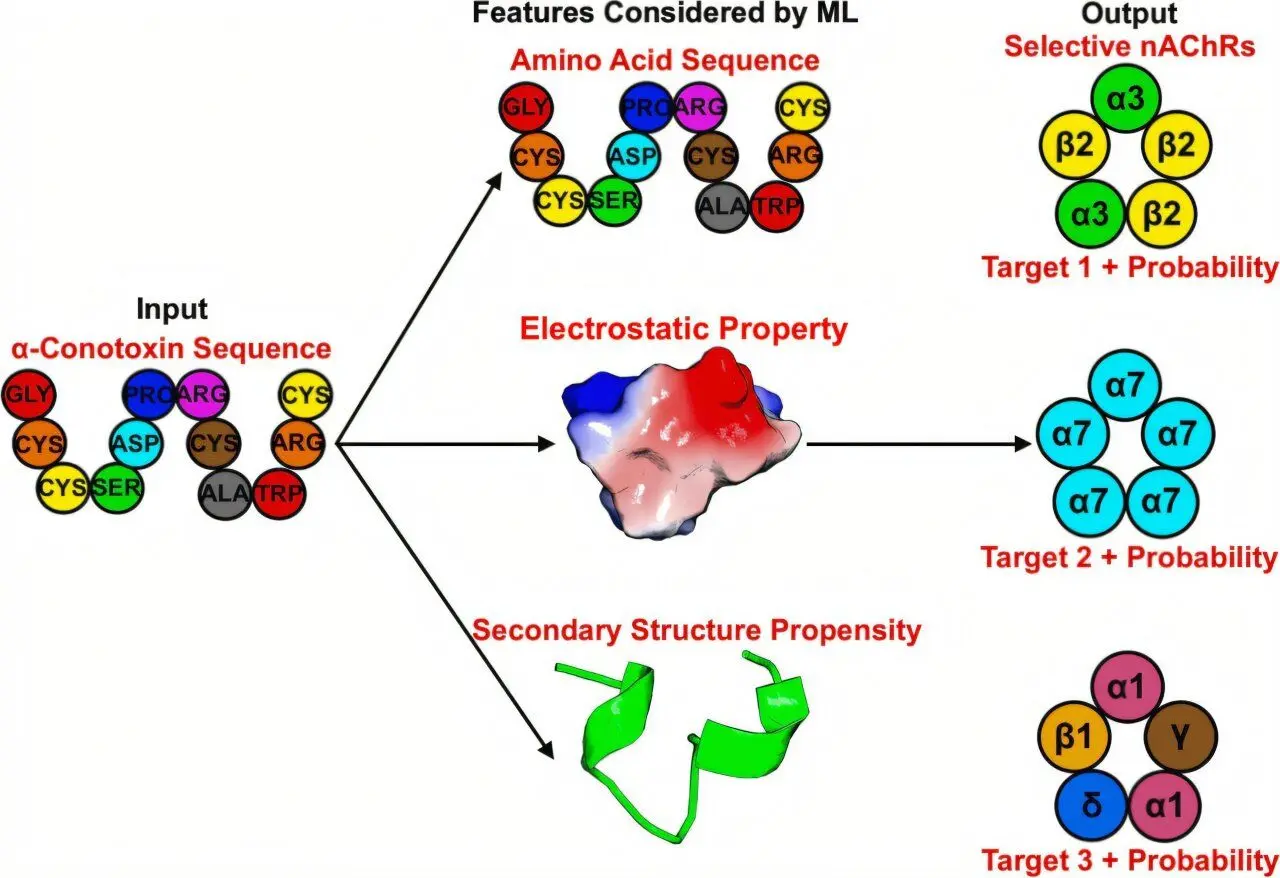
The research team focused on alpha conotoxins, a particularly prevalent and deadly family of these toxins. Despite the limited available data, the machine learning model successfully incorporated the alpha conotoxins' amino acid sequences, secondary structure propensities, and electrostatic properties to predict their target human receptors, including specific subtypes
1
.
Source: Phys.org
Innovative Machine Learning Approach
To achieve this breakthrough, the team developed and deployed two different neural network architectures for their semi-supervised machine learning model. The most effective method for predicting target receptor subtypes came from training the neural network architecture with a combination of dense and convolutional layers
2
.Implications for Anti-Toxin Development
This research has significant implications for both medical drug research and national security. Currently, no antidotes exist for conotoxins, and only about 2% of natural conotoxins have been sequenced. The new AI model provides a powerful tool for understanding and potentially responding to these threats
1
.Related Stories

Future Directions and Potential Applications
The team's next steps involve taking these predictions to the experimentation phase in a chemistry lab at Los Alamos. They aim to create a real-world interface that can mimic the interactions and binding of conotoxins, potentially leading to the development of an anti-toxin
2
.Addressing Synthetic Neurotoxin Concerns
The research also has implications for addressing potential threats from synthetic neurotoxins. Bad actors could potentially develop neurotoxin-like agents using synthetic peptides that mimic conotoxins. However, the insights gained from this AI model could be applied to counter such threats
1
.This groundbreaking research, published in ACS Chemical Neuroscience, represents a critical step towards developing effective anti-toxins and understanding the complex world of marine neurotoxins. The work was supported by the Defense Threat Reduction Agency at the U.S. Department of Defense, highlighting its significance in both scientific and national security contexts
2
.References
Summarized by

Navi
Related Stories
AI-Designed Proteins Show Promise in Neutralizing Deadly Snake Venom Toxins
16 Jan 2025•Science and Research

AI Uncovers Hundreds of Potential Antibiotics in Animal Venom, Offering New Hope Against Antibiotic Resistance
15 Jul 2025•Science and Research

AI Model Revolutionizes Drug Safety by Predicting Human Toxicity Before Clinical Trials
07 Nov 2025•Health

Recent Highlights



Recent Highlights
Today's Top Stories



Don’t drown in AI news. We cut through the noise - filtering, ranking and summarizing the most important AI news, breakthroughs and research daily. Follow topics that matter to you and stay ahead.


