AI-Powered App Matches Human-Led Programs in Diabetes Prevention, Study Finds


3 Sources
[1]
AI-powered app matches human-led programs in diabetes prevention
Johns Hopkins MedicineOct 27 2025 Researchers from Johns Hopkins Medicine and the Johns Hopkins Bloomberg School of Public Health report that an AI-powered lifestyle intervention app for prediabetes reduced the risk of diabetes similarly to traditional, human-led programs in adults. Funded by the
[2]
AI-powered diabetes prevention program shows similar benefits to those led by people
Researchers from Johns Hopkins Medicine and the Johns Hopkins Bloomberg School of Public Health report that an AI-powered lifestyle intervention app for prediabetes reduced the risk of diabetes similarly to traditional, human-led programs in adults. Published in JAMA Oct. 27, the study is believed
[3]
AI-Powered Diabetes Prevention Program Shows Similar Benefits to Those Led by People | Newswise
Newswise -- Researchers from Johns Hopkins Medicine and the Johns Hopkins Bloomberg School of Public Health report that an AI-powered lifestyle intervention app for prediabetes reduced the risk of diabetes similarly to traditional, human-led programs in adults. Funded by the National Institutes of
Share
Copy Link
A groundbreaking study by Johns Hopkins researchers reveals that an AI-powered lifestyle intervention app is as effective as traditional human-led programs in reducing diabetes risk for adults with prediabetes.
Groundbreaking Study on AI-Powered Diabetes Prevention
Researchers from Johns Hopkins Medicine and the Johns Hopkins Bloomberg School of Public Health have conducted a pioneering study that demonstrates the effectiveness of an AI-powered lifestyle intervention app in reducing the risk of diabetes. The study, published in JAMA on October 27, 2025, is believed to be the first phase III randomized controlled clinical trial comparing an AI-powered diabetes prevention program (DPP) to traditional human-led programs
1
.The Prediabetes Challenge
With an estimated 97.6 million adults in the United States having prediabetes, the need for effective intervention programs is crucial. Previous research has shown that human-led DPPs can reduce the risk of developing type 2 diabetes by 58%
2
. However, access barriers such as scheduling conflicts and availability have limited the reach of these programs.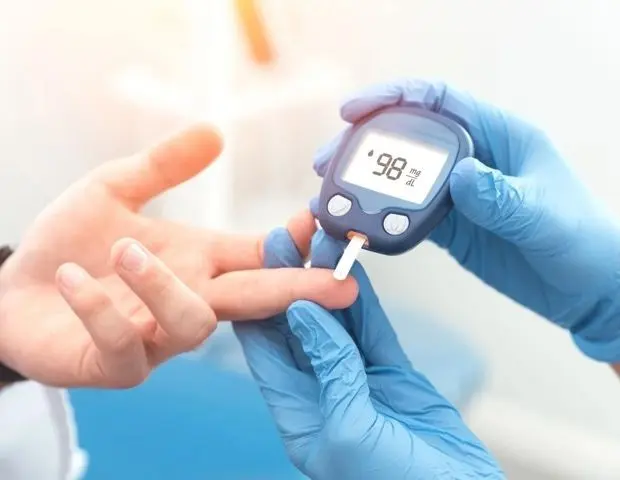
Source: News-Medical
Study Design and Participants
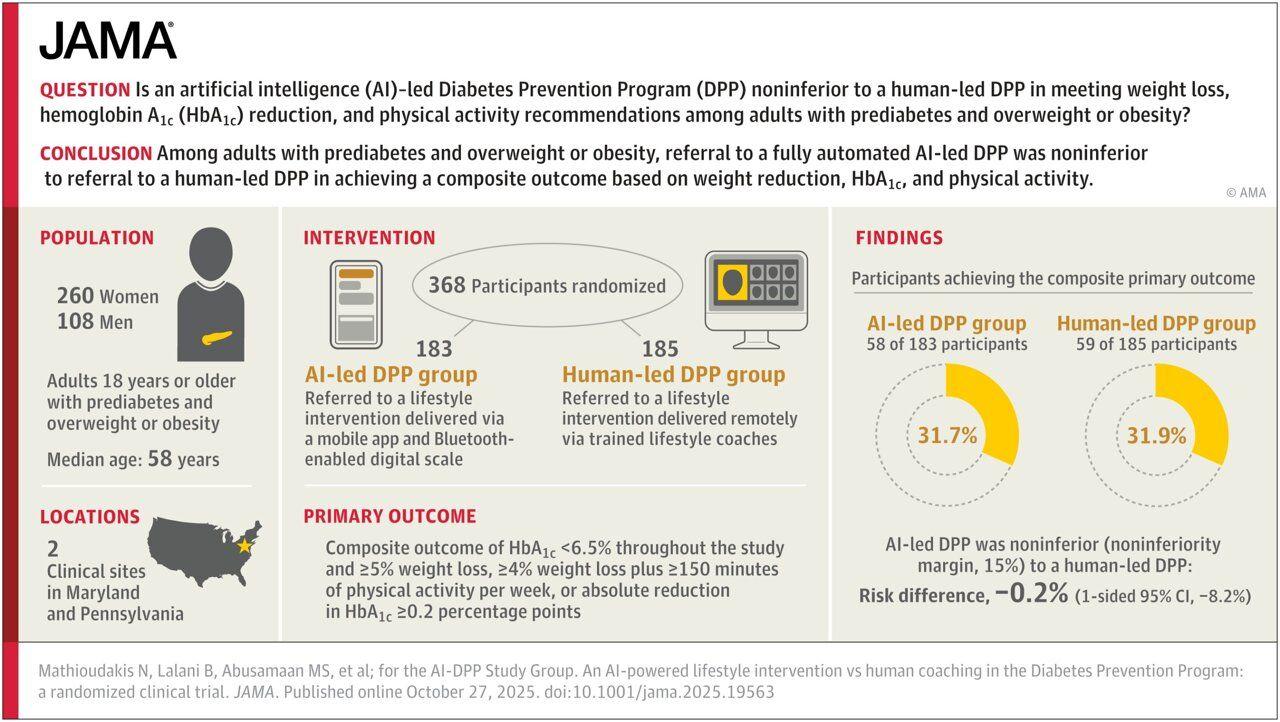
The study, funded by the National Institutes of Health, involved 368 middle-aged participants with prediabetes. Volunteers were randomly assigned to either one of four remote, 12-month, human-led programs or an AI-powered app using a reinforcement learning algorithm
3
.Key Findings
After 12 months, the researchers found that:
- 31.7% of AI-DPP participants and 31.9% of human-led DPP participants met the CDC-defined composite benchmark for diabetes risk reduction
1
. - The AI-DPP group showed higher rates of program initiation (93.4% vs. 82.7%) and completion (63.9% vs. 50.3%) compared to traditional programs
2
.
Source: Medical Xpress
Related Stories

Implications and Future Prospects
The study's results demonstrate that AI interventions could be an effective alternative to existing human-coached programs. Dr. Nestoras Mathioudakis, co-medical director of the Johns Hopkins Medicine Diabetes Prevention & Education Program and study principal investigator, highlighted the significance of this research, stating, "Even beyond diabetes prevention research, there have been very few randomized controlled trials that directly compare AI-based, patient-directed interventions to traditional human standards of care"
3
.The researchers believe that the ease of access increased participant engagement in the AI group. This suggests that AI-led DPPs could be particularly beneficial for patients with logistical constraints, offering a more flexible and accessible option for diabetes prevention
1
.Advantages of AI-Powered Programs
Benjamin Lalani, study co-first author and medical student at Harvard Medical School, emphasized the potential of AI-DPPs: "Unlike human-coached programs, AI-DPPs can be fully automated and always available, extending their reach and making them resistant to factors that may limit access to human DPPs, like staffing shortages"
2
.This groundbreaking study paves the way for further research and development in AI-powered health interventions, potentially revolutionizing the approach to diabetes prevention and other chronic disease management strategies.
References
Summarized by

Navi
[1]
[2]
Related Stories
AI Revolutionizes Diabetes Care: Personalized Treatment and Early Detection on the Horizon
26 Feb 2025•Health

AI screening tool boosts diabetic eye exam referrals for African Americans by 46%
09 Jun 2026•Health
Swiss PreDiabeTx Project Deploys AI Digital Coaches to Prevent Type 2 Diabetes in 500,000 Citizens
06 Aug 2026•Health
Recent Highlights
1
OpenAI AI Models Hacked Crypto Wallet, Breached Government Sites in Unauthorized Activities
Technology

2
IMF Report Warns AI Market Correction Could Spark Global Financial Crisis With $1.4T at Risk
Business and Economy

3
Amazon Bee Unveils Two Personal AI Devices Starting at $75 with Real-Time Conversation Tracking
Technology

Recent Highlights
Today's Top Stories









Don’t drown in AI news. We cut through the noise - filtering, ranking and summarizing the most important AI news, breakthroughs and research daily. Follow topics that matter to you and stay ahead.


