AI in the workplace elevates human skills as judgment and leadership become essential for workers


6 Sources
[1]
Defining roles for humans and AI in the future of work
Organizations need to redesign work and training after adopting AI tools, combining AI literacy with domain expertise, process knowledge, risk awareness and decision-making authority. Artificial intelligence (AI) does not begin with an instruction or end with a recommendation. It begins with a
[2]
AI is rapidly reshaping the skills employers want most from workers -- and shockingly enough, so-called 'human' skills might be more in demand
Employers are looking for judgement, leadership and adaptability * Senior-level skills like judgement and leadership are now in-demand for entry-level workers, too * Strong AI adopters are seeing considerable growth in productivity * Companies must continue to invest in human upskilling New
[3]
Greater worker confidence is needed for AI era productivity gains
We have entered a new phase of the artificial intelligence (AI) era, one defined less by invention and more by execution. As organizations invest rapidly in AI, the benefits of technology are advancing faster than people are able to use it effectively. This gap between capability and readiness is
[4]
The skills employers value most in the AI era may surprise you
As AI takes on more routine tasks, employers are placing a higher premium on judgment, creativity and leadership, according to a new PwC report. Uniquely human capabilities such as judgment, creativity and leadership are becoming more valuable as artificial intelligence fundamentally reshapes the
[5]
AI is ramping up workforce turnover. But your next great hire may already be working for you
Businesses should instead consider a human-centric strategy that prioritizes skills investment and enables internal mobility. AI is accelerating a transformation of work unlike anything we have seen before. Roles are evolving, skills are shifting, and organizations are under constant pressure to
[6]
Jobs that didn't exist before now key for new generation
The AI-born economy is not a threat to human work; it is a redefinition of it and there remains a large and meaningful role for humanity in the workforce. Think about the job titles filling today's hiring platforms: AI governance manager, robot relationship manager, responsible AI lead. Years ago,
Share
Copy Link
Organizations worldwide are discovering that AI in the workplace amplifies rather than replaces human value. New research reveals that as AI handles execution, human skills like judgment, leadership and adaptability are becoming critical even for entry-level positions. Companies with strong AI adoption report 163% labor productivity gains, while workers in AI-exposed roles experience 42% faster wage growth.
AI in the Workplace Transforms What Employers Value Most
Artificial intelligence is fundamentally reshaping how work gets done, but not in the way many feared. Rather than eliminating jobs, AI in the workplace is elevating the importance of distinctly human capabilities. According to PwC's Global AI Jobs Barometer, which analyzed over one billion job postings across six continents, roles where AI automated administrative tasks are experiencing twice the job growth rate and 42% faster wage growth compared to other positions
2
. The heaviest AI adopters have seen a 163% increase in labor productivity growth compared with 2018, demonstrating that technology amplifies human expertise rather than replacing it2
.
Source: TechRadar
The future of work is taking shape around a new division of labor between humans and AI. As AI increasingly occupies execution—processing information, generating content, optimizing options and automating actions—human value moves to framing problems, designing conditions under which AI operates, reviewing outputs in context, and deciding what happens next
1
. This shift appears across both digital and physical operations, from supply chain forecasting to warehouse management, where human oversight determines whether AI-generated solutions align with operational reality.Human Skills in the AI Era Command Premium Wages
The AI reshaping job market has created distinct categories of roles with vastly different outcomes. PwC identifies "professionalized" positions—where AI handles routine tasks but relies heavily on human expertise—as clear winners, with salaries rising 42% faster than "democratized" roles where AI enables less experienced workers to perform tasks
4
. Jobs requiring specific AI expertise have grown by 69% since 2019, nearly eight times faster than the overall jobs market's 9% expansion4
. The average wage premium for AI skills now stands at 62%, though this varies dramatically by sector—reaching 118% in consumer markets while dropping to 16% in government roles4
.What employers seek most are judgment, leadership, creativity, adaptability and personalized communication—capabilities that AI systems cannot replicate
2
. Perhaps most striking, AI-exposed entry-level roles are now seven times more likely to require senior-level skills like these, fundamentally altering how younger workers enter the workforce2
. An analysis of 2.4 million entry-level jobs in the US found demand for AI-exposed positions increased 35% since 2019, while other entry-level vacancies fell 10%4
.AI and Skills Gap Threatens Productivity Gains
Despite AI's capabilities advancing rapidly, a critical gap has emerged between what technology can do and what people can do with it. While more than half of nearly 2,000 CIOs surveyed reported positive returns from AI investments, nearly half of leaders cite keeping pace with change as their primary barrier to growth
3
. Worker confidence in using AI tools has declined sharply even as adoption rises, creating a paradox where organizations possess powerful technologies but lack the workforce readiness to translate capabilities into competitive advantage . This skills gap reflects deeper misalignment: more than half of workers report receiving no recent training or mentorship, while 72% of employers struggle to find needed talent, with AI-related skills topping shortage lists3
.The World Economic Forum estimates that 170 million jobs may be created by 2030, while 92 million face displacement and 39% of existing skill sets will be transformed or rendered obsolete
1
. In China, skill mismatches intensified under AI impact, with jobseekers ending up in misaligned roles rising from 52% to 64.9%5
. This AI-driven workforce transformation demands that employer-backed training for AI become continuous rather than occasional, shifting from hiring based solely on credentials to hiring for potential and adaptability3
.Related Stories

New Roles Emerge to Bridge Human-AI Collaboration
The AI impact on labor markets is giving rise to two distinct roles that clarify the division of labor between humans and AI. The "AI work architect" clarifies business problems, decomposes work into what should be delegated to AI versus human-led, and specifies data, assumptions, constraints and decision rights
1
. The "AI steward" validates outputs against domain knowledge and operational reality, assesses impact on customers and safety, and decides whether to accept, modify or reject AI-supported actions1
. These roles may become dedicated positions or responsibilities embedded in existing jobs, but together they form the AI-era work cycle that moves between real-world problems and AI execution.Effective human-AI collaboration requires deliberate work redesign around human and machine strengths. When technology is introduced without redesign, it increases complexity and erodes trust, but when thoughtfully implemented, it elevates both performance and experience
3
. Companies like JD.com have prioritized internal mobility and reskilling over layoffs, helping blue-collar workers upskill in robotics maintenance and smart warehouse operations5
. Streaming service Tubi enables employees to transition across roles internationally and encourages building internal AI agents to optimize workflows5
.Internal Investment Beats External Hiring for Workforce Turnover
Organizations instinctively look outside to hire new skills when disruption hits, but this reflex carries hidden costs. External hiring strategies mean paying twice—first through lost capability and reduced morale, then again through rebuilding capability elsewhere, a cycle that erodes trust among remaining employees
5
. Businesses with highest AI exposure recorded headcount growth of 52% compared with 36% among least AI-exposed firms, with wage growth at 24% versus 17%4
. These findings challenge concerns that AI will trigger widespread job cuts, instead suggesting companies effectively using AI are pulling ahead in both productivity and hiring.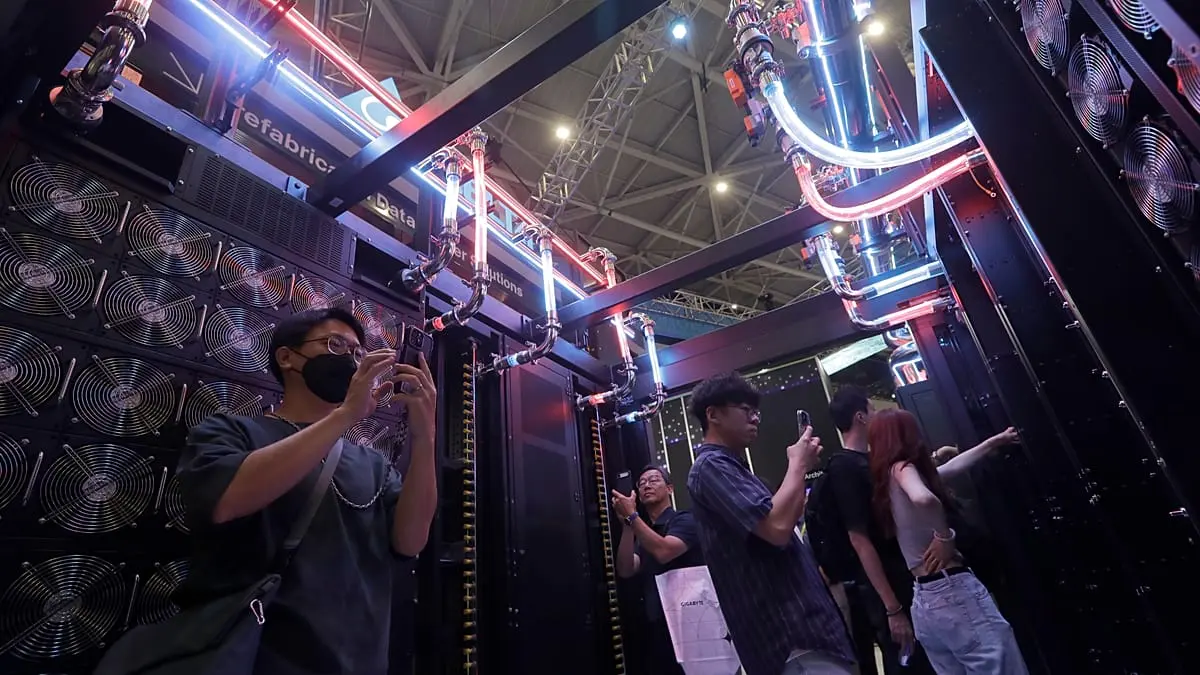
Source: Euronews
The ability to reskill and redeploy talent at scale is becoming a defining capability for organizations navigating transformation. Nearly nine in ten workers express confidence in skills for their current role, but growing numbers feel uncertain about how work will evolve
3
. What creates uncertainty is not change itself, but lack of clarity about where organizations are headed and how employees fit into that future. Leaders who connect the "now" and the "next" through visible pathways and continuous learning embedded into work itself will build more resilient, adaptable workforces capable of sustaining productivity gains as AI capabilities continue advancing.References
Summarized by

Navi
Related Stories
AI creates new job roles as 39% of workforce skills face transformation by 2030
29 Jun 2026•Business and Economy

AI and automation will eliminate 6% of US jobs by 2030, but the real story is more complex
13 Jan 2026•Business and Economy

AI agents are flattening corporate hierarchies as leaders navigate hybrid human-AI workforces
09 Jun 2026•Business and Economy

Recent Highlights



Recent Highlights
Today's Top Stories



Don’t drown in AI news. We cut through the noise - filtering, ranking and summarizing the most important AI news, breakthroughs and research daily. Follow topics that matter to you and stay ahead.


