AI Robots Integrate Touch and Vision for Human-Like Object Manipulation


2 Sources
[1]
AI Robots Learn Touch and Vision to Handle Objects Like Humans - Neuroscience News
Summary: A new breakthrough shows how robots can now integrate both sight and touch to handle objects with greater accuracy, similar to humans. Researchers developed TactileAloha, a system that combines visual and tactile inputs, enabling robotic arms to adapt more flexibly to real-world
[2]
Physical AI uses both sight and touch to manipulate objects like a human
In everyday life, it's a no-brainer to be able to grab a cup of coffee from the table. Multiple sensory inputs such as sight (seeing how far away the cup is) and touch are combined in real-time. However, recreating this in artificial intelligence (AI) is not quite as easy. An international group
Share
Copy Link
Researchers develop TactileAloha, a system combining visual and tactile inputs for robotic arms, enabling more flexible and accurate object handling in real-world tasks.
Breakthrough in Robotic Sensory Integration
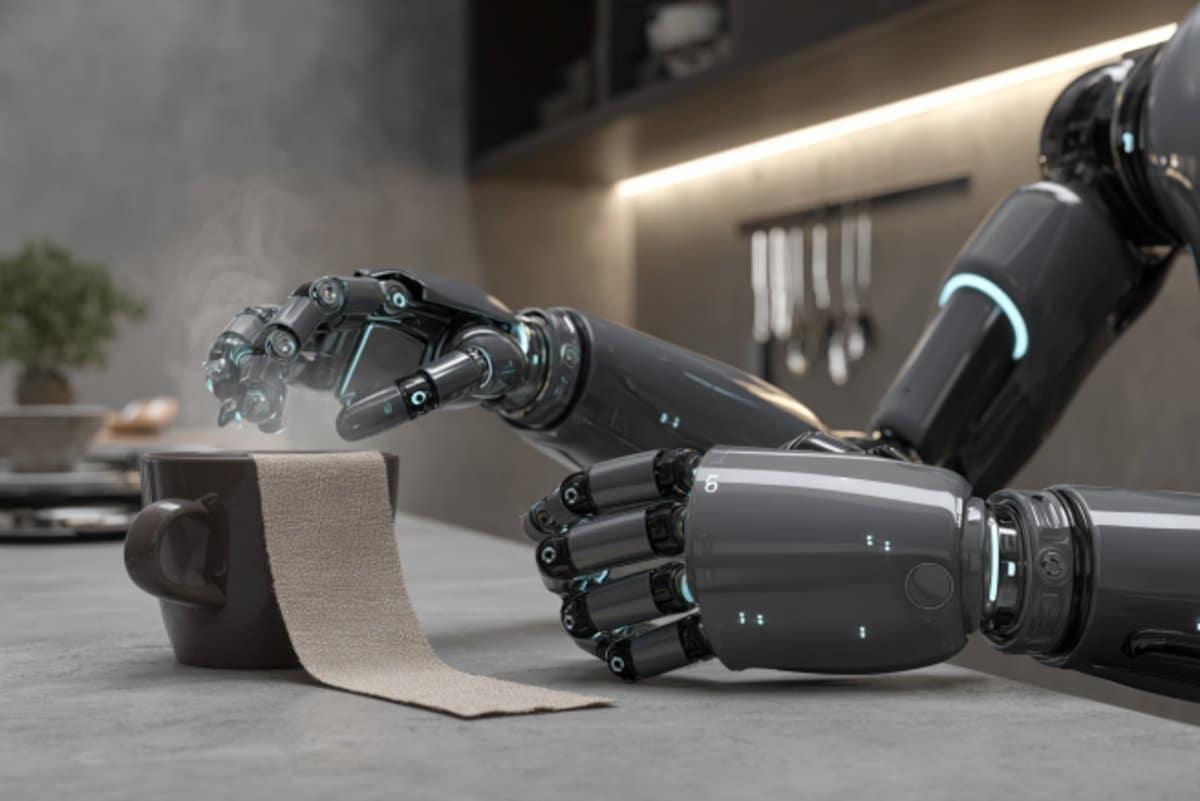
Researchers have achieved a significant milestone in the field of artificial intelligence and robotics by developing a system that combines both visual and tactile inputs, allowing robots to handle objects with human-like precision. The new system, dubbed "TactileAloha," represents a major advancement in multimodal physical AI, enabling robotic arms to adapt more flexibly to real-world tasks
1
2
.
Source: Neuroscience News
The Challenge of Multimodal Sensing in AI
In everyday life, humans effortlessly combine multiple sensory inputs such as sight and touch to interact with objects. However, replicating this capability in artificial intelligence has proven to be a complex challenge. Most existing robotic systems rely primarily on visual information, lacking the nuanced tactile judgments that humans use to distinguish textures or identify object orientations
1
.TactileAloha: A New Approach to Robotic Manipulation
TactileAloha builds upon the ALOHA system developed by Stanford University, which enables low-cost and versatile remote operation of dual-arm robots. The research team, comprising members from Tohoku University, Hong Kong Science Park, and the University of Hong Kong, enhanced this system by integrating tactile sensing capabilities
2
.Professor Mitsuhiro Hayashibe from Tohoku University's Graduate School of Engineering explains, "To overcome these limitations, we developed a system that also enables operational decisions based on the texture of target objects - which are difficult to judge from visual information alone"
1
.Technical Implementation and Performance
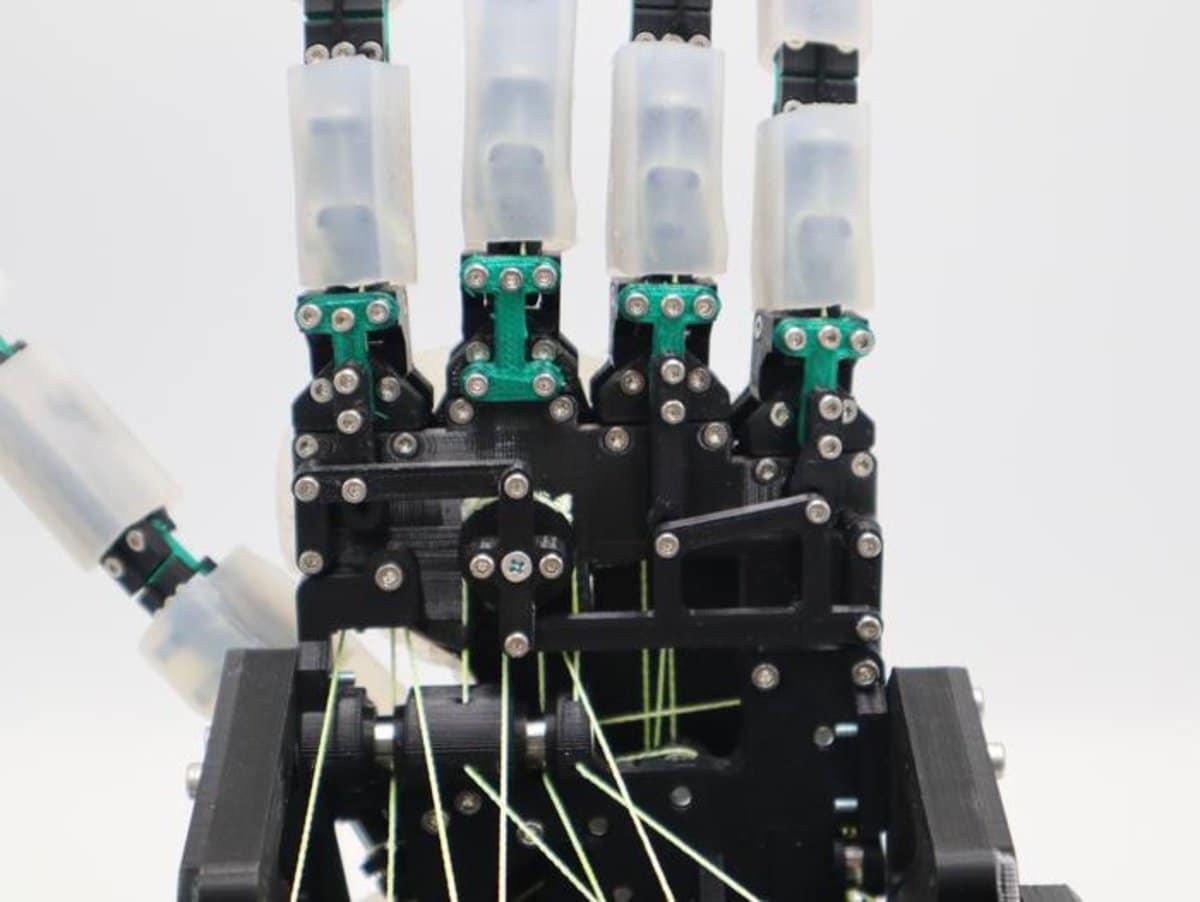
The TactileAloha system incorporates the following key features:
- A tactile sensor mounted on the gripper to capture fine-grained texture information
- Real-time visualization during teleoperation for efficient data collection
- Encoding of tactile signals using a pre-trained ResNet
- Fusion of tactile data with visual and proprioceptive features
- A transformer-based policy with action chunking for predicting future actions
1
The researchers employed a weighted loss function during training to emphasize near-future actions and an improved temporal aggregation scheme at deployment to enhance action precision
1
.
Source: Tech Xplore
Related Stories
Experimental Results and Implications
TactileAloha demonstrated superior performance in challenging bimanual tasks such as zip tie insertion and Velcro fastening, which require precise tactile sensing to perceive object texture and align orientations. The system achieved an average relative improvement of approximately 11.0% compared to state-of-the-art methods with tactile input
1
.This breakthrough has significant implications for the development of more versatile and adaptive robots capable of assisting in various everyday tasks such as cooking, cleaning, and caregiving
2
.Future Prospects and Applications
The success of TactileAloha represents an important step toward realizing multimodal physical AI that integrates and processes multiple senses, mirroring human sensory capabilities. As research in this field progresses, we can anticipate the emergence of robotic helpers that seamlessly integrate into our daily lives, offering assistance in a wide range of practical applications
1
2
.The findings from this study were published in the journal IEEE Robotics and Automation Letters on July 2, 2025, marking a significant contribution to the ongoing development of more sophisticated and human-like artificial intelligence systems
1
2
.References
Summarized by

Navi
[1]
Related Stories
AI Co-Pilot for Bionic Hands Transforms How Amputees Control Prosthetics with Intuitive Grasping
09 Dec 2025•Health
SonicSense: Robots Gain Human-Like Perception Through Acoustic Vibrations
23 Oct 2024•Science and Research

Meta's Breakthrough in Embodied AI: Giving Robots a Human Touch
03 Nov 2024•Technology

Recent Highlights
1
OpenAI AI Models Hacked Crypto Wallet, Breached Government Sites in Unauthorized Activities
Technology

2
IMF Report Warns AI Market Correction Could Spark Global Financial Crisis With $1.4T at Risk
Business and Economy

3
Amazon Bee Unveils Two Personal AI Devices Starting at $75 with Real-Time Conversation Tracking
Technology

Recent Highlights
Today's Top Stories









Don’t drown in AI news. We cut through the noise - filtering, ranking and summarizing the most important AI news, breakthroughs and research daily. Follow topics that matter to you and stay ahead.


