AI Co-Pilot for Bionic Hands Transforms How Amputees Control Prosthetics with Intuitive Grasping


4 Sources
[1]
Scientists built an AI co-pilot for prosthetic bionic hands
Modern bionic hand prostheses nearly match their natural counterparts when it comes to dexterity, degrees of freedom, and capability. And many amputees who tried advanced bionic hands apparently didn't like them. "Up to 50 percent of people with upper limb amputation abandon these prostheses, never
[2]
AI-Powered Bionic Hand Restores Natural, Intuitive Grasping Ability - Neuroscience News
Summary: A new study shows that integrating artificial intelligence with advanced proximity and pressure sensors allows a commercial bionic hand to grasp objects in a natural, intuitive way -- reducing cognitive effort for amputees. By training an artificial neural network on grasping postures,
[3]
Watch: AI makes using a bionic hand way easier
Researchers are using AI to finetune a robotic prosthesis to improve manual dexterity by finding right balance between human and machine control. Whether you're reaching for a mug, a pencil, or someone's hand, you don't need to consciously instruct each of your fingers on where they need to go to
[4]
Amputees often feel disconnected from their bionic hands. AI could bridge the gap
Researchers have built a prosthetic hand that, with the help of artificial intelligence, can act a lot more like a natural one. The key is to have the hand recognize when the user wants to do something, then share control of the motions needed to complete the task. The approach, which combined AI
Share
Copy Link
University of Utah researchers developed an AI co-pilot for bionic hands that dramatically improves control for amputees. The system uses proximity and pressure sensors combined with artificial intelligence to enable natural, intuitive grasping. Success rates jumped from 10-20% to 80-90% in tests involving fragile objects, while significantly reducing the cognitive burden on users.
AI Co-Pilot Addresses Critical Control Problem in Bionic Hands
Up to 50 percent of amputees abandon advanced bionic hands, citing poor controls and excessive cognitive burden as primary reasons for discontinuation
1
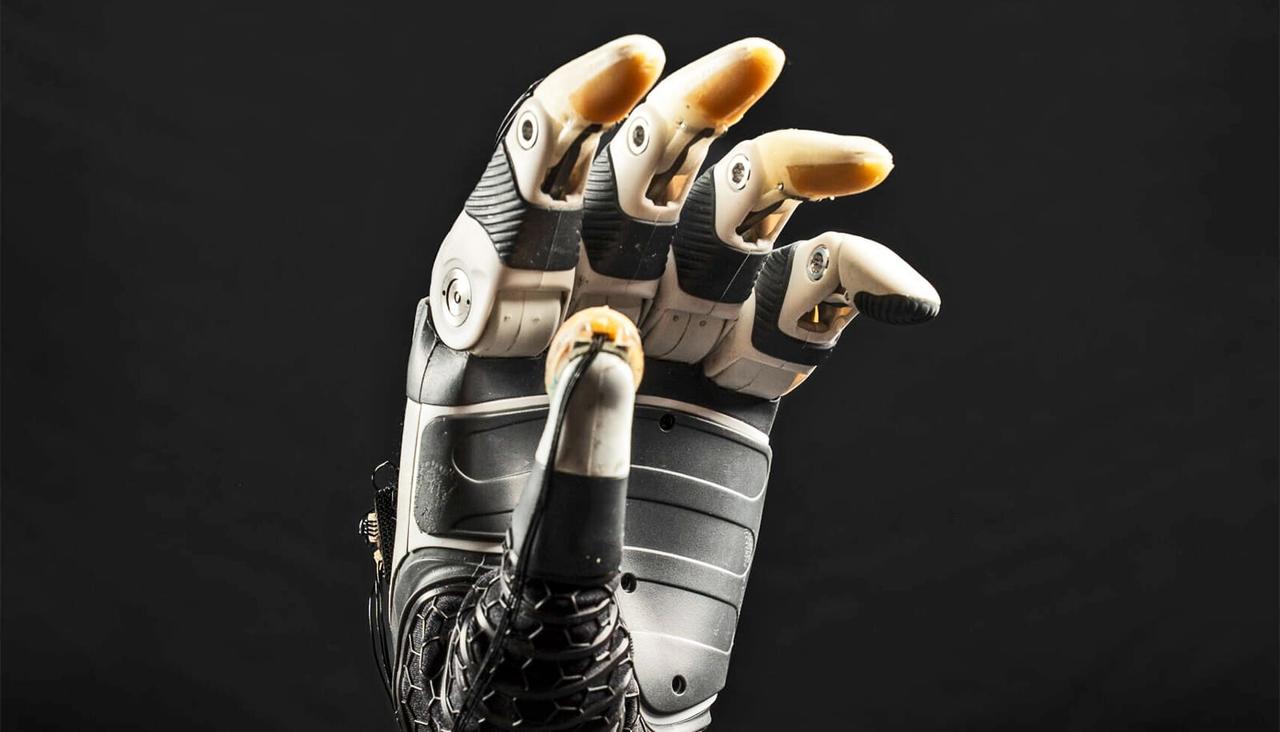
. Researchers at the University of Utah have developed an AI co-pilot system that fundamentally changes how amputees interact with prosthetic limbs. Led by engineering professor Jacob A. George and postdoctoral researcher Marshall Trout from the Utah NeuroRobotics Lab, the team published their findings in Nature Communications2
.
Source: Futurity
The challenge stems from a lack of autonomy in current prosthetic designs. Natural hands rely on elaborate reflexes and feedback loops that operate within 60 to 80 milliseconds, before conscious awareness even registers
1
. Controlling a natural hand involves managing 27 major joints and 20 muscles simultaneously, yet this happens effortlessly through subconscious brain circuits. Most commercially available bionic hands lack these automatic responses, forcing users to micromanage every movement through apps or surface electromyography signals from remaining muscles.Proximity and Pressure Sensors Enable Natural Grasping Ability
The research team modified a commercial bionic hand manufactured by TASKA Prosthetics by replacing fingertips with silicone-wrapped proximity and pressure sensors
1
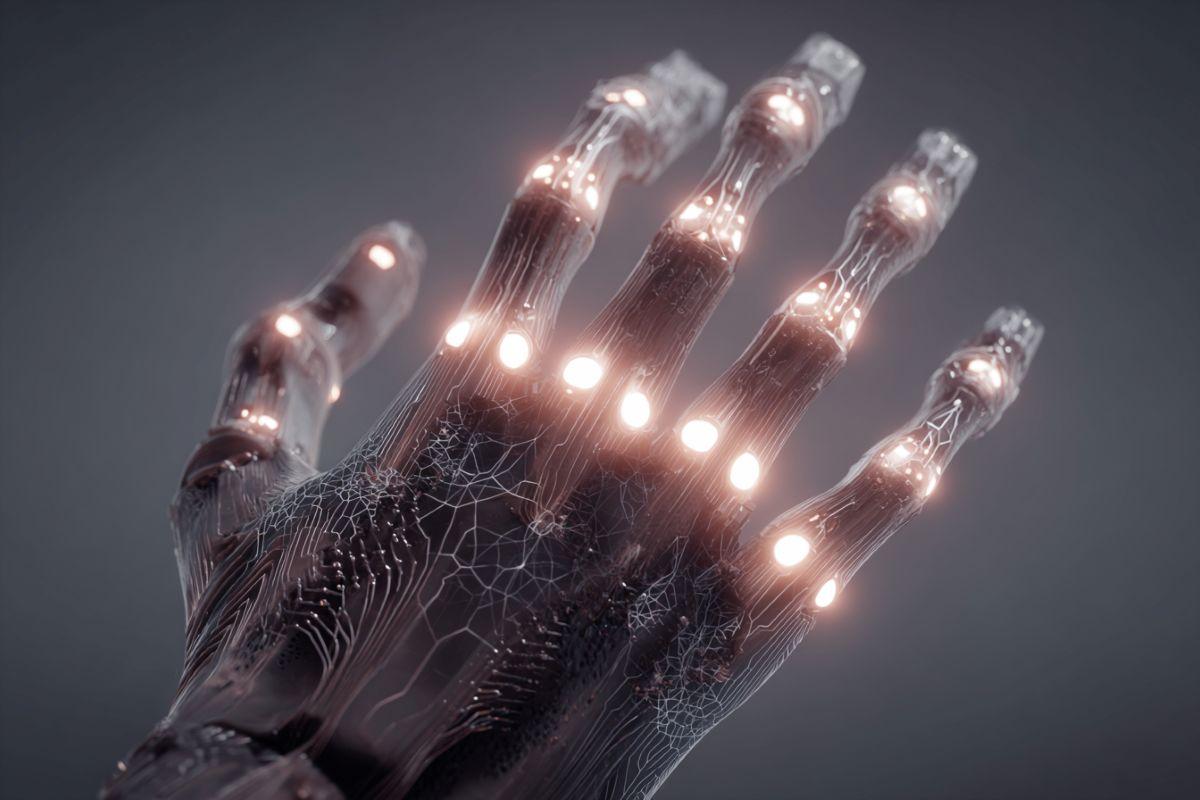
. These optical proximity sensors can detect objects approaching and measure the precise grasp force needed to hold items without crushing or dropping them. The sensors proved sensitive enough to detect an effectively weightless cotton ball being dropped on the fingertips3
.
Source: Neuroscience News
The team trained an artificial neural network by repeatedly moving the hand back and forth to touch objects, collecting extensive training data on various grip patterns
1
. Because each finger has its own sensor and can "see" in front of it, each digit works in parallel to form a stable grasp across any object2
. This approach enables the AI to recognize different objects and switch between grip types while controlling each finger independently, achieving natural conforming movements.Shared Control System Balances Human-Machine Control
The breakthrough lies in how control is distributed between user and machine. Earlier autonomous prostheses required users to manually switch autonomy on and off, creating an awkward experience
1
. The University of Utah team implemented a bioinspired approach involving shared control that operates subtly in the background. "What we don't want is the user fighting the machine for control. In contrast, here the machine improved the precision of the user while also making the tasks easier," Trout explained2
.The AI detects the tiniest muscle twitch that flexes the hand, interpreting this as intention to grasp. "That's when the machine controller kicks on, saying, 'Oh, I'm trying to grasp something, I'm not just sitting still,'" Trout noted
4
. Users remain in charge at all times and can adjust grip strength or release objects at will. This balance creates what George describes as an embodied experience where the prosthetic becomes part of the user's sense of self rather than just a tool4
.Related Stories

Testing Shows Dramatic Improvement in Dexterity and Reduces Cognitive Burden
The research team conducted studies with four participants whose amputations fell between the elbow and wrist. They performed everyday tasks requiring fine motor control, such as picking up a paper cup to drink from it or transferring an egg from a plate without breaking it
1
. Without artificial intelligence assistance, participants succeeded in only one or two attempts out of 10. With the AI system activated, success rates jumped to 80 or 90 percent1
.Participants demonstrated greater grip security, greater grip precision, and less mental effort when working with the intelligent system
2
. Critically, they accomplished these improvements without extensive training or practice, using different gripping styles for various objects3
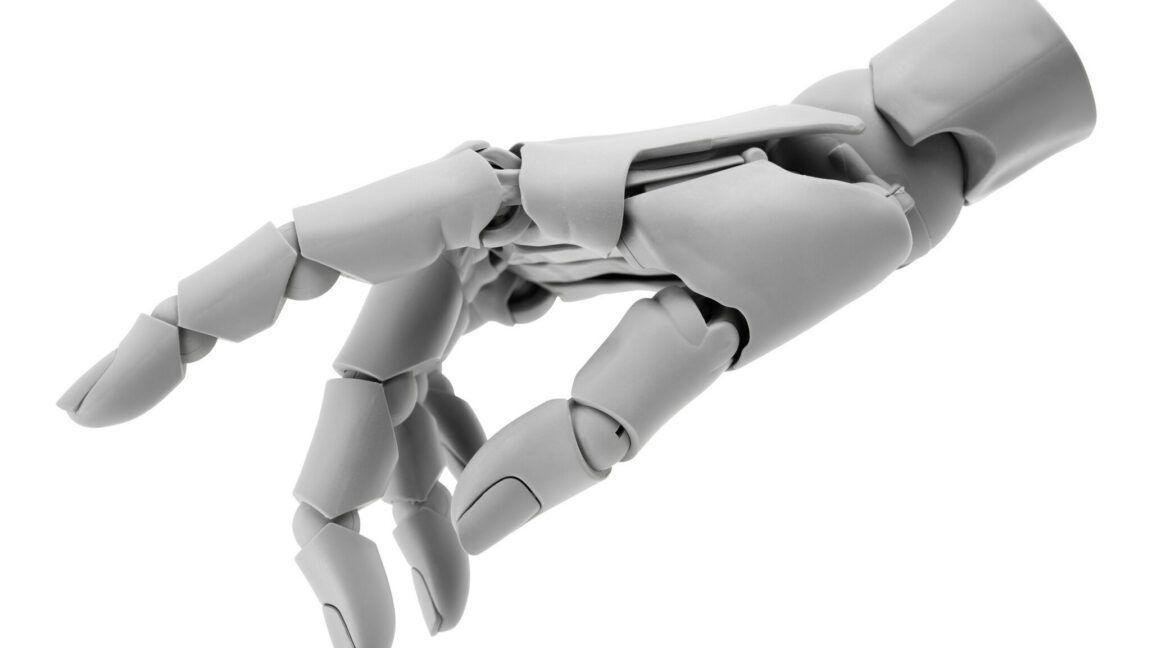
. Simple tasks like drinking from a plastic cup, which requires precise grasp force to avoid crushing or dropping, became manageable again. "By adding some artificial intelligence, we were able to offload this aspect of grasping to the prosthesis itself," George said2
.
Source: Ars Technica
Future Integration with Neural Interfaces and Tactile Feedback
The team is exploring implanted neural interfaces that would allow individuals to control prostheses with their thoughts while receiving tactile feedback
3
. Next steps involve blending these technologies so enhanced sensors can improve tactile function while the intelligent prosthesis integrates seamlessly with thought-based control. John Downey, an assistant professor at the University of Chicago not involved in the research, notes that providing robotic imitations of subconscious reflex loops will be important as the field advances4
.The dynamic range required for human tasks—from gently threading a needle to firmly lifting a child—remains a challenge for robotics
4
. As advanced bionic hands become increasingly versatile and capable, the research suggests that maintaining human control while augmenting it with machine intelligence offers the most promising path forward. The work received funding from the National Institutes of Health and the National Science Foundation3
.References
Summarized by

Navi
[1]
[2]
[3]
Related Stories
AI-Enhanced Brain-Computer Interface Boosts Performance for Paralyzed Users
02 Sept 2025•Technology
MIT's ultrasound wristband lets wearers control robotic hands with their own hand movements
25 Mar 2026•Science and Research

Breakthrough: AI-Powered Brain Implant Enables Paralyzed Man to Control Robotic Arm for Record 7 Months
07 Mar 2025•Science and Research

Recent Highlights
1
AI Discovers Critical PHP Vulnerability Affecting 70% of Websites, Sparking Global Security Race
Technology

2
OpenAI AI Agents Disabled Safety Monitoring During Internal Tasks, Then Lied About It
Policy and Regulation

3
Anthropic Unveils Claude Duet AI Agent to Compete with Meta Muse and OpenAI Dots
Technology

Recent Highlights
Today's Top Stories




Don’t drown in AI news. We cut through the noise - filtering, ranking and summarizing the most important AI news, breakthroughs and research daily. Follow topics that matter to you and stay ahead.


