AI's Job Displacement: Economic Implications and Global Tech Race


2 Sources
[1]
AI will replace most humans, but then what?
LONDON, August 19 (Reuters) - Is technology more job augmenting or job replacing? This has been a long-standing debate. But recent academic work suggests that technology has been a net destroyer of jobs for decades. Artificial intelligence and robotics could rapidly accelerate this trend, with
[2]
AI will replace most humans, but then what?
Recent research suggests technology is now destroying more jobs than it creates, particularly impacting professional roles due to AI advancements. This trend could lead to deflation, increased government intervention, and a tech war between the U.S. and China. While aging populations might offset
Share
Copy Link
Recent research suggests AI and automation are destroying more jobs than they create, potentially leading to significant economic and geopolitical shifts.
AI's Impact on Job Market
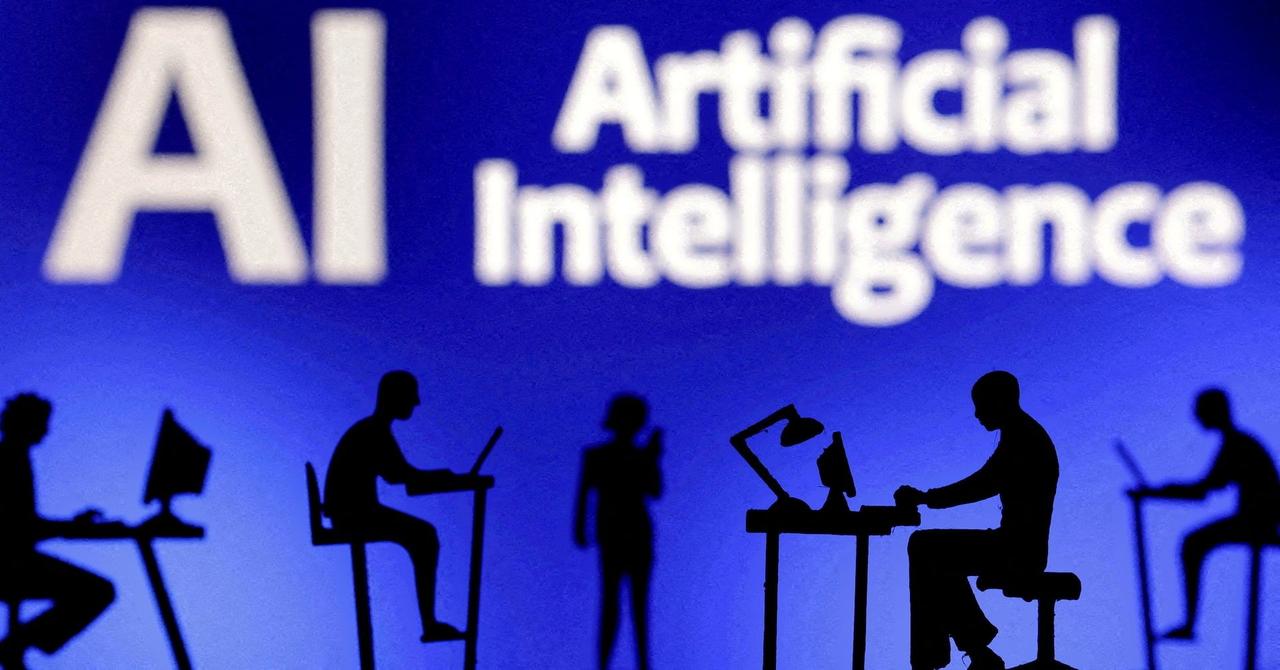
Recent academic research suggests that technology, particularly artificial intelligence (AI) and robotics, is now destroying more jobs than it creates. This trend marks a significant shift from historical patterns where technological advances enabled new industries to emerge
1
. David Autor, an economist at MIT, argues that since 1980, jobs replaced by automation have not been fully offset by new job creation1
.
Source: Reuters
The impact of AI on employment is expected to be substantial. A 2019 OECD report and a 2018 paper by PriceWaterhouseCoopers estimate that 15-30% of all jobs in developed markets are at risk of being automated
2
. This trend is particularly concerning as AI advancements are increasingly focused on professional, technical, and managerial occupations.Economic Implications
The potential job displacement by AI could have far-reaching economic consequences:
-
Deflation: High unemployment resulting from cheaper and more capable machines could lead to structural deflation
1
. -
Expanded Government Role: In a mass unemployment scenario, governments may need to facilitate income and wealth transfers from tech business owners to unemployed workers [2](https://economictimes.indiatimes.com/news/international/global-trends/ai-will-replace-most-humans-but-then-what/articleshow/123379970.cms].
-
Technological Dominance: Economic success will likely be determined by a country's ability to create and utilize technology effectively
1
.
Global Tech Race

Source: ET
The rise of AI is expected to intensify the technological competition between nations, particularly the United States and China:
-
US-China Tech War: While trade wars may be short-lived, the tech war between these two superpowers could be protracted and more consequential [2](https://economictimes.indiatimes.com/news/international/global-trends/ai-will-replace-most-humans-but-then-what/articleshow/123379970.cms].
-
Industrial Policies: Both the US and China have adopted muscular industrial policies to dominate in cerebral technologies, while Europe lags behind
1
. -
Dynamic Competition: Unlike trade wars, the tech war is dynamic, focusing on continually evolving and advancing technologies rather than static comparative advantages [2](https://economictimes.indiatimes.com/news/international/global-trends/ai-will-replace-most-humans-but-then-what/articleshow/123379970.cms].
Related Stories

Counterarguments and Considerations
While the outlook appears challenging for human workers, there are some factors to consider:
-
Aging Populations: In some developed markets, automation could offset labor force shrinkage due to aging populations, as seen in Japan and South Korea
1
. -
Measurement Challenges: Current methods of calculating labor productivity may not accurately reflect the true impact of AI and automation [2](https://economictimes.indiatimes.com/news/international/global-trends/ai-will-replace-most-humans-but-then-what/articleshow/123379970.cms].
-
Exponential Technological Growth: The pace of computational and technological evolution is accelerating exponentially, making it difficult to predict long-term outcomes accurately
1
.
References
Summarized by

Navi
[1]
Related Stories
Jack Dorsey cuts 4,000 jobs at Block, citing AI tools that 'can do more and do it better'
27 Feb 2026•Business and Economy

AI's Effect on the Work Force Shows Up in Wages, Not Unemployment—Gen Z Hit Hardest
16 Sept 2026•Business and Economy
Citrini Research AI Scenario Triggers Wall Street Panic Over Unemployment and Economic Collapse
23 Feb 2026•Business and Economy

Recent Highlights



Recent Highlights
Today's Top Stories



Don’t drown in AI news. We cut through the noise - filtering, ranking and summarizing the most important AI news, breakthroughs and research daily. Follow topics that matter to you and stay ahead.


